

The Alliance for Food Sovereignty in Africa (AFSA) is an African voice advocating for the rights of small-scale food producers. Follow us and join our struggle!
Africa
Joined May 2014
- Tweets4.3K
- Following1.9K
- Followers11.5K
- Likes3K


𝐂𝐎𝐏𝟑𝟏 𝐅𝐚𝐢𝐥𝐞𝐝 𝐀𝐟𝐫𝐢𝐜𝐚’𝐬 𝐅𝐨𝐨𝐝 𝐏𝐫𝐨𝐝𝐮𝐜𝐞𝐫𝐬. 𝐂𝐎𝐏𝟑𝟐 𝐌𝐮𝐬𝐭 𝐃𝐞𝐥𝐢𝐯𝐞𝐫 𝐂𝐥𝐢𝐦𝐚𝐭𝐞 𝐉𝐮𝐬𝐭𝐢𝐜𝐞 𝐚𝐧𝐝 𝐀𝐜𝐭𝐢𝐨𝐧.
The Alliance for Food Sovereignty in Africa (AFSA) expresses profound disappointment with the outcome of #COP31 in Antalya, Türkiye. A conference presented as an opportunity to move from commitments to implementation ended with deep divisions, inadequate progress on climate finance and critical decisions deferred.
The most disappointing outcome was the failure to reach a substantive agreement on the future of agriculture and food security under the UNFCCC. After nine years of discussions under the Koronivia and Sharm el-Sheikh work programmes, negotiations again stalled. Rather than adopting a funded implementation framework, COP31 deferred further consideration to 2027. Workshops, reports and dialogue cannot substitute for decisions that deliver resources to the people producing Africa’s food. Agroecology is already delivering solutions for climate resilience, biodiversity and food sovereignty. What is missing is the political courage to recognise, finance and scale up these solutions.
COP31 also failed to provide the clarity and commitments necessary to deliver on the promise to triple adaptation finance by 2035. No credible financing baseline or sufficiently accountable delivery pathway emerged. Although some institutional outcomes provide opportunities for further engagement, the operational arrangements of the Just Transition Mechanism remain unresolved. Climate finance must be new, additional, predictable and predominantly grant-based, reaching frontline communities directly without creating further debt burdens.
Despite the disappointment in Antalya, AFSA sees #COP32 in Addis Ababa, Ethiopia, as a significant opportunity to place Africa’s priorities at the centre of global climate negotiations. AFSA calls for a concrete, time-bound and financed decision on agriculture and food systems, an accountable pathway for tripling adaptation finance, direct access to grants for frontline communities, and a just transition that protects the rights and livelihoods of farmers, pastoralists, fisherfolk, women, youth and Indigenous Peoples.
Africa cannot afford another lost COP. The people who feed the continent deserve more than recognition, sympathy and promises. They deserve justice, resources and a decisive role in shaping their future.
No more delays. No more empty commitments. It is time to deliver.
Read the full statment here:
EN: afsafrica.org/cop31-failed-a…
FR: afsafrica.org/fr/la-cop31-a-…
#Agroecology4Climate #ClimateJustice #ClimateFinance
🤖 Made with AI

𝐀𝐟𝐫𝐢𝐜𝐚 𝐈𝐬 𝐏𝐚𝐲𝐢𝐧𝐠 𝐈𝐭𝐬 𝐃𝐞𝐛𝐭𝐬 𝐖𝐢𝐭𝐡 𝐭𝐡𝐞 𝐅𝐨𝐨𝐝 𝐈𝐭 𝐒𝐡𝐨𝐮𝐥𝐝 𝐁𝐞 𝐂𝐨𝐧𝐬𝐮𝐦𝐢𝐧𝐠 | 𝐎𝐥𝐢𝐯𝐢𝐞𝐫 𝐃𝐞 𝐒𝐜𝐡𝐮𝐭𝐭𝐞𝐫
Why does hunger persist when the world already produces so much food? In this week’s episode of The Battle for African Agriculture Podcast, Dr. Million Belay speaks with Professor Olivier De Schutter, former UN Special Rapporteur on the Right to Food and later on extreme poverty and human rights, about hunger, debt, power and the political economy of food systems.
Olivier argues that hunger is often driven less by insufficient production than by poverty, inequality and weak social protection. He explains how many African economies remain locked into exporting raw materials and cash crops to earn the foreign currency needed to service debt, while local food systems receive far less support. He also warns that attempts to boost production through imported fertilizers, pesticides and technologies can create a new form of dependency, even when countries are trying to reduce food imports.
The conversation goes further into corporate concentration, Green Revolution approaches, agroecology, subsidies, local markets and the future of food policy. Olivier argues that agroecology cannot scale through farming practices alone. It also needs fair markets, redirected public support, stronger social protection and policies that reward soil health, biodiversity and healthy food. His final proposal is bold: replace the WTO Agreement on Agriculture with a new international framework built around food sovereignty.
🎧 Watch and listen to the full episode on
YouTube: youtube.com/watch?v=6XQD13X1…
Spotify: open.spotify.com/episode/7eD…
Apple Podcasts: podcasts.apple.com/us/podcas…
Amazon Music: music.amazon.com/podcasts/f3…

🎥 𝐂𝐎𝐏𝟑𝟏 𝐃𝐚𝐢𝐥𝐲 𝐁𝐫𝐢𝐞𝐟𝐢𝐧𝐠 | 𝐀𝐧𝐭𝐚𝐥𝐲𝐚, 𝐓𝐮̈𝐫𝐤𝐢𝐲𝐞 🇹🇷
𝐀𝐠𝐫𝐢𝐜𝐮𝐥𝐭𝐮𝐫𝐞 𝐧𝐞𝐠𝐨𝐭𝐢𝐚𝐭𝐢𝐨𝐧𝐬 𝐬𝐭𝐚𝐥𝐥 𝐚𝐭 𝐂𝐎𝐏𝟑𝟏 𝐚𝐬 𝐚𝐭𝐭𝐞𝐧𝐭𝐢𝐨𝐧 𝐭𝐮𝐫𝐧𝐬 𝐭𝐨 𝐂𝐎𝐏𝟑𝟐 𝐢𝐧 𝐄𝐭𝐡𝐢𝐨𝐩𝐢𝐚.
In this update from #COP31, Dr. Million Belay, AFSA General Coordinator, reflects on the stalled agriculture negotiations, highlighting disagreements over the inclusion of food systems and trade-related language. While expressing concern over the slow progress in negotiations on agriculture, just transition, adaptation and climate finance, he emphasises AFSA’s active engagement through side events, advocacy and partnerships. He particularly highlights the delegation’s discussions with the Ethiopian government ahead of #COP32, describing them as a significant opportunity to strengthen African civil society’s engagement and advance the priorities of farmers, pastoralists, women and young people, with agroecology at the centre of the agenda.
#COP31Türkiye #COP32 #Agroecology4Climate #FoodSystems #ClimateFinance #JustTransition #ClimateAdaptation
🎥 𝐂𝐎𝐏𝟑𝟏 𝐃𝐚𝐢𝐥𝐲 𝐁𝐫𝐢𝐞𝐟𝐢𝐧𝐠 | 𝐀𝐧𝐭𝐚𝐥𝐲𝐚, 𝐓𝐮̈𝐫𝐤𝐢𝐲𝐞 🇹🇷
𝐂𝐥𝐢𝐦𝐚𝐭𝐞 𝐚𝐜𝐭𝐢𝐨𝐧 𝐦𝐮𝐬𝐭 𝐦𝐨𝐯𝐞 𝐛𝐞𝐲𝐨𝐧𝐝 𝐝𝐢𝐚𝐥𝐨𝐠𝐮𝐞 𝐚𝐧𝐝 𝐝𝐞𝐥𝐢𝐯𝐞𝐫 𝐫𝐞𝐚𝐥 𝐫𝐞𝐬𝐮𝐥𝐭𝐬 𝐟𝐨𝐫 𝐜𝐨𝐦𝐦𝐮𝐧𝐢𝐭𝐢𝐞𝐬 𝐨𝐧 𝐭𝐡𝐞 𝐠𝐫𝐨𝐮𝐧𝐝.
In this update from #COP31, Musa Usman Ndamba, Vice National President of BOSCUDA Cameroon and AFSA delegate, calls for stronger climate finance to turn commitments into action. He highlights AFSA’s demand to triple adaptation finance and stresses that meaningful implementation must support agroecology, indigenous peoples and pastoralist communities. He emphasises that these communities are among the most affected by climate change, despite drawing on traditional knowledge to adapt to its impacts. His message is clear. COP31 must deliver financing and practical action that communities can experience directly, with agroecology recognised as a solution to the climate crisis.
#COP31 #Agroecology4Climate #ClimateFinance #ClimateAdaptation #IndigenousPeoples #Pastoralists #ClimateJustice #Agroecology #CongoBasin
AFSA retweeted

Multistakeholder partnerships are needed to chart a path forward towards a common #adaptation narrative. African CSOs and stakeholders should align towards a strong action for #COP32 closing the gaps and redressing the #COP31 failures. @PowerShftAfrica @Afsafrica @can_africa


🎥 𝐂𝐎𝐏𝟑𝟏 𝐃𝐚𝐢𝐥𝐲 𝐁𝐫𝐢𝐞𝐟𝐢𝐧𝐠 | 𝐀𝐧𝐭𝐚𝐥𝐲𝐚, 𝐓𝐮̈𝐫𝐤𝐢𝐲𝐞 🇹🇷
𝑨𝒈𝒓𝒐𝒆𝒄𝒐𝒍𝒐𝒈𝒚 𝒊𝒔 𝒄𝒆𝒏𝒕𝒓𝒂𝒍 𝒕𝒐 𝒂𝒄𝒉𝒊𝒆𝒗𝒊𝒏𝒈 𝒂 𝒋𝒖𝒔𝒕 𝒕𝒓𝒂𝒏𝒔𝒊𝒕𝒊𝒐𝒏 𝒊𝒏 𝑨𝒇𝒓𝒊𝒄𝒂.
In this #COP31 briefing, Dr. Million Belay, AFSA General Coordinator, explains how agroecology contributes to a just transition through climate adaptation, resilience, mitigation, economic justice and democratic participation. He highlights how diversified farming systems, healthier soils and farmer-led knowledge creation strengthen climate resilience, while soil carbon sequestration and increased tree cover support mitigation without compromising food security. He also emphasises that reducing dependence on external agricultural inputs strengthens farmers’ economic independence, while the active participation of farmers, pastoralists, fisherfolk, women and young people advances social justice and inclusive decision-making.
#COP31 #Agroecology4Climate #JustTransition #ClimateJustice #ClimateAdaptation #FoodSovereignty #Agroecology
AFSA retweeted

[VIDEO]: Here are the four priorities that must be recognized towards delivering a just transition through agri food systems, according to Dr @Million_Belay
Watch :-
#COP32 #ClimateFinance #FoodSovereignty #COP31
AFSA retweeted
At #COP31 but looks like Africa is postponing #Agriculture decisions to #COP32 what implications for the other thematic priorities like #JustTransition and #Adaptation is to be felt as we follow through the second week. @Afsafrica @FundAgroecology @JVE_Int @MoveTheWorld – at Aksu, Türkiye

🎥 𝐂𝐎𝐏𝟑𝟏 𝐃𝐚𝐢𝐥𝐲 𝐁𝐫𝐢𝐞𝐟𝐢𝐧𝐠 | 𝐀𝐧𝐭𝐚𝐥𝐲𝐚, 𝐓𝐮̈𝐫𝐤𝐢𝐲𝐞 🇹🇷
Agroecology must be part of the conversation on climate adaptation and just transition.
In this update from #COP31, Luta Aluora Annette, Programme Director at Young Volunteers for the Environment, shares her priorities as part of the AFSA delegation. She highlights the importance of ensuring agroecology is included in negotiations on adaptation and just transition. She also emphasizes engaging national leaders, African policymakers and the African Group of Negotiators to keep agriculture on the climate agenda beyond COP31, while pushing for concrete outcomes on the just transition mechanism and financing for implementation.
#COP31 #Agroecology4Climate #JustTransition #ClimateAdaptation #ClimateFinance #FoodSovereignty #AFSA
AFSA retweeted
What next ?? From #COP31 commitments to Country Action.
The conversation is ON.
🌱#Agroecology4Climate
"Delivering a just transition through agri food systems"
Watch Live Here - youtube.com/live/-uD8GEHHIyA…
#COP32 #ClimateFinance #FoodSovereignty


🎥 𝐂𝐎𝐏𝟑𝟏 𝐃𝐚𝐢𝐥𝐲 𝐁𝐫𝐢𝐞𝐟𝐢𝐧𝐠 | 𝐀𝐧𝐭𝐚𝐥𝐲𝐚, 𝐓𝐮̈𝐫𝐤𝐢𝐲𝐞 🇹🇷
Climate justice for Africa requires greater financial support, debt relief and stronger investment in agroecology.
In this update from COP31, Joséphine Atangana from Cameroon, representing the Central African regional organisations’ platform and AFSA member PROPAC, highlights the importance of agroecology in building resilient food systems and protecting ecosystems, including the #CongoBasin. She calls for increased, flexible and accessible climate finance that directly benefits local communities, alongside African debt cancellation to ease the financial burden on agriculture. She also stresses the need to empower women and young people, reduce excessive reliance on chemical inputs, and strengthen African civil society’s collective voice in climate negotiations to secure a healthier environment for future generations.
#COP31 #Agroecology4Climate #ClimateJustice #ClimateFinance #DebtRelief #FoodSovereignty #CongoBasin #AFSA
📢 𝐂𝐀𝐋𝐋 𝐅𝐎𝐑 𝐄𝐗𝐏𝐑𝐄𝐒𝐒𝐈𝐎𝐍𝐒 𝐎𝐅 𝐈𝐍𝐓𝐄𝐑𝐄𝐒𝐓 | 𝐂𝐎𝐍𝐒𝐔𝐋𝐓𝐀𝐍𝐂𝐘 𝐎𝐏𝐏𝐎𝐑𝐓𝐔𝐍𝐈𝐓𝐘
What does the African Continental Free Trade Area (AfCFTA) Annex on Plant Variety Protection mean for African countries, farmers’ rights, seed sovereignty and agricultural biodiversity? The Alliance for Food Sovereignty in Africa (AFSA), in collaboration with APBREBES, is seeking a qualified consultant to undertake a comprehensive legal and policy research study examining these critical questions and their implications for Africa’s agricultural future.
The study will examine the AfCFTA legal framework, compare existing African and international plant variety protection instruments, and develop evidence-based policy recommendations that safeguard farmers’ rights, traditional knowledge, agricultural biodiversity and farmer-managed seed systems. We welcome applications from experienced researchers and legal experts with strong backgrounds in intellectual property, plant variety protection, seed governance and agricultural policy.
📅 Application deadline: 30 November 2026
📩 Submit applications to: [email protected]
⏳ Assignment duration: 6–8 weeks
Interested? Read the full Terms of Reference (ToR) for details on the assignment, qualifications and application requirements. We encourage our networks to share this opportunity with qualified researchers and consultants across Africa.
EN: afsafrica.org/call-for-eoi-c…
FR: afsafrica.org/fr/appel-a-man…
#AfCFTA #FarmersRights #SeedSovereignty #PlantVarietyProtection #FoodSovereignty #AFSA
🤖 Made with AI


𝐂𝐎𝐏𝟑𝟏 𝐃𝐚𝐢𝐥𝐲 𝐔𝐩𝐝𝐚𝐭𝐞 | 𝐋𝐲𝐝𝐢𝐚 𝐂𝐡𝐢𝐛𝐚𝐦𝐛𝐨 𝐂𝐚𝐥𝐥𝐬 𝐟𝐨𝐫 𝐀𝐜𝐭𝐢𝐨𝐧 𝐨𝐧 𝐀𝐠𝐫𝐢𝐜𝐮𝐥𝐭𝐮𝐫𝐞 𝐚𝐧𝐝 𝐂𝐥𝐢𝐦𝐚𝐭𝐞 𝐅𝐢𝐧𝐚𝐧𝐜𝐞
At #COP31 in Antalya, Türkiye, Lydia Chibambo of Eco Action Network Zambia, working with AFSA on #agroecology and climate change, shares her expectations for the agriculture and food security negotiations. She emphasizes that the negotiations must move beyond discussions towards practical implementation, in line with COP31's theme of moving from dialogue to action. Food production requires action, not endless conversations. She calls for long-term programmes rather than short-term projects, with sustained investment in sustainable agriculture and agroecology to support meaningful change in African food systems.
Lydia also stresses the urgent need for climate finance, particularly adaptation funding, to support agroecology and reach local communities. She questions whether existing climate funding mechanisms are genuinely accessible to small-scale farmers, pointing to lengthy procedures and bureaucratic requirements that make accessing these resources difficult. For her, the priority is clear. Climate finance must move beyond commitments and complicated procedures to reach the small-scale farmers who are producing Africa's food.
#COP31 #Agroecology4Climate #ClimateFinance #Adaptation #FoodSovereignty #ClimateJustice
𝐂𝐎𝐏𝟑𝟏 𝐃𝐚𝐢𝐥𝐲 𝐔𝐩𝐝𝐚𝐭𝐞 | 𝐁𝐫𝐢𝐝𝐠𝐞𝐭 𝐌𝐮𝐠𝐚𝐦𝐛𝐞 𝐑𝐞𝐟𝐥𝐞𝐜𝐭𝐬 𝐨𝐧 𝐭𝐡𝐞 𝐅𝐢𝐫𝐬𝐭 𝐖𝐞𝐞𝐤
As the first week of #COP31 draws to a close in Antalya, Türkiye, Bridget Mugambe, AFSA's Programmes and Networking Coordinator, reflects on the negotiations and the urgent need for action. She explains that AFSA came to #COP31 with high hopes for Africa's small-scale farmers, fisherfolk and pastoralists, who are among those most affected by climate change, including the ongoing El Niño impacts in parts of sub-Saharan Africa. Yet, as the first week ends, concrete commitments remain elusive. With the current agriculture work programme coming to an end at COP31, she questions what governments and negotiating parties are proposing next, and what practical plans they have for the millions of Africans struggling with climate impacts, hunger and threats to their livelihoods.
Bridget also raises urgent questions about climate finance, particularly the commitments made at COP29 in Baku. Where is the promised finance, and why has it not reached the farmers who need it most? She expresses concern that, despite a week of negotiations, there are still no clear plans or concrete commitments to address these challenges. She calls on African governments, negotiators and everyone participating in COP31 to speak with one voice for the communities they represent back home, especially those suffering the most severe impacts of climate change. Her message is clear. The time has come for real action, meaningful dialogue and genuine consensus that deliver results for the people on the frontlines of the climate crisis.
#COP31 #Agroecology4Climate #ClimateFinance #ClimateJustice #Adaptation #FoodSovereignty #AfricanFarmers
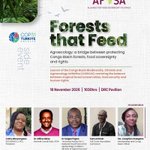
𝐅𝐨𝐫𝐞𝐬𝐭𝐬 𝐓𝐡𝐚𝐭 𝐅𝐞𝐞𝐝 | 𝐀𝐠𝐫𝐨𝐞𝐜𝐨𝐥𝐨𝐠𝐲, 𝐂𝐨𝐧𝐬𝐞𝐫𝐯𝐚𝐭𝐢𝐨𝐧 𝐚𝐧𝐝 𝐅𝐨𝐨𝐝 𝐒𝐨𝐯𝐞𝐫𝐞𝐢𝐠𝐧𝐭𝐲
At #COP31 in Antalya, Türkiye, the Alliance for Food Sovereignty in Africa (AFSA) hosted a side event titled “Forests That Feed,” exploring how agroecology can bridge tropical forest conservation, food sovereignty and human rights. The event brought together experts and advocates from across the Congo Basin, including AFSA General Coordinator Dr. Million Belay, to discuss how protecting forests and securing the livelihoods and rights of local communities can go hand in hand.
A key highlight of the event was the launch of the 𝐂𝐨𝐧𝐠𝐨 𝐁𝐚𝐬𝐢𝐧 𝐁𝐢𝐨𝐝𝐢𝐯𝐞𝐫𝐬𝐢𝐭𝐲, 𝐂𝐥𝐢𝐦𝐚𝐭𝐞 𝐚𝐧𝐝 𝐀𝐠𝐫𝐨𝐞𝐜𝐨𝐥𝐨𝐠𝐲 𝐈𝐧𝐢𝐭𝐢𝐚𝐭𝐢𝐯𝐞 (𝐂𝐎𝐁𝐂𝐀𝐈), which seeks to restore the balance between tropical forest conservation, food security and human rights. The discussions reinforced the importance of placing communities, their knowledge and agroecological practices at the heart of efforts to protect the Congo Basin's forests while building resilient and sustainable food systems.
#COP31 #Agroecology #CongoBasin #FoodSovereignty #Biodiversity #ClimateJustice #Agroecology4Climate

AFSA retweeted

Today, at a mid-COP31 press conference organised by Climate Action Network International, Baboucarr Nyang, Regional Coordinator for CAN Africa, highlighted where adaptation stands for Africa: progress on paper, but not yet for Africa.
He noted that the draft decision on the climate finance work programme now includes:
🔹 A proposed pathway to at least triple adaptation finance by 2035, led by developed countries
🔹 Work on an agreed baseline and counting rules, with a decision targeted for 2027
🔹 A call to raise adaptation finance from 2026 and triple outflows from the multilateral climate funds
But the text is still fully bracketed, and Africa is not mentioned once.
Baboucarr called for:
1️⃣ Recognition of Africa's special needs and circumstances
2️⃣ A binding, time-bound tripling pathway that isn't diluted into the broader finance goal
3️⃣ A baseline that counts only new public, grant-equivalent money
4️⃣ Grants, not debt, for adaptation and loss and damage
5️⃣ Finance that moves countries from adaptation plans to real delivery on the ground
"Africa is already adapting. It needs finance it can actually access, not promises."
#AdaptationFinance #ClimateJustice #Africa #COP31 #CANAfrica
AFSA retweeted

🌍✨ TOGO DAY – COP31 : Hommage et cap sur l’avenir !
Découvrez les temps forts de cette journée mémorable et les perspectives de JVE dans notre article complet 👇 🔗 lnkd.in/p/eM3ySiNi
@turkiyecop31 @Afsafrica @ClimateJCaravan @WWF_Africa @Oxfam @OxfaminAfrica


𝐓𝐡𝐞𝐲 𝐖𝐞𝐫𝐞 𝐓𝐨𝐥𝐝 𝐓𝐡𝐞𝐢𝐫 𝐎𝐰𝐧 𝐒𝐞𝐞𝐝𝐬 𝐀𝐫𝐞 𝐈𝐥𝐥𝐞𝐠𝐚𝐥. 𝐊𝐞𝐧𝐲𝐚𝐧 𝐅𝐚𝐫𝐦𝐞𝐫𝐬 𝐓𝐨𝐨𝐤 𝐭𝐡𝐞 𝐋𝐚𝐰 𝐭𝐨 𝐂𝐨𝐮𝐫𝐭
Who should control the seeds farmers depend on to grow food? In this week’s episode of The Battle for African Agriculture Podcast, Dr. Million Belay speaks with Daniel Wanjama, founder and Coordinator of Seed Savers Network, Kenya, about the struggle over farmers’ seed rights in Kenya.
Daniel explains how his own thinking changed while working inside the Ministry of Agriculture, where small scale farmers were being introduced to packages of hybrid seed, synthetic fertilizer and pesticides. He later discovered that farmers could not simply package and sell many of the seeds they had conserved themselves because unregistered and uncertified seeds were restricted from formal markets. Yet farmer managed seed systems still provide the majority of seeds used by farming communities across Africa, and those seeds carry diversity, culture, local adaptation and resilience.
When farmers felt their rights were not being recognized through the lawmaking process, fifteen farmers from across Kenya took parts of the country’s seed law to court. The High Court later declared several provisions unconstitutional. Daniel also shares how community seed banks are helping farmers conserve, exchange and access locally adapted varieties, including in places affected by droughts and floods.
His message is clear: there can be no food sovereignty without seed sovereignty.
🎧 Listen to the full episode of The Battle for African Agriculture Podcast on:
YouTube: youtube.com/watch?v=UPYf48Yx…
Spotify:open.spotify.com/episode/745…
Apple Podcasts:podcasts.apple.com/us/podcas…
Amazon Music:music.amazon.com/podcasts/f3…
#BattleForAfricanAgriculture #SeedSovereignty #FoodSovereignty #FMSS #FarmersRights #Agroecology #AfricanAgriculture #Kenya

AFSA retweeted

Kati Boyangao présidente de la Plateforme congolaise de la société civile pour l’environnement insiste sur un point : nous avons besoin de davantage de financements et devons promouvoir l’agroécologie.
#COP31Türkiye #Agroecology4climate @Afsafrica
AFSA retweeted
🌱Agroecology as a pathway to climate resilience, healthier food systems and food sovereignty in Africa.
#COP31 continues in Antalya - Türkiye 🇹🇷
Moesi Mmakwena, Coordinator of SCOPE Botswana and Founder and CEO of Viva Organica, outlines her priorities as a member of the @Afsafrica delegation.
She makes a clear case for empowering African farmers as the key to securing food sovereignty and food security.
#Agroecology4Climate #COP32 #ClimateFinance #FoodSovereignty
🎥 𝐂𝐎𝐏𝟑𝟏 𝐃𝐚𝐢𝐥𝐲 𝐁𝐫𝐢𝐞𝐟𝐢𝐧𝐠 | 𝐀𝐧𝐭𝐚𝐥𝐲𝐚, 𝐓𝐮̈𝐫𝐤𝐢𝐲𝐞 🇹🇷
Agroecology offers a pathway to climate resilience, healthier food systems and food sovereignty in Africa.
In this update from #COP31, Moesi Mmakwena, Coordinator of SCOPE Botswana and Founder and CEO of Viva Organica, shares her priorities as part of the AFSA delegation. She highlights the importance of advancing agroecology through sustainable farming practices that support nutritious food production, ecological health and economic viability. As African civil society organisations push for a collective position on agriculture and food systems, she emphasises the need to strengthen climate adaptation, mitigation and resilience while protecting indigenous seeds, traditional soil management practices and local food systems. Her message underscores the importance of empowering African farmers to secure their food sovereignty and food security.
#COP31 #Agroecology4Climate #FoodSovereignty #ClimateAdaptation #ClimateResilienceClimateFinance