

building consensus as a service @zellular_xyz, prev: @muon_net, @brightidproject
Joined April 2018
- Tweets1.1K
- Following261
- Followers477
- Likes4K






Abram Symons retweeted

Giveth - 10 years - WOW.
Truly an incredible milestone. We've done so much and had so much fun along the way!
I'm so proud of our work. We've raised millions of dollars for nonprofits, and impacted countless lives around the globe, including countries that are normally out of reach for traditional financial rails.
For the last 10 years Giveth has been on a mission to build something better than governments, and the mission has taken us around the world and back, with dozens of start-ups and countless of collaborators.
It's been a long hard battle, we've almost shut down in every bear market & yet somehow the generosity of the community has kept us alive.
There was one point in 2019 where Giveth was just me & Amin, and then 4 years later, we grew into ~75 people working on 7 or 8 different projects all exploring how to make public goods profitable.
Throughout this decade we've completely redesigned the Giveth platform 6 times!
We were working on bonding curves in 2018, we ran the first Ethereum scaling conference, we pushed for open source block explorers & we even ran Burning Man camps.
But our journey is not complete... no where near it.
I am still convinced that we will one day find a model that can make nonprofits profitable. Nonprofits create value, and Giveth's primary goal has always been to produce a novel economic system that can appreciate the value that nonprofits produce.
It's not easy, and we don't know where this road will take us, but the journey continues.
Right now we are focused on making crypto safe to use for normal people. We rebuilt the Giveth platform to have a much safer experience (thanks to Turnkey) and our work with TheDAO Security Fund will hopefully extend a safer crypto experience to the entire Ethereum community.
Because no matter what cool model we find for appreciating the value that nonprofits produce... It won't work if normal people can use blockchain tech safely.
I couldn't be more proud of the work we've done over the last 10 years & of all the people I've worked with.
It's been quite the journey, one decade down, many more to go.


Abram Symons retweeted

40 million TPS on @SuiNetwork? 🔥
I was in Singapore when that number was announced at Basecamp.
Now @CertiK's verification report is out, and one detail caught my attention:
15.24 billion offchain transitions.
Just 1,920 onchain lifecycle transactions.
I dug into the numbers 🧵


Abram Symons retweeted

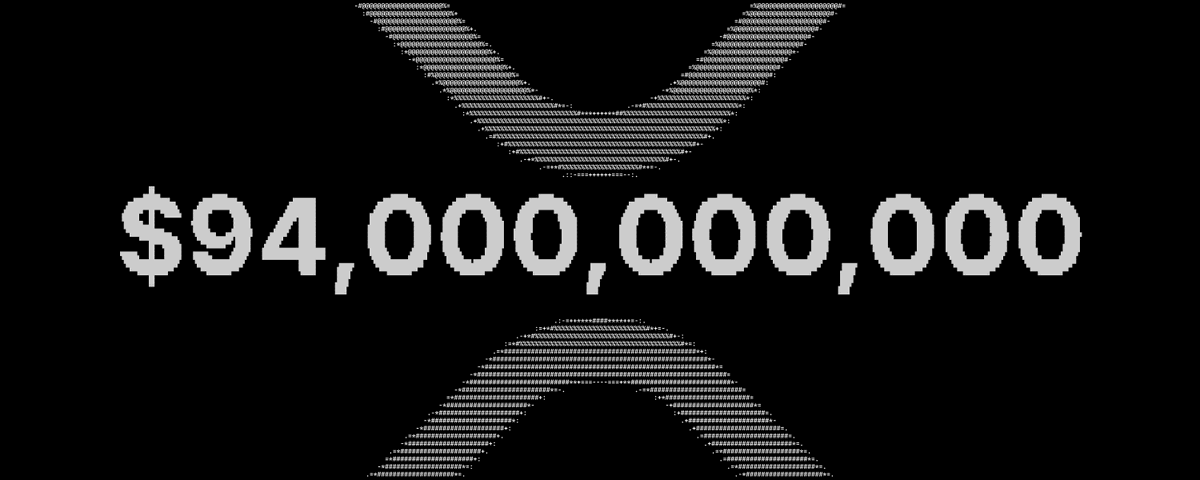
Our AI found a bug that let anyone mint infinite XRP, with $94B at risk. It had been hiding in one of the most audited codebases in crypto for nearly a decade, and earned us the maximum $250K bounty.
Here's how it went unnoticed, and how we found it.
Abram Symons retweeted

$250,000 - it's what a security researcher just got paid for finding a Critical vulnerability in XRP. While it probably should've been more, key learnings are:
- AI autonomously found it, human just triaged
- Two Low severity bugs chained into a Crit
- Large C++ codebase (niche)
A fix in one project is a map to the next. The bug shapes one team has already patched are often still live in other projects built the same way.
Wrote up how I hunt them — and why I challenge every "it's safe" until a PoC proves it:
abramsymons.github.io/patter…
1
109
Abram Symons retweeted

Run offchain.
Verify onchain.
Define your rules.
Enforce with stake.
AI, apps, agents, oracles, all get cryptoeconomic guarantees.
Programmable trust at cloud scale.
This is EigenCloud.
Build Anything. Verify Everything.
As written by @cantinaxyz, link in thread 🧵

ALT Secure by Design: EigenCloud
Finally, EigenCloud BLS signatures can be verified on L2s.

For trust to scale, it must be portable.
With EigenCloud’s Multi-Chain Verification, Ethereum’s trust guarantees extend across its full ecosystem.
Today, we launch our first integration on @base, bringing Ethereum-aligned security to one of crypto’s fastest-growing ecosystems. 🟦
AVSs can now verify across L2s, sync stake + operators daily, and deploy modular apps without rewriting infra.
The verifiable cloud is going multi-chain. And this is just the beginning. ☁️
Abram Symons retweeted

Great comments on @privy_io
Would like to know your opinion about using @privy_io
@griffgreen
@auryn_macmillan
@owocki
@superphiz
@dabit3

Reading about Privy’s TEE-based “non-custodial” wallet infra got me thinking:
If @privy_io backend were fully compromised, could an attacker drain user funds by triggering enclave-based signing?
Genuinely curious — here’s a closer look 🧵
🔗 docs.privy.io/security/walle…

Reading about Privy’s TEE-based “non-custodial” wallet infra got me thinking:
If @privy_io backend were fully compromised, could an attacker drain user funds by triggering enclave-based signing?
Genuinely curious — here’s a closer look 🧵
🔗 docs.privy.io/security/walle…
6/
This isn’t to downplay the benefits:
Using TEEs and splitting keys clearly improves security over traditional custodians.
But from a threat model perspective — what actually prevents a Privy compromise from enabling mass wallet access?
1
1
116
7/
Maybe I’m missing something — open to correction.
Just trying to understand the line between “secure delegation” and true user custody.
Curious how @privy_io thinks about this, especially in a full system compromise.
(Attaching ChatGPT’s take 👇)

1
113
Abram Symons retweeted

Major update to Python EigenLayer SDK!
Now aligned with the latest Go SDK , featuring the incredible Squaring AVS.
Step-by-step integration made simple.
Start building with EigenLayer like never before :) ⚡️

Abram Symons retweeted

Programmable intelligence requires
Programmable institutions.
Human intelligence required the right
human institutions to flourish: money, finance, property rights, civil and criminal law, contracts and companies, democracy.
Intelligence will not flourish without the right institutions. This explains why simply applying free markets to developing countries gives you nothing without the right institutions. Under a command-and-control surveillance state, intelligence does not flourish.
Instead of building the right programmable institutions, trying to chain AGI via surveillance state is not the right outcome.
Building the right programmable institutions to create the right checks and balances for AGI is the right approach. Crypto provides a framework for building programmable institutions: we started with money, then finance (DeFi). For instance, a smart contract is a program that can own property: the Eigenlayer program owns 15B$ in property that is assigned purely based on the conditions of the program.
Right now, crypto doesn’t have the programmability to build agents onchain. We are fixing this and enabling Ai agents to own property, take liability, create companies and bind themselves to commitments that are enforced automatically.
Open-ended programmable intelligence +
Self-enforcing programmable institutions
= Human-AI symbiosis

I worry that so much discussion of AI risks and alignment overlooks the rather large elephant in the room: creativity and open-endedness. Policy makers and gatekeepers need to understand two competing forces that no one seems to talk about: (1) there is a massive economic incentive for frontier labs to boost the creativity of their models, and (2) the more you try to control and constrain the behavior of a model (or even a person!), the less creative it will be. The tension between these competing forces favors #1 in the end because creativity has such vast economic potential. That means that methods to control and constrain models (e.g. by aligning them) face powerful looming headwinds.
Because creativity will eventually win out on economic grounds alone (and indeed we have enormous benefits to gain from creative AI), we should be looking less at methods of "mind control" to browbeat models into thinking thoughts we want them to think (because we will inevitably abandon those), and more at how institutional forces have been employed to keep humans aligned in behavior even though we are free to think as wildly as we want. It's the institutional checks and balances - the laws, the incentive structures of society, competing branches of government and governance, the leveraging of some people to provide oversight over others in different situations, the need for buy-in, approval, or collaboration to get things done - that provide the real guardrails against disaster among humans. Obviously the system is imperfect, but it's a precedent for how to allow sufficient creativity to pursue radical innovation but still have enough order for civilization to persist or even thrive.
If we don't take this precedent seriously the guardrails of alignment will increasingly (and quietly) fall off as the economic fruits of unchained imagination become clearer and clearer.
Abram Symons retweeted

The value proposition of crypto (verifiability) should not be limited to a single network or ecosystem.
It should seamlessly extend into the real world, and integrate with other networks and ecosystems.
• AI - verifiable inference on chain
• Legal - verifiable contract execution and dispute resolution
• zkTLS - verifiable web2 data on chain
• Oracles - verifiable real world data on chain
• Coprocessors - large compute workloads verified and brought on chain
• Networking - VPNs, CDNs, and mesh networks with verifiable routing
The entire internet: on-chain. And composable with any chain or network.
EigenCloud @eigencloud is a bet that the value proposition of crypto will continue expanding, extending, and integrating verifiability into the real world.