

Sharing the latest developments in the world of Tech,Web3 & AI | Content Creator | I help people master AI,web3, Coding, Digital marketing. | Dm for Collab
Joined May 2022
- Tweets35.1K
- Following1.1K
- Followers65K
- Likes188K




Pinned Tweet
Another Tesla Roadster discussion taking over my feed. Another video idea in my head.
I like the idea of starting with a simple description instead of planning every editing detail upfront.
The CapCut plugin is coming soon to ChatGPT, bringing a conversational way to explore video creation with CapCut Web.
Early Access is currently available through ChatGPT desktop (PC only).
Mobile and web support is expected in mid-November.
#CapCutDidThat #CapCutWeb #ChatGPT #CapCutWorld
Adarsh Chetan retweeted
Build Your Own AI Agent with Claude in Just 10 Minutes!
No coding. No complex setup. Just follow these 10 steps:
1Open Claude
2Write a clear prompt
3Add useful skills
4Connect external tools
5Define your agent's goal
6Configure settings
7Test your agent
8Launch it
9Improve continuously
10Start automating tasks!
💡 The real power of AI isn't just generating answers.
It's building agents that can perform useful tasks with the right tools and instructions.
Do Follow for more such amazing stuff ❤️
Adarsh Chetan retweeted
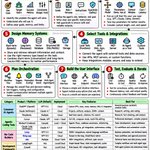
How to Build an AI Agent: A Step-by-Step Guide
AI Agents are transforming how we automate tasks, make decisions, and build intelligent applications.
But building an AI agent requires more than just connecting an LLM to a prompt.
Here are 8 essential steps to build an AI Agent:
1️⃣ Define the Purpose & Scope
2️⃣ Design the System Prompt
3️⃣ Choose the Right LLM
4️⃣ Integrate Tools & APIs
5️⃣ Build Memory Systems
6️⃣ Plan Agent Orchestration
7️⃣ Develop the User Interface
8️⃣ Test, Evaluate & Improve
🛠️ Popular AI Agent Tools & Frameworks:
•LangGraph
•CrewAI
•n8n
•LlamaIndex
•Claude Code
•Cursor
•Windsurf
•Lindy
💡 Remember: A reliable AI agent needs clear instructions, the right tools, effective memory, proper orchestration, and continuous evaluation.
Don't just experiment with AI agents.
Start building real-world applications!
📌 Save this roadmap for your next AI project.
Do Follow for more such amazing stuff ❤️
Adarsh Chetan retweeted
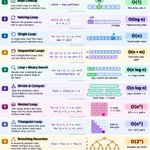
10 Must-Know Time Complexity Patterns Every Developer Should Understand!
Ever wondered how to quickly identify the time complexity of an algorithm?
Understanding Big-O notation is one of the most important skills in Data Structures & Algorithms (DSA).
Instead of memorizing complexity formulas, learn to recognize common coding patterns.
Here are 10 essential patterns every developer should know:
1️⃣ Hash Lookup — O(1)
Accessing elements through a hash map or hash set typically takes constant time.
2️⃣ Halving Loop — O(log n)
When the input size is divided by 2 in every iteration, the complexity is logarithmic.
3️⃣ Single Loop — O(n)
A loop that visits every element once takes linear time.
4️⃣ Sequential Loops — O(n + m)
Two independent loops contribute their individual complexities.
5️⃣ Loop + Binary Search — O(n log n)
Running binary search inside a loop results in O(n log n).
6️⃣ Divide & Conquer — O(n log n)
Splitting a problem into smaller parts and processing each level efficiently often produces this complexity.
7️⃣ Nested Loop — O(n²)
When an inner loop runs for every iteration of an outer loop, the complexity becomes quadratic.
8️⃣ Triangular Loop — O(n²)
A nested loop with a gradually increasing inner range performs approximately n(n−1)/2 operations.
9️⃣ Branching Recursion — O(2ⁿ)
When each recursive call generates multiple additional calls, the execution tree can grow exponentially.
🔟 Permutations — O(n!)
Generating every possible arrangement of n elements results in factorial growth.
💡 Why should you learn these patterns?
Understanding time complexity helps you:
✅ Write efficient and scalable code.
✅ Identify performance bottlenecks.
✅ Choose better algorithms and data structures.
✅ Prepare for DSA and technical interviews.
✅ Understand how algorithms behave as input grows.
Remember: Don't just memorize Big-O formulas. Understand the pattern behind the code.
Do Follow for more such amazing stuff ❤️
Adarsh Chetan retweeted
DSA Patterns Every Developer Should Master in 2026!
Struggling to solve Data Structures & Algorithms problems?
The secret isn't solving thousands of random problems. It's learning to recognize the right pattern.
Most coding interview questions can be approached using a set of reusable problem-solving techniques.
Here are 15 essential DSA patterns worth mastering:
1️⃣ Sliding Window – Solve subarray and substring problems efficiently.
2️⃣ Two Pointers – Find pairs, remove duplicates, and optimize array traversal.
3️⃣ Binary Search – Search efficiently in sorted arrays and search spaces.
4️⃣ Prefix Sum – Handle range sum queries and cumulative calculations.
5️⃣ Hashing – Perform fast lookups, frequency counting, and grouping.
6️⃣ Recursion & Backtracking – Explore combinations, subsets, and permutations.
7️⃣ Greedy Algorithm – Make locally optimal choices to reach a global solution.
8️⃣ Stack & Queue – Solve ordering, balancing, and next-greater-element problems.
9️⃣ Linked List Techniques – Use fast and slow pointers for cycle detection and middle-node problems.
🔟 Heap / Priority Queue – Find top K elements and manage priority-based operations.
1️⃣1️⃣ Trees & Traversals – Master DFS, BFS, BST, and tree-based problems.
1️⃣2️⃣ Dynamic Programming – Break complex problems into overlapping subproblems.
1️⃣3️⃣ Graph Algorithms - Understand BFS, DFS, shortest paths, and topological sorting.
1️⃣4️⃣ Kadane's Algorithm – Find the maximum sum contiguous subarray efficiently.
1️⃣5️⃣ Bit Manipulation - Use XOR, AND, OR, and shifts for optimized solutions.
💡How should you prepare?
✅ Understand the concept behind each pattern.
✅ Solve 5–10 problems for every pattern.
✅ Start with easy problems and gradually move to medium and hard.
Do Follow for more such amazing stuff ❤️
Adarsh Chetan retweeted

Claude Code's team said it this week: "If a change can modify the check that judges it, the check is broken."
Same with tests. If the agent that wrote your code also wrote its tests, nothing independent is checking it.
TestSprite 4.0 is that independent check. It's live today.
We build TestSprite with Claude Code and Codex too, so we had the same problem. Before this launch, 4.0 caught 16 real issues in our own new features, like a search telling a team with 11 lists it had none.
How it works: tell it what your app should do, in plain words or with a PRD or a ticket. It tests every change in real browsers, on every pull request. It didn't write your code, and what a test expects changes only when you approve it. A failing check can't be quietly rewritten to pass.
Lauren Tan's talk this month made the same case: review proof, not code. That's what every failure comes back with: a recording, the failing step, expected vs actual.
Free to start, and the first month of Starter is on us. We're live on Product Hunt today, and I'd love your feedback 🙏
The era of fake unlimited is officially dead, thanks to Dreamina.
This is a total game-changer. Dive into the details.👇
The Dreamina REAL unlimited top models deal has dropped: 30 days of Seedance 2.5 and 60 days of GPT Image 2.5.
Every eligible generation costs 0 credits when you have a qualifying plan.
#DreaminaPartner

That’s a wrap for this one
teapaw.org/adarshchetan/status/21…

The era of fake unlimited is officially dead, thanks to Dreamina.
This is a total game-changer. Dive into the details.👇
The Dreamina REAL unlimited top models deal has dropped: 30 days of Seedance 2.5 and 60 days of GPT Image 2.5.
Every eligible generation costs 0 credits when you have a qualifying plan.
#DreaminaPartner
70
Is the Unlimited plan from Dreamina truly unlimited?"
Check it out for yourself 👇
I was skeptical too. So I put it to the test.
I churned out multiple Seedance 2.5 videos consecutively. Various shots, fresh angles, wild ideas.
Each eligible generation took exactly 0 credits.
The speed was impressive. The quality remained top-tier.
Zero rationing. Zero hesitation. Just pure creation.
1
1
50
Me before going Unlimited: "I better save my credits..." 🥲
Claim your Dreamina Unlimited offer and let your creativity run wild!
Me after jumping on Dreamina Unlimited: "ONE MORE TAKE. AND ANOTHER. AND ANOTHER." 😂
Fresh angles, crazy ideas, limitless testing. Why stop at a single version when you can push the boundaries?
#DreaminaCanvas

1
34
Adarsh Chetan retweeted
The future of ad creation isn't just about generating more videos.
It's about building systems that understand a brand's identity, maintain creative consistency, and deliver ready to-use ads at scale.
400 ads a day with zero editors?
That's an interesting shift.

It's Q4.
You hired 3 editors, then 4, then 10. And when you need volume, they still can't keep up.
That's why we built Nynao.
Up to 400 a day with no editors.
Apply for access : nynao.com
AI infrastructure is becoming increasingly important, but the winners won't necessarily be the platforms with the most complicated architecture.
They'll be the ones that make it usable.

𝐈𝐧𝐭𝐫𝐨𝐝𝐮𝐜𝐢𝐧𝐠 𝐌𝐲𝐂𝐥𝐚𝐰 𝟑.𝟎
Raised AI teammates with tools built in — not a blank agent you babysit.
•𝐀𝐠𝐞𝐧𝐭 𝐰𝐢𝐭𝐡 𝐚𝐧𝐲 𝐡𝐚𝐫𝐧𝐞𝐬𝐬 — Claude Code · Codex · Hermes · Pi · OpenClaw — shared context.
• 𝟓,𝟎𝟎𝟎+ 𝐥𝐢𝐯𝐞 𝐝𝐚𝐭𝐚 𝐬𝐨𝐮𝐫𝐜𝐞𝐬— Not a scavenger hunt for APIs.
• 𝐂𝐥𝐨𝐮𝐝 𝐬𝐮𝐩𝐞𝐫 𝐜𝐨𝐦𝐩𝐮𝐭𝐞𝐫 — up to 64 vCPU · 128GB RAM · 1.28T storage
• 𝐀𝐧𝐲 𝐜𝐡𝐚𝐧𝐧𝐞𝐥— Browser, Slack, Teams, Telegram, WhatsApp
Ready in ~30 seconds → myclaw.ai/new-launch
4
614
The future of ad creation isn't just about generating more videos.
It's about building systems that understand a brand's identity, maintain creative consistency, and deliver ready to-use ads at scale.
400 ads a day with zero editors?
That's an interesting shift.
It's Q4.
You hired 3 editors, then 4, then 10. And when you need volume, they still can't keep up.
That's why we built Nynao.
Up to 400 a day with no editors.
Apply for access : nynao.com
Adarsh Chetan retweeted
20 LLM Formulas Every AI Engineer Should Know in 2026
Ever wondered what happens behind the scenes when you send a prompt to ChatGPT?
Large Language Models rely on mathematical operations to understand text, process context, learn patterns, and generate responses.
Here are 20 important formulas that explain how LLMs work:
🔹 1. Text Representation
1️⃣ Tokenization – Converts text into smaller units called tokens.
2️⃣ Token Embeddings – Converts tokens into numerical vectors that capture their representations.
3️⃣ Positional Encoding – Adds position information so the model understands token order.
🔹 2. Attention & Transformer Architecture
4️⃣ Query, Key, Value (Q, K, V) – Creates three representations used to calculate attention.
5️⃣ Scaled Dot-Product Attention – Determines how much attention each token should pay to other tokens.
6️⃣ Causal Masking – Prevents a token from accessing future tokens during autoregressive generation.
7️⃣ Multi-Head Attention – Runs multiple attention mechanisms in parallel to capture different relationships.
8️⃣ Feed-Forward Network – Applies nonlinear transformations to token representations.
9️⃣ Residual Connection – Adds the original input back to the transformed output.
🔟 Layer Normalization – Normalizes activations to improve training stability.
🔹 3. Prediction & Model Evaluation
1️⃣1️⃣ Softmax – Converts model logits into probabilities.
1️⃣2️⃣ Next-Token Prediction – Estimates the probability of the next token based on previous context.
1️⃣3️⃣ Cross-Entropy Loss – Measures the difference between predicted probabilities and the correct target.
1️⃣4️⃣ Perplexity – Evaluates how uncertain a language model is when predicting tokens.
🔹 4. Training & Optimization
1️⃣5️⃣ Gradient Descent – Updates model parameters to minimize the loss function.
1️⃣6️⃣ Weight Decay (L2 Regularization) – Penalizes large weights to help reduce overfitting.
🔹 5. Text Generation & Inference
1️⃣7️⃣ Temperature Sampling – Controls the randomness of token selection.
1️⃣8️⃣ Top-k Sampling – Restricts token selection to the k most probable candidates.
1️⃣9️⃣ Top-p (Nucleus) Sampling – Selects from the smallest group of tokens whose cumulative probability reaches a chosen threshold.
2️⃣0️⃣ KV Cache – Stores previously computed keys and values to avoid recomputing them during generation.
Why are these formulas important?
Understanding them helps you:
•Understand Transformer architecture.
•Build a foundation in Generative AI.
•Understand attention and token prediction.
•Learn how LLMs are trained and optimized.
•Explore efficient LLM inference techniques.
You don't need to memorize all 20 equations. Focus on understanding the intuition, mathematics, and practical applications behind them.
Do Follow for more such amazing stuff ❤️
Built in India 🇮🇳 Ready for the world. 🌍
How do we turn homegrown AI into globally competitive solutions? Discover the answers at “India AI Story: Building from India, Scaling for the World” on the Trends Stage at Bengaluru Tech Summit 2026.
Under the theme AI & Beyond, @blrtechsummit will connect founders, investors, researchers and policymakers across 120+ sessions, with 1,800+ exhibitors and participation expected from 75+ countries.
If you're building, funding or scaling what comes next, this is where conversations turn into opportunity.
📍 17–19 November | BIEC, Bengaluru
Register:- bit.ly/4z0t8dS
#BTS2026 #IndiaAI #DeepTech #StartupEcosystem

2
7
3,547