NASA Astronaut. Photographer. Scientist. Inventor.
Joined June 2011
- Tweets1.2K
- Following525
- Followers186K
- Likes5.5K


Pinned Tweet
I finally have all 1.2 million raw image files from my latest mission to ISS! Here is a sample of one of my favorite Milky Way photos, taken from the Cupola with Nikon Z9, Arri Zeiss 15mm lens, T1.8 with custom sidereal drive that cancelled out star motion relative to our orbit.

Charged water droplets orbiting my teflon knitting needle! In microgravity a semi-stable orbital motion is induced from the electrostatic forces, shown here in a top-down view.
Earthly city lights through a fisheye lens time exposure, like a great golden wave across the planet. The white streak bottom-right is a radiation artifact caused by cosmic rays zinging my camera sensors!

Starship flight 6 launch plume, seen from a well timed orbital pass aboard ISS. I took this photo almost 2 years ago while watching for the returning booster, and now astronauts can be on the lookout for returning ships!


Dubai, UAE in 2025, 2012, and 2003. Over 22 years the lighting changed from sodium/mercury vapor to multi-colored LED as the city grew. Construction of the Palm Islands was early in 2003, but now a distinct landmark. From orbit we observe changes like this worldwide!


Auroras pulsing intensely through this orbital timelapse. Natural light shows! If you look closely, wisps of the higher altitude red auroras briefly appear within the sea of green before fading away, like sprites from a thunderstorm. Watching them never gets old!
The lights of Dallas, Austin and San Antonio surround dark rural patches in central Texas where millions of bats fly free at dusk! This was my southeast view from ISS while @BabakTafreshi observed on Earth at Frio caves, for our NatGeo project From Above & Under.

Don Pettit retweeted

NASA astronauts Tracy Caldwell Dyson and @astro_Pettit test an analog mockup of Astrolab's Crewed Lunar Vehicle, or CLV-1.
Astronauts are crucial to testing the human factors of our rover designs. Incorporating feedback from people with experience in space suits in reduced gravity is invaluable to our engineering teams.


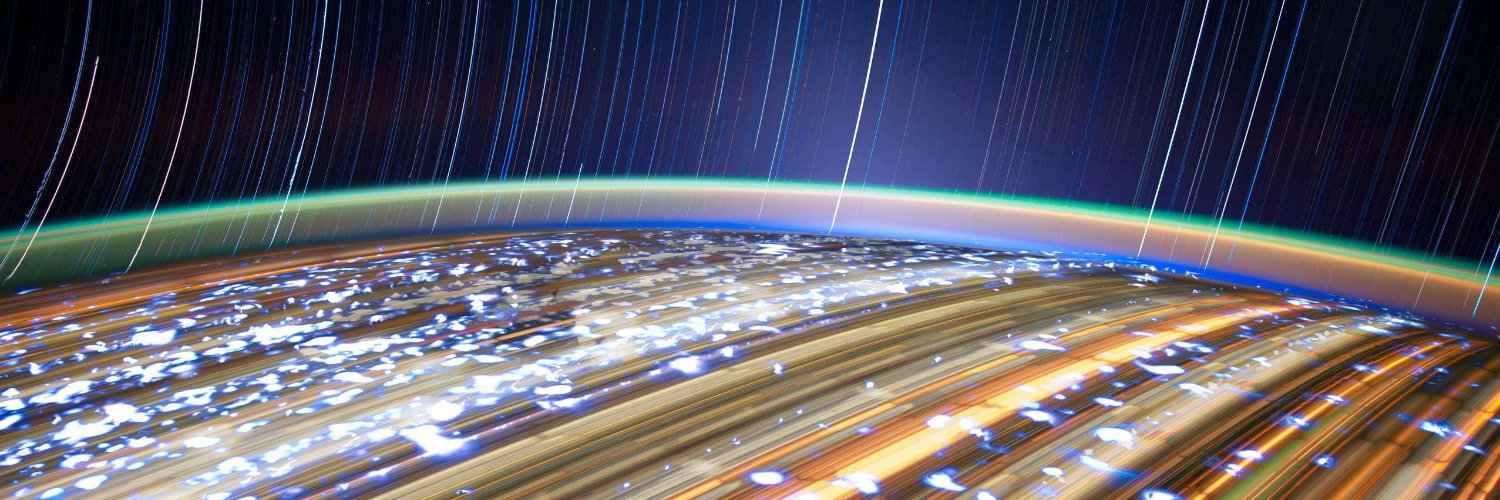
One of my favorite Milky Way photos from ISS, with the multicolored lights of Southeast Asia streaking across the exposure from orbital velocity, while distant stars remain fixed by my star tracker. The long exposure intensifies the atmospheric airglow into a thick red band!

Timelapse of the rising Moon over the limb of Earth during the March 2025 lunar eclipse. Crew in orbit is lucky to see this a few times per year!
Nadir views of earthly auroras through a fisheye lens, distorting the planet into a green sphere. The Soyuz that brought my MS-26 crew and I is in the foreground. Fisheyes are less popular camera lenses to use in orbit but can make some way cool photos!

Nighttime lights of Toronto, Canada are a patchwork of white and warm LEDs in a classic North American grid design. To the southwest, the airport blacks out a large area and an approaching cloud blurs the edge. The Great Lakes coastline is ocean-like in appearance!

Dragon D1, the first SpaceX cargo vehicle, photographed on approach to the ISS as we orbited great thunderstorms. This spacecraft required manual berthing with the robotic arm as it could not autonomously dock! The design has come a long way in 14 years!

Milky Way over Madagascar, a National Geographic collaboration with @BabakTafreshi to photograph the same subjects from Earth and space. Madagascar was a prime setting for its remoteness and natural beauty.

Moonlight reflected off the Amazon river. At the proper angles in our orbit, we aboard @Space_Station can see brief silvery flashes atop water surfaces, illuminating even the darkest places on Earth.

Orbital sunset through the window of SpaceX Dragon. With the oval frame in view it almost looks like a dragon's eye!

Orbiting the multicolored lights of Southeast Asia. Here green lights used on fishing boats are in greater quantities than anywhere else on the planet, dense enough to appear as bright green streaks in long exposure photography.

Riverside lights of the Nile beneath a starry sky. I took this photo in 2012 when the majority of the lights were still sodium vapor, creating a thin golden glow that stretched from Alexandria to Aswan. One of the most striking nighttime views from orbit!
