

We work to safeguard humanity and Earth's ecosystem from nuclear risks and interconnected security threats, for generations to come.
London, England
Joined July 2009
- Tweets6.7K
- Following1.3K
- Followers4.9K
- Likes1.4K






🎙️ Our Policy Fellows @DeclanP95 and Chiara Fargnoli are featured in the Adventures in Nuclear Risk Reduction Oral History Project, from #StanleyCenter and BASIC!
Listen to their interviews with senior experts in nuclear diplomacy and policy at nuclearadventures.org


📢 Now live: the Adventures in Nuclear Risk Reduction Oral History Project from #StanleyCenter and BASIC.
Human stories from the people who shaped nuclear risk reduction, passing their knowledge to the next generation.
🎙️ Listen: nuclearadventures.org

1
101
🌐 Want to learn from experts at the forefront of nuclear policy and diplomacy?
Masterclasses from @WheelerICCS, @kjolvegeland, and Dr Michal Onderco are now free to watch, along with many more from the EVN Senior Expert Masterclass series.
Watch here: basicint.org/expert-mastercl…

📍On 9 Oct we co-hosted a virtual roundtable with @IPCSNewDelhi on "Drivers of Escalation and Restraint in India-Pakistan crises," drawing on our latest report.
Thank you to IPCS and to all our speakers and participants.
Read the full report here: basicint.org/report-addressi…


IPCS co-hosted a virtual roundtable on ‘Drivers of Escalation and Restraint in India-Pakistan Crises’ with @BASIC_int on 9 October.
The discussion explored how intent and perception shape crisis dynamics and decision-making.

123
🌐 Read our latest Non-Proliferation and Disarmament Brief, “Risk Reduction in Outer Space: A Proposal for Confidence-Building Measures”, by guest contributor @TheSabaShahh. (1/3)

1
1
109
(2/3) Space-based weapons programmes are developing faster than the treaties meant to govern them. Batool argues that uncertainty about these weapons is a bigger threat to stability than the fact that they exist.
1
38
(3/3) She proposes voluntary transparency measures in the near term, and binding limits wherever states can reach consensus.
Full brief below.👇
buff.ly/ckng1Tq

23
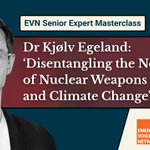
📢 Join us on Monday 9 November at 15:00 GMT for the next Emerging Voices Network (EVN) Senior Expert Masterclass, “Disentangling the Nexus of Nuclear Weapons and Climate Change”, with @kjolvegeland. (1/4)

(3/4) The Masterclass is open to EVN members only. Register via Zoom. 👇buff.ly/dnwybRs
1
61
(4/4) Not a member yet? EVN is currently recruiting! Apply to join. 👇 buff.ly/4dP4zF6

28
(3/4) The Masterclass is open to EVN members only. Register via Zoom. 👇
buff.ly/7GO9Pc7

37

(2/2) The analysis builds on BASIC’s report “Addressing Future Nuclear Crisis Scenarios in South Asia through a Responsibility-Based Approach”, which is based on two Track 2/1.5 crisis simulations involving Indian and Pakistani participants.
buff.ly/IWZQnJ0

As states expand their use of AI in military decision-making, is being “looped in” enough to ensure a human can exercise proper judgement and control?
Our new report by Policy Fellow Eva-Nour Repussard sets out what states need to get right. (1/3)

1
109
(2/3) Drawing on 32 interviews across 14 countries, the report finds there is no one-size-fits-all level of human involvement. Oversight should reflect the operational context, the level of uncertainty, the consequences of error, and the time available to decide.
1
51
(3/3) Read “Governing Military AI: Designing Meaningful Human Control in AI-Enabled Decision-Making” and our policy recommendations at the link below.
📷 U.S. Army Reserve photo by Spc. William Kuang, via DVIDS.
basicint.org/report-governin…

1
35

(4/4) Want to write for the NPD Briefs? Send a title and short summary (200 words max) to Dr Manuel Almela at [email protected].
📷 Gokulsanjeevan, CC BY-SA 4.0, via Wikimedia Commons
Read the full brief 👇
basicint.org/reported-denied…

61