

We help Australians build wealth. Follow us for #ETF industry news, economic analysis, investor education and portfolio construction tips.
Sydney
Joined June 2009
- Tweets4.7K
- Following334
- Followers7.9K
- Likes998




Earlier this month, more than 1,000 women filled Melissa Browne’s Her Wealth Her Way conference.
On the Experts Shares Panel, @EquityMates Media host Jess Swindon offered a different view, from someone who started investing this year. Next to the professionals, she spoke about what getting started looked like for her.
Thanks to Mel and the team for having Betashares there.


A record 11.5 million Australians now invest outside superannuation and their primary home, 2.5 million more than in 2020.
Our Founder and CEO, Alex Vynokur (@vynokur), joined the @ASX's Rory Cunningham, @InvestmenTrends' Julian Cappe, study editor Tony Featherstone and SIAA CEO Maria Lykouras to discuss the @ASX Australian Investor Study 2026.
The study found a significant increase in the number of investors, including younger Australians and women. Among Australians planning to start investing, 39% are aged 18 to 29 and 61% are women - the first time women have clearly led the next wave of investors in the study’s history. ETFs are also playing a bigger role with 24% of investors now holding them, up from 20% in 2023.
Thank you to the @ASX for hosting and to our fellow panellists for sharing their perspectives.


When interest rates rise, the effects can show up in more than your mortgage or savings account. They can also shape how companies earn revenue, what it costs them to operate and how markets value their shares.
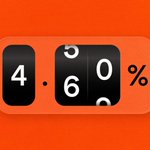
The Reserve Bank has raised the cash rate four times this year, most recently to 4.60% on 29 September, and has signalled it could go further if needed. Inflation remains above its 2–3% target: ABS (the Australian Bureau of Statistics) figures show headline inflation was 4.0% in the year to August, up from 3.5% in July, while trimmed mean inflation held at 3.6%.
betashares.com.au/insights/e…

Over the past week, concerns about whether AI spending can continue, and how it is being funded, led to falls in tech companies.
CoreWeave, a ‘neocloud’ company that rents out AI computing power, fell nearly 30% in a single trading day as yields on its 2031 bonds surged to more than 15%.
Closer to home, data centre operator Firmus withdrew what was set to be one of Australia’s largest share market listings.
betashares.com.au/insights/u…

Investing $200 a fortnight may not sound like the start of a wealth story. It’s $5,200 a year, or $52,000 over a decade. Stashed under a mattress, that’s exactly what you’d have at the end, and it would be worth less if you account for inflation.
However, if that money was invested in Australian shares with dividends reinvested, historical returns suggest it could become a good deal more.
Here’s what the numbers show, and what changes when return, risk and routine change.
betashares.com.au/insights/p…

Most of us are bargain hunters by nature. Whether it’s finding a vintage coffee table on Facebook Marketplace or waiting until Black Friday to buy those shoes you’ve wanted, we like feeling we’ve got a good deal.
betashares.com.au/insights/i…

Bitcoin and the broader crypto market pulled back over the past week after repeated attempts to move above US$87K failed. Bitcoin briefly fell below US$81K on 8 October before recovering to around US$83K by 10 October.
Rising oil prices, US Treasury yields and a stronger US dollar weighed on risk assets. This came even as weaker US employment data reduced expectations of a Federal Reserve rate rise, underscoring the market’s sensitivity to real yields and liquidity.
Over the seven days to 11 October 2026, Bitcoin and Ethereum fell by -2.28% and -7.13%, respectively. Bitcoin’s market capitalisation was US$1.66 trillion, and the global crypto market stood at US$2.8 trillion. Bitcoin’s market dominance was 59.5%.
betashares.com.au/insights/m…

The Australian ETF industry attracted almost $7 billion in net inflows in September, taking total assets to a record $388 billion. International equities led the way, while Australian bond ETFs drew record flows.
betashares.com.au/insights/e…

For the first time in years, equities have serious competition from bonds. The US 10-year Treasury yield is now around 5.25% p.a., a level not seen since before the GFC, and the Australian 10-year Government bond yield is even higher.
betashares.com.au/insights/b…

A big return can be very persuasive. Spot an investment that has gained 209% and it can be hard not to feel the pull to invest in it. However, a headline figure only tells you where an investment finished. It says nothing about how it got there, how much it lurched along the way, or whether it adds anything to what you already hold.
betashares.com.au/insights/s…

As portfolios grow over time, it’s easy to add new investments without stepping back to consider how they fit together.
Over time, even a well-built portfolio can become more complicated than intended. New investment ideas, changing goals and different market environments all play a part. The key is making sure every holding still has a clear role in line with your original investment strategy.
betashares.com.au/insights/e…

AI-related technology stocks held up in September, while a global bond sell-off and rate hikes from the Fed, ECB, Bank of Japan and RBA weighed on markets.
Our Chief Economist, @DavidBassanese considers the outlook for major asset classes.
betashares.com.au/insights/m…

Bitcoin and the broader crypto market rebounded strongly over the past fortnight, with Bitcoin recovering from around US$75K to briefly trade above US$87K on 23 September, its highest level since January.
betashares.com.au/insights/m…

Last week’s talks between the US and China delivered few major breakthroughs on core issues such as the Middle East, rare earth export controls and Taiwan. While an extended trade truce and a new AI safety channel may ease near-term tensions, unresolved issues around the former topics mentioned may cause further volatility for global markets and Australia’s ASX 200 as we head into the final quarter of the year.
betashares.com.au/insights/c…

The decision to invest more inside your super or outside is one almost every Australian investor will face at some point in their investing journey.
Superannuation offers generous tax benefits designed to help Australians build wealth over the long term for retirement. And it’s safe to say it’s been working pretty well so far: superannuation is forecast to hold $4.3 trillion worth of assets by 2031 which would make it the second largest retirement savings pool in the world.
That’s punching well above its weight for a nation that doesn’t even crack the top 50 by population or top 10 by GDP globally.
On the other hand, investments held outside super can complement your retirement savings by giving you another pool of money that can be accessed whenever needed, giving a lot more flexibility in case of a rainy day, while super is generally locked away until at least age 60.
So, where should those next hard-earned investment dollars go? The answer largely comes down to three things: tax, time and access.
betashares.com.au/insights/c…

Heidi Davison works as a commercial property lawyer, so property is part of her professional world. But when it comes to her own finances, she’s taken a different path.
She’s not saving for a house. Instead, Heidi is investing to build something she believes could be more valuable to her: the freedom to choose what comes next.
betashares.com.au/insights/b…

In June 1989, former Treasurer Paul Keating quipped “I guarantee if you walk into any pet shop in Australia, what the resident galah will be talking about is microeconomic policy.”
Today those galahs are likely talking about Australia’s productivity growth slowdown, which has dominated the economic discussion for many months.
Productivity measures how much the economy produces for each hour worked. When productivity rises, businesses can produce more without people necessarily working longer hours, supporting higher wages, economic growth and living standards. When productivity slows, those gains become harder to achieve.
@DavidBassanese explains.
betashares.com.au/insights/a…

Researching an ETF can start simply enough. You find one that looks interesting, read the fund page and look at what it owns.
Then the research expands; you read a market article, watch an expert explain the sector and compare the ETF with a few alternatives. Before long, you’re looking at performance charts, forecasts and opinions that don’t always align.
More information can be helpful, but it can also make the decision harder to assess. The key is to provide each source with a clear purpose.
betashares.com.au/insights/r…
