

Official Coin Bureau X account: covering breaking news, insights & in-depth analysis across Fintech, Macro & AI.
Dubai
Joined September 2017
- Tweets40.1K
- Following430
- Followers1.1M
- Likes12.1K






🚨China’s AI bubble has already BURST, wiping out $480 BILLION, Reuters reports.
The tech-heavy STAR50 has plunged 40% in under four months after trading at nearly 250 TIMES earnings.
The damage stretches beyond AI as Chinese stocks have shed roughly $3.5 TRILLION since their May peak, with the CSI 300 entering a bear market.
MiniMax and Zhipu have lost a combined $150 billion from their highs, while several AI hardware names have fallen -50 to -60%.
China’s AI story hasn’t disappeared but investors have stopped paying any price for it.
How much room does the U.S. market have for the same reassessment?


🚨BULLISH: Bitcoin is LESS VOLATILE than Oracle, Coinbase, Honeywell and Sandisk, per Grayscale.
Bitcoin’s annualized realized volatility stood at 43%, below its decade-long average of 64% and the 81% recorded five years earlier.
Grayscale places Bitcoin below roughly 19% of S&P 500 stocks on this measure, a quiet reminder that some familiar equities have experienced bigger price swings than BTC.


🇺🇸 LATEST: Intel is reportedly acquiring Israeli quantum computing startup Classiq for $2.3 BILLION, per Bloomberg.
Classiq’s software lets companies design quantum applications across different hardware platforms, with customers including BMW and AT&T. The deal would help Intel build a full-stack quantum computing business.
$INTC closed up more than 4% today as investors weigh the company’s quantum computing ambitions.


🇰🇷 JUST IN: South Korea's KOSPI jumps more than 4%, its seventh move of 3% or more in 12 trading days.
In all of 2024, it had only four moves that big.
The rally follows gains on Wall Street and renewed optimism about AI, per Yonhap.
Samsung and SK Hynix, the two biggest companies on the index, make the memory chips used in AI servers.
Even so, the index is still more than 35% below its record close of 9,114 in June.

🇯🇵 JUST IN: BlackRock officially signs on to explore linking tokenized funds with a yen stablecoin.
The $15.5 TRILLION asset manager is working with SBI and Startale, the companies behind JPYSC, a stablecoin tied to the Japanese yen.
They want to see if tokenized money market funds can plug into JPYSC.
SBI's chairman says the shift to onchain finance "is becoming an unavoidable global trend."


🇯🇵 TODAY: Japan sells about ¥250 billion of existing 20- to 40-year bonds, a week after its 20-year auction drew the strongest demand on record.
It's the first super-long bond sale since then.
Last Tuesday, investors bid ¥3.14 trillion for ¥537 billion of 20-year bonds, the highest ratio in records going back to 1987.
The last record, in 2019, came at a yield of just 0.36%.
This time, buyers got 3.72%, more than 10 times higher.
Earlier this month, the 20-year yield hit its highest since 1995, while the 30-year and 40-year hit records.
At the same time, Japan's debt is already about twice the size of its economy, the highest of any advanced economy, per the IMF.
Its finance ministry is asking for a record ¥16.6 trillion for interest payments next fiscal year, up 27%, per Nikkei.
Then on Friday, the Bank of Japan decides on rates.

🇺🇸BREAKING: The OCC has officially given Ripple final approval for its own national trust bank, which will manage the reserves behind its RLUSD stablecoin.
It completes a process that began with the OCC's conditional approval last December.
Ripple National Trust Bank will also offer crypto custody once it opens.
Ripple CEO Brad Garlinghouse says "crypto and banks work better together."


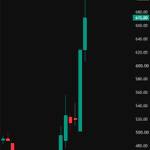
🇨🇳BULLISH: Chinese robot maker Unitree's stock has surged more than 65% in seven trading days, and JPMorgan has turned from bearish to bullish.
Shares jumped as much as 18% on Monday before closing up 7.7% at 672 yuan.
JPMorgan more than tripled its price target to 995 yuan, about 48% above Monday's close.
Investors who got shares at the 150.80 yuan IPO price in August are now up about 346%.
But the stock is still about 39% below the 1,100 yuan it opened at on its first day of trading.

JUST IN: Ripple now lets businesses earn returns on idle cash 24/7, even on weekends.
The new 24/7 Returns feature puts unused operating cash to work when banks are closed.
Eligible Ripple Treasury customers can use qualifying digital assets held in a Ripple wallet, including the RLUSD stablecoin.
A new AI layer can also automate cash forecasting, reconciliation and payments.
American Airlines, Subway and Christian Louboutin already use Ripple Treasury.
🇺🇸BIG MOVES: US regulators are building crypto rails from THREE directions.
Even with the CLARITY Act stalled in the Senate, regulators keep moving, and the latest steps came on Monday.
1. Local banks could issue their own stablecoins.
The OCC is encouraging small community banks to look at issuing digital dollars, with new federal stablecoin rules kicking in on January 18, 2027.
2. Crypto firms are getting federal trust charters.
Circle, Ripple, BitGo, Fidelity Digital Assets and Paxos won conditional approval last December to become national trust banks, which can hold customers’ assets but can’t take deposits like a normal bank.
3. Crypto exchanges could register with federal regulators.
CFTC Chair Mike Selig says the agency is building an optional way for crypto exchanges to register with federal regulators “while Congress has yet to act.”
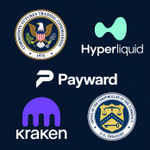
Kraken’s parent, Payward, also plans to become the first CFTC-regulated firm to run its own markets on Hyperliquid, once approved.
Is Washington finally ready for crypto?


🚨BREAKING: Microsoft is offering buyouts to 60,000 employees as AI reshapes its workforce.
The voluntary exit program covers roughly 27% of Microsoft’s 223,000 employees across the U.S., Canada, India and the U.K., extending to workers at the vice president level and below.
The move comes as Microsoft pours billions into AI infrastructure while pushing AI tools across engineering, sales and other teams to improve efficiency.


🔥BIG: Binance founder CZ rings the NASDAQ opening bell for BNB Standard ($BNC), the world's LARGEST corporate BNB treasury company.
“I don’t know what shows crypto and tradfi converging more than this,” CZ said.
⚡️NEW: Microsoft's new AI system diagnoses complex medical cases more than TWICE as accurately as general physicians, per a study on Science(.)org.
Here's what researchers found:
- 83% accuracy for AI vs. 36% for doctors on 304 complex cases
- 80% accuracy for AI vs. 47% for doctors on emergency room cases
- A cost-optimized version achieved high accuracy with LESS spending on diagnostic tests
The system works like a team of doctors, asking questions, ordering tests and refining diagnoses step by step.
$MSFT now plans to test the technology in a REAL hospital setting in Boston.


🇺🇸NOW: $540 BILLION added to the U.S. stock market in one hour after Trump pauses planned attacks on Iran.
The relief rally sent the S&P 500 up 0.83%, the Nasdaq up 1.38% and the Dow up 0.50%, with Tesla surging 6.48%, Nvidia gaining 3.01% and Broadcom rising 3.09%.


JUST IN: 🇨🇦Canada opens consultation on STABLECOIN rules draft but maintains its BAN on interest and yield payments to holders.
The proposed framework requires:
- 1:1 reserves held at qualified Canadian financial institutions.
- Users must be able to exchange stablecoins for cash within THREE business days.
- Fees for converting stablecoins back into cash capped at 1%.
The 60-day consultation ends December 23, with the rules expected to take effect in late 2027.


⚡️UPDATE: Anthropic is reportedly planning an UNCONVENTIONAL IPO lock-up structure that could let early investors and employees cash out much SOONER than the standard 180-day restriction.
Here's the reported timeline:
DAY 1: First batch of shares available for sale
DAY 27: More shares released
DAY 48: Another round of shares unlocked
The number of shares eligible for sale has yet to be disclosed.
The accelerated schedule could expose Anthropic's stock to early SELLING pressure and heightened volatility shortly after its market debut.

🔥Anthropic's IPO: The BIGGER AI Trade Story
It could become one of the BIGGEST stock market debuts in history.
But the REAL STORY isn't how much money it could raise.
It's the NUMBERS the IPO could reveal about the AI boom.
Here are the KEY NUMBERS:
- Anthropic generated $16.3 BILLION in H1 revenue but reported an $80.7 BILLION net loss, largely driven by non-cash accounting charges, per Reuters.
- The company faces at least $518 BILLION in AI infrastructure commitments over the next decade, with roughly 80% subject to mandatory payment obligations, per Reuters.
- Expected IPO valuations have FALLEN to $1.5T–$1.75T from earlier estimates of $2 TRILLION or more, despite explosive revenue growth, per FT.
- Nearly HALF, or 47%, of its 2025 sales flowed through Amazon and Google, which are also major investors and infrastructure providers, per Reuters.
Anthropic also has considered allowing insiders to sell shares at the IPO while locking up remaining holdings beyond the traditional 180 days, per The Information.
Why Anthropic's IPO matters?
For years, investors have poured BILLIONS into Nvidia, Broadcom and Big Tech, betting that AI demand will keep accelerating.
Now, Anthropic's IPO will give Wall Street a direct look at whether AI developers can generate enough profits to justify their massive infrastructure spending.
A WEAKER valuation could pressure the broader AI trade as investors reassess future returns.
The AI trade is entering a FRAGILE phase, and Anthropic's IPO could mark a major turning point for the broader AI trade.

🚨BIG NEWS: Anthropic has filed for IPO TODAY, potentially setting the stage for one of the LARGEST stock market debuts in history, per Bloomberg.
The AI giant reportedly aims to match or surpass SpaceX's record $75 BILLION IPO.
However, its expected valuation has FALLEN to $1.5T–$1.75T from earlier estimates of $2T or more, despite quarterly revenue surging nearly 50% to $16.8 BILLION.
Investor marketing could begin the week of November 9, with trading potentially starting before Thanksgiving.
The listing could become a major test of investor appetite for AI amid growing concerns over the sector's massive spending.


