

Book: Experimental Design for Biologists. Focus areas: Aging; Skeletal Muscle. I work for a biotech. Views expressed here are solely my own.
New York
Joined December 2013
- Tweets2.9K
- Following3.3K
- Followers5.1K
- Likes40.1K




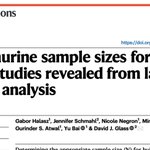


Regeneron's latest: A single dose of an siRNA targeting liver expression of CIDEB was associated with a reduction in liver fat of 58 to 80% at week 36 after treatment in persons with metabolic dysfunction–associated steatotic liver disease.
nejm.org/doi/full/10.1056/NE…

According to this latest paper from Yamanaka, each cell line has to be optimized individually for reprogramming - which makes the idea of giving a human these factors for aging very very challenging. Also, check out the variability seen in the small N used.
biorxiv.org/content/10.64898…


CRISPR screens identify targets to rescue age-related T cell dysfunction in cancer
cell.com/cell/fulltext/S0092…

I thought this was a piece of satire at first... Is there any clearer evidence that the funding bubble has jumped the shark? ...or in this case the genetically engineered dog? (Among the issues here is that the genetic cause of the hip dysplasia hasn't even been identified).
techcrunch.com/2026/10/22/be…

1
11
1,226
There are roughly 17,000 unique ICD codes, meaning there are that many unique diseases. In five years there are 1825 days. So in order to cure all diseases in 5 years, if the Anthropic CEO is gonna space that out a bit, that means there needs to be a bit over 9 diseases cured per day. Since about a month has gone by since he promised AI would cure all diseases in 5 years, that's 30 days x 9.3 disease or 279 diseases cured. Where are our 279 cured diseases?? I want to see the patients suffering from those 279 former diseases reporting here that they've been cured. ...or is Anthropic claiming it will cure all 17,000 human diseases at the last minute? Why procrastinate? Space things out... do this in an orderly fashion.
This is of course very very concerning. This is why many are moving to smaller AI agents that can be entirely housed on a local server. And even then, you'd need to have guardrails to assure data doesn't get uploaded elsewhere - easier said than done.
nytimes.com/2026/09/27/scien…

David J Glass MD retweeted

So the same lead author (Peter Yoon) published a Science paper about a new viral repeat system (VIPR) and also this Anthropic ART paper. If this was all Claude's work, is it just a coincidence that the same human was a lead contributor to both?

Claude has discovered a previously unknown enzyme system hidden in the DNA of bacteriophages. Beside the enzyme’s gene sits a long array of repeating DNA—a structure that looks somewhat similar to CRISPR.
We don’t yet understand what this system does, but only a handful of known systems share its features, and all of them are able to cut, copy, and paste DNA. Historically, the discovery of such programmable systems has helped revolutionize medicine. CRISPR, for instance, is now the foundation of genetic medicines. But it will take much more work to learn what this system does, and whether it can be put to similar use.
Read more: anthropic.com/news/claude-di…

David J Glass MD retweeted

Biochem ppl: yeah this has been happening for like last 10-15 years, this is like discovering a new frog, they’re out there and it’s not particularly useful info. Not significant.
AI ppl: holy shit, this is the first domino to fall, bio is the next math/CS field. GG disease.
Gene editing ppl: wtf why can’t we get any hype/press/investor love for even putting systems like this together and curing patients
Patients: cool so when do I get a cure for my genetic dz I’m dying from where we know the pinpoint mutation causing it
Claude has discovered a previously unknown enzyme system hidden in the DNA of bacteriophages. Beside the enzyme’s gene sits a long array of repeating DNA—a structure that looks somewhat similar to CRISPR.
We don’t yet understand what this system does, but only a handful of known systems share its features, and all of them are able to cut, copy, and paste DNA. Historically, the discovery of such programmable systems has helped revolutionize medicine. CRISPR, for instance, is now the foundation of genetic medicines. But it will take much more work to learn what this system does, and whether it can be put to similar use.
Read more: anthropic.com/news/claude-di…
David J Glass MD retweeted

Best summary of this finding and the concerns expressed by many about the way this has been framed and disclosed…”The hard part, and where the real discoveries come from, is figuring out what the system actually does.”
One of the worst phenotypes among scientists is what I call "Figure 1 people." These are often smart young scientists who do some work in the lab, and then get incredibly excited by the very first thing they find - but then think they're done... when they've actually just started
Claude has discovered a previously unknown enzyme system hidden in the DNA of bacteriophages. Beside the enzyme’s gene sits a long array of repeating DNA—a structure that looks somewhat similar to CRISPR.
We don’t yet understand what this system does, but only a handful of known systems share its features, and all of them are able to cut, copy, and paste DNA. Historically, the discovery of such programmable systems has helped revolutionize medicine. CRISPR, for instance, is now the foundation of genetic medicines. But it will take much more work to learn what this system does, and whether it can be put to similar use.
Read more: anthropic.com/news/claude-di…
These guys find "by AI" a gene which perhaps may have a CRISPR-like function. The CEO hypes this on Twitter as if they did in fact cure all diseases in 5 years. No function. No mechanism. No peer review. Nothing besides something any undergrad could do. Sad.

Today we announced the Claude-led discovery of a molecular machine that we suspect could represent a new gene editing mechanism. Its precise function, biotechnological utility (if any), or level of significance is not yet clear, but at minimum it is work I would have been proud to do as a PhD student. The work was done mostly, though not entirely, by Claude: our life sciences team suggested a broad area of research, Claude read through the literature and a bunch of genome data and discovered something interesting, then Claude proposed experiments to verify the discovery and our team carried them out.
It’s easy to dismiss this as a one-off or curiosity, but we’ve repeatedly seen a pattern where AI performance in new intellectual domains goes from weak to superhuman in a matter of a few years. In 2023 models struggled to do math at the level of an average high-school student. In 2024 they started to do well on math competitions for the best high-schoolers in the country, in 2025 they started to solve minor open problems, in early 2026 more significant open problems, and in late 2026 they are beginning to solve the top few open problems in all of mathematics. We believe AI for biology is on a similar exponential trend.
The main difference between biology and mathematics, of course, is that math can be done purely theoretically, while biology requires experimentation. Some have used this to draw the conclusion that AI’s utility in biology will be limited. We think this is wrong. As we’ve demonstrated today, humans can collaborate with AI to perform the experiments, validate key results in a few weeks and, if necessary, work with the AI to iterate on what they find. Eventually it may even be possible for Claude itself to safely perform the experiments by autonomously controlling lab equipment, with appropriate safeguards in place, but we aren’t doing that today (our lab is also a BSL1/BSL2 facility that doesn't handle materials dangerous to humans).
More broadly, biomedical advancement has many stages — from fundamental biology discoveries, to translational research, to drug discovery, clinical trials, and finally the actual delivery of medicines and health care to patients. We are also interested in these later stages, but even simply accelerating the first stage of fundamental biological discoveries has the potential to speed up and broaden the entire pipeline. Improving our understanding of biology and sharpening biologists’ tools can drive forward all of the later stages, for example by identifying new drug targets, finding new therapeutic modalities, allowing for more precise measurement, and speeding up the experimental loop which itself further accelerates our understanding of biology. This will not in itself speed up clinical trial times, but if it succeeds it could greatly increase the number of promising candidates that go into the pipeline — an increase in throughput even though latency remains.
In Machines of Loving Grace, I wrote about AI’s potential to “cure most diseases in 5-10 years” — a goal that sounds impossible, but one I believe is just barely possible if AI is applied to every stage of the pipeline. The first step is showing that AI can first help with, and then drive, biological discoveries.
Claude’s discovery is the latest in a line of related prior work that goes back decades, beginning with systems like CRISPR, and continuing with discoveries like the bridge recombinase and VIPR in the past few years. Recently, there has been heightened interest in systems based on reverse transcriptase (RT) enzymes, the enzyme underlying the system Claude identified. And most recently, a Stanford team working independently described a novel RT system with an associated non-coding array that is in some ways similar to the one Claude found, though they are distinct systems that evolved independently from each other. I believe that we’re at the very beginning of finding such systems and developing them into powerful tools for biotechnology.
I’m proud of the resources Anthropic has invested in accelerating the public benefits of AI through the life sciences, and we’re aiming both to grow our life sciences team and to work with other scientists to extend this approach to a broad range of problems. If you have a proposal for a research collaboration or are interested in joining our life sciences team, please reach out.
By fostering and supporting your own research programs internally, you not only can develop your own medicines from scratch, knowing them intimately, but by doing this you also develop the expertise to evaluate outside opportunities. Without your own R&D, you're essentially blind
2
23
1,782
I'd like to take this opportunity to thank all of the individuals who have published bogus, incorrect, misleading and incomplete data sets, wrecking the biology literature. This is very helpful in keeping the AI Agents from rendering me obsolete. Much appreciated.
David J Glass MD retweeted

How Anthropic's new results post would read without the PR:
Claude orchestrated open-source protein design models, PXDesign, RFdiffusion, Genie, BoltzGen, from a 30k-token expert prompt and 12,500 H100-hours of compute, and designed binders against 14 of 15 targets. Hit rates of 22–35% against a 10–15% baseline, where some of those tools already report similar numbers on their own.
The orchestration is genuinely impressive. But the open-source models did most of the lifting, and they came from the Baker lab, Columbia, MIT, ByteDance Seed, and most of them were already wet-lab validated before Claude touched them.
Which also sets the ceiling. All these generators share a single PDB-shaped training distribution, so calling four of them doesn't diversify away the blind spot, since they fail together. The targets that worked are the well-studied ones.
So the valid claim is that an agent can now drive this stack competently in the regime where the stack already works.
Instead, we got this announcement:
Many drugs work by binding to a specific target in the body and blocking or changing what it does. An important first step in the drug development process is designing a molecule that can bind tightly to its target. Traditionally, that's meant weeks or months of expert work per target, sifting through a large number of candidates to identify the few that work.
We wanted to test if Claude could successfully design novel protein binders from scratch (also called de novo design). With a protein design prompt written by a human expert, Claude autonomously designed protein binders against 14 out of 15 targets.
We then worked with Adaptyv Bio and Twist Bioscience, who independently built and tested the proteins Claude designed.
You're considering hiring a brilliant academic scientist to found or join your biotech or pharma NewCo: first make sure she or he is willing to adapt to what is needed by your company, rather than simply continuing their academic research. Don't promise "complete freedom".
15
1,361
As to how the biotech and pharm world have done pre-AI, 15 years ago we did not have :
1. High-efficacy incretin therapy (semaglutide on...)
2. CAR-T therapy
3. modern cytokine-blockade: anti: IL-4/13, IL-17, IL-23
4. mRNA vaccines
5. Anti-Ebola antibodies
(Cont'd)
13.Antibody–drug conjugates
14.Curative hepatitis C regimens
15.PCSK9 and ANGPTL3
16.SGLT2 inhibitors
17.CFTR modulators
18.JAK and TYK2 inhibitors
19.KRAS inhibitors
20.PARP inhibitors
21.FcRn blockade
22.The complement build-out
(cont'd)
2
10
866