

Ideas that matter, well-taught. Founder at You & AI.
Washington, DC
Joined July 2010
- Tweets9.1K
- Following424
- Followers1.1K
- Likes7K


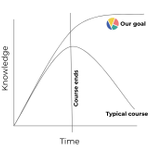




Imagine if instead of 15 minutes on 4 +3, even a fraction of that time were spent on mad minutes (or other automaticity work).


Yes, have long wanted an eval for AI-human collaboration! Let's do it.

I rarely click on videos & watched this one four times in a row.
Wildly impressive design, persuasively catchy lyrics, if not fully considered economics. Reset my expectations of what's possible with video.
THUS SPOKE COMPUTE!
Would love to know the creator's process.

Relatedly, I'm very excited to be going to the AI & History conference next month. Not a historian, just an enthusiast, going for the use cases.

All of this effort from the AI labs pouring into proofs, but there are so many other interesting problems in other fields
For example, this historian used AI to make progress on the cyphers of John Dee & the intellectual antecedents that Darwin drew from. resobscura.substack.com/p/ai…

For everyone who has ever been told their standards are too high

Patrick Collison's advice to people in their 20s: find where the highest standards are, and go experience them firsthand.
"When I talk to people in other domains, this is so frequently the thing that I hear from them."
"That when they worked with X person or Y organization or in Z environment, they learned what great actually is, and that just permanently changed their sense for what their own standard for their work ought to be."
"Maybe one version of what people in their twenties should do is... figure out, where can you learn the highest standards? Where are the highest standards embodied, and where can you go and experience that firsthand?"
@patrickc w/ @dwarkesh_sp (Feb 2024)


Sarah Dillard retweeted

Throwing rubbish in a landfill is (usually) better for the environment than recycling it. With few exceptions, recycling ends up emitting more CO2 and costing more money, while landfills are cheap and secure.
- Recycling mid-tier plastics (like plastic bottles or butter tubs) costs thousands of dollars per ton of CO2 saved. It's cheaper to do direct air CO2 capture than that! And there is no shortage of plastic, nor any problem with sequestering it in the ground once we're done with it.
- Modern landfills are extraordinarily secure and are *much* more than just big piles of trash. They capture 75%–95% of methane gas. Groundwater contamination is doesn't really happen with landfills built since 1990. A study of 31 landfills built since 1988 in NY found no adverse effect at all on local groundwater quality.
- The crusade against single-use plastics has driven us to products that use far more materials and energy and would need to be used an absurd number of times to actually be an improvement. A steel straw needs to be used 150 times to be worth using. A ceramic mug needs to be used 1,000 times to beat a polystyrene cup. A cotton bag needs to be reused 173 times to beat single-use.
- Some things ARE worth recycling. Recycling metal saves a huge amount of energy and material – recycling aluminium saves 95% of the energy spent on making fresh stuff. So we do a lot of it already: about 30% of steel worldwide is recycled.
Modern, well-run landfills cause minimal environmental damage. We have plenty of space for them – less than 0.01% of the US is used for landfill and only about 0.02% of Germany. We can even build on top of old landfills, so the land area is not spent permanently.
New in @WorksInProgMag, @robertwiblin and @chalmermagne on why it's usually best to just bury your trash. worksinprogress.co/issue/jus…

I switched from Fable to Opus 5 for what some agents/automations I'm building, and it seems clear that there are not currently evals for *intelligibility of output to humans.*
But how well a human can collaborate with a model is a huge determinant of real-world outcomes.
Cannot adopt or implement curriculum effectively, cannot evaluate edtech apps (or effectively argue agains them), cannot make effective instructional decisions in advance or on the fly, cannot teach students to teach themselves effectively.

100%. Wondered if Fable would upgrade, but it doesn't meaningfully on this vector.

Something shocking I've learned at @Alphaschool:
AI is horrible at designing edtech & educational material.
Learning science is so poorly implemented in academia that it's embedded in the training data for every model, and they'll naturally make the same mistakes without realizing it.
Our engineers & learning scientists have to do an incredible amount of manual work around designing good questions & grading rubrics & skill trees.
Sarah Dillard retweeted

Every time you get a cancer biopsy, the lab makes a tissue slide that costs about $5. It shows the shape of your cells under a microscope, and every cancer patient already has one on file.
There’s a much fancier version of that test called multiplex immunofluorescence (basically a protein-level map showing which immune cells are near your tumor and what they’re doing). It costs thousands of dollars per sample, takes specialized equipment most hospitals don’t have, and barely scales. But it’s the kind of data oncologists need to figure out whether immunotherapy will actually work for you. Right now, only about 20 to 40% of cancer patients respond to immunotherapy, and one of the biggest reasons is that doctors can’t easily tell whether a tumor is “hot” (immune cells actively fighting it) or “cold” (immune system ignoring it).
Microsoft, Providence Health, and the University of Washington trained an AI to analyze the $5 slide and predict what the expensive test would show across 21 different protein markers. They called it GigaTIME, trained it on 40 million cells in which both the cheap slide and the expensive test coexisted, and then turned it loose on 14,256 real cancer patients across 51 hospitals in 7 US states.
The results landed in Cell, one of the most selective journals in biology. The model generated about 300,000 virtual protein maps covering 24 cancer types and 306 subtypes. It found 1,234 real, verified connections between immune cell behavior, genetic mutations, tumor staging, and patient survival that were previously invisible at this scale. When they tested it against a completely separate database of 10,200 cancer patients, the results matched up almost perfectly (0.88 out of 1.0 agreement).
Nature Methods named spatial proteomics (mapping where specific proteins sit inside your tissue) its Method of the Year in 2024, and specifically cited GigaTIME in a March 2026 update as a model that “democratizes” this kind of analysis. The full model is open-source on Hugging Face. Any cancer research lab with archived biopsy slides, and most of them have thousands, can now run virtual immune profiling without buying a single piece of new equipment.


Sarah Dillard retweeted
I used DALL-E to help me create art to represent the concept of, "Some people take faith leaders on science; some take science leaders on faith."
My thought process:

