

PACE is an independent, nonpartisan research policy center based at Stanford, UC Davis, USC, UCLA, UC Berkeley | Free newsletter: https://teapaw.org/t.co/EQaFUub45n
Stanford, CA
Joined September 2012
- Tweets3.6K
- Following1.5K
- Followers3.4K
- Likes2.9K





Pinned Tweet
New report from PACE by H. Alix Gallagher and Lawrence O. Picus examines California’s funding for TK–12 education, finding that despite increased spending, the education system faces several critical finance issues that policymakers need to address. edpolicyinca.org/publication… (1/7)

In @EdSource, PACE Faculty Director Julie Marsh and UDel Assistant Professor James Bridgeforth explain how low voter turnout can amplify the influence of organized groups: “If you give up your voice, there are plenty of others ready to use theirs.” edsource.org/2026/why-vote-s…

What should California's next governor prioritize in education? PACE Executive Director Lupita Cortez Alcalá and PACE Co-Founder/Advisor Michael W. Kirst join four prominent education leaders in sharing their perspectives with @EdSource: edsource.org/2026/california…

PACE Director of Education Policy and Outcomes H. Alix Gallagher recently testified before the California Assembly Committee on Education on strengthening statewide support for mathematics instruction and improving student achievement. edsource.org/2026/california… via @EdSource

PACE retweeted

First priority for California’s next state superintendent: Negotiate a job description
edsource.org/2026/california…

What should Californians look for in their next schools chief? PACE Faculty Director Julie Marsh asks: “Can they give constructive criticism while maintaining some of the relationships they need to get these things solved?” edsource.org/2026/california… via @EdSource
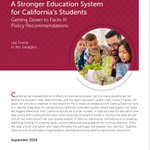
A new PACE brief by Lisa Towne and Alix Gallagher draws on evidence from Getting Down to Facts III to identify 3 critical areas for strengthening California’s education system and ensure success of the state’s investments in education improvements. edpolicyinca.org/publication… (1/4)

2) The state should ensure that every district has high-quality support for improving teaching, practical guidance for curricula selection, and stable funding for ongoing needs. (3/4)
New brief from PACE by Jennifer Ahn of @Lead_byLearning and Alix Gallagher of PACE explores how California school districts are responding to AI and makes concrete recommendations for addressing AI integration more strategically. edpolicyinca.org/publication… (1/4)

The interview results show that a more organized response by districts is needed, including sustained professional learning to build educators’ expertise for thoughtful classroom use of AI. (3/4)
TOMORROW: What does California’s historic TK–12 governance reform mean for students, families, and schools? Join Brooks Allen, Lupita Cortez Alcalá, Ted Lempert, and Yolie Flores for a timely conversation on October 1, 3–4:30 pm PT. Register today! bit.ly/caedgovreset

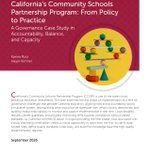
New PACE brief by Karina Ruiz and Hayin Kimner at highlights lessons from the California Community Schools Partnership Program learned from challenges implementing the program’s first phase and makes recommendations for strengthening its next phase. edpolicyinca.org/publication… (1/4)

NEXT WEEK: What does California’s historic TK–12 governance reform mean for students, families, and schools? Join Brooks Allen, Lupita Cortez Alcalá, Ted Lempert, and Yolie Flores for a timely conversation on October 1, 3–4:30 pm PT. Register today! bit.ly/caedgovreset

PACE retweeted

Michael Kirst, professor emeritus of education at Stanford University, is this week's guest on the Education Exchange podcast. bit.ly/3TgDzLx
