

Official Account of the Ministry of Finance, Government of Pakistan
Islamabad, Pakistan
Joined June 2014
- Tweets10.9K
- Following15
- Followers262K
- Likes431




Finance Minister and UNDP Discuss Strategic Cooperation on Climate Finance under Bridge Initiative of Türkiye’s COP31 Presidency
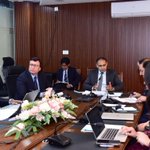
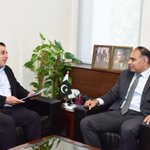
Federal Minister for Finance and Revenue, Senator Muhammad Aurangzeb, met a delegation of the United Nations Development Programme (UNDP), led by its Resident Representative, Mr. Samuel Rizk, to discuss Pakistan’s development priorities, climate finance opportunities and ways to strengthen cooperation with development partners. Senior officials of the Ministry of Finance were also present.
The UNDP delegation highlighted Pakistan’s progress in developing a pipeline of potential investments aligned with national development and climate priorities. The portfolio brings together projects from the SDG Investment Pipeline, Climate Prosperity Plans and other climate adaptation initiatives. It comprises a range of projects covering clean energy and infrastructure, climate resilience, water and food security, ecosystems, and circular economy initiatives.
The UNDP noted that the portfolio could serve as a starting point for identifying investment opportunities and mobilising resources. The discussion focused on prioritising technically sound, investment-ready projects capable of delivering tangible results within a shorter timeframe.
The Finance Minister underscored the importance of aligning the initiative with national priorities and concrete development outcomes. He emphasised that the next phase should focus on a carefully selected portfolio of projects with clear implementation pathways and the potential to demonstrate timely progress.
The Minister highlighted the importance of close coordination and stakeholder consultation to ensure that the initiative remains aligned with national priorities, drawing on relevant institutional expertise and mandates.
He observed that climate finance requires a coordinated approach to project development, financing and implementation. He emphasised the need to build on existing project pipelines, engage relevant stakeholders and identify opportunities to accelerate projects already under consideration by multilateral development partners.
The Minister also stressed the importance of making effective use of available financing opportunities, including concessional resources, climate funds and private-sector investment, while recognising the time required to mobilise international finance. He called for a focused and manageable set of priority projects.
The UNDP outlined its proposed support in refining the portfolio, undertaking a diagnostic assessment, facilitating project preparation and engaging with global climate financing mechanisms. The discussion also covered blended finance and public-private partnerships, particularly in areas such as renewable energy, waste management, recycling and climate-smart agriculture.
The meeting also considered lessons from recent climate-induced disasters and the importance of strengthening long-term resilience through institutional preparedness, disaster risk reduction and enhanced institutional capacity.
The Finance Minister welcomed UNDP’s continued engagement and reaffirmed the Ministry of Finance’s readiness to support a coordinated and results-oriented approach. He emphasised that effective collaboration among government institutions and development partners would be essential to translate priorities into bankable projects and mobilise financing.
Both sides agreed to maintain close engagement, further refine the project portfolio and identify priority projects for focused follow-up. The Minister stressed the importance of maintaining momentum and ensuring practical and measurable progress in climate resilience and sustainable development.
The UNDP delegation included Deputy Resident Representative Ms. Van Nguyen; Assistant Resident Representatives Mr. Shiraz Ali Shah and Ms. Naghma-e-Tehniyat Jerral; and Programme Analyst Ms. Bushra Gul.


Government Opens New Avenues for International Financing Through USD 500 Million MIGA-Backed Trade Finance Facility
Announces Consortium of Commerzbank, J.P. Morgan and Standard Chartered Bank as Financing Partners
Federal Minister for Finance and Revenue, Senator Muhammad Aurangzeb, held a virtual meeting with the senior leadership of a consortium of international banks and representatives of the Multilateral Investment Guarantee Agency (MIGA), a member of the World Bank Group, regarding a USD 500 million trade finance facility backed by MIGA.
Following a competitive selection process and receipt of bids from nine international financial institutions, the Finance Division, Government of Pakistan, has selected the following banks as financing partners for the facility:
1. Commerzbank
2. J.P. Morgan
3. Standard Chartered Bank
The one-year facility, renewable on a rolling 1+1+1 basis, will support the financing of essential imports and trade-related expenditures. The transaction marks the Government of Pakistan's first-ever credit enhancement transaction with MIGA under its Trade Finance programme, while also representing the first-ever participation of Commerzbank and J.P. Morgan in commercial lending to the Government of Pakistan.
The banks were selected on the basis of the most competitive financing terms offered to the Government of Pakistan. The strong response and participation from international financial institutions reflect growing confidence in Pakistan's improving economic outlook and progress towards sustainable growth. The Government appreciates the interest shown by all participating institutions and is grateful for their time, effort and engagement throughout the process.
The transaction marks an important step towards mobilising private international capital through multilateral risk-mitigation instruments, diversifying external financing sources and exploring innovative financing structures, while maintaining prudent debt management and fiscal responsibility.
The Ministry of Finance and Revenue looks forward to building strong and lasting relationships with all three global institutions: Commerzbank, J.P. Morgan and Standard Chartered Bank.
The Government of Pakistan will work closely with MIGA and the selected banks to advance the transaction towards its timely execution.


Finance Division Calrifiies News Commentary Regarding PM's Financial Package for Khyber Pakhtunkhwa
The Finance Division has taken note of a commentary published in a section of the press regarding the financial package announced by the Prime Minister for Khyber Pakhtunkhwa.
In this regard, it is clarified that the Prime Minister of Pakistan announced Rs160 billion for the Area Development Secretariat comprising twelve districts of Khyber Pakhtunkhwa. An amount of Rs10 billion has been released till date. This is in addition to the Rs151.1 billion current and development budget allocation for eight Newly Merged Districts (NMDs) in FY 2026-27. The releases are made as per existing fiscal transfer arrangements.
Finance Minister Calls for Expeditious Finalisation of Power Sector Regulatory Reforms, Emphasises Affordable Electricity and Investor Confidence
Federal Minister for Finance and Revenue, Senator Muhammad Aurangzeb, chaired a meeting of the Steering Committee on Power Sector Regulatory Regime at the Finance Division today to review progress on the proposed reforms and recommendations emerging from the Technical Working Group (TWG). The meeting continued the government's deliberations on developing a comprehensive regulatory and market framework to improve efficiency, promote competition, attract private investment and ensure affordable electricity for consumers.
The Committee was briefed on the TWG's detailed work covering tariff methodology, regulatory certainty, investment incentives, performance benchmarks and the future structure of the electricity market. Discussions focused on ensuring that the proposed framework addresses investor concerns while safeguarding consumer interests and strengthening the sector's long-term financial sustainability.
A key area of deliberation was the need for clear, transparent and predictable regulatory rules for distribution network operators (DNOs) and competitive suppliers. The Committee considered proposals relating to investment approvals, monitoring of investment plans, service and performance standards, transmission and distribution losses, conflict-of-interest safeguards and the scope of ancillary commercial activities. The importance of clearly defining the respective roles of NEPRA and the Competition Commission of Pakistan, while avoiding regulatory overlaps, was also highlighted.
The Committee reviewed proposals for strengthening the incentive structure under the Multi-Year Tariff (MYT) framework, including mechanisms to reward improvements in operational efficiency, service quality and reduction in distribution losses. Discussions also covered the treatment of returns on equity, inflation-related adjustments and sharing of efficiency gains, with a view to balancing commercially viable investment incentives with consumer protection. It was emphasised that efficiency improvements should translate into tangible benefits for consumers.
The evolving dynamics of the electricity market, particularly rapid solarisation, battery storage and changing consumption patterns, also featured prominently. The Committee discussed the challenges arising from excess generation capacity, declining grid demand and the resulting pressure of capacity-payment obligations on electricity tariffs. In this context, proposals for adapting the Competitive Trading Bilateral Contract Market (CTBCM) design to Pakistan's changing circumstances were examined. These included the possibility of aligning existing supply obligations and consumer demand with distribution companies being privatised, as a potential pathway towards a more competitive electricity market.
The discussions recognised the need to address the imbalance between available generation capacity and actual consumption, while preventing further increases in the burden on grid-connected consumers. The proposed market arrangements could provide greater flexibility for competitive suppliers to develop tariff structures, improve efficiency and make better use of existing generation capacity. Their implications for existing power purchase agreements, capacity-payment obligations and uniform tariff arrangements would, however, require further examination.
The Finance Minister emphasised that the overriding objective of the reform process must be to reduce electricity costs, improve service delivery and establish a financially sustainable power sector. He observed that Pakistan's changing energy landscape required practical and forward-looking solutions tailored to the country's specific challenges. The reforms must create a viable environment for private investment while ensuring affordable and competitive electricity for households, businesses and industry.
The Committee also discussed the pace and sequencing of the transition towards a competitive retail electricity market. While recognising the need to move towards greater competition, participants highlighted the importance of a realistic implementation roadmap that takes account of regulatory and institutional readiness, consumer protection and investor confidence. The need to balance the urgency of reforms with the practical requirements of market preparedness was underscored.
The proposed arrangements for managing residual assets and liabilities of distribution companies in the context of privatisation were also discussed. These include land, receivables, pension obligations and litigation. The Finance Minister called for a pragmatic and cost-effective institutional arrangement, avoiding unnecessary duplication and ensuring effective management of these responsibilities.
The Committee agreed that further work was required on certain technical and policy aspects of the proposed framework. The Finance Minister directed the relevant teams to clearly identify outstanding issues, including areas of divergent views, and bring forward considered recommendations for the Steering Committee's further deliberation. Continued coordination with NEPRA and other stakeholders was emphasised to ensure that the eventual framework is technically sound, legally robust and implementable.
The Finance Minister reiterated the government's commitment to advancing power-sector reforms within clear timelines, with affordability, financial sustainability, regulatory predictability, improved service quality and greater private-sector participation as the guiding objectives.
The meeting was attended by Federal Minister for Power Sardar Awais Ahmad Khan Leghari; Special Assistant to the Prime Minister on Energy, Lt. Gen. Muhammad Zafar Iqbal; Minister of State for Finance and Railways, Mr. Bilal Azhar Kayani; Adviser to the Prime Minister on Privatisation, Muhammad Ali; Chairman NEPRA; senior officials of the Finance Division; and representatives of relevant public-sector institutions and stakeholders.


Finance Minister Chairs ECC, Approves Key TSGs and Export Financing Reforms
The Economic Coordination Committee (ECC) of the Cabinet met today at the Finance Division under the chairmanship of Federal Minister for Finance and Revenue, Senator Muhammad Aurangzeb and approved facilitative measures to boost SME exports beside Technical Supplementary Grants (TSGs) for various Ministries.
The ECC approved a summary submitted by the Finance Division for the provision of TSG for execution of National Economic Initiatives (NEI) projects. The Committee underscored the importance of NEI projects in advancing key national development priorities.
On a separate summary submitted by the Finance Division, the ECC approved amendments to the Long Term Export Growth Financing Facility, administered through EXIM Bank of Pakistan, to facilitate SME financing and support emerging exporters. The amendments have lowered the minimum threshold of 80 percent exports to 50 percent within four years. The Committee also directed a review of progress after six months.
On a summary submitted by the Ministry of Religious Affairs and Interfaith Harmony, the ECC approved a TSG of Rs. 100 million for Minorities Welfare Fund (MWF). These funds will support financial assistance, scholarships, marriage grants for orphan minority girls, emergency relief and repair of minority places of worship.
The ECC also approved three separate summaries requiring approval of various TSGs submitted by the Ministry of Interior and Narcotics Control. These included a TSG of Rs. 26.500 million for the purchase of helicopter spare parts for Pakistan Rangers (Punjab) to meet its maintenance requirements; a TSG of Rs. 100 million to meet the salary requirements of the Social Media Protection and Regulatory Authority (SMPRA) and the Social Media Complaint Council (SMCC) for FY 2026-27; and a further TSG of Rs. 67 million for the annual repair and maintenance of helicopters under use by the Frontier Corps Balochistan (North).
On a summary submitted by the Ministry of Federal Education and Professional Training, the Committee approved modification of its earlier decision regarding the release of Rs. 2 billion for the Daanish Schools Authority. The modification allows utilisation of Rs. 500 million from the released amount to meet the operational expenses of Daanish Schools during FY 2026-27, including salaries, boarding, utilities, transport, security and maintenance.
The ECC also considered a summary summitted by Petroleum Division and approved a TSG of Rs. 1 billion for settlement of the outstanding guaranteed throughput claim of Pak-Arab Pipeline Company Limited (PAPCO).
on a summary submitted by the Ministry of National Food Security and Research, the ECC considered the recommendations of Cabinet Committee headed by Deputy Prime Minister regarding exports of Sugar to safeguard farmers' interests in the form of adequate price support for their produce. The Committee also reiterated the importance of deregulating the sugar sector.
The meeting was attended by Federal Minister for Board of Investment, Mr. Qaiser Ahmed Sheikh; Federal Minister for National Food Security and Research, Rana Tanveer Hussain; Federal Minister for Power, Sardar Awais Ahmad Khan Leghari; Federal Minister for Commerce, Mr. Jam Kamal Khan; Minister of State for Finance, Mr. Bilal Azhar Kayani; and along with Federal Secretaries and senior officials from the relevant Ministries, Divisions and departments.


Finance Minister Holds Meetings with World Bank, IFC and GFTN Leadership on SME Development and Fintech Cooperation
Federal Minister for Finance and Revenue, Senator Muhammad Aurangzeb, held meetings with senior leaders of World Bank on the sidelines of the Singapore FinTech Festival 2026, focusing on strengthening Pakistan’s small and medium enterprises (SMEs), expanding access to finance, promoting fintech innovation and enhancing international cooperation in financial services.
The Finance Minister met Mr. Pablo Saavedra, World Bank Group Vice President for Prosperity, and Mr. Alfonso Garcia Mora, IFC Vice President for Europe, Latin America and the Caribbean. Discussions focused on opportunities to accelerate SME development in Pakistan and strengthen collaboration in this important sector.
The Minister highlighted the significant contribution of SMEs to Pakistan’s economy. He observed that despite their substantial economic contribution, SMEs had not received adequate attention in the past. The government was now prioritising the sector as a key driver of employment generation, economic growth and export diversification, he added.
The Finance Minister apprised the World Bank and IFC leadership of the government's initiatives to expand access to finance for SMEs. He informed them that the government aimed to increase the share of SME financing in private sector credit from the current 9.9 per cent to 13 per cent over the next two years. This would entail doubling SME financing from approximately Rs1 trillion to Rs2 trillion by June 2028. He also underscored the role of the Small and Medium Enterprises Development Authority (SMEDA) in strengthening the institutional and financial capacity of SMEs and enhancing their ability to access formal financing.
The Minister also highlighted Pakistan's progress in digital financial infrastructure, including the Roshan Digital Account, the growing fintech ecosystem and the operations of five digital banks. He discussed opportunities to leverage digital solutions to improve financial inclusion, particularly for farmers and businesses operating in the agricultural sector. Strengthening agricultural value chains and promoting meat exports were also identified as important areas, in line with Pakistan's broader objective of pursuing export-led growth.
The discussions also explored potential areas of cooperation, particularly supply-chain development, data infrastructure, digital invoicing, fast payment systems and strengthening the regulatory framework to facilitate SME growth and improve access to finance.
In a separate meeting, the Finance Minister met Mr. Sopnendu Mohanty, Co-founder and Group CEO of the Global Finance & Technology Network (GFTN). Mr. Mohanty briefed the Minister on GFTN's establishment in 2024 and its role in advancing innovation and transformation in the financial sector through its four operating arms: Forums, Advisory, Platform and Capital. He appreciated the Finance Minister's efforts towards stabilising Pakistan's economy.
The Finance Minister highlighted Pakistan's initiatives to enhance the capabilities of its youth and informed Mr. Mohanty about the establishment of a Centre of Excellence at the Lahore University of Management Sciences (LUMS). He expressed Pakistan's interest in benefiting from GFTN's global platform, particularly in the fintech domain, and exploring opportunities for knowledge-sharing, capacity building and institutional collaboration.


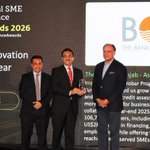
Bank of Punjab Wins Global SME Finance Award for Product Innovation at Singapore FinTech Festival 2026
The Bank of Punjab has won the prestigious Product Innovation of the Year award at the 9th Global SME Finance Awards, hosted by the SME Finance Forum on the sidelines of the Singapore FinTech Festival 2026.
Federal Minister for Finance and Revenue, Senator Muhammad Aurangzeb, attended the awards ceremony and presented awards to the winners across various categories. The Bank of Punjab received the award in recognition of its contribution to innovation in SME financing.
The Global SME Finance Awards recognise innovation, excellence and leadership in advancing access to finance for small and medium enterprises (SMEs) across emerging markets and developed economies. The 2026 awards recognised outstanding institutions from across the financial sector in four core categories: SME Financier of the Year, Product Innovation of the Year, Sustainable SME Financier of the Year, and Best Financier for Women Entrepreneurs.
The recognition of the Bank of Punjab at this international forum highlights Pakistan's growing contribution to innovation in SME finance and its efforts to strengthen financial inclusion and expand financing opportunities for small and medium enterprises.


Minister of State for Finance Chairs Meeting on EFS Amendments, Emphasises Exporter Facilitation and Export-Led Growth
Minister of State for Finance and Railways, Mr. Bilal Azhar Kiyani, chaired the ninth meeting of the Prime Minister’s Committee to Review the Export Facilitation Scheme (EFS) at the Ministry of Finance to discuss proposed amendments aimed at facilitating exporters, simplifying procedures and strengthening compliance and revenue safeguards.
The Minister of State reiterated the Government’s commitment to advancing the Prime Minister’s vision of a business-friendly environment, export-led growth and greater private sector participation. He emphasised that the proposed amendments should make the EFS more accessible and predictable for exporters, while ensuring transparency.
The Committee reviewed proposed amendments to make the EFS simpler and responsive to exporters’ needs, while strengthening risk-based oversight. The proposals aim to reduce compliance costs, encourage new investment and local value addition, and ensure that benefits under the scheme remain linked to actual export performance.
The meeting reviewed proposals to simplify exporter categorisation, rationalise authorisation periods and broaden access to the scheme for new and established exporters. Discussions also focused on introducing a uniform value-addition formula to replace varying calculations across Collectorates, drawing on available data while ensuring a practical approach for new entrants and due consideration of small and medium enterprises (SMEs). The importance of stakeholder consultation to ensure clarity and practical application of the proposed formula was also highlighted.
The participants also considered measures to strengthen risk-based oversight and prevent misuse of the scheme. These included clearly defining the sampling and follow-up procedures for the Regulatory Collector and the Collector at the exporting station, alongside streamlined security requirements.
The Minister of State emphasised that simplification of the scheme must go hand in hand with strong compliance and revenue safeguards. He underscored the need for eligibility criteria and prescribed procedures to be applied uniformly while maintaining continued engagement with exporters and relevant trade bodies to address their concerns and facilitate legitimate export activity.
The meeting also underscored the importance of continued consultation with stakeholders in finalising the proposed amendments. It was decided that stakeholder briefing sessions would be convened ahead of implementation to familiarise exporters with the proposed changes. The meeting reaffirmed the importance of strengthening the EFS to facilitate exporters and support sustained export-led growth.
The meeting was attended by senior officials from the Ministry of Commerce and the Federal Board of Revenue (FBR), Mr. Musadiq Zulkarnain, Chairman and Chief Executive Officer of Interloop Limited, representatives of exporters’ associations, including the All Pakistan Textile Mills Association (APTMA) and the Pakistan Textile Exporters Association (PTEA), the Sialkot Chamber of Commerce and Industry, and prominent exporters.


Advisor to Finance Minister Khurram Schehzad Highlights Islamic Finance, Economic Recovery and Digital Growth at ICIBF 2026
Advisor to the Federal Minister for Finance and Revenue, Mr. Khurram Schehzad, @kschehzad , highlighted Pakistan's progress towards macroeconomic stability, the expanding role of Islamic finance, growing digital exports and ongoing structural reforms, emphasising their importance in supporting investment, financial inclusion and sustainable economic growth.
Addressing the 10th International Conference on Islamic Banking and Finance (ICIBF 2026) as Guest of Honour, Mr. Schehzad underscored the opportunities for Islamic banking and Shariah-compliant financial instruments to contribute more effectively to national development. The conference was held under the theme, “Islamic Finance for National Transformation: Building a Riba-Free, Digital, Inclusive and Sustainable Economy.”
Highlighting developments in Pakistan's Islamic capital market, he noted that cumulative domestic sovereign Sukuk issuance had crossed the historic Rs 10 trillion milestone, reflecting the growing importance of Shariah-compliant instruments in government financing and debt-market development. He emphasised the need to further broaden Islamic financial products, deepen capital markets and expand participation by individual, institutional and international investors.
Sharing an overview of Pakistan's macroeconomic progress through 25 key indicators, Mr. Schehzad highlighted the country's transition from economic contraction towards stabilisation and recovery. He noted that real GDP growth had recovered to 3.7 percent in FY2026, compared with a contraction of 0.2 percent in FY2022–23, while industrial growth had improved to 3.34 percent from a contraction of 3.9 percent over the same period.
He further highlighted the reduction in the fiscal deficit to below 3 percent of GDP in FY2026, its lowest level in 22 years, alongside the achievement of a primary fiscal surplus, reflecting progress in fiscal consolidation and expenditure management.
Referring to Pakistan's strengthening external position, he noted that the State Bank of Pakistan's foreign exchange reserves had recovered significantly to US$21.6 billion in November 2026, from critically low levels of around US$3bn in FY2022–23. He added that the government's debt management strategy remained focused on diversifying financing sources, managing borrowing costs and improving the maturity profile of public debt. He also referred to improvements in Pakistan's sovereign credit ratings as indicators of progress in restoring macroeconomic stability and investor confidence.
Discussing the expanding digital economy, Mr. Schehzad highlighted that Pakistan's IT exports had reached a record US$453 million in October 2026, increasing by 17.4 percent from US$386 million in October 2025. He also noted that freelancers' export earnings had reached a record US$210 million in October 2026, underscoring the growing contribution of digital services and independent professionals to foreign exchange earnings.
He emphasised that the government, under the leadership of Prime Minister Muhammad Shehbaz Sharif and Finance Minister Senator Muhammad Aurangzeb, remained committed to export-led and private-sector-led growth, with particular emphasis on SMEs, agriculture, housing, digitalisation, entrepreneurship and investment. He highlighted the importance of the government's Access to Finance agenda, being spearheaded by the Finance Minister, in supporting business expansion, broadening financial inclusion and deepening capital markets through increased listings and an expanding investor base.
On financial inclusion, Mr. Schehzad referred to the government's affordable housing finance initiative, which provides eligible first-time homebuyers financing at a subsidised 5 percent markup rate for the first ten years. He underscored the importance of expanding access to affordable housing finance, including through Islamic banking institutions, to support wider financial participation and homeownership.
He also outlined ongoing structural reforms, including privatisation of state-owned enterprises, energy-sector reforms, taxation and pension reforms, and rightsizing of federal government ministries and departments. He stressed that sustained economic progress would require continued reforms, greater efficiency, stronger institutions and an enabling environment for private-sector investment.
Mr. Schehzad emphasised that Islamic finance must evolve beyond traditional banking and sovereign financing to become a stronger driver of investment, entrepreneurship, financial inclusion and sustainable economic growth, supported by innovation, digital transformation and deeper participation by domestic and international investors.
The conference also featured discussions on the roadmap towards a Riba-free financial system, inclusive economic growth, digital transformation and sustainable national development.
The conference was also attended by H.E. Dr. Mohamed Waheed Hassan, Former President of the Republic of Maldives; Dr. Ishrat Husain, Former Governor of the State Bank of Pakistan and Former Adviser to the Prime Minister on Institutional Reforms and Austerity; Mr. Saleem Ullah, Deputy Governor, State Bank of Pakistan; Prof. Dr. Imam Uddin, Associate Dean, Industry Linkages, College of Business Management (CBM); Prof. Dr. Muhammad Kashif, Dean, CBM, IoBM; Mr. Talib S. Karim, President, IoBM; and Mr. M. Bashir Jan Mohammad, Chancellor, IoBM.
The 10th International Conference on Islamic Banking and Finance (ICIBF 2026) was organised by the Centre for Islamic Business and Finance (CIBF), College of Business Management, Institute of Business Management (IoBM), under the patronage of the Accounting and Auditing Organization for Islamic Financial Institutions (AAOIFI).
The conference brought together scholars, researchers, policymakers, banking professionals and industry experts from Pakistan and abroad to discuss emerging developments and opportunities in Islamic banking and finance.


Finance Minister Meets Pakistani Diaspora and Business Community in Singapore
Federal Minister for Finance and Revenue, Senator Muhammad Aurangzeb, met with members of the Pakistani diaspora and business community in Singapore at a dinner hosted by High Commissioner of Pakistan to Singapore, Rabia Shafiq, at Pakistan House on Wednesday evening.
During the interaction, the Finance Minister briefed participants on the improving macroeconomic stability of Pakistan and the measures being undertaken by the government to strengthen the economy and reduce the fiscal deficit. He highlighted the government's commitment to fiscal discipline, economic reforms and creating a conducive environment for investment.
Recalling his time spent in Singapore, Federal Minister Senator Muhammad Aurangzeb described the Pakistani diaspora as a valuable national asset and an important partner in the country's economic development. He encouraged overseas Pakistanis, particularly members of the business community, to play an active role in promoting Pakistan as an investment destination and to facilitate greater engagement between Pakistani and investors in Singapore.
The Finance Minister also apprised participants of the investment opportunities available in Pakistan across various sectors. He highlighted the government's privatisation programme, noting that the privatisation of state-owned enterprises (SOEs) would help reduce the financial burden on the national exchequer, contain government expenditure and improve economic efficiency.
Members of the Pakistani business community shared their perspectives on strengthening Pakistan's investment appeal and attracting foreign investors. They also discussed opportunities for greater business-to-business engagement and offered suggestions for promoting investment and economic cooperation.


Minister of State for Finance Meets Newly Elected APTMA Office Bearers, Discusses Textile Sector Priorities and Export-Led Growth
Minister of State for Finance and Railways, Mr. Bilal Azhar Kayani, met a delegation of the newly elected office bearers of the All Pakistan Textile Mills Association (APTMA), led by its Chairman, Mr. Asad Shafi, at the Ministry of Finance. The delegation called on the Minister to discuss key issues facing the textile and apparel industry, share feedback on the business environment and exchange views on measures to strengthen the sector’s competitiveness and export performance.
The Minister welcomed the newly elected office bearers and extended his best wishes for their tenure. The APTMA delegation appreciated the Government’s efforts to improve the ease of doing business and acknowledged recent measures announced in the last federal budget, including the reduction in taxes on exports and the elimination of super tax for SMEs and mid-sized corporates. The participants discussed key industry concerns affecting textile production, investment and exports, along with opportunities to further improve the operating environment for the industry.
The discussions also covered the Federal Board of Revenue’s (FBR) efforts regarding the Production Monitoring System (PMS), as well as the availability and utilisation of financing facilities for exporters. Particular attention was given to the terms and scope of the Export Finance Scheme (EFS) and the Long-Term Export Growth Financing Facility (LTEGFF). APTMA shared suggestions on making these facilities more accessible and responsive to the financing needs of textile exporters, supporting both working capital requirements and long-term investment.
The participants also exchanged views on promoting Pakistani textile brands in international markets and enabling local manufacturers to move further up the value chain through brand development and direct engagement with overseas consumers. The Minister acknowledged the importance of these initiatives in enhancing value addition and strengthening Pakistan’s position in global textile and apparel markets.
The Minister of State appreciated APTMA’s constructive engagement and recognised the textile sector’s significant contribution to the country’s exports and economic activity. He emphasised the importance of building on the sector’s performance by strengthening competitiveness, encouraging investment and expanding export markets.
Both sides reaffirmed their commitment to continued coordination between the Government and the private sector and agreed to maintain close and regular engagement on matters concerning the textile industry, with a shared focus on strengthening the sector and promoting sustained export-led growth.


Finance Minister Highlights Pakistan’s Reforms to Expand SME Financing at Global SME Finance Forum 2026
Federal Minister for Finance and Revenue Senator Muhammad Aurangzeb highlighted government’s ongoing efforts to expand access to finance for small and medium enterprises (SMEs), promote digital financial inclusion and mobilise private investment while addressing the Ministerial Dialogue on SME Growth, Jobs and Competitiveness at the Global SME Finance Forum 2026 in Singapore, held during the ongoing Singapore Fintech Festival.
The Minister underscored the vital role SMEs played in Pakistan’s economy, accounting for 90% of businesses, 40% of GDP, around 20% of exports and approximately 78% of non-farm employment. He observed that the sector’s contribution could be significantly greater with improved access to finance and a more enabling business environment.
Highlighting the government’s financing ambitions, he outlined the target of increasing SME financing to Rs 2 trillion by June 2028—almost double the current level. He emphasised the need to move beyond conventional, collateral-based lending towards technology-enabled, data-driven and inclusive financing solutions, supported by stronger participation from banks, fintech companies, development finance institutions and private investors.
The Minister highlighted the SME Connect Portal, launched by the State Bank of Pakistan on 1 November 2026, as an important step towards facilitating SME registration, improving access to financing, enabling application tracking and enhancing transparency in banks’ responses and processing times.
He stressed the importance of accessible working capital and long-term financing to strengthen the productive capacity of SMEs and help them compete in international markets. He also emphasised the role of the Small and Medium Enterprises Development Authority (SMEDA) in building the capacity of businesses to better understand and manage their balance sheets and disclosures, enabling them to become more financially prepared and attractive to lenders and investors.
Emphasising the role of technology, the Minister identified fintech solutions, digital payments, alternative credit assessment and digital lending as important tools for widening access to finance, particularly for businesses that lack conventional collateral. He also called for greater use of risk-sharing mechanisms to facilitate lending to SMEs.
He also highlighted the potential for engagement with Singapore’s financial technology ecosystem, including through the Global Finance & Technology Network (GFTN).
The Minister called for greater mobilisation of private capital and stronger partnerships with development finance institutions, international financial institutions and investors through credit guarantees, risk-sharing arrangements, blended finance and technology transfer.
Reaffirming Pakistan’s commitment to developing an inclusive, competitive, digitally enabled and export-oriented SME ecosystem, the Minister emphasised that international partnerships, innovation and private-sector investment would be essential to unlocking the sector’s full potential.
The Minister also visited the Singapore FinTech Festival, where he inaugurated Ignite’s Pakistan Pavilion and interacted with Pakistani companies including Tax Nerd Pakistan, Ping Up, Bagh-e, Fortanixor Technologies, and Lendverse / Tawha Technologies. Representatives of the participating companies briefed him on their respective products, services and innovative fintech solutions.
The Minister also visited the pavilion of Ant International, where he was briefed on the company’s services and solutions.
1/4


Finance Minister Muhammad Aurangzeb discusses deepening economic cooperation with Singapore Deputy Prime Minister Gan Kim Yong
Federal Minister for Finance and Revenue, Senator Muhammad Aurangzeb, today called on Singapore’s Deputy Prime Minister and Minister for Energy, Trade and Industry, Mr Gan Kim Yong, in Singapore to discuss opportunities for further strengthening economic, trade and investment cooperation between Pakistan and Singapore. The meeting was held on the sidelines of Singapore Fintech Festival 2026 in Singapore which the Finance Minister is attending. High Commissioner of Pakistan to Singapore Rabia Shafiq also attended the meeting.
During the meeting, Finance Minister Aurangzeb highlighted the significance of the 60th anniversary of diplomatic relations between Pakistan and Singapore this year, a testament of our longstanding relations. The Finance Minister observed that bilateral engagements were gaining momentum. He recalled the recent visit of Singapore’s Foreign Minister H.E. Dr Vivian Balakrishnan to Pakistan.
Federal Minister Senator Aurangzeb congratulated Singapore on its forthcoming ASEAN Chairmanship in 2027, noting that Pakistan assumed the Chairmanship of the Shanghai Cooperation Organisation (SCO).
He underscored the potential for closer collaboration between the two countries in areas including finance, artificial intelligence, fintech, trade and investment. He noted that businesses, particularly small and medium-sized enterprises (SMEs), need to engage directly to better understand the commercial opportunities between the two countries.
The two sides also discussed opportunities to enhance trade in Pakistani food and agricultural products, with the Finance Minister noting the potential to further expand their presence in the Singapore market.
The Finance Minister also reaffirmed Pakistan’s commitment to regional peace and stability. He expressed hope for peace in the Middle East, underscoring Pakistan’s continued efforts to promote peace and stability at the regional and international levels.


Advisor to Finance Minister Khurram Schehzad Highlights Macroeconomic Stability, Improving Investment Climate and Retail Sector's Role in Sustainable Growth
Advisor to the Federal Minister for Finance and Revenue, Mr. Khurram Schehzad, @kschehzad , highlighted Pakistan's improving macroeconomic stability and investment environment, underscoring the importance of sustained reforms, private-sector participation and stronger economic activity in advancing sustainable and inclusive growth.
Addressing the 6th Future of Retail Conference as Guest of Honour, Mr. Schehzad noted that Pakistan had made significant progress in restoring macroeconomic stability through fiscal consolidation, improved external-sector resilience, expenditure discipline and ongoing structural reforms. He highlighted the reduction in the fiscal deficit, efforts to broaden the tax base and strengthen revenue mobilisation, and the substantial rebuilding of the country's foreign exchange reserves from the critically low levels witnessed during FY2022–23.
He observed that these improvements had been achieved despite a challenging global environment marked by geopolitical tensions, international commodity price volatility and external economic uncertainties. Pakistan, he said, had demonstrated resilience in navigating these challenges, with stronger macroeconomic fundamentals providing a more stable foundation for economic recovery and growth.
Mr. Schehzad emphasised that maintaining macroeconomic stability, alongside continued policy reforms, was essential for strengthening investor confidence, encouraging domestic and foreign investment and supporting higher and more sustainable economic growth. Over time, these improvements would help create conditions for stronger business activity, employment generation, improved household purchasing power and increased consumer demand.
Highlighting the importance of the retail sector, he remarked that retail was no longer merely a point of sale but a vital economic link connecting farms, factories, financial institutions and families. He noted that a vibrant and competitive retail sector contributed to stronger supply chains, business expansion, employment opportunities and broader economic activity.
He also underscored the government's commitment to facilitating small and medium-sized enterprises (SMEs), recognising their critical role in entrepreneurship, employment generation and economic growth. He highlighted that, under the Prime Minister's Access to Finance Initiative, Rs 300 billion had been earmarked exclusively for SME exporters under the Export Finance Scheme, providing dedicated financing support to meet their working capital requirements and enhance export competitiveness.
He highlighted the importance of improving access to finance, encouraging business formalisation and creating an enabling environment in which smaller enterprises could expand, invest and participate more effectively in the formal economy.
Mr. Schehzad reiterated that the government's economic agenda remained focused on consolidating macroeconomic stability while accelerating structural reforms, improving the investment climate and enabling the private sector to lead economic expansion.
He emphasised that the next phase of Pakistan's economic progress must translate macroeconomic stability into greater investment, stronger businesses, more employment opportunities and tangible improvements in people's economic well-being, supported by sustained reforms and private-sector-led growth.


Finance Minister Muhammad Aurangzeb Arrives in Singapore on Three-Day Official Visit
Federal Minister for Finance and Revenue, Senator Muhammad Aurangzeb, arrived in Singapore today on a three-day official visit from 17 to 19 November 2026. He will attend the Singapore Fintech Festival 2026. High Commissioner of Pakistan to Singapore, Rabia Shafiq, received the Finance Minister upon his arrival.
During his visit, the Finance Minister will participate in the Global SME Finance Forum, where he is scheduled to address the Ministerial Dialogue on SME Growth, Jobs and Competitiveness on 18 November.
He will also interact with Pakistani fintech companies during a session organised by the Global Finance & Technology Network (GFTN).
The Finance Minister is scheduled to hold a meeting with Mr Gan Kim Yong, Deputy Prime Minister and Minister for Energy, Trade and Industry (Trade) of Singapore and Chairman of the Monetary Authority of Singapore (MAS).
On 19 November, the Finance Minister will hold bilateral meetings with Mr Pablo Saavedra, World Bank Group Vice President for Prosperity, and Mr Alfonso Garcia Mora, IFC Vice President for Europe, Latin America and the Caribbean. He will also attend the Global SME Finance Awards Ceremony.
Finance Minister Chairs Meeting on SME Financing, Reviews Progress on SME Connect Portal and Export Finance Initiatives
Reiterates Government’s Commitment to Expanding Access to Finance for SMEs and Supporting Export-Led Growth
Federal Minister for Finance and Revenue, Senator Muhammad Aurangzeb, chaired a meeting to discuss ongoing efforts to expand financing opportunities for Small and Medium Enterprises (SMEs), with a particular focus on the SME Connect Portal and initiatives to enhance access to finance for SME exporters.
The Finance Minister underscored the importance of expanding access to finance for SMEs, recognising their contribution to economic activity, investment and employment generation. He emphasised the need to ensure that financing reaches a wider segment of businesses, particularly smaller and export-oriented enterprises, in line with the Prime Minister’s vision of strengthening the SME sector and advancing export-led growth.
The State Bank of Pakistan (SBP) gave a presentation on the progress of the SME Connect Portal, launched on November 1, 2026, highlighting its role in facilitating access to financing and improving transparency in the application process. The portal provides a central platform for SMEs to register their business profiles, submit their financing requirements and track the status of their requests. It also enables the monitoring of banks’ responses and processing timelines.
The Finance Minister emphasised that the portal would help establish greater visibility over the financing process and enable systematic monitoring of banks’ performance against prescribed timelines. He highlighted the importance of comprehensive reporting on application status and banks’ responses to support effective oversight.
The meeting discussed the portal as an important first step towards improving transparency and accountability in SME financing, while recognising that banks would continue to process applications through their respective systems and lending policies. The Finance Minister also stressed the importance of facilitating access for SMEs with limited digital and financial literacy, including through bank branches, and called for further improvements towards a more integrated, end-to-end digital financing experience.
The Export-Import Bank of Pakistan (EXIM Bank) also briefed the participants on export financing initiatives. It was highlighted that an allocation of Rs. 300 billion under the short-term Export Finance Scheme had been earmarked exclusively for SMEs, providing dedicated financing support to meet their working capital requirements and facilitate export activity.
The discussion also covered measures to improve SME access to long-term financing and facilitate investment in export-oriented projects. Greater financing opportunities were considered important for supporting business expansion, investment and export activities, with implementation to be monitored to assess progress and uptake.
The Finance Minister emphasised the need for sustained coordination among relevant institutions to strengthen monitoring, facilitate timely credit decisions and address the practical constraints faced by smaller businesses. He stressed that these efforts should translate into improved access to finance, greater SME participation in exports, increased private sector activity and export-led growth.
The meeting was attended by Federal Minister for National Food Security and Research, Rana Tanveer Hussain; Federal Minister for Commerce, Mr. Jam Kamal Khan; Federal Minister for Climate Change and Environmental Coordination, Dr. Musadik Masood Malik; Adviser to the Prime Minister on Industries and Production, Mr. Haroon Akhtar Khan; Minister of State for Finance, Mr. Bilal Azhar Kiyani; Governor, State Bank of Pakistan; Chairman, Securities and Exchange Commission of Pakistan; Chairman, Pakistan Banks Association; Chief Executive Officer, SMEDA; federal secretaries from relevant divisions; and senior representatives of the Finance Division, SBP, SECP and Export – Import Bank of Pakistan (EXIM Bank).


Finance Minister Meets HBL Delegation, Discusses Investment, Priority Sector Lending and Private Sector Engagement
Federal Minister for Finance and Revenue, Senator Muhammad Aurangzeb, met with a delegation of Habib Bank Limited (HBL), led by its President and Chief Executive Officer, Mr. Muhammad Nassir Salim, to discuss the banking sector’s role in supporting economic growth, mobilising investment and expanding lending across priority sectors.
The Finance Minister appreciated HBL’s continued engagement in supporting Pakistan’s financial sector and its contribution to the development of banking services. He recognised the importance of a strong banking sector in facilitating business transactions and promoting financial inclusion. He noted that banks have an important role in supporting economic activity by providing businesses and individuals with access to a range of financial services.
Senator Muhammad Aurangzeb highlighted the importance of priority sector lending and expanding access to finance for SMEs, agriculture, housing and the Pakistan Accelerated Vehicle Electrification (PAVE) Scheme. He emphasised the role of banks in mobilising financing towards productive sectors and broadening financial inclusion. The discussion also covered opportunities to promote investment in infrastructure and support further development of Pakistan’s capital markets.
The delegation also shared HBL’s international outreach initiatives and discussed opportunities to strengthen engagement with overseas markets. It shared its perspective on the Roshan Digital Account (RDA) 2.0 initiative, highlighting the encouraging response to the expanded facilities and the potential to further broaden participation.
The Finance Minister also underscored the importance of developing appropriate financing structures to support viable investment projects and facilitate greater private sector participation in areas requiring long-term capital.
The meeting also discussed strengthening cooperation between the Government and HBL to promote Pakistan as an attractive destination for businesses and investors and facilitate greater international business engagement. The Finance Minister highlighted the importance of closer coordination with the banking sector in supporting investor engagement, facilitating business activity and creating an enabling environment for investment.
The Finance Minister emphasised the importance of continued collaboration with the banking sector to address emerging challenges, improve the business environment and facilitate private sector-led growth. He encouraged HBL to continue contributing to initiatives aimed at mobilising investment, expanding financing opportunities and supporting the country’s economic priorities.
The HBL delegation included Mr. Farhan Talib, Head of International Banking; Mr. Mohammad Ali, Senior Representative and Head of Strategy Projects; and Mr. Zeeshan A. Malik, Head of China Coverage.


Mr. Khurram Schehzad, Adviser to the Federal Minister for Finance & Revenue, @kschehzad , speaking to the media on the sidelines of Meezan Bank’s event commemorating PKR 10 trillion in Sovereign Sukuk Issuance, highlighting the rapid growth of Islamic finance, rising demand for Shariah-compliant products and the Government’s commitment to expanding Sukuk’s share in domestic financing.
He underscored the significant potential to attract overseas Pakistanis and international institutional investors, urging banks and capital market institutions to lead in product innovation, digital access, investor outreach and market liquidity, supported by an enabling regulatory framework.
The way forward: deeper Islamic capital markets, greater global investment and private-sector-led growth in Shariah-compliant financing.
Ambassador of Türkiye Calls on Honorable Minister of State for Finance in Islamabad
Ambassador of Republic of Türkiye to Pakistan, H.E. Irfan Nezioğlu, called on Honorable Minister of State for Finance and Revenue, H.E. Bilal Azhar Kayani, in Islamabad today.
The meeting reviewed agenda related to cooperation in trade, investment and energy. Pakistan reaffirmed its commitment to the agreed USD 5 billion bilateral trade target and to attracting greater Turkish investments, especially in the Special Economic Zones. He appreciated Türkiye’s strong interest in exploring investment opportunities in Pakistan and expressed the need to leverage the strong political goodwill on both sides to mutually enhance trade volumes.
Honorable Minister of State appreciated the active participation of Turkish companies in the Pakistan Minerals Investment Forum 2026, as well the interest of Turkish enterprises in privatization of DISCOs. He underscored the importance of strengthening cooperation across multiple sectors including maritime and ship breaking where significant opportunities exist for mutually beneficial partnerships for the two brotherly countries.
Both sides agreed to renew the efforts on the expansion of Pakistan-Turkiye Trade in Goods agreement and discussed ideas to translate the political goodwill into actionable targets and deliver meaningful results. Both also agreed to hold further meetings to explore new avenues for strengthening the longstanding strategic partnership between Pakistan and Türkiye.


Finance Minister Meets Transsion Holdings, Discusses Investment, Exports and Industrial Cooperation
Federal Minister for Finance and Revenue, Senator Muhammad Aurangzeb, met with Mr. George Zhu, Founder and Chairman of Transsion Holdings, a multibillion dollar conglomerate in China, along with his delegation, to discuss the company’s ongoing operations in Pakistan, future investment plans and opportunities to strengthen local manufacturing and Pakistan’s export potential.
The Finance Minister welcomed Transsion Holdings’ continued investment and expansion interest in Pakistan and its contribution to the country’s manufacturing sector. The company shared an overview of its operations in Pakistan, including its presence in the smartphone, electric bike and energy storage segments, and outlined its plans for further investment and business expansion.
The discussions focused on strengthening local manufacturing, promoting deeper localisation and developing a broader industrial ecosystem through the establishment of supporting industries and local supply chains. The company highlighted the potential to expand beyond assembly operations towards greater value addition and component manufacturing, creating opportunities for local businesses and further investment.
The Finance Minister underscored that sustained macroeconomic stability provides a strong foundation for investor confidence and long-term business planning. He reaffirmed the Government’s commitment to maintaining the reform trajectory and highlighted the importance of export-oriented growth, greater value addition and stronger integration into global supply chains for enhancing Pakistan’s competitiveness.
The potential to position Pakistan as a manufacturing and export hub was also discussed. The company described Pakistan as a strategic market, highlighting its sizeable domestic consumer base, geographic location and business environment as important factors supporting its long-term plans. The discussion also underscored the opportunity to leverage Pakistan’s manufacturing capacity to serve international markets.
The Finance Minister encouraged continued engagement between Transsion Holdings and relevant government institutions to explore opportunities for further investment and business expansion in Pakistan. Both sides expressed interest in strengthening cooperation and enhancing Pakistan’s potential as an export base.
The Transsion delegation included Mr. Joe Hu, Pakistan Head, Transsion; Mr. Arif Chowdhry, Board Member, Transsion; Mr. Zakkary Zhou, Head of Manufacturing, Transsion; Mr. Eason Zhou, General Manager, Manufacturing Center; Mr. Aamir Allawala, Chief Executive Officer, Tecno; Mr. Asif Allawala, Director, Tecno; and Mr. Abdullah Allawala, Director, Tecno.


