
keywords: hyrox, bittensor, bitcoin, ethereum, technophile, art, NFTs, all things fitness, asia, sci-fi and fantasy books, boy dad
Joined August 2008
- Tweets4.4K
- Following5.7K
- Followers5.3K
- Likes86K



Highlights from the book Language Intelligence: Lessons on persuasion from Jesus, Shakespeare, Lincoln, and Lady Gaga
Author: Joe Romm, 2012
As John F. Kennedy said of Churchill, “He mobilized the English language and sent it into battle”
Lincoln paraphrased Jesus, saying, “A house divided against itself cannot stand,”
Similarly, every great songwriter—our modern bards—inevitably masters rhetoric since rhetoric itself came from the oral tradition of the great bards like Homer.
It was taught to Shakespeare from an early age—and to the translators of the King James Bible, which explains how a committee of four dozen men working in six teams wrote that masterpiece as if with one voice.
Chapter One examines how the system of rhetoric has evolved over the past twenty-five hundred years, and why it remains relevant today. The figures of speech have become a vital part of modern advertising.
Chapter Two debunks a popular myth that rhetoric equals big words. In fact, “the shorter words of a language are usually the more ancient,” as Churchill explained.
Chapter Three explores the essential element of all persuasion: repetition, repetition, repetition.
Chapter Five looks at foreshadowing. The best speeches create anticipation before fulfilling the listener’s desire: Tell them what you are going to tell them.
Chapter Six targets metaphorical missiles and mine fields. Artistotle believed, “The greatest thing by far is to be a master of metaphor.”
Chapter Seven examines extended metaphor, my favorite figure and the key to framing a picture-perfect speech, song, or political victory. The Gettysburg Address may be the greatest extended metaphor in the English language, with Lincoln turning the bloody battle into a symbolic national crucifixion, although that facet of the speech is rarely taught.
I’ve come to realize that the single most important part of any blog post is the headline. One way to write a wowing headline is to use a figure of speech.
The Greeks found the ways to teach eloquence to everyone. In ancient Athens, all citizens needed to excel at public speaking because every citizen was required by Greek law to speak in his own behalf in court.
How does Aristotle teach us to make people trust us? “Aptness of language.” He links specific figures of speech with specific emotional states. For instance, he noted that hyperbole, extravagant exaggeration, is used by angry men.
Imagine the impact of such schooling on the future writers of literature and drama. Students would memorize huge parts of famous works, such as Ovid’s Metamorphoses. Much of the curriculum was rhetoric since the Elizabethans saw eloquence as the greatest skill to be acquired and rhetoric as the key to the Bible and literature.
In 1604, James directed that the “the best-learned” in Oxford and Cambridge begin a new translation from the original Hebrew and Greek into English. Some four dozen translators of varying Christian religious beliefs were divided into six teams to translate different pieces of the Bible. Then twelve men, two from each subgroup, worked on the whole final work. That the King James Bible did become a textbook of rhetoric will soon be evident: Many of the most famous examples of every figure of speech can be found in its pages. That the Bible would be a textbook of rhetoric was ordained, since the translators were every one a university-trained language scholar with a far more extensive formal education in rhetoric than Shakespeare, who, after grammar school, was purely self-taught.
Appointed to be read in churches. The Bible was written to be read aloud. While literacy was spreading in Renaissance England, many, perhaps most, parishioners were still illiterate and were thrilled to hear the eloquent word of God. Thus the King James Bible, like the works of Shakespeare, was designed to move us through our ears, not our eyes. The ears are the kingdom of rhetoric.
Lincoln, a master orator, debater, and rhetorician, was the most consciously rhetorical of our presidents.
Lincoln worked hard to teach himself elocution and grammar. He studied the great speechmakers of his time, like Daniel Webster, as well the great Elizabethan speechmaker, the Bard of Avon.
Lincoln continued his passion for poetry and Shakespeare throughout his entire life. He spent hours reading passages from Shakespeare to his personal secretary, John Hay, and the artist F. B. Carpenter.
Carpenter describes Lincoln reciting Claudius’s thirty-six-line speech “from memory, with a feeling and appreciation unsurpassed by anything I ever witnessed upon the stage.”
The winner of Twitter’s first-ever Golden Tweet for the most retweeted tweet of 2010 was humorist Stephen Colbert for his BP disaster bon mot, “In honor of oil-soaked birds, ‘tweets’ are now ‘gurgles.’” That combines a pun, sarcasm, and (one form of) personification. The second most retweeted tweet of 2010 was from the rapper Drake: “We always ignore the ones who adore us, and adore the ones who ignore us.” That’s a classic chiasmus
“The modern mass media has facilitated the development of the rhetorical presidency by giving the president the means to communicate directly and instantaneously to a large national audience,” and by increasing the importance of “verbal dramatic performance.”
Another reason for the growing power of rhetoric in politics is the shrinking power of the mainstream media—the major TV networks and newspapers.
Narratives are crucial for governing, and the lack of such a narrative is a key reason that President Obama has been far less successful at communications than many people expected. As columnist Ruth Marcus put it in 2011, “On health care, [Obama] took on a big fight without being able to articulate a clear message.
Short words win. Short words sell. In an era of snappy sound-bites and sexy slogans, the pitch must be pithy or the channel will be changed.
In the middle of the debate, Carter attacked Reagan for his position on Medicare. Reagan began his sharp reply, “There you go again,” as if he, the challenger, were the wise teacher and Carter the callow youth in need of correction. One commentator later called those words “the beginning of the Reagan presidency.”
At the end of the debate, Reagan introduced a key question, a rhetorical question, that has since been repeated by countless candidates. He asked the audience to imagine itself at the polls and about to make the key decision. His words are worth repeating at length to hear just how much you can say with short words repeated often: I think when you make that decision, it might be well if you would ask yourself, are you better off than you were four years ago?
The first of the six rules George Orwell offered in his 1946 essay, “Politics and the English Language,” was, “Never use a long word where a short one will do.”
Beyond its ability to convey meaning, “repetition, the re-experiencing of something identical, is clearly in itself a source of pleasure,” as Sigmund Freud wrote.
The most watched YouTube video of all time is “Baby,” in which teen sensation Justin Bieber repeats the alliterative title an astounding fifty-four times.
Many studies find that repeated exposure to a statement increases its acceptance as true. In fact, a 2007 study found that hearing one person express an opinion repeatedly leads listeners “to estimate that the opinion is more widespread relative to hearing the same communicator express the same opinion only once.” The more you repeat, the more you “sound like a chorus.”
Michael Deaver, the Karl Rove of the Reagan presidency, said in 2003 of the Bush White House: “This business of saying the same thing over and over and over again—which to a lot of Washington insiders and pundits is boring—works. That was sort of what we figured out in the Reagan White House. And I think these people do it very, very well.”
I believe one reason true orators, especially those well schooled in the Bible, don’t mind repeating slogans or whole sentences is that they have so much practice repeating words and phrases, which is the heart of rhetoric. Certainly Bill Clinton was comfortable with both the Bible and repetition.
Studies suggest that if a phrase or aphorism rhymes then people are more likely to view it as true. People more readily believe “woes unite foes” describes human behavior accurately than they do “woes unite enemies.”All these years after the 1995 O. J. Simpson murder case, defense attorney Johnnie Cochran’s phrase “If it doesn’t fit, you must acquit” still sticks in the mind.
For instance, anaphora repeats the same words at the beginning of a series of sentences or clauses. The best-selling Elizabethan author John Hoskins notes “this figure beats upon one thing to cause the quicker feeling in the audience.” It works brilliantly to rally a nation at war in Churchill’s famous 1940 speech: “We shall fight in France, we shall fight on the seas and oceans, we shall fight … in the air…. We shall fight on the beaches, we shall fight on the landing grounds, we shall fight in the fields and in the streets, we shall fight in the hills….” We can hear these powerful words echo in our heads because Churchill understood that “every speech is a rhymeless, meterless verse.
The converse figure is epistrophe—when many clauses have the same ending. Hoskins explains, “This figure is rather of narration or instruction than motion.” We can hear that in the Gettysburg Address, as Lincoln instructed those present that they must “highly resolve … that government of the people, by the people, for the people shall not perish from the earth.
Perhaps the most elegant—and certainly one of the most popular—figures of repetition is chiasmus: words repeated in inverse order. Chiasmus is a great source of aphorisms.
Mae West famously said, “It’s not the men in my life, it’s the life in my men.” Ray Bradbury advised writers, “You have to know how to accept rejection and reject acceptance.”
The trick to wowing people is to say an old truth in a new way.
An especially important rhetorical device is to repeat a word but use a different sense of the word and/or possibly a different ending, such as a plural or past tense. The most general term for this figure is ploce. Lincoln, in the Gettysburg Address, uses dedicate/dedicated six times, and his repetition of that key word is inevitably a major focus of analyses of the speech.
typical dictionary definition is, “The use of words to express something different from and sometimes opposite to their literal meaning.” That is verbal irony, a figure of speech.
1. SOCRATIC IRONY
Karl Rove called Bush the smartest, best-informed guy in the room. “I’ve seen it time and time again,” Rove told Newsweek, “we all get the briefing papers the night before, we’ve all read them, and he’ll inevitably have thought about three steps ahead of anyone in the room.” Considering that Rove was called “Bush’s Brain,” that is either high praise or high irony.
Is it just a coincidence that the only ones who used the word “rhetoric” in the 2004 presidential debates were George Bush and Dick Cheney? In the vice-presidential debate, Cheney said to his Democratic rival, Senator John Edwards, “Your rhetoric, Senator, would be a lot more credible if there was a record to back it up.” In the final debate, Bush twice repeated almost verbatim the same accusation about Kerry: “His rhetoric doesn’t match his record,” and again, “His record in the United States Senate does not match his rhetoric.”
For I have neither wit, nor words, nor worth, Action, nor utterance, nor the power of speech, To stir men’s blood: I only speak right on; I tell you that which you yourselves do know; So Antony is a man of the people—just reminding them of what they already know. Antony was, in fact, a born patrician, like Bush. Antony was actually a student of rhetoric, but his repeated use of one-syllable words lends an aura of sincerity and credibility to his bluntness. It is a mark of eirons and first-rate orators that they deny eloquence.
We few, we happy few, we band of brothers; For he today that sheds his blood with me Shall be my brother…. Again we see the mark of a great speech: short words plus repetition.
The reason orators use this trick: Being blunt and ineloquent proves they must perforce be honest and steadfast.
Here is Bush in his Orlando campaign speech on October 30, 2004: Sometimes I’m a little too blunt—I get that from my mother. [Huge cheers] Sometimes I mangle the English language—I get that from my dad. [Laughter and cheers] But you always know where I stand. You can’t say that for my opponent. For a blunt language-mangler, that’s rousing rhetoric.
The president had everything down cold that we expect from a skilled rhetorician—or at least someone who can follow the script written by a professional logographos: the repeated simple words, the repeated phrases, and the message that his opponent is inconsistent and inconstant because he’s too clever by half and doesn’t talk the way you and I do. Yet at the same time, Bush manages to leave the impression that he himself is rather slow and inarticulate.
In sum, Socratic irony is the strategy of the master orator who denies eloquence, claiming to be an ordinary Joe, a plain-spoken man of the people.
2. VERBAL IRONY
One rhetoric text used in Elizabethan grammar schools recommends a “Subtle Approach”—winning over the audience “covertly, through dissimulation” —whenever “the hearer has apparently been won over by the previous speakers of the opposition.”
3. DRAMATIC IRONY
Dramatic irony applies mainly to audiences—such as theatergoers or TV watchers—who know (or are told) the significance of words and actions when the characters do not.
For instance, Shakespeare’s Iago tells the audience plainly in several early soliloquies that he is a dangerous liar plotting to destroy Othello and the other major characters. So we hear dramatic irony each time one of those characters calls him honest Iago or trusts him. We, the audience, know what’s going on, but Othello and the others don’t.
In Casablanca, when Claude Rains shuts down Humphrey Bogart’s nightclub, and Bogart asks him, “On what grounds?” he famously replies, “I’m shocked, shocked to find that gambling is going on in here!” just before a croupier hands him a pile of money, saying, “Your winnings, sir.” Rains says softly, “Oh, thank you very much,” and then loudly, “Everybody out at once!” The “shocked, shocked” line, which is a figure of speech (epizeuxis, words repeated one after another for special effect), has itself become a catchphrase for labeling ironic hypocrisy, for telling us when a politician or a person in a position of power is speaking out of both sides of their mouths.
First is a clue given to us by the Canadian literary scholar Northrop Frye, that there are four generic plots or storylines: tragedy, comedy, romance, and irony.
4. IRONY OF FATE: POETIC JUSTICE
The irony underlying poetic justice occurs when a character, or a real person, gets the fate that they deserve, typically the very opposite of the one that they themselves expect or plan for.
Poetic justice of all kinds is extremely common in popular culture. At the most basic level, in the vast majority of TV shows, movies, plays, and books, good triumphs over evil. Good is rewarded, evil is destroyed, criminals are captured, boy gets girl.
Missing the point, critics often described Seinfeld as a “show about nothing.” Some cultural critics even denounced the show for glamorizing a kind of ironic detachment, when the reverse was true.101 In the vast majority of episodes, the plot was contrived to ensure that whatever deceit or trickery or hubristic cleverness is employed by the main characters at the start comes back to bite them at the end.
That people who acquire power become what they once opposed is another standard ironic plotline, from Orson Welles’ Citizen Kane and George Orwell’s Animal Farm to All the King’s Men.
The other iconic ironic storyline is the reverse of power transforming good to evil: Love transforms evil to good. This is standard fare in comedies, like Pretty Woman, where the love of Julia Roberts, the prostitute with a heart of gold (an archetype that itself has become a cliché) transforms Richard Gere from a hard-hearted, job-destroying corporate raider into a soft-hearted job-rescuing corporation saver.
Foreshadowing is related to the figure of speech ominatio (Latin for “omen”).
The golden rule of speechmaking is “Tell ’em what what you’re going to tell ’em; tell’em; then tell ’em what you told ’em.”
We hear again King’s favorite rhetorical device in this speech, anaphora, in the repetition of “one hundred years later” to help him refine the central idea that “the Negro is still not free.”
He builds to the climax using the phrase “Let freedom ring” a dozen times and ends with the final repetitions of the key word as he says we can “speed up that day when all of God’s children … will be able to join hands and sing in the words of the old Negro spiritual, ‘Free at last! Free at last! Thank God Almighty, we are free at last!’”
Foreshadowing and ominatio are the foundation upon which the Bible’s scaffolding of rhetoric was built—and Jesus himself makes many prophecies.
Foreshadowing and ominatio are key elements of poetic justice.
One day, when Joseph’s brothers saw him in the field, “they said one to another, ‘Behold, this dreamer cometh. Come now therefore, and let us slay him, and cast him into some pit … and we shall see what will become of his dreams.’” This is best labeled ironic foreshadowing, a favorite device also of Shakespeare’s and other great writers. The final line is intended as sarcasm, that the dreams will be dashed in death, but it soon becomes dramatic irony.
Foreshadowing works for two reasons. First, as described here and in the last chapter, the great stories, from the Greek myths and the Bible to Shakespeare and popular culture, are constructed around irony, around poetic justice that is foreshadowed or forewarned.
This leads to the second reason we are enthralled by foreshadowing. Ultimately, the reason foreshadowing works, and the reason we can expect more of it in popular culture and political coverage is that we like to believe that people’s individual lives have a circularity, a consistency—a pattern.
As one example, in Getting the Love You Want, one of the basic texts for couples’ therapists, Harville Hendrix explains that one of the most reliable indicators for why someone falls in love with you is that your negative qualities match those of their opposite sex parent or caregiver. Thus do we tend to relive the same story as our parents.
In the 2000 campaign, Bush famously used a first-class piece of rhetorical repetition as a universal defense against all journalist questions aimed at finding the fateful foreshadowing, such as cocaine use: “When I was young and irresponsible, I was young and irresponsible.”
The greatest thing by far is to be a master of metaphor. —Aristotle
Metaphors are bolder than their younger siblings, similes. If I tell my sweetheart in a simile, “You are as sweet as honey,” or “You are sweet like honey,” that is sweet of me, but how much sharper she will hear, “You are honey.” Similes are more true in fact, whereas metaphors are more true in feeling.
Metaphors are much more prone to misuse and misinterpretation than other figures, as we’ll see.
“To be a master of metaphor,” Aristotle writes in Poetics, is “a sign of genius, since a good metaphor implies intuitive perception of the similarity in dissimilars.”
Social science research has put metaphors atop Mount Olympus. The journal Cognitive Science explains: Extensive studies and analyses have been done on a broad range of our most basic concepts, such as time, cause, event, mind, thought, memory, self, knowledge, morality, etc. These studies reveal that virtually all of our abstract conceptualization and reasoning is structured by metaphor.
Metaphors make it easier to understand and remember prose. People were asked to read short passages on a subject such as how Hitler “committed his people to a course of war.” The passages either ended with a literal summary line, “The German people blindly accepted Hitler’s dangerous ideas,” or a metaphorical one, “The sheep followed the leader over the cliff.” Then everyone was tested for how well they recalled the material. You might expect that the picture was sticky—but the metaphor was more like a weld: “Not only were the concluding metaphors themselves better remembered than the literal paraphrases, but there was also an increase in recall of the preceding context.”
In particular, metaphors create a visual aid to memory. Metaphor is “used for the sake of creating a vivid mental picture,” wrote the author of one of the rhetoric textbooks used to teach Elizabethan children.
Metaphors are one of the best ways to verbally connect to visual people, and those with high language intelligence are good at painting pictures with words—the green-eyed monster that is jealousy.
Metaphors aid in memory a second way: They require the hearer or reader to think more, to light up more brain circuits, to figure out the connections and what they mean.
Ideally, a metaphor will make you think and at the same time create a visual image that connects to something already residing in your memory, such as the image of sheep being herded and blindly following a shepherd.
A 2005 study on “Presidential Leadership and Charisma” examined the use of metaphors in the first-term inaugural addresses of three dozen presidents who had been independently rated for charisma. The conclusion: “Charismatic presidents used nearly twice as many metaphors (adjusted for speech length) than non-charismatic presidents.”
Elton John says in his tribute to Princess Diana (a revision of his tribute to Marilyn Monroe) that she lived her life “like a candle in the wind.” Lady Gaga’s uber-hit “Poker Face” is an extended metaphor of love as a poker game.
Miscast metaphors are minefields.
Orwell’s first rule for writers is, “Never use a metaphor, simile, or other figure of speech which you are used to seeing in print.”
Extended metaphor is, for me, the most important rhetorical device. This figure is at the heart of some of Lincoln’s greatest speeches. It pumps the life blood into Shakespeare’s greatest plays.
The top-selling song of 2009, Lady Gaga’s “Poker Face,” which has been viewed online more than one hundred million times, is an extended metaphor of love as a game of poker and chance:
In 2011, Lady Gaga explained her song-writing philosophy: “I just like really aggressive metaphors—harder, thicker, darker and my fans do as well.”
Why was Lincoln so fond of extended metaphors? They are certainly common figures in the Bible and Shakespeare, including his favorite speech in Hamlet. We know Lincoln knew of the figure, since “allegory,” which “may be regarded as a metaphor continued,” is one of the fourteen figures of speech discussed in Kirkham’s English Grammar, the book Lincoln studied from age twenty-three. I suspect that the reason he liked the figure is the same reason that modern candidates do: It is a masterful means of framing a political debate, exactly as he crafted the framed-timbers-of-the-house extended metaphor to frame Douglas for the crime of extending slavery.
Argument-is-war is an extended metaphor that pervades our language and thinking, one that extends back centuries. One best-selling Elizabethan author describes the figures of speech as “martial instruments both of defence & invasion.” Lincoln explained that the figures of speech “are weapons which hit you, but miss us.” Churchill labeled analogy and metaphor “among the most formidable weapons of the rhetorician.”
In 2008, the public wanted change after eight years of Bush. Barack Obama and Hillary Clinton each had a big advantage: They were both powerful visual metaphors for change since neither of them looked like any of the previous presidents. Obama understood this was a change election, and his entire message was built around change, including his simple slogan: “Change we can believe in.” In that sense, he had a fully consistent extended metaphor or narrative. In contrast, Hillary Clinton ran as an establishment candidate—the safer choice, the one who could handle a 3:00 a.m. phone call.
4
4
340
The power of frames and extended metaphors—the reason why smart orators use them—is that they cannot be overturned merely by presenting contrary facts. Let me repeat that: Facts cannot fight false frames. You must fight metaphorical fire with metaphorical fire. “One of the fundamental findings of cognitive science is that people think in terms of frames and metaphors,” writes linguist Lakoff. “The frames are in the synapses of our brains, physically present in the form of neural circuitry.” In recent decades, linguists, cognitive scientists, and others have shown how frames and extended metaphors are at the heart of how we think about “our most important abstract philosophical concepts, including time, causation, morality, and the mind.” Countless books and articles underscore that extended metaphors are at the core of all human thinking. Here is the key lesson for politics from cognitive science, as Lakoff puts it: “When the facts don’t fit the frames, the frames are kept and the facts are ignored.”
Simply pointing out the flaws in a scientific theory or in a manager’s worldview or in the public’s perception of a candidate’s policy and moral framework is never useful—none of these will change their thinking or their behavior or their voting. In popular terms, “You can’t beat a horse with no horse.”
The dark side of rhetoric was well-known—and well-feared—in ancient Greece. The term “Sophists” originally applied to those who taught rhetoric (and other subjects) for pay. The Sophist Protagorus boasted he could make the weaker cause appear to be the stronger. Hence sophistry, the term for disingenuous arguments.
“But when a certain … depraved imitation of virtue … acquired the power of eloquence unaccompanied by any consideration of moral duty, then low cunning supported by talent began to corrupt cities and undermine the lives of men.” That’s a chillingly accurate description of Shakespeare’s Iago and other seducers.
Seduction, like persuasion, is a two-step dance for a master of rhetoric. First, a seducer must convince you that he or she is a trustworthy person, a person who shares your values and speaks your language. This is the first strategy for all orators, as Aristotle explained more than two thousand years ago. But since seducers are trying to lead you astray, they must necessarily deceive. Ovid advised the young men of Rome who wanted to seduce women to “dissemble your powers, avoid long words, don’t look too highbrow.” This may sound familiar, since it is the strategy of the eiron, which comes from the Greek for “dissembler,” as discussed in Chapter Four. Marc Antony, Iago, and Hal/Henry V all practice this precise strategy. Once a would-be seducer has established he is trustworthy, that he is a plainspoken, straight-shooting person who means what he says and says what he means, then he can safely start saying what he doesn’t mean.
One of the most powerful figures of seduction, and certainly the most ironic, is the indirect suggestion.
The basic idea of indirect suggestion is that if you want to move people to do something they have a resistance to, one approach is to state the idea indirectly, even in the negative.
You may not believe in indirect suggestion. But those who developed rhetoric did. The Greeks called this apophasis (from the Greek word for “to deny”), the figure of speech that emphasizes a point by pretending to deny it, that stresses an idea or image by negating it.
Antony’s primary goal is to enrage the citizens to “mutiny,” so he uses the word three times, stressing it each time by pretending to deny it. First, Antony says he would be doing wrong to the conspirators “if I were disposed to stir your hearts and minds to mutiny and rage.” He puts the idea in the conditional, using if. Second, Antony says, “Sweet friends, let me not stir you up to such a sudden flood of mutiny.” He puts the idea in the negative, using not. Here is apophasis directly. Third, Antony says he is not an orator like Brutus, but if he were Brutus, he would give a speech that would “move the stones of Rome to rise and mutiny.” What is particularly remarkable, in our efforts to divine Shakespeare’s rhetorical technique, is what he wrote for the very next line: All: We’ll mutiny.
Rumsfeld is particularly good at asking questions that he then answers: “Is it [post-war Iraq] going to be as efficient as a dictatorship? No. Is it going to be vastly more desirable? You bet.”
As psychologists know, that which we can visualize, we are more likely to believe.
We should all minimize the use of negative suggestions in everyday life. For example, avoid saying to your children things like “Don’t whine” but instead say “Use your normal voice.” Similarly, when you make an important phone call to someone who is busy, don’t ask, “Are you busy?” or, “Is this a bad time to talk?” as the words “busy” and “bad time” will ring in their ears. Ask, “Is this a good time to talk?”
Telling people that a consumer claim is false can make them misremember it as true. In two experiments, older adults were especially susceptible to this “illusion of truth” effect. Repeatedly identifying a claim as false helped older adults remember it as false in the short term but paradoxically made them more likely to remember it as true after a 3 day delay. This unintended effect of repetition comes from increased familiarity with the claim itself but decreased recollection of the claim’s original context.
When the Centers for Disease Control and Prevention put out a flier to debunk myths about the flu vaccine, it repeated several myths, such as, “The side effects are worse than the flu” and labeled them false. A study of people given the flier found that “within 30 minutes, older people misremembered 28 percent of the false statements as true.” Worse, “three days later, they remembered 40 percent of the myths as factual.” And they identified the source of their erroneous beliefs as the CDC itself.
The authors found that rather than deny a false claim, it is better to make a completely new assertion that makes no reference to the original myth. It takes a lot of message discipline to do this, but if you want to debunk a myth, you need to focus on stating the truth, not repeating the myth.
Richard Nixon said, “I am not a crook,” and only his final word still rings in our ears.
Lieutenant Columbo’s favorite phrase, “Just one more thing,” was a variation, where he made the most important thing he wanted a suspect to hear seem like an afterthought that almost escaped his mind entirely.
There are certain common privileges of a writer, the benefit whereof, I hope, there will be no reason to doubt; particularly, that where I’m not understood, it shall be concluded, that something very useful and profound is couched underneath; and again, that whatever word or sentence is printed in a different character shall be judged to contain something extraordinary either of wit or sublime. —Jonathan Swift177
As Plato put it, rhetoric is “the art of winning the soul by discourse.”
1. Use short, simple words.
2. Repeat, repeat, repeat. Repetition is the essential element of all persuasion.
3. Master irony and foreshadowing. They are central elements of popular culture, modern politics, and mass media for a reason—they help us make sense of the stories of our lives and other people’s lives.
4. Use metaphors to paint a picture, to connect what your listeners already know to what you want them to know. Metaphors may be the most important figure as well as the most underused and misused.
5. Create an extended metaphor when you have a big task at hand, like framing a picture-perfect speech or launching a major campaign.
6. If you want to avoid being seduced, learn the figures of seduction. If you want to debunk a myth, do not repeat that myth.
1
1
82
habits retweeted

US cars are so so so far behind China, we need extreme protectionism or most of the US makers would quickly go bankrupt. (I don’t support protectionism for this purpose.)
youtu.be/awjlMCCdqXw?is=7_9S…


habits retweeted

$TAO - Bittensor will soon be the highest revenue-generating crypto project we have ever seen.
$72M annualized on-chain revenue.
Up +191% in 30 days.
Look up the subnet breakdown on bittensorrevenueindex.com/ if you still doubt decentralized AI has real paying customers.
Bravo, @WeAreSubConnect, you're doing God's work.

habits retweeted
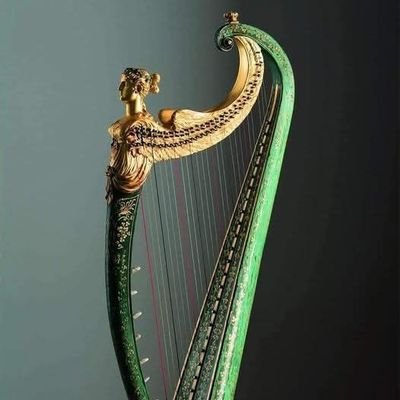
Hongkong Classical Traditional Tea Wrapped Skill By Master Chen who has been doing this for over 80 years in Hongkong,amazing!!!
habits retweeted

Age when winning all four Slams + the ATP Finals:
23 years old— Carlos Alcaraz
24 years old—
25 years old—
26 years old—
27 years old— Roger Federer
28 years old—
29 years old— Andre Agassi, Novak Djokovic
Generational. 🌟
habits retweeted

People ask me what it’s like to live in Switzerland and part of the answer is that it’s a very well managed and governed country.
I’ve been living here for 4 years now and can’t name a single Swiss politician.
I think that says something about what good politicians look like.
habits retweeted
BREAKING: Robert Pattison has been selected by Nvidia’s board as the new CEO, effective immediately.

habits retweeted

Ok let's talk seriously here
1. There's very few known entities that own enough to cause this price action and can sell. If you assume this is 2.5B+ of btc selling, all you really have is Saylor and USG, and neither is likely to sell. Of course it could also be CZ deciding to take some risk off after several large hits (US fine, hack, possibly 10/10?)
2. Some remote chance it's a player that's cracked cryptography, this is roughly how you'd execute although probably better to do during normal hours. Unlikely due to low priors
3. Could be some random nobody knows like the guy who cashed out $9B last year with galaxy. If so, probably fairly degen. This seems most likely option.
4. It's not some insider selling before WWIII, come on. The chances that someone who gets this kind of info also happens to have 5B of btc lying around is very low. The kinds of plausible insider moves are hundreds of millions on leverage in highly liquid markets, not someone dumping btc 15% in low liquidity weekends. We'll know tonight when futures open!
5. I guess it could be China but again, why sell quickly?
6. Could also be someone trying to frontrun DPRK. Not a terrible idea, they're going to dump $3B in crypto soon, they're price insensitive. If you're doing that you want as much price impact as possible so weekends make sense. But a very ballsy move if so. Study Tom Lee buys, or Do Kwon buys and sells for some masterfully executed front runs.
I'd say mixture of 3 and 6.

habits retweeted


ALT Llama in a Tux (@LlamaInaTux) on Twitter: "don't you understand? the human race is an endless number of monkeys. and every day we produce an endless number of words. and one of us already wrote hamlet."
habits retweeted

With the idea of 111k it’s hard to fathom making 111,111 interesting and unique images.
When you make NFTs within the same mindset as artists do in our scene, you tend to reinvent your art style or find a new format to make something still engaging with collectors & yourself.
🩸🪡⤵️


habits retweeted

This prompt finds things that make you feel kinda gross, like learning you have cockroaches in the walls:
"Clean up stale agent sessions and coding worktrees on my machine. Scan my activity monitor for suspicious processes from apps or packages that I may have installed at one point but no longer use. Audit any skills, MCPs, or agent instructions with exposed credentials or instructions >4months old to review for deletion."
the most balanced post elections analysis i've read on here

Takes on the election
1. To a first approximation, Republicans lost this hard because voters lost confidence in the Trump administration, not because of a positive agenda from the Democrats. Favorability of the Democratic Party was negative (-5). But Trump told voters to “vote like he was on the ballot”, and they did. The NBC exit poll found that 37% of voters approved of Trump, and 63% disapproved (-26). There’s just no winning the national environment with these margins.
2. There were essentially two major issues that voters cared about: 1) cost of living and 2) government corruption, both of which ~90% of voters said were “crucial or a major factor”. AI was not *that* big of a deal in this election - 56% said it was “crucial or a major factor”, but it’s really hard to disambiguate what voters feel about AGI and catastrophic risks (if anything) from ordinary median-voter NIMBYism around data centers. (It will, however, likely be a huge deal in the 2028 election when the impacts of AI become much more visible). Immigration was also not that big of a deal. Voters actually slightly favored Rs on immigration (+2), probably thanks to lasting backlash from the Biden administration’s laxity on border enforcement. It's unclear to what extent the war with Iran contributed aside from it raising the price of gas.
3. Data centers are probably not over. In fact data center ETF $DTCR was up nearly 2.5% today! It’s hard to understand why this is the case, but one hypothesis is that markets think ultimately, elites’ recognition of the immense economic and national security importance of data centers will override voters’ desire not to build them.
4. On cost of living in particular: one of the most important questions now is to what extent Dems will embrace economic slopulism (think rent control, broad asset taxes, and subsidizing demand) vs. “abundance liberal” policies like building more housing, cutting regulations, and embracing economic growth.
5. Thermostatic backlash is real. Voters hate incumbents. Political majorities shift constantly. The blue wave of 2008 was immediately followed by the red wave of 2010. Anyone predicting a durable multi-decade supermajority for Democrats will likely end up being wrong.
6. “Woke is back” is exactly the wrong lesson for Democrats to take from this, and Ro Khanna posting “DEI is back” doesn’t help. Using transgender issues as a proxy for “woke”, 52% of voters said trans rights have gone too far, compared to just 26% who said they haven’t gone far enough. Deep-blue Washington voted to ban trans athletes in girls’ sports, and Colorado voted to ban trans surgery for minors. Successful Democrats mostly avoided culture war issues.
7. Similarly, a lot of moderate or even right-leaning downballot measures passed, even in blue states. Eight states voted to require voter ID. North Carolina voted to cap state income taxes. California’s billionaire tax is on track to fail by nearly 11 points. Wisconsin voted to ban DEI in state government. Voters largely do not like left-wing ideas.
8. On the other side, “Demographics is destiny” (i.e. America needs to be a white nationalist/nativist country and heavily restrict immigration) is the wrong lesson for Republicans. White voters shifted 13 points to the left. Whites under 30 shifted 30 points to the left. Hispanics and other non-white groups shifted massively towards the right in 2024, and can be encouraged to do so again.
9. Moderates outperformed; radicals underperformed. Dems won by 13 points nationwide. Roy Cooper won by 19.6 in North Carolina (where Trump won by 3.2 in 2024). Jon Ossoff won by 18 in Georgia, where Trump won by 2.2. Abdul El-Sayed in Michigan and Troy Jackson in Maine, both Bernie-backed supporters of Medicare for All, abolishing ICE, and wealth taxes, both underperformed the national margin. In fact, Maine shifted slightly rightward. Dems were able to win deep red states like Iowa, Kansas, and Mississippi by running moderate, Republican-presenting, pro-border-security candidates. I suspect this is the main reason markets are up today. (For some intuition on how insane it is for a Dem candidate to win in Mississippi, Trump won Mississippi in 2024 by a larger margin than Harris won California!)
10. One of last night’s biggest winners was Florida’s Republican governor, Ron DeSantis. Under his tenure, Florida has gone from slightly red-leaning to reliably red. Republicans swept every statewide office, kept every House seat, and kept their majority in the State House and supermajority in the State Senate. In January, Florida will be the only one of America’s ten most populous states to have a Republican governor. DeSantis is genuinely smart and nuanced, lacks the baggage of figures like Vance and Rubio who are associated with the Trump administration, and did a great job as an administrator running Florida (see its high rate of domestic migration, zero state income tax, very low debt per capita, high education rankings, state budget surplus, etc). I would be unsurprised if he decided to run for President in 2028.
11. The other biggest winner was Jon Ossoff. Ossoff is a young, handsome, charismatic, moderate white male who won by 18 points in a state that went +2.2 for Trump in 2024. He achieved this in large part by focusing relentlessly on the two issues that mattered: the Trump admin’s corruption and the cost of living. He may very well be the Democratic frontrunner in 2028 (although, of course, it's far too early to make confident predictions about these things).
12. The biggest loser of all last night was Israel and the US-Israel relationship. Israel’s popularity in the United States has been in a steep, secular decline for years. Just 13% of Democrats and 54% of Republicans have positive views on Israel, and this is heavily skewed by age - younger voters are much more likely to oppose Israel. With Democrats taking both houses, it’s unlikely America’s level of political and military support for Israel will last for very long.
13. Gerrymandering doesn’t work under sufficiently strong margins for the opposing party. In political science, this is known as “dummymandering”. Dems are on track to flip 7 of North Carolina’s 14 House seats, shifting the balance of power from 10-4 Republican to 11-3 Democratic.
14. Trump quickly conceded that his party lost and he would be open to working with the Democrats. This was a positive update on Trump’s tendency toward authoritarianism. Many mainstream Republican figures, like JD Vance and Ted Cruz, quickly posted somewhat genuine mea culpas. There was a lot less coping than I expected. It’s possible that the loss had to be very painful for them to learn from it, and we wouldn’t have seen the same if Dems had won only 51 Senate seats.
15. Elections are truly a ton of fun to monitor live. There’s nothing like it. And prediction markets beat mainstream media in terms of timeliness and accuracy by FAR.
16. There’s a good chance none of this matters that much. Trump is still the president and still has veto power. Voters might turn on the incumbent Democrats in 2028. And historically, real GDP growth isn’t that different during eras where Ds controlled Congress vs Rs. Much of your probability mass should go towards “nothing ever happens”.
2
23
352
