

The Institute for Energy Research is a non-profit foundation that conducts analysis on the functions, operations, and government regulation of energy markets.
Washington, DC
Joined August 2008
- Tweets22.2K
- Following2.1K
- Followers18.1K
- Likes869




Pinned Tweet
The massive growth in AI-electricity demand at data centers has sparked growing concern about rising electricity demand and prices. Some are even calling for a moratorium on new data centers.
But does the data support this intuition? The answer is no.

Institute for Energy Research retweeted

@IERenergy
Explodes false study
Energy Innovation’s “Soaring Bills” Study Is Nonsense instituteforenergyresearch.o…

Refinery output in the Midwest is up 17% since 2000, while California has lost 30% of its refinery capacity in the last 5 years. What does this mean for gas prices?
Learn more about the relationship between gas prices and pipelines from our latest report. instituteforenergyresearch.o…

Institute for Energy Research retweeted

U.S. Midwest Refiners Need Expanded Infrastructure to Move Their Surplus Capacity to Markets instituteforenergyresearch.o… Via @IERenergy

Earlier this week The Institute for Energy Research released its newest paper, National Environmental Policy Act: An Obstacle to Affordable and Reliable Energy.
As permitting reform dominates the conversation in Washington, the National Environmental Policy Act (NEPA) is rightly in the spotlight. Originally designed to review and disclose the environmental effects of federal projects, NEPA has devolved into one of the most consequential obstacles to energy development and infrastructure construction in the United States. The question is no longer whether this law needs to be reexamined, but rather how. IER’s latest report examines how NEPA has been weaponized over time and outlines the steps needed to fix it. instituteforenergyresearch.o…

IER president @TomJPyle had this to say following the paper's release: instituteforenergyresearch.o…

The full report is available here: instituteforenergyresearch.o…

Institute for Energy Research retweeted

Science magazine’s climate plan is a wealth transfer scheme in disguise | RESTORING AMERICA by David Kreutzer, a former senior economist at the Institute for Energy Research, and Benjamin Zycher, a senior fellow at the American Enterprise Institute.
trib.al/93YVL9W

Institute for Energy Research retweeted
Proposed Natural Gas Pipeline expansion projected to lower energy bills in Massachusetts, but are voters paying attention? @FiscalAlliance
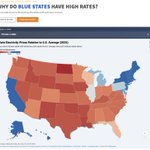
realclearenergy.org/articles… @IERenergy provides insights with "Blue States, High Rates"

The EU’s push for unilateral net-zero targets created a market optimized for Chinese overcapacity. High green energy costs hit European factories while China uses cheap coal to flood the bloc with subsidized solar and EVs. instituteforenergyresearch.o…

The Trump administration is considering broader sales of red-dyed diesel, which could allow some buyers to avoid the federal fuel tax; banning diesel exports, which would not solve the problem and could have the opposite effect; and asking refineries to take voluntary action to increase U.S. diesel supply, which could reduce diesel prices. instituteforenergyresearch.o…

California has seven new pieces of legislation regulating data centers, signed by Governor Newsom, who has reversed his stance on data center development. The measures are likely to shift data center development to other states which see the benefits in their development. instituteforenergyresearch.o…

New York’s residential electricity prices are among the highest in the nation, 60% higher than the national average and 95% higher than Florida’s average residential prices, where many New Yorkers have migrated. Hochul admits that the rebate would not resolve the underlying causes of high energy prices. instituteforenergyresearch.o…

Institute for Energy Research retweeted
@IERenergy IER points to RGGI participation as one of the key factors behind rising energy prices in certain states in Blue States, High Rates. Thomas Jefferson would agree!! restoration-news.com/redisco… @NewsRestoration @ceidotorg

A new study by @AlwaysOnEnergy for the @FiscalAlliance examines what an expansion of pipeline capacity could mean for Massachusetts ratepayers. Its subject is Project Beacon, a proposal to expand the existing Algonquin Gas Transmission system through pipe replacements, pipeline loops, and added compression. The project would provide 300 million cubic feet per day of additional firm capacity, with service targeted as early as November 2030. instituteforenergyresearch.o…
Think a diesel export ban will lower prices at home? Think again.
Restricting exports doesn't create new diesel—it artificially inflates global prices, hitting American wallets.
Institute for Energy Research retweeted

🚨Why did #diesel just hit record prices near $6.50 a gallon even though crude is not at an inflation-adjusted record? That is not a mystery. It is also not “gouging.”
A new analysis by the Institute for Energy Research @IERenergy – linked in the next post - has the details.
Crude is the feedstock. Diesel is a manufactured product. The bottleneck is the refining system, and that system is stretched thin.
Make no mistake: this is a global distillate shortage, not a kitchen-pantry problem Congress can fix with an export ban two months before an election.
• Diesel crack spreads briefly topped $100 a barrel. That is the market screaming that finished fuel is scarce relative to crude, not that refiners invented a new way to fleece farmers.
• Ukrainian drone strikes smashed Russian refining. Moscow then banned diesel exports. Russia used to be one of the world’s biggest diesel suppliers. That supply is gone.
• The Iran conflict and the de facto choke on the Strait of Hormuz cut Gulf diesel and gasoil exports. Reuters put the combined Russia-plus-Gulf loss near 1.6 million barrels a day.
• U.S. plants are already running at 97–98% utilization and producing huge distillate volumes. There is no idle warehouse of diesel sitting around waiting for a politician to “keep it home.”
• America has less refining capacity than the 2020 peak. Closures, conversions to renewable diesel, aging plants, and hostile state policy reduced the cushion. When the world loses barrels, prices spike harder.
High margins mean refiners that can run are making money. They should. That price signal is what keeps units running full tilt.
Pretending exports caused the spike is utter nonsense. U.S. plants make more distillate than the domestic market absorbs. Slam the export valve and they cut runs. You lose diesel, gasoline, and jet fuel from the same crude stream.
Energy reality is ugly and simple. Prices stay high until the wars end, damaged plants come back, and inventories rebuild.
Until then, the answer is more supply, not election-year hostage-taking of the fuel that moves food, freight, and harvest.

Institute for Energy Research retweeted

Massachusetts families and businesses pay some of the highest energy costs in the country. A new Fiscal Alliance Foundation study examines how much of that burden could be reduced by expanding natural gas pipeline capacity into New England.
Our newly released study, Project Beacon: Estimated Savings for Massachusetts Ratepayers, analyzes the proposed 300 MMcf/d expansion of the Algonquin Gas Transmission system and models what that additional capacity could mean for natural gas prices, electricity prices, and winter fuel use in Massachusetts.
The findings are significant.
Based on historical data, the analysis estimates that Project Beacon could have produced an average of $367 million in savings per winter for Massachusetts ratepayers across natural gas and electricity costs.
For a typical gas-heated household, the study estimates approximately $95 in gross annual winter savings, compared with an estimated $19 annual cost associated with the project, leaving about $76 in net savings. For commercial ratepayers, the estimated net savings are approximately $622 per winter.
The analysis also estimates that adding 300 MMcf/d of pipeline capacity could:
📉 Reduce Algonquin Citygate natural gas prices by an average of $1.27/MMBtu
⚡ Reduce winter wholesale electricity prices by an average of $4.78/MWh
🛢️ Reduce winter oil-fired generation by roughly 35 percent, displacing about 8.4 million gallons of fuel oil per winter
🔥 Provide the greatest savings during the coldest winters, when pipeline constraints and energy prices are under the most pressure.
The interactive version of the study lets you explore the findings, charts, pipeline maps, methodology, ratepayer estimates, and underlying data in one place.
Massachusetts’ energy affordability problem did not develop overnight, and there is no single factor behind it. This study takes a detailed look at one important piece of that problem: what limited natural gas pipeline capacity costs ratepayers, and what additional capacity could mean for household and business energy bills.
Explore the full interactive study: fiscalalliancefoundation.org…

Today, the Institute for Energy Research released a new report finding that the focus on the U.S. trade deficit with Canada misstates the relationship. Most of what America buys from Canada is discounted crude oil, natural gas, potash, and unfinished metals that U.S. workers refine into higher-value products and export at a premium.
By updating our trade accounting to grant a domestic designation to raw Canadian inputs that are refined in U.S. facilities, policymakers can scrub tens of billions of dollars from the trade deficit.

IER President @TomJPyle had this to say:
“Putting America First requires trade metrics that accurately reflect domestic manufacturing, supply chain resilience, and American labor, rather than figures that group discounted raw materials from an ally with finished goods from competitors. For decades, these flawed trade figures have misled economic policy in Washington. By updating trade rules to classify raw Canadian inputs processed in U.S. facilities as domestic, policymakers can eliminate tens of billions from the trade deficit. Combined with the U.S. surplus in services, this adjustment virtually erases the bilateral trade gap with Canada, allowing Washington to focus on strengthening supply chains, expanding manufacturing, and securing well-paying American jobs.”
instituteforenergyresearch.o…

The full report is available here: instituteforenergyresearch.o…