

🇲🇽 | @Libertarianism. @ClubAmerica.
CDMX | México.
Joined January 2025
- Tweets300
- Following744
- Followers606
- Likes6.7K


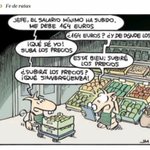





Todos los aumentos al salario mínimo sin respaldo en la productividad y con el agravante de las reducciones en las jornadas laborales, en pleno auge de la automatización y de la robotización, tienen consecuencias.


.@FarmaciasGdl abrió su primera sucursal automatizada en el País El establecimiento, ubicado en Av. Ávila Camacho, hay cajas de autocobro y surtido de medicina, que funcionan con robot e IA.
Los detalles: mural.com.mx/hMXYWm
El peor análisis posible. Nada que ver la sustitución del trabajo físico en comparación a la sustitución del raciocinio, de la lógica y del razonamiento.


If you're worried about A.I., you should think about the tractor.
Yes, the tractor. 👇
An Iowa inventor named John Froelich built the first practical gasoline tractor in 1892. Froelich left the business, but the firm, renamed the Waterloo Gasoline Engine Company, went on to build the Waterloo Boy: a two-cylinder kerosene tractor. But that's not what really changed the world.
Ford changed the world.
As he’d done with cars, Henry Ford perfected the tractor. Ford’s tractor debuted in October 1917 at $750, or roughly $137,000 today. In March 1918, John Deere bought the Waterloo Gasoline Engine Company. The John Deere Model D arrived in 1923, stayed in production for 30 years, and sold 160,000 units. Anticipating the competition, in February 1922, Ford cut the price of his tractor to $395. The industry called what followed the “tractor wars.”
In 1923 alone, Ford built more than 100,000 tractors.
The resulting vast increase to farming productivity was probably the single biggest, most important fundamental economic change in human history to that point.
In 1830, growing 100 bushels of wheat took 250 to 300 hours of human labor with a walking plow, a sickle, and a flail. By 1930, with a tractor, a gang plow, and a combine, the same 100 bushels took 15 to 20 hours, a 95% reduction.
In 1920, American farms owned 246,083 tractors and 25.2 million horses and mules. By 1950, they owned 3.25 million tractors and only 7.6 million horses and mules. I bet you've never thought about how much that changed -- or created -- the modern world.
A mature farm horse needed about three acres of cropland for feed every year. At “peak horse” in 1915, roughly 93 million acres of American cropland grew food for horses and mules rather than for people.
The economic historians Alan Olmstead and Paul Rhode calculated that the tractor replaced 23 million draft animals between 1910 and 1960. That added 79 million acres to the effective cropland base, an area equal to two-thirds of all the cropland harvested across the Louisiana Purchase.
By 1960, the tractor cut the labor needed to grow America’s crops by about 1.7 million workers.
So who lost? The horse breeders lost, and so did the oat growers who fed the horses. The harness makers, the livery stables, and the farm blacksmiths lost too. And, of course, millions of farmers who didn’t take advantage of the new machinery and vastly expand their acreage also lost.
But… who won? America won. All of us.
In 1900, 41% of America’s workforce worked in agriculture. By 1930, the share was 21.5%, and by 2000, it was only 1.9%.
It was this fundamental change to farming productivity that created our cities. The 1920 census was the first in our history to count more Americans in towns and cities than in the countryside: 51.2%. During the 1920s, for the first time in our history, the total rural population actually fell.
So… what happened to the farmers? They followed prices (wages) to build what the economy needed. It didn’t need farmers anymore, thanks to tractors. The new economy needed cars and radios, city offices, stores, and hospitals. While they went on to build these things (and invent many others), the food they no longer had to grow kept arriving from fewer farms, at lower prices.
But hang on, didn’t the advent of the tractor and the changes to farming cause the Great Depression? Remember the “Okies”? Remember John Steinbeck’s The Grapes of Wrath?
For the farmers who couldn’t compete in the new world of tractor farming, politics held out the siren song of getting something for nothing. And getting disaffected farmers’ votes was a winning political strategy for decades.
When Herbert Hoover became the U.S. president in March 1929, he called Congress into special session to deliver “farm relief through limited changes in the tariff.”
Much like President Trump today, Hoover believed tariffs were taxes that Americans wouldn’t have to pay. Those revenues could be used to give money to farmers. Congress took Hoover’s farm bill and loaded it with protection for thousands of other businesses.
More than 1,000 American economists signed a petition begging Hoover to veto the bill. They warned “the vast majority of farmers would also lose.” Henry Ford, the man selling tractors to those farmers, spent an evening at the White House calling the bill “an economic stupidity.” But Hoover signed it anyway, on June 17, 1930.
The Smoot-Hawley Tariff did exactly what the economists predicted. Canada retaliated before the bill was even signed, and Europe followed. Our exports fell from $5.24 billion in 1929 to $1.67 billion in 1933: a 68% collapse.
From 1926 through 1929, trade accounted for 15% to 17% of American farm income. It went to zero after the tariff. Farm-state banks failed by the thousands. Between December 1930 and March 1933, about half of all American banks either closed or merged.
But the tractor didn’t cause the Great Depression.
The productivity – the enormous wealth – it delivered was real. What turned that productivity into misery was government: a tariff wall that kept American farmers from selling their incredible abundance to the world.
And that's the big risk today.
A big part of what’s driving the angst and the political resistance to artificial intelligence (“AI”) is the computer nerds (who don't understand the first thing about economics) saying that humans will never have a job again.
Nonsense.
Yes, millions of jobs will vanish. Yes, whole trades will die. Yes, prices for things like legal work, accounting, and medical diagnosis will collapse. And yes, the capital invested in the old way of doing those things will get wiped out. People aren’t going to use Google’s web search anymore.
But that doesn’t mean that Alphabet (GOOG) is going to go out of business.
Why not? Because creative destruction isn’t a flaw of capitalism – it’s the main feature.
Joseph Schumpeter, the Austrian economist, first explained all of this formally in 1942. But you still won’t see this taught in government schools.
While Marx invented the term “creative destruction,” Schumpeter correctly explained it for the first time as a process that “incessantly revolutionizes the economic structure from within, incessantly destroying the old one, incessantly creating a new one.” He wrote that
“This process of Creative Destruction is the essential fact about capitalism,” and he described capitalism itself as “the perennial gale of creative destruction.”
The logic is simple. A new machine lets fewer people produce more, so prices fall. The workers and the capital that the old method no longer needs are set free, and prices tell them where they are needed next. The market allows them to go on to build new industries that nobody could have planned.
That’s why the AI nerds believe there won’t be any new jobs: they haven’t been created yet.
Ironically, the AI that the nerds do understand is what will empower the human creativity and ingenuity that will build these entire new industries – if the government doesn’t get in the way.
Capitalism is the best way to organize a society and allocate its scarce resources for exactly this reason: it encourages creative destruction instead of preventing it. On the other hand, systems that protect incumbents stagnate. They don’t grow. They restrain human ingenuity. Poverty is the result.
We are living through a new huge “gale” of creative destruction today with AI. The temptation to stop it politically will be immense. And whether or not we – as a society – thrive or are destroyed by AI will depend on Americans continuing to choose freedom and capitalism over statism and poverty.
Given our changing demographics and the rise of communism in America, I’m honestly not optimistic. (And by the way, much of the blame for that rests with the Republicans who continue to pursue statist, big-government policies.)
The tractor of the AI age is the Nvidia (NVDA) accelerator chip: the machine that lets a small number of people do work that once took armies of them. I expect the creative destruction it unleashes to be every bit as violent as the tractor’s. And Washington has decided that the best way for us to manage it is to keep the machine at home.
The United States began restricting Nvidia’s advanced chips to China in 2022, and it still bans the export of Nvidia’s newest Blackwell and Rubin chips there. In December 2025, the White House allowed sales of the older H200 chips to approved Chinese buyers on one condition: the chips had to be routed through the United States, where the government collected a 25% tariff on the way out.
The barriers keep spreading. On Monday, the Commerce Department issued a rule requiring an export license to ship advanced chips to Indonesia, Malaysia, Singapore, Thailand, and Brazil.
We shouldn't fear AI. It's here. There's no putting the genie back in the bottle. And erecting barriers to trade is exactly what caused a great depression when the tractor arrived.
Let's not make that mistake twice.
1
20
337
¿Buenas noticias en qué sentido, si la inflación ya está descontrolada?


💰📈 ¡BUENAS NOTICIAS PARA TU BOLSILLO! El #SalarioMínimo en #México podría aumentar hasta 13% en 2027
posta.com.mx/mexico/aumentar…

La Falacia de la Ventana Rota.

Frédéric Bastiat gave economics its most useful diagnostic tool in 1850, and most people in government today have never applied it; in fact, they avoid it like the plague.
The tool is simple: when you evaluate any policy, law, or intervention, you must account not only for what you can see, but for what that intervention could destroy before it could exist.
A shopkeeper's son smashes a window. The glazier gets paid. The crowd watching decides this is good for the economy because money circulates. What they cannot see is the suit the shopkeeper planned to buy, the tailor who goes without a sale, the capital that evaporates into replacement rather than expansion. Destruction consumed resources. Nothing was created. This is the broken window fallacy.
Governments run this logic on a civilizational scale.
The 2009 Cash for Clunkers program destroyed 690,000 working vehicles, most of them affordable transportation for lower-income buyers, in exchange for a brief sales spike at GM and Ford. Congress saw the spike; nobody in the Congressional Budget Office modeled the used-car market that you, specifically, lost access to when supply collapsed and prices jumped. The program cost $3 billion, and you paid for it, then you paid again at the used lot.
Minimum wage laws work exactly this way. The politician sees the worker earning $17 an hour instead of $14. The camera follows that worker. The teenager never got hired because the entry-level position was automated or simply eliminated when the math stopped working for the employer. That teenager's first job, his first reference, his first skill set, disappears into the unseen and nobody holds a press conference about it.
Trade tariffs are perhaps the most dishonest application of the seen-and-unseen problem. The steel mill in Pennsylvania stays open. Those workers are visible, photographed, quoted in dispatches. Invisible are the downstream manufacturers, the auto plants, the appliance makers, the construction firms who now buy steel at artificially inflated prices and either raise their prices or cut their own payrolls. The 2018 Section 232 tariffs saved 8,700 steel jobs by one Federal Reserve estimate, while raising costs across steel-consuming industries that employed 6.5 million workers.
Every resource a government spends was first extracted from somewhere else. Every job a subsidy preserves is set against jobs the private sector never created because capital was redirected by force. The seen is always photogenic. The unseen never gets a ribbon-cutting ceremony, which is precisely why politicians ignore it, and you keep paying the difference.

Por supuesto que hay que exigir justicia por lo que sucedió. Pero también hay que señalar que es irónico hacerlo ante una situación de atropellamiento, mientras vas grabando un vídeo manejando y distrayendo la vista del camino.

La familia de Cristina Joselyn Rocha Chimal exige justicia tras su fallecimiento luego de ser atropellada en la avenida Santa Fe, en la alcaldía Cuajimalpa, cuando tenía seis meses de embarazo.
El conductor responsable abandonó el lugar de los hechos y, hasta el momento, las autoridades no han reportado avances en su localización, por lo que se solicita el apoyo de testigos para identificarlo.
Qué raro cómo todo hoy está muchísimo más caro que con los malvados neoliberales. Otro éxito mas de la #4T y sus políticas inflacionarias.


Las fondas, recauderías y taquerías de la ciudad se hacen la misma pregunta cada semana: ¿a cuánto va a estar el jitomate?
La respuesta es pública, gratuita y casi nadie la conoce: el SNIIM.
Todos los días registra el precio al mayoreo de frutas, verduras y granos, y explica por qué sube o baja cada producto.
Para un changarro, eso significa saber si le están cobrando de más y adelantarse a un alza antes de que llegue.
Cómo encontrarlo: busca “SNIIM precios”.
Hay negocios que pagan analistas por esta información. Tú la tienes gratis.
Y cada vez más presente en México.

⚖️📡 La SCJN validó disposiciones que permiten la geolocalización en tiempo real y el acceso de autoridades a datos de telecomunicaciones.
capitalmexico.com.mx/politic…

📊 Mis resultados en el test político.
(En la segunda imagen aparece el grado de afinidad que yo tendría con los partidos políticos de #España).


Siempre pensé que este tipo de publicaciones eran fake, y no dudo que muchos sí hagan simulaciones, pero a un amigo le enviaron un jabón en vez del cargador de su laptop. Por ende, si pueden evitar comprar artículos electrónicos en @amazonmex, evítenlo, no se expongan.

¿Es neta Amazon? Pedí un iPhone 18 Pro Max y recibí una caja de otro teléfono con un perfume adentro. Yo no tengo la culpa de que sus trabajadores del CEDIS de Pachuca sean unos rateros, @amazonmex su atención a clientes es una basura tengo pruebas con fotos y videos de cuando…


¿En qué países son "tantos", porque con base en la proporción de la población han sido pocos, y esos pocos rara vez buscan libertades, más bien buscan que el Gobierno esté más presente y entrometido en sus vidas.

Nuestra transmisión anoche 📡
Conversación con @YomarMr Moreno, sobre «El Estado de Bienestar y los jóvenes. Las protestas juveniles en Europa».
Véala ahora aquí: youtu.be/m4AddUc0uD0?si=NmDT…

Cada avance de la Cuarta Transformación es un retroceso en las libertades.
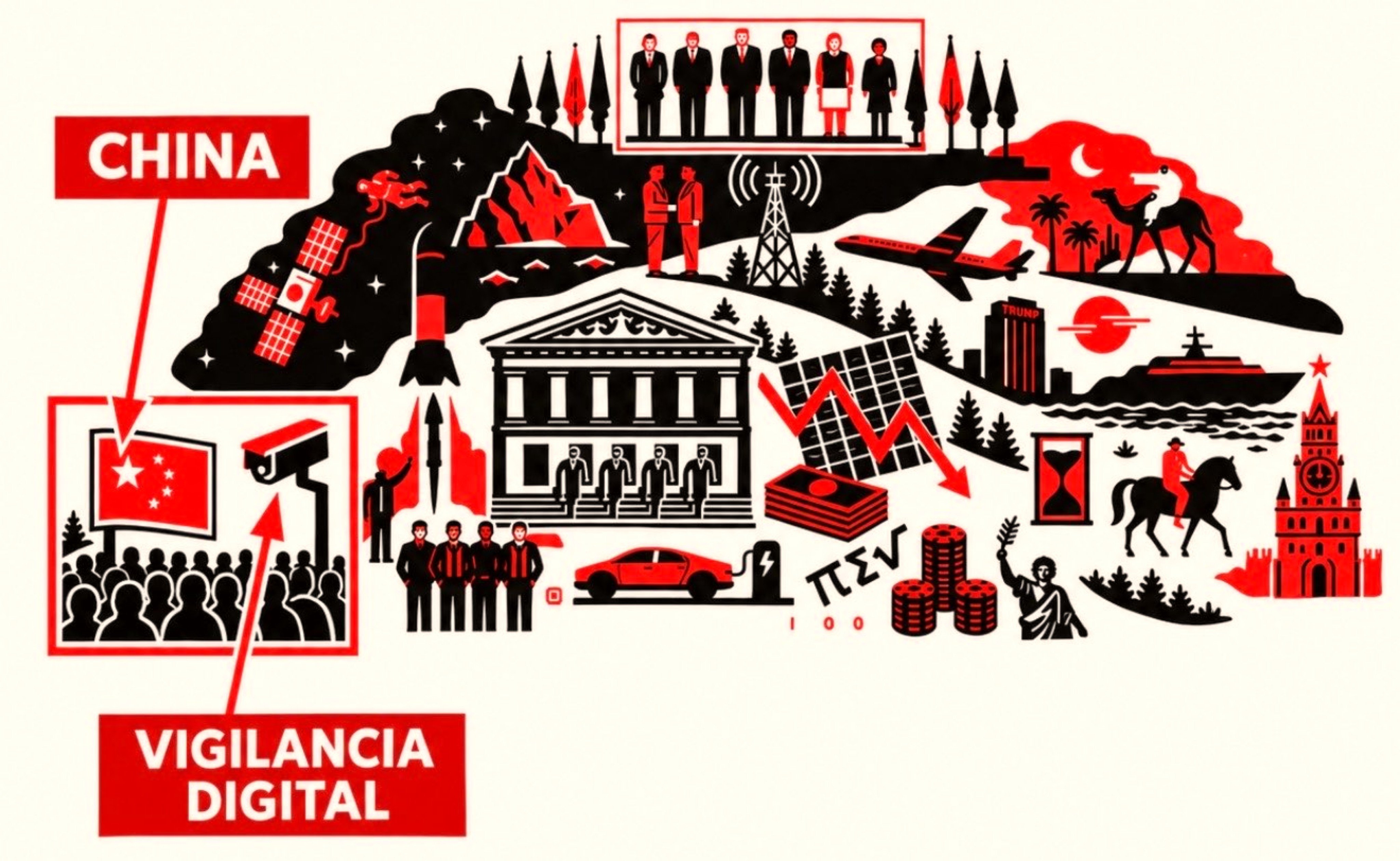

Nuestro teléfono se ha convertido en el registro más íntimo de nuestra vida. Hoy, la @SCJN discutirá un proyecto de la ministra María Estela Ríos que propone avalar la conservación obligatoria de nuestros datos telefónicos durante 24 meses y la geolocalización en tiempo real. El problema es enorme: el Estado puede conocer aspectos de nuestra vida privada sin necesidad de escuchar una sola conversación.
Saber con quién hablamos, cuándo lo hacemos y dónde nos encontramos permite reconstruir nuestras relaciones, movimientos y hábitos. La ministra sostiene que estos datos no equivalen al contenido de las comunicaciones y que localizar un celular no exige, por sí mismo, autorización judicial. Es una visión preocupantemente limitada de la privacidad. El artículo 16 constitucional protege mucho más que nuestras palabras.
Combatir la delincuencia es indispensable, pero no justifica cualquier intervención del Estado. Aunque el acceso a los registros conservados requiere control judicial, queda una pregunta constitucional de fondo: ¿por qué conservar indiscriminadamente los rastros de millones de personas para investigar a unas cuantas? La seguridad exige necesidad, proporcionalidad y controles efectivos. Una democracia no puede acostumbrarse a tratar la vida privada de todos como información disponible para futuras investigaciones. La seguridad debe proteger nuestra libertad, no convertirla en objeto de vigilancia.

1
16
356
Esta señora a duras penas sabe hablar. Es evidente que ese proyecto no pudo presentarlo por iniciativa propia. Los ministros de la @SCJN de la #4T son los títeres que convalidan todo para favorecer a la agenda tiránica internacional.

⚖️📱 Ministra Estela Ríos pierde el hilo de su intervención al consultar su celular en plena sesión de la SCJN
🔴 Durante una discusión del pleno de la @SCJN, la ministra María Estela Ríos González tuvo dificultades para continuar su exposición luego de perder de vista el párrafo que leía desde su teléfono celular.
La situación provocó una breve interrupción mientras intentaba retomar su intervención.
📹 @SCJN_Clips
12
94