

Official account of the world’s largest library. Explore collections & plan a visit. All Library accounts: https://teapaw.org/t.co/KMH2LPXfZv
- Tweets25.7K
- Following13
- Followers1.1M
- Likes4.4K
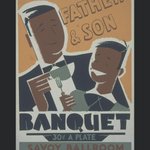




ALT WPA poster featuring a "Father & Son" banquet Sponsored by the Chicago Urban League in the Savoy Ballroom on Saturday, Oct. 28 from 5 to 9 p.m. Albert Bender, artist. 1939. Work Projects Administration Poster Collection, Library of Congress Prints and Photographs Division.

ALT Poster for the Tenement House Department of the City of New York advising that tenement house residents keep their fire escapes free of obstructions. 1936 or 1937. Work Projects Administration Poster Collection, Library of Congress Prints and Photographs Division.

ALT Poster promoting cleanliness and proper child care, showing swan with cygnet. Erik Hans Krause, artist. Between 1936 and 1939. Work Projects Administration Poster Collection, Library of Congress Prints and Photographs Division.

ALT Who's who in the zoo Illustrated natural history prepared by the WPA Federal Writers Project : On sale at all book stores, zoos, and museums. Attributed to Sidney Jacobson. 1936 or 1937. Work Projects Administration Poster Collection, Library of Congress Prints and Photographs Division.

ALT Don't Forget the Salvation Army (My Doughnut Girl) sheet music. Cover features an illustration of a "Doughnut Girl" holding a bucket full of doughnuts. Inside page features the sheet music for the song. Library of Congress WWI sheet music collection.

ALT Salvation Army doughnut race. Three women stand behind waist-high donuts. The White House is seen in the far background. Harris & Ewing photograph collection, Library of Congress Prints and Photographs Division.

ALT Chauntee Ross of musical duo SistaStrings performs on one of the Library's Stradivarius violins during a visit, March 21, 2024. Photo by Shawn Miller/Library of Congress.

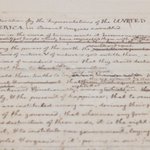
ALT Thomas Jefferson's handwritten draft of the Declaration of Independence, shown May 14, 2026. Photo by Shawn Miller/Library of Congress.


ALT Photograph shows side view of a cat wearing a winged helmet and breastplate armor in the role of the valkyrie Brünnhilde from the opera Der Ring des Niebelungen. Weidhaas, Adolph Edward, photographer. 1936.

ALT Photograph shows Benjamin Fink, half-length portrait, standing, facing front, holding Tiger, referred to as "Tige", the White House cat with President Calvin Coolidge. 1924. National Photo Company Collection, Library of Congress Prints and Photographs Division.

ALT Seated woman, side view, with a white cat on her shoulder. February 1894 and February 1901. C.M. Bell Studio Collection, Library of Congress Prints and Photographs Division.


ALT The Dalí Quartet, accompanied by Ricardo Morales on clarinet, performs during the Library's annual Stradivari concert in the Coolidge Auditorium, December 18, 2023. Photo by Shawn Miller/Library of Congress.

ALT The Daedalus Quartet and members of the Erick Hawkins Dance Company perform "Elusive Pierce/Disparate Stairway Radical Other" in the Coolidge Auditorium, June 3, 2025. Photo by Shawn Miller/Library of Congress.

ALT Cuban-Swiss musician Yilian Cañizares blends her native Afro-Cuban rhythms with jazz and classical music during a performance in the Coolidge Auditorium, April 9, 2026. Photo by Shawn Miller/Library of Congress.

ALT Roberto Díaz performs on the Library's 1690 "Tuscan-Medici" viola by Antonio Stradivari, with accompaniment by mezzo-soprano Judy Zhuo and pianist Lynn Ye, during a concert celebrating the viola's acquisition by the Library, May 14, 2025. Photo by Shawn Miller/Library of Congress.
ALT The Dalí Quartet, accompanied by Ricardo Morales on clarinet, performs during the Library's annual Stradivari concert in the Coolidge Auditorium, December 18, 2023. Photo by Shawn Miller/Library of Congress.
ALT The Daedalus Quartet and members of the Erick Hawkins Dance Company perform "Elusive Pierce/Disparate Stairway Radical Other" in the Coolidge Auditorium, June 3, 2025. Photo by Shawn Miller/Library of Congress.
ALT Cuban-Swiss musician Yilian Cañizares blends her native Afro-Cuban rhythms with jazz and classical music during a performance in the Coolidge Auditorium, April 9, 2026. Photo by Shawn Miller/Library of Congress.
ALT Roberto Díaz performs on the Library's 1690 "Tuscan-Medici" viola by Antonio Stradivari, with accompaniment by mezzo-soprano Judy Zhuo and pianist Lynn Ye, during a concert celebrating the viola's acquisition by the Library, May 14, 2025. Photo by Shawn Miller/Library of Congress.

ALT A photograph of the newly-acquired copy of the Theodore Roosevelt speech delivered immediately after he was shot by would-be assassin John Schrank. Centered in the photo is the line "I have just been shot".

ALT A screenshot of an image on the front page of The Atlanta Georgian and News from Oct. 16, 1912. The headline reads, "How Colonel Roosevelt Was Shot." Below that is a "photo-diagram" with an image of Roosevelt waving to a crowd with the shooter drawn in to the image.

ALT Elbert Martin and bullet-pierced speech. Photo related to John F. Schrank's attempted assassination of U.S. President Teddy Roosevelt in Oct. 1912. Bain News Service photograph collection, Library of Congress Prints and Photographs Division.

ALT A photograph of the newly-acquired copy of the Theodore Roosevelt speech delivered immediately after he was shot by would-be assassin John Schrank. it shows some of Roosevelt's own penciled emendations.

ALT Editorial cartoon reads: "We are against his politics but we like his grit." Roosevelt holds paper marked "speech" with bullet hole at top. Cartoon by William Allen Rogers.

ALT X-Ray of Roosevelt (shows bullet). Photo related to John F. Schrank's attempted assassination of U.S. President Teddy Roosevelt in Oct. 1912. Bain News Service photograph collection, Library of Congress Prints and Photographs Division.


ALT Photo shows crowd gathered outside the New York Herald newspaper building in New York City to watch a "playograph" during the World Series, 1911. Bain News Service photograph collection, Library of Congress Prints and Photographs Division.

ALT Advertisement in The Washington Daily News, Monday, Oct. 4, 1926 advises baseball fans to "See the World's Series on The Washington Daily News Playograph," an "ingenious mechanical devise that reproduces the actual game play by play" via "a special wire from the ball park to the rear of the Playograph" that "insures speed and accuracy." "As fast as a play is made a crew of three operators will reproduce it for you on the Playograph."