

Long Now is a non-profit organization fostering long-term thinking and responsibility in the framework of the next 10,000 years.
San Francisco, CA
Joined July 2008
- Tweets15.4K
- Following5.4K
- Followers54.4K
- Likes19.5K



Pinned Tweet
Challenges that feel impossible to tackle within a single human lifetime become conceivable when you have a longer timescale to work with.
Today is a day to take the long view.
Join our community of long-term thinking, 02026 is going to be a good one. na2.hubs.ly/H02frJ50
Long-time Long Now collaborator @JonathonKeats explores time beyond the human scale in “Chronotope,” a new group exhibition opening next week at Moderism. His piece, Arboreal Tempo, reconfigures a standard metronome to measure time at the vastly slower, deliberate pace of a tree.
If you are in the Bay Area, attend the opening reception to see it in person:
Thursday, Nov 12 | 6:00–8:00 PM
@ Modernism | 724 Ellis St, San Francisco modernisminc.com/exhibitions…
Long Now Foundation retweeted

so excited for this! That's my article right there! Buy this book immediately!!

Issue 3 of Pace Layers, our print annual journal of long-term thinking, is out now. Get it here: shop.longnow.org/products/pa…


Long Now Foundation retweeted

once again honored to be so intimately involved --
20 + instances of custom art for this issue,
3 full-color double-page spreads
Issue 3 of Pace Layers, our print annual journal of long-term thinking, is out now. Get it here: shop.longnow.org/products/pa…
Long Now Foundation retweeted

Honored to have my Long Now Talk featured in Issue 3 of Pace Layers, The Long Now Foundation’s annual journal of long-term thinking.
We explore what it takes to build institutions that endure beyond their founders, a question central to stewardship and long-term thinking.
Get it here: lnkd.in/ge_fx3-C
Issue 3 of Pace Layers, our print annual journal of long-term thinking, is out now. Get it here: shop.longnow.org/products/pa…
Long Now Foundation retweeted

I recently hosted @blaiseaguera and @baratunde at @LongNow for a discussion on Interdependence.
From each of their unique vantages, we explored how we might move beyond what Blaise calls the "Cartesian wound," and colonial legacies of domination, to embrace a worldview rooted in mutual dependence, ecological stewardship, and belonging with both nature and technology.
Baratunde and Blaise approach AI not as a product or a neutral tool, but as a relationship that shapes our habits and our agency. They talk about how human intelligence has always been collective. And I ask them what it might mean to be human a hundred years from now.
It’s a conversation that’s generous in areas of agreement and generative when it diverges. It’s also something of an experiment for us: it’s going to feel a lot more like a lively back-and-forth between old friends in your living room, than it is a traditional Long Now Talk.
Enjoy: youtube.com/watch?v=CpNPzkKy…

Issue 3 of Pace Layers, our print annual journal of long-term thinking, is out now. Get it here: shop.longnow.org/products/pa…
Featuring an excerpt from the next installment of Maintenance: Of Everything by @stewartbrand
Long Now Talks by Bayo Akomolafe, @nayafia, @katecrawford, Melody Jue, @indy_johar, @ninamiolane & Claire Isabel Webb, @ericries, and Lynn Rothschild
Essays by Josh Berson, Samuel Butler, @deepfates, Amitav Ghosh, @grescoe, @EmilybyNight, and @jonathonkeats
Fiction by Andrew Dana Hudson
Poetry by @denisehearn_ and Gary Snyder
Art by @CaseyCripe, Isabella Kirkland, Katie Paterson, and Stefan Sagmeister
Photography by @chrismichel
It's a real beauty.

This expansive conversation between @baratunde and @blaiseaguera covered symbiogenesis, Copernican wounds, indigenous democracies, organic and synthetic intelligence, and how we protect our humanity and care for the collective in the age of AI.
Far reaching and heart-felt, this is a must-see.
Watch the episode on YouTube: youtu.be/CpNPzkKy0Fc?si=0r1_…
Listen on any podcast app: pod.link/186908455/episode/M…
Thank you to all our members and supporters who make this episode ad-free and globally accessible. Every member receives two free tickets to Talks like this, join us: longnow.org/join
Long Now Foundation retweeted
So thrilled @ninabegus is leading our Epistemic Cycles Lab @longnow.

Movie making, fiction, science come together to face the unknown.
Watch Dennis Villeneuve and @ninabegus discuss the Arrival, past, present, and future.

How do we make the unfathomable scales of planetary and cosmic history tangible? Artist and Long Now Council member Katie Paterson has spent her career translating the vast dimensions of deep time into visceral experiences.
Her first solo exhibition in China, Across Deep Time, is now open at UCCA Dune in Aranya, and it is a triumph. The exhibition convenes 21 of her works showcasing everything from Earth’s deep past to beauty in the outer reaches of the cosmos. Here are a few of our favorites from the show, on view until April 02027.
Silva (2024) — a branch formed from the ashes of 10,000 tree species, condensing the enormity of the world's forests into a single, fragile object
Totality (2016) — 10,000 images of total solar eclipses, daguerreotypes to modern telescopic photography, each image made into a reflective facet on a giant mirror ball
Vapour (2026) — an atmospheric sculpture composed of 1,000 water sources from across the planet (ice cores, aquifers, monsoon rains) released as a shifting fog for visitors to breathe and inhabit
Congratulations Katie! More on the exhibition here: na2.hubs.ly/H08MhJN0


An important discussion is happening around the death of the leap second: International metrologists voted to halt worldwide usage of the leap second convention and adopt a continuous atomic time scale instead. This will mean civil time will drift away from astronomical solar time by up to an hour over the centuries ahead.
The discussion brings long-term thinking, civilizational planning, and planetary-scale cooperation all to the forefront, which we love.
Farewell to the little leap second, and welcome to the future leap hour. It’s all a poetic reminder that human technology is still tethered to the messy, irregular, wobbly planet we all inhabit.

The leap second is no more. International timekeepers voted to end it today, which will allow Earth’s rotation and official time to fall farther out of alignment than ever before.
sciam.com/article/scientists…

Long Now Foundation retweeted

This is an outstanding essay on the nature and prospects of AI.

I'm absolutely thrilled to have written this article for Long Now. It's about AI and time: how we got here, and what we can do now, when all of the pace layers are disrupted at once by an influx of new minds.
I wrote this over the summer. At the time, it seemed maybe too weird, like people wouldn't believe or understand what I was saying. And of course, everything changes so fast that it's hard to imagine writing something about AI that far in advance and have it still make sense. But I think the events of the last few months have only made it more relevant.
The Long Now Foundation has been an inspiration to me for a decade now, and has changed my life in countless ways. I'm incredibly grateful and honored to be among so many of my heroes and friends and colleagues represented in this issue of Pace Layers and Long Now Ideas. I wouldn't be here in San Francisco, here on Twitter, or here in the field of artificial intelligence if not for this community.
The conversation about AI has been fractious. It's very hard to think about how to fit this sudden, disruptive, technological change into the 10,000-year view. I hope I provide some insights, or at least some new angles for the conversation. It's scary to go on the record, especially about something that will affect everyone, and affect the rest of history. If I'm wrong, I'm wrong forever!
Please read and enjoy, and post quotes and screenshots, and buy Pace Layers Issue 3 so you can have a permanent hard copy. I have always wanted to be a part of the 10,000-year library, so I have to be serious for once and try to stand for something. Let me know what you think.


In "Attention Is All You Need" @deepfates writes, “AI is going to speed up every aspect of human society, for better or worse, because it is made of the substrate society runs on. Their arrival accelerates all the pace layers at once.”
Read it on Long Now Ideas here: na2.hubs.ly/H08Hs7C0
Pre-order it in print here: na2.hubs.ly/H08Hs7G0


This Archive of AI Predictions gathers all the AI forecasts in one place. Without a record, bold predictions are easy to make and easy to forget (see Long Bets for our version).
In moments of great uncertainty and anxiety, especially around fast-moving technology, it helps to stay grounded, keep records, check the records against how reality unfolds, and be in community with other critical thinkers.
Explore the AI Predictions Archive here: na2.hubs.ly/H08Jytq0 Join the Long Now community here: na2.hubs.ly/H08Jyr10

In the 01940s, the Reber Plan proposed damming San Francisco Bay to turn it into two vast freshwater lakes. The Army Corps of Engineers built the Bay Model in 01956 to test the effects of the proposal. Before computer modeling, there was only one way to simulate a hydrological system as enormous and complex as the Bay Area: build it.
The Long Now team recently visited the model, which remained an active research tool until 02000, and got to experience the “miniature” up close (it’s 1.5 acres!). It is housed in a cavernous warehouse on the Sausalito waterfront, and its tides still run on a compressed clock, with a full “day” passing every 15 minutes.
The Reber Plan was ultimately abandoned after the model showed it would completely devastate the ecosystems and estuaries. The Bay Model is a remarkable artifact from an era of slide rules and analog science. A reminder of what it looks like to test our largest decisions with patience before committing future generations to the consequences.
Learn more about this Bay Area hidden gem: na2.hubs.ly/H08HqHK0
Amazing photos thanks to Cayla Sharp


Is a living thing a machine? Biologist Michael Levin’s answer: no — and also yes.
A rich exploration of how our metaphors are failing us, by our upcoming Entangled Intelligences speaker Michael Levin. Read it in @noemamag here: na2.hubs.ly/H08DBp00

Long Now Foundation retweeted

An essay I wrote about @mruspace is one of 27 picked to be featured in the Long Now Foundation's upcoming Book of Time, due out next spring
Announcing our first Long Now Labs awardees in partnership with the Protocol Institute. We received 370+ exceptional submissions — and we’re thrilled to unveil the three awardees chosen to develop their concepts into prototypes. The awardees for Book of Time are:
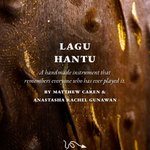
▪️Matthew Caren and Anastasha Rachel Gunawan for “Lagu Hantu,” a handmade instrument installation that remembers everyone who has ever played it.
▪️Eirini Malliaraki (@irinimalliaraki) with “One Billion Clocks” a kinetic sculpture that tracks the metabolic time of soil
▪️Sarah Friend (@isthisanart_) for “Thermodynamic Clock for LLMs” which will test whether giving models access to different experiences of time will alter their behavior
Over the coming year, each team will develop its concept into a working prototype with $25,000 in funding and support from Long Now. Their work will appear alongside 27 selected submissions in the Book of Time anthology, coming in spring 02027.
For our second Lab, Epistemic Cycles, UC Berkeley scholar Nina Begus (@ninabegus) will serve as Lab Lead. She’ll convene an interdisciplinary working group to build an atlas of information ruptures (from writing to generative AI) and of how societies have repaired them.
Our third Lab, Interspecies Protocols, launches in 02027.
Thank you to everyone who applied, to our partners at the Protocol Institute, and to our review panel. Read the full description of these incredible projects on Ideas here: na2.hubs.ly/H08xGzF0


