

Chief Economist @economics_ma. Host of Inside Economics podcast https://teapaw.org/t.co/ONmSCQ65Ib. Co-founder of https://teapaw.org/t.co/ZAo6ME72qu. Views expressed here are my own.
Joined March 2010
- Tweets2.4K
- Following151
- Followers50.2K
- Likes427
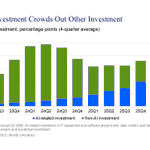




AI has been a boon to economic growth and job creation, but it's coming with side effects. It’s adding to inflation by driving up electricity and consumer electronics prices, and pushing up interest rates by soaking up capital to finance the AI build-out. It’s also coming at the expense of other investment. Since ChatGPT debuted four years ago, AI has gone from a rounding error to nearly two-thirds of the growth in investment, while growth in everything else has slowed by more than half since mid-2024. The bet on AI had better pay off in higher productivity, because the rest of the economy isn't investing enough to deliver it.

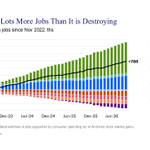
October's jobs report was strong, following a weak September. Look past the monthly noise, and the job market is holding firm. Turns out, the reason is surprising: artificial intelligence. Far from the job killer many feared, AI has so far been an engine of job growth.

The gains are coming mostly from data center construction and from jobs supported by spending done by wealthy households that own AI stocks. The losses are concentrated in the information, financial, and professional services sectors.
Wasn’t AI supposed to destroy jobs? The most dystopian scenarios even called for mass unemployment. That risk hasn’t gone away, and AI-driven productivity gains could still shift into a higher gear. But for now, AI is adding to job growth, not subtracting from it, and it is a key reason the job market is proving so resilient.
1
6
1,508
What do the midterm results mean for economic policy? Not much, at least not right away. Democrats won the House and Senate, but easing the financial strain on many Americans would take legislation, and that requires the President’s signature, which will be hard to come by.
Another opening may come next year, and it hinges on the lame-duck session. If Republicans can pass a budget and raise the Treasury debt limit on their own through reconciliation, Democrats will have less leverage. But if they fall short, the President will need Democratic votes, and Democrats could use that clout to restore enhanced Affordable Care Act subsidies and reverse cuts to SNAP and Medicaid.
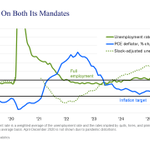
The Fed won’t raise interest rates again when it meets this week, and it shouldn’t. The economy is threatened by a growing list of risks, and a Fed misstep is one of them.
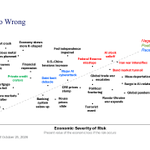
That’s the clear message in our risk matrix, which sizes up each risk by how likely it is to occur over the next 12 to 18 months and how much economic damage it would cause if it did. There’s a lot of red in the matrix, indicating risks that are becoming more likely or more severe.

Even the stock market, which has been an AI-powered juggernaut, has gone more or less sideways since early summer. Investors are increasingly skeptical that AI companies can generate the revenues necessary to service their growing debts and meet the lofty return expectations of equity investors. A meaningful sell-off, hardly a remote possibility, would hit spending by well-to-do households, who have been powering growth.
With all eyes on the inflation statistics released this week, little attention was paid to the Treasury statement released on Friday. It showed the nation racked up a nearly $2 trillion budget deficit in just-ended fiscal year 2026. That’s more than 6% of GDP.

But arguably most significant is that global investors see all this and appear to be demanding a higher rate to compensate for the mounting risk. The 10-year Treasury yield is up about a percentage point this year, among the biggest increases of any major economy, and the countries with the heaviest interest burdens have generally seen the biggest increases. A vicious cycle threatens to take hold, with higher rates adding to the interest payments and debt load, which in turn pushes rates up even more.
Nearly $2,000. By my calculation, that is what the Iran war has cost the average American household since the war began nearly eight months ago. Nationwide, that adds up to $265 billion.

The military costs also continue to mount. Based on what the Pentagon has acknowledged, these costs come to $360 per household.