

son of GOD | 🇺🇬 Entrepreneur | Connecting Agricultural producers to global markets | Advocating for Uganda as a profitable investment & tourism destination!
Kampala, Uganda
Joined February 2009
- Tweets2.5K
- Following99
- Followers356
- Likes7.3K







Pinned Tweet
We have only 14 days until the 29th Arab-African Investment & International Cooperation Summit in Luxor, Egypt, October 18–22, 2026. If you want to secure cross-border partnerships, access B2B/B2G networking sessions, or present high-impact projects, you need to be there. The summit brings together investors, government leaders, and industry decision-makers across key growth sectors. Spaces for full participation, B2B matchmaking, and exhibition booths are limited- get on board now. 📅 October 18–22, 2026
📍 Luxor, Egypt
📞 Contact AWIU Executive Office: +20 122 222 0888 / +20 100 506 2010
📧 Email: [email protected] | [email protected] #AAIIC26 #ArabAfricanSummit #Investment #Luxor2026 #B2B #EconomicPartnerships


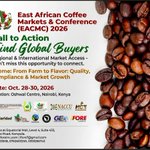
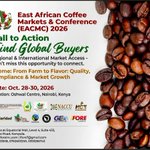
ALT Ready to scale your coffee business globally? Join us at the East African Coffee Markets & Conference (EACMC) 2026 to connect with international and regional buyers and access new markets! Contact: +256 762 603 250 #EACMC2026 #CoffeeTrade #EastAfrica #CoffeeExporters #Nairobi
Arabica Coffee Retreats as Brazil Supplies Hit the Market share.google/HsrG3v28codifkC…
This is great news 👏 thank you @elonmusk

Jongoza- Kalisizo. Akamwaamyi. Coffee farms , but the kasana. Hoping the rains come soon. #coffee #maiif #ugandaCoffee


If someone gave you UGX 100 million today, what would you build in Uganda?
Not spend.
Not consume.
Build.
A farm? A factory? A distribution business? A technology company? An export business?
I’m interested in businesses that can turn capital into jobs, products and more capital.
What wd you build ?
Uganda is not short of opportunities.
We are short of people who can see them, finance them, execute them and build markets around them.
I want to spend more time talking about what Uganda can build.
Agriculture.
Tourism
Manufacturing.
Trade.
Investment.
Energy and Technology.
Exports.
There is money to be made by solving real problems.
There are businesses waiting to be built.
There are Ugandan products that can be sold to the world.
I'm going to talk about these things more.
#matovu #Ug #Trade #Investment

We run, explored, connected, had fun. The @RwenzoriMarathn . Thank you @wekesa_amos


Stop chasing volume. Here is what actually keeps agricultural exporters awake at night across East Africa- and the three hard execution lessons nobody talks about.
Uganda produces an average of just 1.5kg per tree. In Kenya, for instance, top farms reach 5-10kg, with national targets set at 10kg per tree.
If we could double our yield to 3 kilos per tree, that would add an extra 8.6 m bags to our national production. And we would be at 17.2 M bags without planting new land.
Yield per tree is our jackpot....what happens if we hit 10 or 15?


The Owek. @cpmayiga taught us the other day that the luganda word for sneakers is "lusejjera"! Now, I wonder what the luganda word for "Ai" is. . @BugandaKingdom_ @TourBugandaUG


Kitende St Mary's. This is something. Very proud alumni @smaskosa @StMarysKitende

International trading always starts with trust. You create trust and build on it.

Every premium crop now needs more than a good story.
That is where @dimitratech becomes interesting
Because verified farm data can turn provenance into proof buyers can actually trust. How?
Let's dive deeper.
When Every Grain Carries a Verified Story
The Gap Between Story and Proof
▪️ Agricultural brands have always told stories about their sourcing.
▪️ "Single origin." "Rainforest-grown." "Smallholder farmer direct." These claims create value when consumers believe them.
▪️ But belief is fragile.
▪️ A single investigative report showing disconnected supply chain documentation can collapse years of brand-building.
▪️ What the market increasingly demands is not a better story.
▪️ It is verifiable proof behind the story.
What Full-Chain Traceability Actually Looks Like
▪️ True traceability begins at the farm before anything is planted.
▪️ Land is mapped.
▪️ Historical land use is verified against satellite records.
▪️ As farming activity proceeds, each input application, each growth stage, each harvest event is recorded.
▪️ When the product moves, from farm to cooperative to buying station to warehouse to exporter, each transfer is logged.
▪️ By the time the product reaches a buyer, the record is not assembled from fragments.
▪️ It is a continuous chain from soil to shipment.
Blockchain's Role in Making Records Permanent
▪️ The challenge with digital records is that they can be altered.
▪️ A database entry can be changed; the alteration can be hidden.
▪️ Blockchain integration addresses this by writing records to an immutable ledger, one where every entry is permanent and every alteration is transparently visible.
▪️ For supply chain records, this immutability is commercially significant.
▪️ It transforms a record from "what the system currently shows" to "what actually happened and cannot be disputed."
The Premium Pricing Mechanism
▪️ When buyers can access verifiable proof of the entire journey of a product, they price it differently.
▪️ Specialty coffee roasters, certified organic importers, and sustainability-linked brands all pay meaningfully more for verified sourcing than for commodity claims.
▪️ The premium is not goodwill.
▪️ It is the economic value of reduced risk, risk of regulatory non-compliance, risk of brand exposure from supply chain scandals, risk of audit failure.
▪️ Verified data reduces all three.
Consumer-Facing Transparency as Market Differentiation
▪️ At the retail level, QR code traceability, where a consumer can scan a package and see the verified journey of what they are buying, is transitioning from novelty to expectation in premium categories.
▪️ Brands that can offer genuine provenance data rather than marketing copy are building a different kind of consumer relationship.
▪️ One based on evidence rather than trust in a brand promise.
▪️ This is durable differentiation that compounds over time.
Conclusion
▪️ The grain that carries a verified story is worth more than the grain that only carries a claim.
▪️ Not marginally more.
▪️ Structurally more, at every stage of the supply chain, in every market that is moving toward evidence-based sourcing standards.
▪️ Building the infrastructure that creates those verified stories is the work that determines who leads global agricultural trade in the coming decade.

Just back from a powerful week at AfricaHealthExCon in Cairo. While the innovation from global bodies (Africa CDC, WHO, UN) was world-class, the near-zero participation from Sub-Saharan Africa highlights a massive, urgent trade & manufacturing gap we must bridge.
On a brighter note, Egypt is a hidden gem for world-class medical tourism. We saw elite hospitals delivering complex organ transplants, advanced fertility care, plastic surgery etc... The infrastructure is incredible.


