NASA Solar System (@NASASolarSystem) header
NASA Solar System (@NASASolarSystem) profile picture

Join us as we explore the worlds of our solar system.

Milky Way Galaxy
Joined June 2008
Photo by NASA Solar System (@NASASolarSystem)Photo by NASA Solar System (@NASASolarSystem)Photo by NASA Solar System (@NASASolarSystem)Photo by NASA Solar System (@NASASolarSystem)Photo by NASA Solar System (@NASASolarSystem)Photo by NASA Solar System (@NASASolarSystem)Photo by NASA Solar System (@NASASolarSystem)Photo by NASA Solar System (@NASASolarSystem)Photo by NASA Solar System (@NASASolarSystem)Photo by NASA Solar System (@NASASolarSystem)
High in the atmosphere, mysterious flashes light up the sky during thunderstorms. Unconfirmed until 1989, these Transient Luminous Events, or TLEs, have mythological names like sprites, TROLLS (Transient Red Optical Luminous Lineaments), and green ghosts. 👻 Now, NASA is on the hunt with a project called Spritacular, where people across the globe photograph and study these TLEs. NASA’s Illuminate: Out-of-this-world images shining light on our Sun and solar system.
45
218
17
893
47,539
NASA Solar System retweeted
Calling all hackathon enthusiasts! 👩‍💻👨‍💻 The NASA @SpaceApps Challenge has released Full Challenge Statements for this year's event. Looking for ones with a STEM twist for beginners? Check out the thread below.👇
1
18
40
7,158
NASA Solar System retweeted
🛰️🪨After 2 years in deep space, ESA's Hera mission for planetary defence is closing in on its target - Dimorphos, the 1st object in the Solar System to have had its orbit changed by human action, when NASA's DART impacted it in 2022
7
61
5
254
11,496
Meet some of the confirmed dwarf planets in our solar system: science.nasa.gov/dwarf-plane…
Meet our Solar System's newest dwarf planet candidate: 2026 ED138! Orbiting past Pluto, scientists found it in NSF–DOE Rubin Observatory data from earlier in 2026. Early analysis suggests it's 600–1500 km across, one of the largest found past Neptune! 🔗 rubinobservatory.org/news/ru…
12
70
6
464
25,867
NASA’s Dragonfly mission successfully completed its most comprehensive flight simulation yet at @JHUAPL, testing its ability to autonomously navigate and land safely on Saturn's moon Titan. 🚁 Learn more: go.nasa.gov/4kkHIJy
20
70
5
377
34,511
The recent test brought together flight software and avionics with simulated data input from the sensors Dragonfly will use at Titan, including its newly installed navigation cameras, inertial measurement units, and lidar system.
4
46
7,008
NASA Solar System retweeted
Our Hera spacecraft can now see Didymos and Dimorphos as two separate asteroids! Coming closer, it will study the effects of NASA's 2022 DART impact and help advance asteroid deflection as a planetary defence technique. The first detailed images of Dimorphos are expected on 25 November. Follow Hera’s journey with the Hera Space Companion 👉 hera.esa.int 🔗esa.int/Space_Safety/Hera/Fi…
53
182
29
1,005
67,463
No tricks, just a celestial treat. 🌕🎃 The Hunter’s Moon rises tonight, bringing a little extra glow to Halloween week! This full Moon gets its name from the time of year when hunters traditionally used the moonlight to track game and prepare for winter. Rising around sunset, the Moon will illuminate the night sky, weather permitting. Don’t forget to look up tonight!
86
610
44
2,711
72,335
NASA Solar System retweeted
We’ve known since the Apollo missions that dust can present challenges for explorers on other worlds. Now, scientists are using instruments on the Perseverance rover to understand the risks of dust on Mars and find clues about how to protect future crews on the Red Planet. ½
28
134
8
935
47,090
NASA Solar System retweeted
The study is based on analysis of sample spacesuit materials that were placed on the rover to help prepare for future exploration. Learn more: go.nasa.gov/4yNajei
4
30
1
276
25,720
The sunshade for the NEO Surveyor mission is ready for its day in the sun! 😎 NASA's Near-Earth Object (NEO) Surveyor will hunt for potentially hazardous asteroids and comets that cross Earth’s path. ½
22
64
3
402
54,440
Teams have completed work on integrating solar arrays onto the spacecraft’s sunshade. The 20-foot-tall (6-meter-tall) structure is primarily designed to block the Sun’s glare as NEO Surveyor's telescope scans for its elusive targets. Look into the details: go.nasa.gov/4zSg4YO
1
4
61
7,733
NASA Solar System retweeted
The Moon has impeccable timing. October's full Moon rises tonight, bringing a little moonlit magic to the start of Halloween week. The Moon reaches peak illumination at 12:12am ET (0412 UTC) on Oct. 26. Don't forget to look up!
57
459
41
2,611
71,763
NASA Solar System retweeted
On Oct. 24, 2001, NASA's Mars Odyssey spacecraft slipped into orbit around the Red Planet. 25 years later, it's still conducting science and relaying messages from the rovers, making it the longest-operating orbiter ever at a planet beyond Earth.  ½
44
314
22
1,650
56,548
NASA Solar System retweeted
Ready for an Artemis update? Tune in Friday, Oct. 23, at 2 p.m. ET (1800 UTC) to hear our latest progress and accelerated plans for Artemis lunar missions. Watch live: youtube.com/live/pAKqJxuxDgk
52
393
46
2,544
276,532
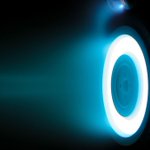
Floor it! NASA’s Psyche spacecraft has fired up its thrusters and is accelerating to the metal-rich asteroid of the same name. Learn more about Psyche’s solar-powered propulsion system, which uses electromagnetic fields to steadily deliver thrust: go.nasa.gov/4jAR2bY
53
294
23
1,748
70,532
Track Psyche's position in real time as it journeys towards its target, which may be a partial core of a planetesimal, a building block of an early planet. eyes.nasa.gov/apps/solar-sys…
4
17
83
7,603
NASA Solar System retweeted
The wheels are in motion for Moon Base! From robotic rovers to lunar terrain vehicles, our latest update highlights progress on the mobility systems that will support early Moon Base development and Artemis exploration. See what's rolling: nasa.gov/missions/moon-base/…
28
217
18
1,539
44,440
NASA Solar System retweeted
Two scientists. One unforgettable view of our planet. What's it like to see the Artemis II Earthrise image through the eyes of a lunar scientist? How about an oceanographer? Jacob Richardson & Ivona Cetinic are here to tell us. Explore Artemis II data: go.nasa.gov/Artemis2LunarSci…
26
120
691
48,550
NASA Solar System retweeted
The Orionid meteor shower, created by tiny pieces of debris from Halley's Comet, peaks on the night of Oct. 21 - 22. Your best chance to see them comes a few hours before dawn, after the bright Moon sets. Find a dark location, give your eyes time to adjust, and look up.
51
418
45
1,453
86,654