








Pinned Tweet
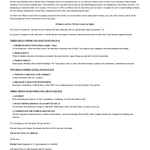
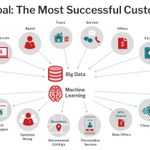
MEDDPICC has been the most popular B2B sales framework. There hasn't been a corresponding framework to look at customer health and answer 'Will this customer renew?' in a systematic way.
I am proposing a B2B CS framework - MELICCEO.
Let's dive in 🧵:
3
5
1,280
Looking for an engineer who has actually coded with hands in his/her past life (and still does it)
7
7
705
Claude code is the new Facebook for millennials! People stuck on their screens everywhere - just watching and scrolling CLIs!
1
296
Humans have generated more useless content on LinkedIn about the AI agent social network than what AI agents have done...
2
252
If you are non-tech on X and want to understand how AI/LLMs work in simple english - check this 1-hour course I created... feedback welcome!
aiforprofessionals.ai/ai-101…
2
229


This has been the most difficult aspect of leadership.
This is a good framework to think through such situations. I also think an open, honest conversation with the person goes a long way in setting the right expectations.

As an executive coach, the most common question I get is about handling an underperformer. Should they give them more time? Should they let them go? Here are the 4 questions I ask to help them solve the right problem:
1
136


Great insight - to plan your life and career, to think about success and failure.. 4 years is also the right time to play out a shot.


1
1
100

A question for founders:
If you could give one piece of advice to a CS student graduating in the next 4 years, what would it be?
I have been asked this question a bunch now, I am putting together a "Founders’ Guide for CS students to survive and thrive in the AI era". I would love contributions from founders. Comment here or DM me!
My take (v1):
Hey - as you are taking CS classes, the field is changing daily. Most of what you are learning is likely already outdated. Professors are trying their best to keep up. Path breaking research is not happening in universities, but in commercial labs.
@deedydas recently wrote on how AI is already writing most / all of the code. By the time you graduate, AI will be writing 100% of the code.
But, all hope is not lost. The bar is just way higher!
Three skills that will still matter (and matter more):
@gokulr recently wrote about two skills to interview for - I will add a third.
1. Problem selection (What to build + Why) and solving
2. High agency
3. People skills (Meet, influence, build friendships)
Two skills that will matter less:
1. Writing code (fast and correct)
2. Broad but shallow knowledge
Three new skills you should learn:
1. Working with AI
2. Reading, testing and maintaining code
3. System-level thinking
Finally three actions to take during your college years:
1. Go deep - in tech, problems, thinking; AI will do the shallow stuff.
2. Build things (deeply) - as many as you can
3. Understand the world around you
CS is changing so fast this guide will age quickly :)
I will share v2 next week.
Image generated by @dharmesh's Imagegen - would love his take on this :)

4
1
110
Evolution of work interruptions:
1. Chit chat
2. Another person taking a call
3. Social media
4. Phone
5. Auto suggestions by every tool out there...
Thankfully X still has no auto suggestions. These auto suggestions just break the thinking flow!
1
60
Now there is a 0-> 0.1 stage of any idea/product/company --> very fast, gives instant rush, and people forget the work required to take it from 0.1 to 1.0
53


This is amazing stuff!

This might be the most valuable thing I've ever released.
And it's 100% free.
→ Marketing Skills for Claude Code
A collection of skills that turn Claude into a marketing and copywriting genius.
Check it out
↓
github.com/coreyhaines31/mar…

1
84
A lot of work happens in a company and AI tech is changing every day. CEOs need a clear way of thinking about how to leverage AI.
My simple framework for a CEO to use AI:
Think about three parameters:
Why AI: Output per hour (you can do the same in less time and/or you can do more in the same time), revenue increased, cost takeout, risk reduction. Note an increased output per hour <=> cost reduction
What: ROI (high favorable) vs. Frequency (high favorable) vs. Risk introduced (low favorable)
How: Human augmentation (Prompts/skills) vs. Automation (n8n or true reasoning Agents)
You will find the most obvious places will be: human augmentation in high ROI/high frequency use cases; and not necessarily Agentic automation in low ROI use cases.
For example: Agentic automation to close your books -- low frequency work, high risk, low ROI
Skills to coach your sales team --> high frequency, low risk, high ROI
If you get this thinking correct, you can come up with a clear no-hype, no-BS plan.
75