

Founder and first President of The Geneva Learning Foundation @DigitalScholarX https://teapaw.org/t.co/UM7s0cTlPg
Joined April 2011
- Tweets10.6K
- Following2.7K
- Followers1.7K
- Likes2K







Pinned Tweet
"Equitable care is the purest form of healing." @PIH

I cannot unsee the quiet sorting of who matters and who does not.
I remember the grandmother who arrived before dawn, waiting hours while others who came later were seen first.
She did not ask for health equity.
She asked only if she would live to see her grandchildren grow.
I remember the adolescent boy who hid his illness for months because our clinic had become known as “the place where young men are judged.”
He did not ask for sensitivity training.
He asked if we could treat him without his community knowing.
I remember the woman carrying her malnourished child for a day’s journey, turned away because she could not pay.
She did not ask for policy reform.
She asked why the medicines that arrived at the district capital never reached her village.
They said health was universal.
But access is not universal.
Nor is dignity, nor quality.
Only the promises were universal.
Only the mission statements were universal.
We tracked the discrepancies in our ledgers.
We mapped the gaps in our coverage.
And then, we stopped merely documenting.
We began transforming what we could reach.
A nurse created pictorial instructions for patients who could not read.
A community health worker traveled extra hours to reach homes others deemed too remote.
A midwife learned phrases in five local dialects to comfort women in labor.
A doctor quietly paid for medicines when families could not.
No recognition.
No promotions.
Just presence.
I have seen community clinics operate without electricity—just daylight, ingenuity and dedication.
I have seen health workers walk kilometers in rainy seasons, unpaid, underequipped, and unwavering.
I have seen funders abandon, but our compassion endure.
What endures is not the policy, not the frameworks written in conference rooms.
What endures is the provider who questioned the status quo when questioning brought no reward.
The names absent from publications.
The efforts never funded.
The principles never compromised.
The inequity persisted.
And yet—we adapted.
Not because we were trained to.
Not because it advanced our careers.
But because equitable care, when all systems resist it, is the purest form of healing.
Equity did not arrive when policies proclaimed it.
Equity grew because someone, somewhere, insisted on providing care that honored every human equally.
This is why we care when equity fails.

Polycrises et ère de l’intelligence: le professeur Adipala Ekwamu et Reda Sadki appellent à un dialogue entre les responsables de l’éducation et les personnes qui œuvrent pour la santé de leurs communautés.
De quoi les communautés auront-elles besoin de la part des professionnels de la santé pour survivre?
L’OMS prévoit que l’Afrique manquera de 6,1 millions de professionnels de la santé d’ici 2030.
La Fondation a vu des diplômés motivés rejoindre un ministère de la Santé et se voir confier des services de vaccination.
Leur formation ne les a pas préparés à ce travail.
Ils apprennent sur le terrain, parce qu’ils en sont capables.
Mais du temps est perdu, et des vies sont en jeu.
L’épidémie d’Ebola causée par le virus Bundibugyo est la plus importante jamais signalée en RDC.
Début octobre 2026, la seule province de l’Ituri avait déjà signalé 6 370 cas.
L’intelligence artificielle change ce qu’un professionnel de la santé doit être.
Le jugement en situation d’incertitude et la conduite éthique deviennent des capacités rares.
Les universités détiennent dans leurs sociétés une autorité et une légitimité qu’aucun autre acteur ne peut remplacer.
Toute stratégie crédible pour la future main-d’œuvre de santé doit les inclure.
Comment une université devrait-elle enseigner et apprendre lorsque la survie des communautés est en jeu?

Lire l’article complet: learning.foundation/fr/2026/…

TODAY: How does climate change hurt health? Learning session today with the Lancet’s Dr Marina Romanello, who is joining to listen and share the newest evidence.
Registration is required to join on Zoom.
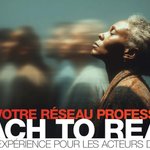
Dr Marina Romanello is joining Teach to Reach 19 today.
Teach to Reach is the monthly one-hour session of The Geneva Learning Foundation for health workers.
The Lancet Countdown tracks each year how climate change is harming people’s health.
This edition brings new evidence from 146 authors and 71 contributing organisations.
First, she will listen to health workers.
Then, she will share the new findings.
The numbers show the size and direction of the harm.
Your experience shows what that harm means for real people.
In December 2024, she told Teach to Reach:
“The biggest validation of the numbers that we show has to do with the experiences on the ground.”

Learn more and request your invitation: learning.foundation/2026/10/…
Register and see the time in your location:
Learn more about Dr Marina Romanello: learning.foundation/2026/10/…
Find out what is in the new Countdown: learning.foundation/2026/10/…
Did you miss it? Catch up on YouTube:
Did you download the 7-30 Climate-Health Emergency Framework? learning.foundation/2026/08/…

AUJOURD’HUI : Face au paludisme, améliorez le parcours de soins des familles. Rejoignez des acteurs de la santé de tout le continent.
Ouvert à tous. Inscription requise.
Teach to Reach est la séance mensuelle d’une heure de La Fondation Apprendre Genève pour les professionnels de la santé.
Vous y travaillez sur des défis réels avec des collègues.
Vous y découvrez deux nouvelles certifications sur le paludisme.
La première part du parcours de soins des familles et des enfants.
Un défi partagé : une pharmacie vend des comprimés pendant plusieurs jours, sans test.
Vous trouvez la cause profonde, puis vous décidez quoi faire.
La seconde porte sur la qualité et l’utilisation des données du paludisme.
Elle part du chiffre qui ne colle pas avec le terrain.
Vous fixez un objectif sur 30 jours et des actions hebdomadaires.
Les deux certifications préparent aussi à l’Accélérateur d’impact sur le paludisme.
Des collègues vous aident, et vous les aidez.
Venez avec un défi.

Rejoignez des acteurs de la santé de tout le continent : learning.foundation/fr/2026/…
Suivez l’événement sur LinkedIn :
Rejoignez notre studio Zoom :
Les deux nouvelles certifications :
Agir pour améliorer l’expérience des familles et des enfants dans leurs parcours de soins face au paludisme : learning.foundation/fr/cours…
Comment améliorer la qualité et l’utilisation des données du paludisme : learning.foundation/fr/cours…
Teach to Reach, comment ça marche : learning.foundation/fr/teach…

Polycrises and Age of Intelligence: Professor Adipala Ekwamu and Reda Sadki call for a dialogue between education leaders and people who work for the health of their communities.
What will communities need from health professionals to survive?
The WHO projects that Africa will be short of 6.1 million health workers by 2030.
TGLF has watched motivated graduates join a ministry of health and be assigned to run vaccination services.
Their education did not prepare them for the work.
They learn on the job, because they are capable.
But time is lost, and lives are at stake.
The Ebola outbreak caused by Bundibugyo virus is the largest ever reported in the DRC.
By early October 2026, Ituri province alone had reported 6,370 cases.
Artificial intelligence is changing what a health professional needs to be.
Judgement in uncertain situations and ethical conduct become the scarce capabilities.
Universities hold authority and legitimacy in their societies that no other actor can replace.
Any credible agenda for the future health workforce must include them.
How should a university teach and learn when community survival is at stake?

Read the full article: learning.foundation/2026/11/…

Students who practised with unrestricted GPT-4 scored about 5 points lower on the exam.
The field experiment involved almost 1,000 high school mathematics students in Türkiye.
During practice, they had scored about 14 points higher than the control group.
The control group used ordinary textbooks and notes.
Anthropic’s S-1 lists “individually tailored education” among AI’s possible benefits.
It reports no learning outcomes for its student learning mode.
MIT’s committee found AI can produce credible solutions to almost any written undergraduate assignment.
Its report says MIT may need to reexamine every subject.
Economist Jason Potts argues that universities sell matching and verification.
In his argument, AI makes assessable work cheap, so credentials stop separating students.
Before AI, years of education predicted job performance with a correlation of 0.10.
The studies so far stop at the post-test, and the article names six gaps.

Read the full article: learning.foundation/2026/11/…

Anthropic’s S-1 mentions schools, students and teachers 13 times in 243,089 words.
It mentions software developers and Claude Code 93 times.
In life sciences, Anthropic built a molecular biology lab and acquired Coefficient Bio.
For education, the filing describes no laboratory and no revenue figure.
Students get a learning mode, with no learning outcomes reported.
Teachers get help with the paperwork.
Its risk factors say minors may be more susceptible to overreliance on AI outputs.
The filing’s largest learning investments train customers, including a $100 million academy for engineers.
Claude wrote over 90% of Anthropic’s code contributions in September 2026.
Education leaders can read the S-1 as a statement of priorities.
Procurement can ask what learners can do once the assistance is withdrawn.

Read the full article: learning.foundation/2026/11/…

Quel est le langage visuel de la philanthropie à l’ère de l’intelligence ? « Cela fait statutaire », s’est exclamé le directeur de création Cédric Delmont, qui dessine pour Lindt et L’Oréal. Il parlait de l’ancien logo de La Fondation Apprendre Genève. Vous serez surpris de découvrir pourquoi et comment l’agence cheeeeese a réinventé notre logo.
« Vous ne sentez pas l’action », a-t-il dit.
La Fondation en a convenu. Son réseau de plus de 80 000 professionnels de la santé et de l’humanitaire apprend par la pratique.
Son fondateur redoutait avant tout d’être pris pour un groupe de réflexion.
Pour son dixième anniversaire, la Fondation et le studio genevois de cheeeeese ont testé trois idées.
Ils ont choisi une clé tirée des armoiries de Genève.
La clé se trouve désormais entre les mains du professionnel de la santé qui cherche une cause profonde.
Le studio a réalisé ce travail à titre gracieux.
Autre rebondissement : une intelligence artificielle gérera la nouvelle identité, sous supervision humaine.

Lire l'article complet : learning.foundation/fr/2026/…

Qu’y a-t-il dans la dixième édition annuelle du Lancet Countdown sur le changement climatique et la santé ? Nous ne pouvons pas encore vous le dire, mais voici un avant-goût.
La Dre Marina Romanello, qui dirige le Lancet Countdown, présentera les conclusions de cette année en direct à Teach to Reach 19.

Obtenez une certification en climat et santé : learning.foundation/fr/2026/…
En savoir plus sur Teach to Reach : learning.foundation/fr/teach…
Découvrez ce qui s’est passé la première fois que Marina Romanello, du Lancet Countdown, s’est entretenue avec des agents de santé : learning.foundation/fr/2026/…

What’s in the tenth annual Lancet Countdown on climate change and health? We can’t tell you yet, but here is a teaser.
Dr Marina Romanello, who leads the Lancet Countdown, will present this year’s findings live at Teach to Reach 19.

Get climate and health certification: learning.foundation/2026/06/…
Learn more about Teach to Reach: learning.foundation/teachtor…
See what happened the first time Marina Romanello from the Lancet Countdown sat down with health workers: learning.foundation/2026/10/…

Health worker, are you prepared? The strongest El Niño on record is going to harm the health of millions with hunger and disasters, and United Nations relief chief Tom Fletcher called it a “wrecking ball” on 21 October 2026.
Up to 50 million people could face more hunger from extreme heat, droughts, and floods.
The World Meteorological Organization and OCHA warned that Pacific sea temperatures may rise 3.8 degrees above average between November 2026 and January 2027.
This will bring extreme weather to Latin America, East and Southern Africa, Asia, and the Pacific.
Somalia, Ethiopia, and Kenya need supplies in place before heavy rains arrive.
Southern Africa needs seeds and support for livestock before the planting season.
Central America needs help to protect livelihoods from drought.
The UN released over 50 million U.S. dollars from the Central Emergency Response Fund for 11 countries on the front line, including Chad, Ethiopia, Somalia, South Sudan, and El Salvador.
Health workers already see more sickness from floods, heat, and failed crops.
The African Development Bank estimates costs of 10 to 20 billion dollars for African countries and a drop in GDP of 1 to 2 percent.
The Geneva Learning Foundation’s 7-30 Climate Health Emergency Framework sorts a climate emergency into two numbers you can hold in your head under pressure, seven days to prepare and thirty days to recover.
This course connects you with health workers from all over the world, each building their own local 7-30 plan for the next shock.

7-30 Climate Health Emergency Framework is a free framework that gives a shape to what you already do as a health worker facing climate shocks, so you can ask for support with evidence behind you. Download the framework and get certified here: learning.foundation/2026/08/…
7-30 sorts a climate emergency into two numbers you can hold in your head under pressure, seven days to prepare and thirty days to recover.
A free Level 1 certification course helps you learn to use it in the community you serve.
Work with a colleague to build your local plan and earn your certificate to submit to your employer or professional body.
