

We defend and promote free speech for all Americans in our courtrooms, on our campuses, and in our culture.
Philadelphia and Washington
Joined December 2008
- Tweets27.2K
- Following2.7K
- Followers225K
- Likes4.5K




Pinned Tweet
LAWSUIT: Eight officers raided his home before dawn.
His offense? He filmed an officer speeding, criticized him when he got to a drive-thru, and embarrassed the department.
In a free country, criticizing police shouldn’t end in handcuffs.
In 2022, Joshua Gibbons filmed a Kingsport, Tennessee police SUV speeding without lights or sirens, violating state law.
He caught up with the officer at a drive-thru and had salty words about his disregard for the law.
That exchange lasted all of one minute. The consequences for Joshua lasted four years.
After someone complained about a different video — an officer flipping Gibbons off — police scoured Gibbons’ YouTube channel for ammunition.
Before dawn the next morning, while Gibbons was still in bed, eight armed officers raided his mother’s home to arrest him — for speeding using a cellphone while driving, and disorderly conduct.
A judge dismissed the speeding and cellphone charges but convicted him of disorderly conduct, saying he was “offended by the way” Gibbons was “talking to that officer.” Gibbons appealed. At a second trial, a jury again found him guilty.
In June, the Tennessee Court of Criminal Appeals unanimously reversed that conviction and dismissed the charge.
The court found “no evidence” that Gibbons’ criticism prevented anyone from doing anything lawful.
The court recognized — as many courts had held — that even “profane and insulting” words alone aren’t a crime, especially when directed at police officers, who are trained to exercise restraint.
With FIRE’s help, Gibbons is suing to vindicate his First Amendment rights.
The First Amendment protects your right to film and criticize police. Kingsport PD needs to hear that message loud and clear.

Catch the latest in this week’s FIREwire. expression.fire.org/p/meta-g…

The @UofMaryland Athletics Department has agreed to First Amendment training with FIRE after two student journalists were reported to campus police for “suspicious activity” while trying to interview @umterps football players.
Student reporters should be able to do their jobs in public spaces without fear of unnecessary police encounters.
We appreciate Maryland Athletics’ willingness to address these concerns. Public universities — including their athletic departments — have a duty to protect press freedom, not intimidate those exercising it.

For @testudotimes, @JudeWilkenfeld and I were outside Jones-Hill House trying to get players to comment. An athletics staffer took pictures of us, and a police dispatch was called for suspicious activity; a cop and 2 cop cars pulled up, and officers ID’d us and asked us to leave.

Are social media algorithms making it harder to find the truth?
FIRE's @RosenJeffrey thinks so.
He explains how algorithms feed confirmation bias, making it harder to have the open debate and pursuit of truth the Founders envisioned for democracy. 👇
Listen to @JeffreyRosenPod and subscribe wherever you get your podcasts! 🎧
linktr.ee/jefros


FIRE retweeted

Listen, I know not everyone is going to agree with @TheFIREorg all the time. That’s unavoidable when you’re committed to being a genuinely nonpartisan institution in a hyperpartisan society, and when you don't shy away from complex cases that divide even the most thoughtful of us. But here’s my take:
If you agree with FIRE 50% of the time, you should probably be a donor.
If you agree with us 80% of the time, you should probably work here!
FIRE retweeted

Today, a New Mexico judge ordered Meta to pay a staggering $25 billion.
While most coverage has characterized it as a privacy case, the claims are fundamentally about speech, and 3 of the 5 categories of alleged misrepresentations have absolutely nothing to do with data privacy.
Instead, they are focused on “hateful, violent, and divisive content,” “misinformation,” and “equal application of Facebook’s policies.” Fraud is not protected by the First Amendment, but these are incredibly vague concepts without clear legal definitions that encompass a wide array of constitutionally protected speech. A jury was asked to interpret these terms and evaluate the accuracy of Facebook’s high-level statements about how it tries to moderate content against them.
To decide whether a statement like "we don't allow hate speech" was false, jurors had to apply their own understanding of terms that have no legal definition. Even more, they had to decide whether Facebook applied its policies equally. These are very amorphous concepts that mean something different to everyone, making it incredibly difficult to prove falsity, a necessary element in any fraud case.
Facebook was found to have committed 43,899,725 violations.
43,899,725.
How? The state multiplied the 26 statements Facebook made about its moderation practices by the number of users who may have potentially read them.
Many of these statements were not advertising. They were executives speaking publicly about how Facebook handles some of the most contested content moderation questions of the last decade.
The decision in this case would give government officials an incredibly powerful tool to go after content moderation decisions they don't like. Every state has a consumer protection law like New Mexico's Unfair Practices Act and every major platform publishes rules about what content it removes and how it enforces them. All a state has to do is point to an alleged discrepancy between a platform’s stated policy and its content moderation decision.
If it is not overturned, this case will have a massive chilling effect on what platforms say about their content moderation practices. The safest course of action for any platform now is to say as little as possible about how it moderates content to as few people as possible.
Ultimately, platforms will be less willing to share information with users and users will know less about the platforms they use.

Breaking News: Meta must pay $25 billion, one of the largest penalties levied against the tech giant, for deceiving users about data privacy. nyti.ms/4yvv5yZ

FIRE retweeted

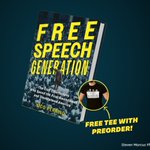
My book comes out January 19. Preorder it and get a free, limited-edition @TheFIREorg shirt.
All you have to do is submit proof of purchase at the link below ⬇️

FIRE retweeted
Is it censorship when a government official asks a platform to remove content that violates its own rules?
It depends!
The key distinction is between asking and coercing. A request is one thing. A threat, explicit or implied, is quite another. That's a First Amendment problem.

The New Hampshire governor urged X to ban the account of the Libertarian Party's former New Hampshire affiliate. A day later, the account was suspended. Was it jawboning?
buff.ly/h6uLEbB

The First Amendment didn't make America a free speech nation. People did.
In his debut book, "Free Speech Generation," FIRE's @NicoPerrino tells the remarkable story of the civil libertarians who fought to make free speech a reality.
Preorder today and get a FREE shirt!

Get your copy, show us proof, and claim your shirt now!
fire.org/research-learn/free…

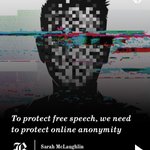
The death of internet anonymity is looming, bringing with it severe implications for our free speech rights. And no one seems to want to stop it.
Laws aimed at protecting children online could have serious unintended consequences.
📰 @BostonGlobe
🖊️ @sarahemclaugh


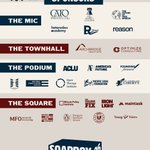
A conference like Soapbox doesn’t happen without support behind the scenes.
A huge thank you to our sponsors for backing free speech and making this year’s SOLD OUT conference possible. We’re incredibly grateful to have you with us.
The countdown is on. See you in Philly!


Religious groups in early America were big fans of liberty for themselves.
But for everyone else? Not so much.
Mary Sarah Bilder, Justin Collings, and Alan Taylor join FIRE’s @RosenJeffrey to explore how religion was used to suppress dissent.
Listen to @JeffreyRosenPod and subscribe wherever you get your podcasts! 🎧
linktr.ee/jefros
Cornell’s ban on all fraternity social events is collective punishment — which is no substitute for campus safety and betrays the university’s commitment to free expression.
Accountability means punishing wrongdoers, not innocent students.

Cornell has suspended all fraternity social events for the rest of the academic year after allegations of serious misconduct, punishing an entire community for the alleged actions of a few.
Cornell has every right to investigate misconduct and hold responsible organizations accountable for their members’ actions. But punishing students who had no involvement is guilt by association.
With roughly one-third of Cornell undergraduates participating in Greek life, the blanket ban restricts students’ freedom of association and shuts down even charitable fundraisers.
Protecting students and respecting their rights are not competing obligations. Cornell has a responsibility to do both.

We urge @Cornell to stop penalizing students for misconduct they had no part in.
fire.org/research-learn/fire…

At UT Austin, campus police shut down an event featuring right-wing commentator @MyronGainesX, without clear justification. An officer even threatened an organizer with trespassing charges if they stayed.
And that's not the only free speech controversy brewing on campus. 🧵
Just weeks earlier, UT Austin charged a student group nearly $18,000 in security fees to host @hasanthehun, despite an initial estimate of $364. The increase followed public officials’ outcry over the event.
Universities can't price speech they disagree with out of reach.


The First Amendment protects speech from the right and the left. Public universities must do the same.
We’ve called on UT Austin to rescind Hasan’s security fees and are investigating the shutdown of Gaines’ event. Students deserve answers.
fire.org/research-learn/fire…
