







Pinned Tweet
The economic consequences of the second Trump administration: A preliminary assessment
@GaryGensler @baselinescene @upanizza @bweder
ow.ly/XMzZ50WbrAk

EU economic outlook: Weathering the shock but eroding fiscal buffers
Maarten Verwey, Laura Bardone, Kristian Orsini @ecfin @EU_Commission
ow.ly/FZRt5109EjU

Central bank retail deposits in the past: Lessons for the central bank digital currency debate
Pamfili Antipa @LSEnews, Anna Grodecka-Messi @riksbanken, Marius Hafke, Clemens Jobst @univienna, Enrique Jorge-Sotelo @UniBarcelona, Daniel Kaufmann @UniNeuchatel, Eva Mulder @ErasmusESE, Kilian Rieder @oenb, Stefano Ugolini @UTCapitole
ow.ly/u72w5109E24

For three decades, software companies have paid independent researchers to identify security vulnerabilities in their code. But how effective are bug bounty programmes, and how is AI changing the way software flaws are discovered?
In this #VoxTalks Economics, Tim Phillips speaks with @tkretschmer_LMU (@ImperialBiz and CEPR) about his research into the design and effectiveness of bug bounty programmes.
Drawing on data from the Bugcrowd platform, they discuss the trade-offs between open and invitation-only programmes. Opening programmes to more researchers can increase the number of vulnerabilities discovered, but also brings more duplicate and lower-quality submissions, increasing the burden of reviewing them.
They also consider what AI-assisted vulnerability detection means for the future of bug bounties, and why evaluating submissions remains a crucial part of software security.
🎧 Listen to the episode: ow.ly/7q395104tI3
#VoxTalksEconomics #Cybersecurity #ArtificialIntelligence #Economics

517
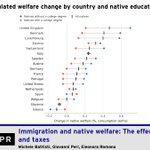
Immigration and native welfare: The effect through wages and taxes
Michele Battisti @UofGlasgow, Giovanni Peri @giov_peri @UCDavisEcon, Eleonora Romano @WorldBankGroup
ow.ly/kOwJ5109CR2

For more than 1,300 years, China chose its top officials through competitive written exams. But was success determined by merit alone?
In this episode of #VoxTalks Economics, Ruixue Jia (@UCSanDiego and CEPR) joins Tim Phillips to discuss new research with Ying Bai tracing the careers of 24,269 graduates of China’s imperial examination during the Qing dynasty, from 1644 to 1905.
They explore how exam performance and the lasting networks formed between successful candidates and their examiners worked together in shaping who reached the top of the imperial state.
🎧 Listen now: ow.ly/mN5V50ZTShB
📄 The research: Ying Bai and Ruixue Jia, “Meritocracy and the Networks It Forged: China's Imperial Examination”, CEPR Discussion Paper 21814.
#VoxTalksEconomics #EconomicHistory #PoliticalEconomy

1
738
Emerging Europe’s defence industrial base: Between legacy firms and new entrants
Federica Coelli @EBRD, Catalina Cozariuc @imperialcollege, Anton Grahed @EBRD
ow.ly/YfZK5109h1E

680
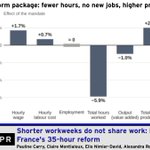
Shorter workweeks do not share work: Evidence from France's 35-hour reform
@PaulineCarry, Claire Montialoux @ScPoEcon @CNRS, @ElioNimier, @alexandraroulet, Nina Roussille @MIT
ow.ly/Ovai5109gjU

Does joint custody lead to better outcomes for parents and children after divorce?
In this episode of #VoxTalks Economics, Tim Phillips sits down with Gordon Dahl (@UCSDEcon) and @CostasMeghir (@YaleEconomics) to discuss new research examining how custody arrangements affect families.
Compiling an impressive database of over 56,000 Swedish custody rulings, scanning paper archives by hand, the authors linked the varying results to records of parents' earnings, mental health prescriptions and children's school performance. Using this data, they discussed the effects of joint versus sole custody, the substantial variations in how often Swedish Judges award joint custody and the consequences of these decisions.
🎧 Listen to the episode: ow.ly/joLF50ZYviy
📖 Read the paper: ow.ly/aaCE50ZYvwv
#VoxTalks #Econ #FamilyEconomics

When transparency raises prices: Lessons from California’s all-in pricing law for short-term rentals
Ginger Jin @BU_Tweets, Liad Wagman @rpi, Jingyi Xing @UofMaryland
ow.ly/MWBE5109g6K

Inside fiscal policy: A new dataset on government actions
Hites Ahir @IMFNews, Miyoko Asai @WorldBankGroup, Matthieu Bellon, Maria Chiara Cavalleri @IMFNews, Shuvam Das @UMNews, Davide Furceri, Faizaan Kisat, Aiko Mineshima, Irene Rausell Moreno, Vishal Parmar, Nikhil Patel, Adrian Peralta-Alva @IMFNews
ow.ly/Bls75108QaK

Researcher choices matter: Synthetic controls and California’s $20 fast-food minimum wage
Jeffrey Clemens @jeffreypclemens @UCSDEcon, Olivia Edwards, Jonathan Meer @TAMU, Joshua Nguyen @TAMU
ow.ly/6sCO5108Q52

Export controls are broader than you think, but they buy more security with coordination
Jingting Fan (CKGSB), Kyle Handley @KyleLHandley @GPS_UCSD @UCSanDiego, Nuno Limão @Georgetown
ow.ly/BO8u5108PU9

Locked out: Drivers and consequences of housing affordability pressures in Europe
Robert Beyer, Nina Biljanovska, Alexandra Fotiou, Morgan Maneely, Frederik Toscani @IMFNews
ow.ly/9Eso5108PPQ

The return of inflation: More bank profits, more central bank losses
Paul De Grauwe @pdegrauwe @LSEEI @LSEnews, Yuemei Ji @ucl
ow.ly/52Le5108lLt

Europe’s growth outlook has improved, but higher energy prices continue to put pressure on inflation. What does this mean for European households and businesses?
In the latest episode of VoxTalks Economics, Tim Phillips speaks with Laura Bardone and Kristian Orsini (@ecfin & @EU_Commission) about the findings of its newly released Autumn 2026 Economic Forecast.
The Commission has revised its EU growth forecast upwards to 1.4% in 2026, with strong exports of equipment linked to the global AI investment boom among the main contributing factors. However, the inflation outlook remains challenging, with higher energy costs linked to the conflict in the Middle East expected to continue feeding through to consumer prices.
They discuss how rising gas prices could take months to feed through to household bills, the unequal impact of inflation across income groups, and the implications of higher energy costs for food prices, monetary policy and public finances.
🎧 Listen to the episode: ow.ly/YyxB5108oVw
📄 Read the European Commission's Autumn 2026 Economic Forecast: ow.ly/O2wv5108oVv
#VoxTalks #Economics #EuropeanEconomy #Inflation

Worker runs: How compensation design can curb contagious departures like that at Weil, Gotschal & Manges
Florian Hoffmann @LeuvenEconomics @leuvenresearch, Vladimir Vladimirov @UvA_Amsterdam
ow.ly/F1sX5108lEn

753
Global imbalances, the status of the dollar, and the stability of bond markets are putting pressure on the international financial system. But are we witnessing a rupture, or a transition?
In another installment of #VoxTalks Economics, Valentina Bruno (@KogodBiz, CEPR) and Cédric Tille (@GVAGrad, CEPR) join Tim Phillips to discuss the findings of the 29th Geneva Report on the World Economy.
They examine why stocks, the dollar, and US Treasuries all fell following Liberation Day in April 2025, why this could happen again, and what can be done about it.
🎧 Listen to the podcast: ow.ly/VfEE5100zk8
📖 Read the 29th Geneva Report on the World Economy, Changing Structure and Challenges of the International Financial System: Imbalances, Currencies, and Financial Stability, available to download for free from CEPR: ow.ly/6Fk05100zk7
#InternationalFinance #FinancialMarkets

4
877
Mergers and European competitiveness: Evidence on innovation and market power
Joel Stiebale @JoelStiebale @DICEHHU @HHU_de, Florian Szücs @wu_vienna @WU_econ
ow.ly/Mock5107XYM

The health costs of organised crime
Davide Cipullo @Unicatt @Unicatt_en, Massimiliano Onorato @DSE_Unibo, Gianmario Pelleschi @Unicatt @Unicatt_en
ow.ly/xe5H5107Xvs

Gradually, then suddenly – the fiscal value of climate resilience
Jemima Peppel-Srebrny @ESM_Press
ow.ly/EkVV5107B8e
