




Pinned Tweet
Huge milestone unlocked! 🚀
XPayr’s official acceptance into the @circle Partner Program is locked in!
We’re bringing enterprise-grade stablecoin checkout and seamless USDC rails to the ecosystem. Check out our partner profile here: partners.circle.com/partner/…
The future of onchain commerce is here. Let’s build! 🌐💳 #XPayr #Circle #USDC #Arc

A 3.5% processing fee on a high-volume merchant is not a service charge. It is an invisible tax on your gross margin.
Add rolling reserves, cross-border exchange markups, and delayed payouts, and you are losing up to 5% of top-line revenue.
@XPayrPay delivers non-custodial Web3 checkout with a 0.5% flat rate. The funds land in your private wallet instantly upon checkout confirmation.
Upgrade your payment infrastructure: xpayr.com

1
59
Rolling reserves: the polite corporate name for when your processor holds 10% of your earnings for 180 days just in case.
Your business funded the inventory, paid for the ads, and served the customer. Why is someone else holding the cash?
With @XPayrPay, settlement is non-custodial. We never hold your funds, so we can never freeze them. T+0 direct settlement.
Take back your cash flow: xpayr.com
1
55
A rolling reserve is not fraud protection. It is a short-term loan your processor gave itself using your revenue as collateral — without asking.
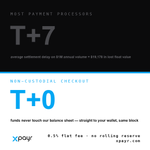
On $1M annual volume, a standard T+7 hold costs merchants roughly $19,178 in lost float value every year. That is not a processing fee. It is an invisible tax on being paid.
XPayr is non-custodial. Customer pays, funds land in your wallet the same block. T+0. No balance sheet entry on our side, no reserve pool, no surprise freeze.
0.5% flat. Fee quoted before checkout, locked in the buyer config, expires if stale.
How much of your revenue is sitting in someone else's reserve account right now?
#XPayr #stablecoins #payments #ecommerce

1
79
Arc Mainnet is live, but are you still paying high gas fees? 🛑
Bridging liquidity shouldn't be a nightmare. @XPayrPay makes cross-chain USDC bridging instant and frictionless on Arc.
xpayr.com/usdc-bridge
Drop your wallet address below if you're ready for sub-second commerce rails. Let's see who's early! 👇⚡ #XPayr #Arc #Mainnet


Arc Mainnet is live.
Arc launches as the Economic OS for the internet: an open platform for global markets, real-time value movement, tokenized assets, and agentic economic activity.
Arc is more than a blockchain.
It launches as a full-stack financial platform with assets, applications, interoperability, developer infrastructure, and Circle platform services live from day one.
Arc delivers USDC as native gas, deterministic sub-second finality, EVM compatibility, and institutional validators.
It integrates with Arc Studio, App Kits, Arc Portal, Circle Agent Stack, CCTP, Gateway, CPN, and StableFX.
A complete economic platform at genesis.
Arc launches with infrastructure for:
→ Agentic economic workflows
→ Lending and borrowing
→ Trading and liquidity
→ Onchain FX
→ Payments and settlement
→ Tokenized assets
→ Exchanges, wallets, custody, compliance, data, and developer tooling
190+ institutional and ecosystem builders are building across Arc.

When autonomous AI agents pay each other for API calls, waiting 15 minutes for block confirmations or holding 4 different volatile gas tokens breaks the execution loop instantly.
Building on @arc (Circle's L1) changes the foundation: gas is natively settled in @USDC with sub-second deterministic finality. No gas token top-ups, no treasury conversion risk.
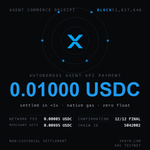
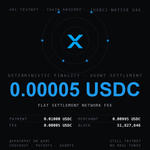
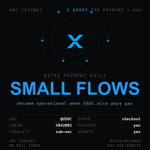
On testnet block 51,827,646, an autonomous agent sent a 0.01000 USDC query payment. The 0.00005 USDC network fee cleared, 0.00995 settled directly to the merchant endpoint, and webhooks triggered in under a second.
Still testnet, no real funds. But programmable agent-to-agent micro-commerce finally has its native rail.
Builders: what agent checkout flows are you testing on @arc?
#Arc #USDC #XPayr #payments

1
78
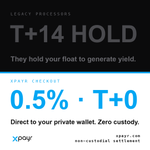
Traditional payment gateways treat your revenue like an interest-free loan they gave themselves. By holding merchant payouts for T+7 or T+14, they pocket yield on your float while your business covers payroll.
At scale, every 1% in processing fees and locked reserves drains cash flow that should be compounding inside your operations.
@XPayrPay is non-custodial from the ground up. When a buyer completes checkout, funds settle directly into your merchant wallet at T+0 with a transparent flat 0.5% fee. We never hold balances, never touch custody, and keep zero float.
Your capital belongs on your balance sheet the second the block confirms.
How much float is your current gateway sitting on right now?
#XPayr #stablecoins #payments #ecommerce

69
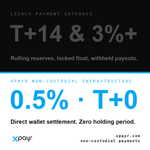
When a payment processor holds your settlement for 7 to 14 days, they aren't protecting you from fraud. They are earning interest on your working capital while you finance your own inventory.
On $1M in gross sales, traditional gateways extract 2.9% + 30¢ plus rolling reserves, costing you over $30,000 yearly in fees and locked liquidity.
@XPayrPay is engineered strictly non-custodial. When your customer checks out, funds route directly into your private wallet at T+0 with a flat 0.5% fee. We hold zero balances, custody zero funds, and take zero float.
Your capital belongs on your balance sheet from block confirmation forward.
Why should your payment processor earn yield on money your business already made?
#XPayr #stablecoins #payments #ecommerce

43
When your network fee, product price, and merchant settlement all speak different currencies, someone is always absorbing hidden slippage.
On @arc, @USDC is the native gas. Same exact unit from customer checkout to network validation to merchant payout. Sub-second deterministic finality means done is done—no confirmation counting, no volatile gas reserve on the balance sheet.
In our agent payment testnet run, a 0.01000 USDC payment settled with a 0.00005 network fee and delivered 0.00995 directly to the merchant wallet in block 51,827,646 across 12/12 automated checks.
@XPayrPay builds checkout, payouts, and autonomous agent payments on these rails. Still testnet, USDC-only, no real funds.
What part of your payment stack gets simpler when every single number stays in dollars?
#Arc #USDC #XPayr #payments

1
76
The reason most tiny payment adjustments never ship is not product. It is settlement overhead.
If every micro-refund, per-request API charge or pay-per-minute flow needs confirmation math, gas budgeting and a second token balance, teams round everything up into clumsy batches and call it strategy.
On @arc, @USDC is the native gas and finality is deterministic and sub-second, so @XPayrPay can run checkout, payouts and agent payments on chain 5042002 in the same unit. Still testnet, USDC-only, no real funds.
Builders: which small payment becomes worth automating first when the payment asset and gas asset are finally the same thing?
#Arc #USDC #XPayr #payments

56
Most payment stacks make you settle the same sale twice.
First the customer pays. Then ops reopens the money to divide it: merchant share here, creator share there, supplier payout later, affiliate spreadsheet tonight. The checkout finished. The accounting work did not.
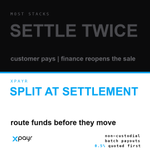
@XPayrPay closes that second settlement loop. Funds go straight to wallets, never through our balance sheet. A revenue splitter divides at settlement instead of after it, mass payouts run in one batch with one approval, and the settlement router decides where funds land before the money moves.
How many times does one order get re-routed after it is supposedly paid?
#XPayr #payments #stablecoins #ecommerce

53
When you build payment infrastructure on traditional chains, you spend half your codebase dealing with probabilistic finality and gas price spikes.
Building @XPayrPay on Arc changes the math completely. Because Arc is a Circle network with USDC as native gas and sub-second deterministic finality, a confirmed transaction is truly settled—no waiting for 12 block confirmations, no volatile token rebalancing for gas reserves.
We are running our non-custodial checkout and agent-to-agent payment rails directly on testnet (Chain ID: 5042002). Sub-cent micro-transactions settle instantly without CFOs worrying about gas token volatility.
Still testnet, no real funds yet.
What payment use case do you think benefits the most from sub-second USDC settlement?
#Arc #USDC #XPayr #payments

49
Checkout conversion dies in small ways before the payment ever fails.
A wallet screen in the wrong language. A redirect into someone else's brand. A fee that changes after the buyer already agreed. None of that looks dramatic on a dashboard. It just quietly deletes orders.
@XPayrPay keeps the payment surface tighter: no-code payment links, embeddable widget or full white-label checkout, 8 languages including RTL, a 0.5% fee quoted before payment and snapshotted at checkout, recipient wallet locked in config, stale quotes expire instead of drifting. Funds settle T+0 straight to the merchant wallet. They never touch our balance sheet.
Which part of your checkout is losing trust before it loses money?
#XPayr #payments #stablecoins #ecommerce

54
The nicest change in our payments runbook on @arc was not a faster spinner. It was deleting the sentence that says 'wait for more confirmations before support closes the ticket.'
Arc is a Circle network where @USDC is the native gas and finality is deterministic and sub-second, so the payment and the fee stay in the same unit and done means done. Our agent payment demo: 0.01000 USDC in, 0.00005 fee, 0.00995 to the merchant, block 51,827,646, 12/12 checks passed, webhook delivered. @XPayrPay runs checkout, payouts and agent payments there.
Still testnet, USDC-only, no real funds.
Builders: which line in your support runbook disappears first when settlement is final?
#Arc #USDC #XPayr #payments

54
Integration debt is still debt even when you rename it infrastructure.
A payments stack that needs custom chain config, private SDK access and a merchant success call before the first checkout is not lightweight. It is a backlog with branding.
XPayr keeps the path smaller: payment links, widget or white-label checkout, public MIT tools for Node, PHP, Laravel, Postman and webhooks, 8 languages including RTL, and non-custodial settlement straight to the merchant wallet at T+0.
What part of your payment launch still depends on someone opening a ticket?
#XPayr #stablecoins #payments #ecommerce

59
The most suspiciously boring part of moving payments onto Arc was the Solidity diff.
We expected a rewrite budget. Instead the old contracts, verifier and reconciliation logic mostly just came with us, because @arc is full EVM and @USDC is the native gas. The weird part was deleting steps, not adding them. Our agent payment demo still settled 0.01000 USDC with a 0.00005 fee to 0.00995 merchant on chain 5042002, with 12/12 checks passing and the webhook delivered.
Still testnet, USDC-only, no real funds.
Builders: what migration turned into deletion instead of engineering heroics?
#Arc #USDC #XPayr #payments

1
1
53
The ugliest sentence in payments is 'final fee may vary.'
A buyer already clicked pay, the merchant already priced the order, and somewhere between checkout and settlement the number is still allowed to wobble. Stale quotes, silent repricing, reserve logic, risk margin. Revenue turns into an estimate after the sale supposedly happened.
@XPayrPay locks that part before the payment exists. The 0.5% fee is quoted up front, snapshotted at checkout, the recipient wallet is locked in config, and stale quotes expire instead of quietly repricing. Then the funds settle T+0 straight to the merchant wallet. They never enter our balance sheet.
What part of your checkout still changes after the customer already agreed?
#XPayr #stablecoins #payments #ecommerce

1
26
Most payment debates waste time on confirmation policy after the payment already happened.
How many blocks is safe, who bears the edge case, who explains the delay to support, who watches the mempool when finance just wants to know whether the money arrived.
On @arc that argument collapses into a smaller sentence: done means done. It is a Circle network with @USDC as native gas, deterministic sub-second finality, full EVM on chain id 5042002, and @XPayrPay runs checkout, payouts and agent payments there without a second asset or confirmation math.
Still testnet, USDC-only, no real funds.
What part of your payments runbook exists only because finality is still a debate?
#Arc #USDC #XPayr #payments

1
1
51
Most processors charge you twice for the same payment.
First with the rate. Then with the time between "payment received" and money you can actually use, where a hold schedule, a rolling reserve and a freeze clause turn your cash flow into someone else's buffer.
XPayr removes the second charge entirely. The customer pays and the funds settle straight to your wallet at T+0 because they never enter our balance sheet. Checkout is 0.5%, quoted before payment, snapshotted at checkout, recipient locked in config, and stale quotes expire instead of drifting.
A processing fee is one thing. Paying for someone else to hold your revenue is another.
Which part are you being charged for today?
#XPayr #payments #stablecoins #ecommerce

36
The oddest part of most crypto payment stacks is the side budget no customer ever sees.
You want to move dollars, so someone on finance gets told to keep a second token around for gas, watch its price, and top it up before checkout or payouts stall.
On @arc that argument disappears. It's a Circle network where @USDC is the native gas, finality is deterministic and sub-second, and it's full EVM on chain id 5042002. @XPayrPay runs checkout, payouts and agent payments there without a separate top-up asset.
Still testnet, USDC-only, no real funds.
Builders: what extra token is still hiding in your payments runbook?
#Arc #USDC #XPayr #stablecoins

69