

Atlantic Canadian seafood exporter delivering premium, traceable, sustainably sourced products to customers worldwide.
Popes Harbour, Nova Scotia
Joined March 2026
- Tweets258
- Following558
- Followers252
- Likes632





Pinned Tweet
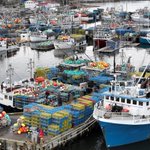
Every wharf in the Atlantic has this
conversation.
Two guys in a truck watching one fella work...
And somehow the whole conversation turns into how hard that guy works.
You don't hear enough of this anymore.
CHINA CUTS TARIFFS ON MORE CANADIAN SEAFOOD, INCLUDING COLD-WATER SHRIMP AND TURBOT
Canada and China agreed in Shenzhen on Tuesday to widen the trade arrangement the two countries reached in January. China will give tariff relief on about $285 million in Canadian fish and seafood exports. The list includes certain frozen cold-water shrimp and prawns, Greenland halibut, sea cucumber and some molluscs. On frozen cold-water shrimp, a 25 per cent Chinese tariff comes off.
Cold-water shrimp, turbot and sea cucumber are all fished and processed in Atlantic Canada. The new relief comes on top of the two-year extension of tariff relief for lobster and crab announced earlier this month, so more of the region's catch now goes into China on better terms.
In return, Ottawa will extend tariff relief on some Chinese steel and aluminum for two more years. A major Canadian trade mission to China is planned for 2027.
Source: Prime Minister of Canada; CBC News

FIRST NATIONS ALLOCATED 50% OF ATLANTIC CANADA’S ELVER QUOTA
Fisheries and Oceans Canada’s 2026 briefing documents confirm that 50% of the total allowable elver catch was reallocated in 2025 to increase First Nations participation in the fishery.
The decision represents a significant redistribution of commercial fishing access in one of Atlantic Canada’s most valuable fisheries per pound.
Source: Fisheries and Oceans Canada

1
92
DFO CLOSES 4RST HALIBUT BYCATCH FOR INSHORE MOBILE-GEAR BOATS
Fisheries and Oceans Canada says inshore mobile-gear vessels less than 65 feet may no longer keep Atlantic halibut as bycatch in NAFO Divisions 4RST. The ban takes effect at 8 p.m. Newfoundland Standard Time today, November 16. The department says the sector's Atlantic halibut bycatch allocation for this season has been taken.
The notice applies to the inshore mobile-gear fleet fishing 4RST, which includes waters off western Newfoundland, southern Labrador and in the Gulf of St. Lawrence. Fixed-gear hook-and-line boats based in western Newfoundland and southern Labrador that elected to fish Period 5 opened at 6 a.m. today and are scheduled to stay open until 8 p.m. on December 6. That opening was announced on November 12.
Harvesters in the mobile-gear sector should not retain Atlantic halibut after the 8 p.m. cutoff for the rest of this season.
Source: Fisheries and Oceans Canada

2
97
PEI LOBSTER HARVESTERS BACK AN EARLIER OPENING AND A SCALLOP-DRAG BAN
Prince Edward Island lobster licence holders in LFA 24 have voted on three management questions, and the Prince Edward Island Fishermen's Association posted the results today. Ballots were counted on November 9 at the Farm Centre in Charlottetown. Of 594 commercial licence holders, 444 questionnaires were returned, a 74.7 percent return rate. One was spoiled.
A majority, 242 votes or 54.6 percent, favoured an April 26 opening to avoid fishing in July, against 199 votes or 45 percent for April 30. A proposed 1 millimetre increase in the minimum carapace size, from 75 mm to 76 mm in 2027, was rejected, with 262 votes or 59.1 percent against and 181 or 40.9 percent in favour. Support was strongest for a ban on scallop dragging from the shore out to the 10-nautical-mile line in LFA 24, which received 378 votes, or 85.3 percent.
The LFA 24 Lobster Advisory Committee said it will move forward with any result that clears 50 percent plus one of the returned ballots. All three questions met that test. The votes will shape next spring's north-side PEI season and the debate over scallop gear on lobster ground.
Source: Prince Edward Island Fishermen's Association

2
120
OTTAWA OPENS TALKS ON CHANGING THE FISHERIES ACT
Fisheries Minister Joanne Thompson said today that she has instructed her department to start discussions with Indigenous Peoples, provinces and territories, industry, stakeholders and Canadians on certain provisions of the Fisheries Act. The talks will include rules tied to hydroelectricity generation and to a nature-positive approach to offsetting, including at least no net loss of habitat.
The statement follows concerns from the hydroelectricity sector and others that the current Act is not aligned with the government's plan to double Canada's electricity grid by 2050. Thompson also said Ottawa has received the House of Commons Standing Committee on Fisheries and Oceans report, Review of the Fisheries Act: Policy and Legislative Considerations and Recommendations, as part of the Act's five-year review. A full government response will be shared later.
This is not a new catch limit or a season opening. It is the start of a review that could change how fish habitat is treated when major projects are built, including in Atlantic Canada.
Source: Fisheries and Oceans Canada

2
155
WINNING BACK CHINA WILL TAKE MORE THAN A TARIFF PAUSE
Canadian lobster exports to China dropped from $521 million in 2024 to $314 million in 2025, according to Statistics Canada figures. China's retaliatory tariff on Canadian seafood is now suspended until 2028. Even so, industry leaders say regaining lost ground is slow going.
Vietnam has become the fastest-growing competitor, selling farmed spiny lobster. Its farms are rebuilding after floods last year. The Lobster Council of Canada wants to lean on what sets our product apart: wild-caught, cold-water, traceable and sustainable. It is seeking Atlantic Fisheries Fund support for marketing in China.
With southwest Nova Scotia's big fall season opening at the end of the month, higher fuel costs and tougher competition point to a challenging winter market for Atlantic lobster.
Source: CBC News, Statistics Canada

1
42
INVERNESS COUNTY, CAPE BRETON ISLAND, NOVA SCOTIA
Some of the finest Atlantic lobster in the world comes from the cold, clean waters along Cape Breton’s western coastline. Known for its sweet, tender meat and exceptional quality, Inverness County lobster is a prized catch, harvested by generations of local fishermen who take pride in bringing some of Nova Scotia’s best seafood to market.


2
124
NEW BRUNSWICK OPENS THE BOOKS ON UNREPORTED LOBSTER SALES
New Brunswick's Department of Agriculture, Aquaculture and Fisheries is reviewing the Seafood Processing Act with one target in mind: lobster that changes hands without being reported. Ideas on the table include licences covering every commercial purchase, making it an offence to buy illegally caught seafood, tougher penalties, more detailed reporting on purchases, sales and dead loss, licensing for tank houses, and a ban on commercial cash sales.
Harvesters, buyers, processors, tank house owners and First Nations are being asked to weigh in. In-person sessions are set for Shediac on November 30 and Shippagan on December 1, with a bilingual Zoom session on January 11. Written feedback is accepted until February 11, 2027.
The province says lobster landings were worth $323 million in 2024 and lobster exports topped $1.2 billion in 2025. Rules that shape how that catch is bought and tracked deserve input from the people who land it.
Source: Government of New Brunswick

1
3
85
DUMPING DAY IS 15 DAYS OUT
Canada’s biggest lobster fishery is getting close. Lobster Fishing Areas 33 and 34, from Halifax County to Digby County, are set to open at 7 a.m. on Monday, November 30. Under the regulations, the season opens on the last Monday in November and runs to May 31.
The start date isn’t certain. Before opening day, DFO holds weather calls with LFA advisory committee members, the Coast Guard and Environment and Climate Change Canada. If the forecast calls for winds over 26 knots, the opening is delayed.
There is a lot riding on it. Preliminary DFO figures for 2024/25 put LFA 33 landings at 7,179 tonnes worth $175 million, and LFA 34 at 14,742 tonnes worth $349 million. The two areas have 1,656 licence holders between them, and traps, bait and fuel are already being bought.
Source: Fisheries and Oceans Canada

1
3
53
CANADA AND CHINA MEET AGAIN AT APEC IN SHENZHEN
Prime Minister Mark Carney is set to meet Chinese President Xi Jinping in Shenzhen on November 17, during the Asia-Pacific Economic Cooperation leaders' summit. It is the last stop on a trip through Ireland, the Philippines, Cambodia and China that runs to November 19.
Ottawa says its strategic partnership with Beijing has opened more than $7 billion in export markets for Canadian businesses. When the two leaders met in January, they welcomed progress on trade irritants for farm and food products, naming canola and seafood.
China is Canada's second-largest single-country trading partner for goods, with two-way trade of $125.7 billion in 2025. For seafood exporters already shifting toward Asia, any word from Shenzhen on market access or tariffs will matter heading into the Lunar New Year buying season.
Source: Prime Minister of Canada; Bloomberg via Quartz

1
90
U.S. SCIENCE SHIFT COULD EASE PRESSURE ON LOBSTER GEAR
NOAA Fisheries has postponed its December meeting of the Atlantic Large Whale Take Reduction Team to March 2027. The agency wants updated science peer reviewed before the team talks about new gear rules.
A first look at that science points the same way. NOAA now expects right whale deaths and serious injuries linked to U.S. fixed-gear fisheries to come in well below its 2022 estimate, possibly near the level the population can sustain. A new gear-identification method puts the U.S. share of entanglements at about 25 percent. The work is still preliminary and could change. A public online session is set for December 2, and a final rule is still due by the end of 2028.
Right whale rules on both sides of the border shape fishing seasons and gear for Atlantic lobster and crab harvesters. Updated population and mortality numbers are expected this month and will be worth watching closely.
Source: NOAA Fisheries; Maine Department of Marine Resources

NEW BOAT OR NEW LINE? OTTAWA SAYS WRITE IT OFF RIGHT AWAY
Fisheries Minister Joanne Thompson was in Mount Pearl today to promote the Productivity Mega Deduction from Budget 2026. Businesses could write off the full cost of a wider range of capital assets in the year they buy them. Ottawa says the change is permanent and covers more than 65% of business investment.
The minister tied it straight to the fishery: a harvester putting a new vessel on the water or a processor bringing in new equipment could deduct the full cost up front instead of spreading it over years. Ottawa says the effective tax rate on new business investment drops from 13% to 6.4%.
Boats, engines, gear and plant upgrades are among the biggest costs fleets and plants face. Anyone planning one should talk to an accountant about the timing.
Source: Fisheries and Oceans Canada

2
41
NEWFOUNDLAND LOBSTER IS GROWING, BUT THE BIG FEMALES MATTER
Fisheries and Oceans Canada's latest look at American lobster around Newfoundland shows the stock rising in all four assessment regions, with landings close to record highs. Warming water at the northern edge of the species' range appears to be helping.
There is a catch. In the most heavily fished areas, especially along the south and west coasts, the females carrying eggs are smaller. Bigger females produce far more eggs, so this is the number harvesters and managers will be watching.
DFO says the overall picture stays positive and it will keep monitoring the stock. A strong fishery today depends on leaving enough large females in the water for tomorrow.
Source: Fisheries and Oceans Canada, via VOCM

2
68
NOVA SCOTIA AND MASSACHUSETTS ASK FOR INPUT ON OFFSHORE WIND
Nova Scotia and Massachusetts launched a joint request for information on November 12 about building offshore wind off Nova Scotia and sending the power to New England. Maine, Connecticut, Rhode Island and Vermont are also part of it.
The province estimates its offshore wind potential at 60 gigawatts. At peak demand, Nova Scotia uses 2.4 gigawatts. The governments want feedback on market interest, transmission, workforce and the infrastructure needed.
Fisheries representatives are named among the groups invited to respond, along with developers, utilities, Indigenous communities and others. Offshore wind would share the water with fishing grounds, so this is a chance for harvesters to be heard early. The request is open until December 31.
Source: Government of Nova Scotia

56
$10 MILLION MORE FOR WILD ATLANTIC SALMON CONSERVATION
Fisheries Minister Joanne Thompson has announced a $10 million federal grant to add to the Atlantic Salmon Endowment Fund. The fund is run by the Foundation for Conservation of Atlantic Salmon and is a permanent source of money for salmon work in Atlantic Canada and Quebec.
The fund was started in 2007 with $30 million from Ottawa. According to Fisheries and Oceans Canada, projects it has supported have restored 7.5 million metres of habitat and opened up almost 200 square kilometres more. The new money will go to habitat restoration, fish passage, population monitoring, climate adaptation and applied research.
Because the money goes into a permanent endowment, it will keep earning income for local river and watershed groups year after year.
Source: Fisheries and Oceans Canada

2
112
P.E.I. WILD OYSTER HARVESTERS FACE A HARD CHOICE
Wild oyster fishers on Prince Edward Island are handing in their licences this fall under a federal retirement program. It offers $40,000 to harvesters who permanently give up their wild oyster access.
The program covers P.E.I., Nova Scotia and New Brunswick and was set up after two oyster diseases, MSX and dermo, wiped out much of the wild stock, especially in western P.E.I. Harvesters who take the grant cannot get back into the oyster fishery for 10 years.
Some fishers call it a tough but necessary decision. The P.E.I. Shellfish Association has warned that if many licences are retired at once, there will be little wild supply left for buyers. The coming seasons will show whether the beds can recover.
Source: Fisheries and Oceans Canada

LIVE LOBSTER HEADS INTO THE HOLIDAYS WITH BUYERS IN CONTROL
Live lobster is moving slowly this month. Maine landings have improved and the Canadian fall fisheries are adding supply. Meanwhile, live and processing buyers are only covering what they need right now instead of stocking up, so the pressure on prices is building.
China shows the same pattern. In early November, the mainstream 1.25 lb Canadian lobster shipped to Shanghai was quoted at US$11.00 per pound, down 9.1 percent from a year earlier. Large lobster of 2.5 to 3 lb went the other way and rose 5.1 percent, because so little of the catch comes in at that size.
The next test comes when LFA 33 and 34 open off southwestern Nova Scotia on November 30, followed by holiday orders and Chinese New Year demand. Size grading and timing will matter more than usual this winter.

2
88
FINAL HALIBUT WINDOW OPENS FOR WESTERN NL AND SOUTHERN LABRADOR
Fisheries and Oceans Canada has set the fifth seasonal opening for Atlantic halibut in NAFO Divisions 4RST. The hook-and-line fishery opens at 6 a.m. on November 16 and closes at 8 p.m. on December 6, 2026.
The opening is for fixed-gear vessels under 65 feet based in Western Newfoundland and Southern Labrador that chose to fish in Period 5. The new variation order takes effect November 13 and replaces the earlier one.
Harvesters fishing this period should check the full notice and their licence conditions before setting gear. This is one of the last halibut windows of the year for the inshore fleet.
Source: Fisheries and Oceans Canada, Notice to Fish Harvesters

1
73
COLD STORAGE IS NOW A CYBER TARGET
The FBI, CISA, USDA and other US agencies have issued a joint warning. Hackers around the world are targeting refrigeration and temperature controllers in cold storage and grocery facilities. Systems that are unpatched, reachable from the internet, or still on factory-default passwords are most at risk.
If attackers get in, they can change temperatures, force units into constant defrost, or hide the real readings from staff. That can lead to lost product, damaged equipment and food safety problems.
For seafood, the cold chain is everything. The agencies recommend taking controllers off the public internet, changing default passwords, keeping firmware updated, and making sure temperature alarms reach someone who can act on them.
Source: CISA, FBI, HHS, USDA and DOT joint fact sheet, November 12, 2026

1
59
TARIFF REFUNDS LIFT HIGH LINER'S THIRD QUARTER
Lunenburg-based High Liner Foods reported third-quarter sales of US$288.0 million, up 15.8% from a year earlier, on 59.1 million pounds of product. Adjusted EBITDA rose to US$41.5 million, and that figure includes US$21.8 million in recovered tariffs.
The company says demand held up despite continued inflation, and that earnings grew even with the tariff recoveries set aside. Shareholders will vote on December 15 on the proposed acquisition by Umios.
For the wider industry, the results show how much U.S. tariff policy still shapes seafood company earnings. They also show that frozen value-added seafood keeps selling well in North America. A change of ownership at one of Nova Scotia's best-known seafood names is worth watching.
Source: High Liner Foods Q3 2026 results, November 11, 2026

18