

Writing Book on Tolkien | Philosophy & Theology Prof | Myths | Tolkien | Lewis | Kierkegaard | Husband & Dad | Mythic Mind Podcasts & Fellowship | Games | Film
Virginia
Joined May 2009
- Tweets38.5K
- Following1.1K
- Followers17.5K
- Likes81.9K




Pinned Tweet
There are many readings of The Lord of the Rings that have been offered, but Tolkien himself claimed that the central conflict is about God’s sole right to divine honour.
I was recently invited to lecture on this topic and was permitted to reproduce it for you.
Link below
Watch the full lecture and Q&A here or listen to episode 199 of the Mythic Mind podcast.
mythicmindfellowship.com/the…
2
143
Andrew Snyder retweeted

A lot of folks are talking about Ocarina of Time right now and many are rightly recognizing that it taps into older story telling forms than most games.
I've seen quite a few calling it a fairy tale, and I want to clear up right now that those folks are wrong.
At least in the Tolkienian sense.
Tolkien's essay On Fairy Stories is required reading on the topic. In the conclusory pages, he insists that the happy ending is required in a fairy tale. And not mere consolation. A fairy tale requires a "sudden and miraculous grace." He coined the now famous term eucatastrophe to mean the opposite of a catastrophe. A sudden turn towards joy. This is the true ending of the fairy tale.
(mild spoilers for OoT below)
Ocarina of Time does have some of elements of a fairy story. Innocence. Wonder. But ultimately it's a multilayered tragedy. It's a game about loss. The innocent forest boy loses his childhood, slowly loses his companions, and then eventually loses his place in time as he is sent back to before it ever happens. And then he loses his fairy, which in the context of the game starting about the boy without a fairy, is a cruelest blow of all. There is no turn of grace for the hero, who carries the tragedy and memory with him.
I can't map an exact literary structure onto Ocarina. It has elements of a heroic romance but is also more interested in myth making.
But the tragedy also adds an 'Elegiac' element onto the story. It becomes something more similar in tone to the Arthurian Cycle, or Beowulf, where the story leaves you with a strong sense of what has been lost in spite of the heroism on display.
Elegiac Myth?
Not a recognized literary category, but that's what I would label Ocarina of Time.
(Side note, not all Zelda games are this tragic, though several are. Link to the Past probably actually IS a fairy tale by the way, as it ends with every tear being wiped away and the healing of all harms.)
(Also pictured below, additional scenes of loss and tragedy)


Get the Words for the Day at mythicmindfellowship.com
1
253

Andrew Snyder retweeted
In Letter 246, Tolkien explains why Gandalf would have been an even more dangerous ring-lord than Sauron:
"While Sauron multiplied evil, he left ‘good’ clearly distinguishable from it. Gandalf would have made good detestable and seem evil."
In Letter 246, Tolkien explains why Gandalf would have been an even more dangerous ring-lord than Sauron:
"While Sauron multiplied evil, he left ‘good’ clearly distinguishable from it. Gandalf would have made good detestable and seem evil."
Andrew Snyder retweeted
"Mightier than Estë is Nienna, sister of the Fëanturi; she dwells alone. She is acquainted with grief, and mourns for every wound that Arda has suffered in the marring of Melkor. So great was her sorrow, as the Music unfolded, that her song turned to lamentation long before its end, and the sound of mourning was woven into the themes of the World before it began. But she does not weep for herself; and those who hearken to her learn pity, and endurance in hope."
- Tolkien, The Silmarillion

Andrew Snyder retweeted
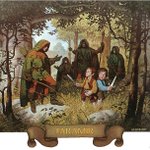
“A new character has come on the scene (I am sure I did not invent him, I did not even want him, though I like him, but there he came walking into the woods of Ithilien): Faramir, the brother of Boromir …”
- Tolkien, Letter 66

"If I have ventured wrongly, well, then life helps me by punishing me. But if I have not ventured at all, who helps me then?"
- Kierkegaard, The Sickness unto Death
Andrew Snyder retweeted
In 1940, C.S. Lewis listened to a speech by Adolf Hitler on the radio.
Shortly after, he wrote a letter to his brother, commenting on the power of Hitler's rhetoric: "Statements which I know to be untrue all but convince me, at any rate for the moment, if only the man says them unflinchingly."
He then shared his idea for a book in which a demon seeks to lull people into Hell through sly manipulation.

“A new character has come on the scene (I am sure I did not invent him, I did not even want him, though I like him, but there he came walking into the woods of Ithilien): Faramir, the brother of Boromir …”
- Tolkien, Letter 66
Andrew Snyder retweeted

Great conversation of the first Christopher Nolan film I believe I ever watched. Give it a listen!

