
Saving America's Battlefields.
Washington, DC
Joined March 2009
- Tweets23.8K
- Following971
- Followers52.3K
- Likes3.3K



#OnThisDay November 23, 1863, the Battle of Chattanooga began. After learning from deserters that the Confederates were beginning to withdraw from Chattanooga, Ulysses S. Grant sent Union troops to prevent the Confederates from reaching Knoxville to reinforce Lt. Gen. James Longstreet. His 14,000 troops quickly overran the 600 Confederates at Orchard Knob, and Grant established his headquarters there, which he used for the rest of the battle. battlefields.org/learn/civil…

The Miami warrior Little Turtle’s November 4, 1791, defeat of Maj. Gen. Arthur St. Clair’s troops near Cincinnati was the worst defeat ever inflicted on the U.S. Army by Native troops. It wouldn’t be until several years later that the U.S. Army would defeat Little Turtle at the Battle of the Fallen Timbers in 1794. The resulting peace treaty ceded three-quarters of Ohio to the United States. #NativeAmericanHeritageMonth battlefields.org/learn/biogr…

Elbridge Gerry, former vice president to James Madison, died #OnThisDay November 23, 1814. During the summer of 1813, as the War of 1812 raged, Gerry and Madison both fell seriously ill. Gerry, however, refused to yield his chair in the Senate to the president pro tempore, who supported peace with Britain. Gerry and Madison both recovered, and Gerry’s stubborn refusal to give up his seat ensured their administration remained in power as they faced increasing opposition in the Senate. battlefields.org/learn/biogr…

#OnThisDay November 22, 1864, Union Brig. Gen. Charles Walcutt clashed with Confederate Maj. Gen. Joseph Wheeler’s cavalry after being sent towards Macon, Georgia, to ascertain the position of enemy troops. Walcutt drove Wheeler beyond Griswoldville, and later that afternoon withstood three Confederate charges before receiving reinforcements. The Confederates withdrew that evening, which allowed Union troops to enter Griswoldville and destroy its industrial facilities. battlefields.org/learn/civil…

After a night of drinking in 1805, Tenskwatawa, living on the fringes of Shawnee society, received a vision from the Great Spirit, who told him to reject European society and customs. In response, he and his brother Tecumseh began preaching resistance to local tribes. Their efforts culminated in Prophetstown, a settlement designed to be the heart of a new Native American confederation that would halt the advance of white settlement. But Prophetstown lasted only three years before William Henry Harrison destroyed it in 1811 after the Battle of Tippecanoe. #NativeAmericanHeritageMonth battlefields.org/learn/biogr…

#OnThisDay November 21, 1861, Judah P. Benjamin became the first-ever Jewish American to serve in an executive cabinet in American history. Throughout the Civil War, he served as the Attorney General, Secretary of War, and Secretary of State for the Confederacy. He has received the title “brains of the Confederacy” from some scholars for his apparent position as Jefferson Davis’ right hand. battlefields.org/learn/biogr…

#DidYouKnow that British military leaders in North America relied on their Native American allies to assist in the war since many of their enlisted troops were deployed fighting Napoleon in Europe at the beginning of the War of 1812?#NativeAmericanHeritageMonth battlefields.org/learn/artic…

North Carolina initially rejected the Constitution, citing the lack of a Bill of Rights, but ratified it #OnThisDay November 21, 1789, after the promise of amendments. Rhode Island, the last holdout, finally ratified the Constitution on May 29, 1790, under pressure from the new federal government and the threat of economic isolation. battlefields.org/learn/artic…

Patriot Brig. Gen. Thomas Sumter defeated the British at Blackstock’s Plantation in Union, South Carolina #OnThisDay November 20, 1780. Though none of the original buildings on the property remain, battlefield visitors can still see the sharp hill and a 50-acre pasture that leads to a shallow stream, along with the battle monument. Can’t make it in person? Check out the Trust’s 360-degree virtual tour, complete with contextual information! battlefields.org/visit/virtu…

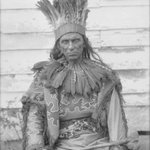
In May 1862, William Terrill Bradby, a member of the Pamunkey Tribe in Virginia, enlisted in the Union forces. Bradby spent most of his service in the Navy, working on ships that enforced the Union blockade. While serving on the USS Schockon, he was shot in the leg by a piece of Confederate shell. He recovered, but was plagued by rheumatism for the rest of his life. #NativeAmericanHeritageMonth

ALT Civil War veteran William Terrill Bradby, a member and former chief of the Pamunkey Indian Tribe, poses for a photograph in regalia he most likely crafted to wear at the 1893 Chicago World's Fair. This photograph was taken by ethnologists on the Pamunkey Reservation in October 1899.
❗Update: Orange County Officially Drops Defense of Wilderness Crossing Lawsuit
On November 19, 2026, Orange County's motion to change its position in the lawsuit brought by the American Battlefield Trust and its allies to stop the planned Wilderness Crossing mega-development at the gateway of the Wilderness Battlefield was granted. The County, which had previously defended the Wilderness Crossing rezoning, has formally withdrawn its opposition to the lawsuit and all its defenses, leaving the developers to defend the project alone.
Read the full statement from Trust President David Duncan below ⬇️ battlefields.org/news/orange…

British Gen. William Howe ordered Lt. Gen. Charles Cornwallis to capture Fort Lee to remove Patriot defenses along the Lower Hudson River. 250 years ago, #OnThisDay November 20, 1776, Cornwallis’ men crossed the Hudson and landed north of Fort Lee. Learning of the advancing troops, American Maj. Gen. Nathanael Greene ordered the evacuation of Fort Lee. #America250 battlefields.org/learn/revol…

Victory at Wilson’s Creek! These now-preserved five acres of hallowed ground in Missouri are located directly adjacent to Wilson’s Creek National Battlefield and hold an important part of that battle’s story. On August 10, 1861, Union soldiers of the 2nd Kansas Infantry crossed this ground to reinforce their line under mounting Confederate fire. The regiment’s right flank rested on the very land now preserved.
Alongside the generosity of Trust members, this project was made possible through support from the American Battlefield Protection Program and the Wilson’s Creek National Battlefield Foundation. battlefields.org/news/victor…

“The world will little note, nor long remember, what we say here,” President Abraham Lincoln said during his Gettysburg Address 163 years ago #OnThisDay November 19, 1863. And yet, his words have inspired generations to remember those who had lost their lives fighting at the Battle of Gettysburg and the unfinished work that they had fought for. Read the full address below ⬇️ battlefields.org/learn/prima…

Join Garry Adelman and Chris Gwinn as they visit the location where Abraham Lincoln gave the Gettysburg Address #OnThisDay November 19, 1863, and "step in" to the famous 1863 photograph of the occasion.
The Shawnee leader and orator Tecumseh and his small army sided with Britain in the War of 1812 after William Henry Harrison destroyed their settlement at the Battle of Tippecanoe. As Tecumseh fought across the Great Lakes region, he spread his message of resistance to white settlement and culture to other tribes. However, his hopes of building another mass movement died with him after British Gen. Henry Procter abandoned him at the Battle of the Thames. #NativeAmericanHeritageMonth battlefields.org/learn/biogr…

Today, some battlefields that were once historic farmland are focusing on sustainable agriculture, such as Minuteman National Historical Park, where the Battles of Lexington and Concord took place. Pigs and sheep grazing at the park help remove invasive species, allowing local farmers to plant cover crops that keep the soil healthy. Wool from these sheep is then used for local knitting and felt. Visitors to the park can sometimes see the sheep while walking along the Battle Road Trail between the parking lots at Meriam’s Corner and Brooks Village in Concord, as well as other grazing areas at the Park. battlefields.org/learn/natur…

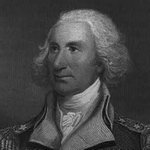
Maj. Gen. Philip Schuyler died #OnThisDay November 18, 1804. Schuyler was commissioned as one of only four major generals in the Continental Army in 1775 but resigned in 1779 after failing to capture Quebec. Schuyler later served New York in the Continental Congress, the state Senate, and the U.S. Senate. His daughter, Elizabeth, was married to Alexander Hamilton.
Learn more: bit.ly/48oZtR0

ALT Black and white print of Philip Schuyler.
Our friends at @CapitalOne and their Salute BRG are helping us improve the visitor experience at Chancellorsville! They recently joined Trust staff on the battlefield to build a trail connecting new interpretive signage detailing Stonewall Jackson's famous flank attack on May 2, 1863. We're deeply thankful and know visitors will appreciate all their hard work!
The chief of the Creek town of Okfuskee, Menawa, or “The Great Warrior,” earned his name by carrying out raids on pioneer settlements in Tennessee. Menawa’s band of Red Stick warriors was ultimately destroyed by Andrew Jackson’s army at the Battle of Horseshoe Bend in 1814. 800 of Menawa’s 1,000 men were killed, and Menawa himself was injured seven times, but survived by feigning death and escaping. #NativeAmericanHeritageMonth battlefields.org/learn/biogr…
