

Helping policymakers and the public engage the challenges facing the U.S. and international community in the 21st century. Newsletter: https://teapaw.org/t.co/HgDCEOVGYy
Washington, D.C.
Joined July 2009
- Tweets67.7K
- Following995
- Followers195K
- Likes1.6K





Brookings Foreign Policy retweeted

What comes after the 2026 midterms? E.J. Dionne, Molly Reynolds, Kathryn Dunn Tenpas, and Robert Kagan discuss divided government, congressional oversight, opportunities for bipartisan action, and the road to 2028. brook.gs/3UV54LH

Brookings Foreign Policy retweeted
A summit between Trump, Xi, and Putin would offer a historic encounter, but what would the United States gain? Read a new analysis by @patricia_m_kim. brookings.edu/articles/ameri…

Brookings Foreign Policy retweeted
APEC leaders meet in Shenzhen this week. Six experts preview a likely Trump-Xi meeting, where AI and military crisis communication may see modest progress, and a possible trilateral with Putin that carries high stakes for Ukraine and Europe. brook.gs/4zBLl2C

Canada is America's largest energy partner, but the USMCA review is unresolved, and trade tensions are rising.
On Monday, Nov. 30, 9 - 10:15 am, Canada's Energy & Natural Resources Minister @timhodgsonmt will join @samanthaenergy & Kari Heerman.
Join us: brook.gs/4jcXunU

4
914
Democrats will take Congress in January. What does that mean for the US–South Korea alliance?
@AndrewIYeo and @foreman_hanna say it brings relief, new challenges, and a chance to close growing gaps on investment, nuclear subs, and wartime OPCON. 🇰🇷 🇺🇸
brook.gs/4eQdevv

“The Rise and Fall of Tunisian Democracy”: @sh_grewal joins Marc Lynch on the @POMEPS podcast to discuss his new book and what Tunisia’s democratic collapse tells us about populism and polarization. 🎧 brook.gs/4AEWyQ7

1
965
"The US needs to be hard to paralyze, resistant to panic, and fast to get back online and recover.” @alexhnoyes on critical infrastructure resilience, on the Cybercrime Magazine podcast: brook.gs/4iY91Hh

Israel joined the U.S. Visa Waiver Program in 2023 with commitments on how it would treat American travelers. @HadyAmr reviews reports of recent entry denials and the program’s enforcement history. brook.gs/3WOr2R7

Brookings Foreign Policy retweeted

It's here! My new book, The Rise and Fall of Tunisian Democracy, is now out with @CambridgeUP!
The book explores what went wrong in Tunisia -- and what lessons can be learned about what to do and what not to do during transitions to democracy. A thread 🧵
cambridge.org/core/books/ris…


TODAY at 10am ET: What role does the U.S. play in European security, and in ending the Russia-Ukraine war?
Keynote: @PhilGordonDC with @ConStelz
Panel: @KristiRaik, @JyShapiro and @thomaswright08, moderated by @MichaelEOHanlon.
Watch live ⬇️
brook.gs/3X8wMFm

Brookings Foreign Policy retweeted

Trump, Putin, and Xi have arrived in Shenzhen for the APEC summit. @jonczin, @kyleichan, @ryanl_hass, @water_futures, @ConStelz, and Yun Sun discuss the implications of the summit and trilateral meeting between the three leaders. Read: brookings.edu/articles/trump…
Does working with Chinese scientists make the U.S. stronger or more vulnerable? With an Office of Management and Budget funding ban due to take effect in December, @kyleichan, @JacquelineNDeal, @Yingyi_Ma and @milesyu10 share their different perspectives:
brook.gs/48x24Z4

Brookings Foreign Policy retweeted

Excited to share my latest publication on 🇯🇵Japan’s forthcoming revisions to its so-called "three security documents" (national security strategy, national defense strategy, defense buildup program)
Check it out (free)!
brookings.edu/articles/japan…

In the 1970s, the U.S. sat at the pivot between Beijing and Moscow. Now China and Russia are close partners and U.S. alliances are strained. @patricia_m_kim on what the Shenzhen trilateral may reveal about Washington's lost leverage: brook.gs/48lsAVl
Nearly two years in, Trump’s accommodating approach to China is emboldening Beijing, not restraining it, argue @MiraRappHooper and @elyratner in @nytopinion. Their case: the new Congress should use its power to restore U.S. commitments in Asia.
brook.gs/3WFmAnL

Japan is rewriting its 3 core security documents years ahead of schedule, due in December. @AdamPLiff on what to expect from the Takaichi government, and the open questions: spending targets, nuclear-powered subs, and the non-nuclear principles.
brook.gs/4eEKLc7
3
695
Brookings Foreign Policy retweeted
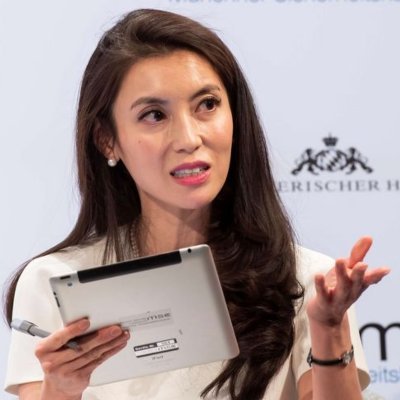
A pleasure to join the Fortune Southeast Asia 500 Summit opening plenary, “Global Economic Outlook: Regional Impact,” in Ho Chi Minh City.
Southeast Asia’s commercial promise rests on security, reliable supplies of essential goods and energy, and international rules that support peace and prosperity. A positive outlook depends on how effectively the region manages geopolitical risks, including through greater regional integration, broader economic and security partnerships, and support for international law. International law helps preserve a predictable environment for business, reduces conflict risks, and enables countries to defend their interests without aligning with any one power. Governments and businesses must also assess whether diversifying suppliers reduces vulnerabilities or creates new dependencies, and strengthen the infrastructure on which supplies depend.
But Southeast Asia’s peace and prosperity also depend on the actions of major powers. Questions about US security commitments and disruption caused by US economic policies undermine these prospects.
In a Fortune commentary published shortly before the panel, I examine the triple risks of conflict, US-China rivalry, and American economic nationalism. I also discuss what governments and businesses can do to protect the foundations of the region’s growth.
🔗 : “How Southeast Asia can realize its commercial promise amid geopolitical rivalry” (fortune.com/2026/10/31/how-s…)
Thank you to the lovely team at @FortuneMagazine for convening the discussion with Amol Gupte, Jens Lottner and @TedOsius, moderated by @ajs.
Last photo: We took the “scenic route” to the stage - through the kitchen!
@BrookingsInst @BrookingsFP @FortuneMagazine


What role should the U.S. play in European security, from the war in Ukraine to deterring Russia?
On Thursday, November 19, from 10 am - 11:30 am, join @PhilGordonDC, @ConStelz, @KristiRaik, @stephenwertheim, @thomaswright08, and @MichaelEOHanlon: brook.gs/3X8wMFm
Against a backdrop of conflict in Sudan, South Sudan, Somalia, and among the Houthis, comes the risk of war between Ethiopia and Eritrea. Jeffrey Feltman warns that a border clash could merge the Red Sea region's conflicts into one wider fire: brook.gs/48RHUsO

When Trump and Xi see each other again at APEC in Shenzhen next week from November 18–19, a possible Putin meeting is in the mix. Brookings experts preview what to expect on trade, AI, and Ukraine, and what it all signals to U.S. allies: brook.gs/4zBLl2C