

Contemporary OB/GYN® is a peer-reviewed journal providing practical information for doctors by doctors.
Joined November 2011
- Tweets14K
- Following5K
- Followers16.5K
- Likes719




By quantifying rising demand, particularly for specific formulations, institutions “can be better prepared and do better forecasting,” for MHT, said Dana Sarnak, PhD, of Johns Hopkins Bloomberg School of Public Health.
Future analyses will examine whether the increases are shared equitably across socioeconomic and geographic groups and will look at prescribing by specialty, she said.
Watch our full interview with Sarnak and Wen Shen, MD, MPH, from The Menopause Society Annual Meeting here: hubs.li/Q04FSGsJ0
173
In this clip, Wen Shen, MD, MPH, of The Johns Hopkins University, comments on the fact that many women now live into their 80s but spend their final decades in poor health, she said better access to hormone therapy could help change that.
“I am very happy to see the movement that is happening,” Shen said, framing it as part of healthy aging in midlife and beyond.
Watch our full interview from The Menopause Society Annual Meeting here: hubs.li/Q04FS95c0
In a global cross-sectional study of 1,808 perimenopausal Flo app users across 87 countries, higher physical activity frequency was associated with lower total Menopause Rating Scale scores (17.46 for inactive vs 13.77 for the most active; P < .001).
Liudmila Zhaunova explains the Flo app further in our full interview from The Menopause Society Annual Meeting. Watch the full interview here: hubs.li/Q04FHcpc0
151
Top news on Tuesday, November 17, 2026:
- The United States has earned a fifth-straight "D+" rating from the March of Dimes annual report card for preterm birth, with half of all states having received a "D" or "F" grade for 2025. Early prenatal care did improve, and overall maternal mortality declined to pre-pandemic levels.
- According to multiple reports, the Pan American Health Organization, part of the World Health Organization, officially removed measles elimination status from the United States, as over 5400 cases have been confirmed in 2026 (as of November 12, 2026.
Read more on each story below.
US officially loses measles elimination status: hubs.li/Q04FxcX70
US receives "D+" grade from March of Dimes: hubs.li/Q04FxdyT0

150
Kristin MacGregor, PhD, explains why some perinatal depression goes unspoken or undertreated, and how that impacts patients.
Watch the full interview and learn more about postpartum and perinatal depression: hubs.li/Q04Fp5_W0
1
212
For the first time in 26 years, and according to multiple national reports, the United States has lost its elimination status for #measles, a loss that represents “a significant public health setback, indicative of the resurgence of highly preventable contagious diseases in the country,” according to Camille A. Clare, MD, MPH, CPE, FACOG, president of the American College of Obstetricians & Gynecologists (ACOG).
View the latest available numbers and more on elimination status here: hubs.li/Q04FnhL80

1
145
In our Article of the Week, Dallas Reed, MD, FACMG, FACOG, explains that risk factors cast a wide net in preeclampsia prediction, but biomarkers could add precision.
Read more 👇
hubs.li/Q04Fhtjh0

2
264
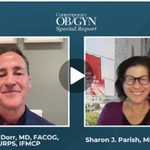
In a new Contemporary OB/GYN Special Report, we welcome back Bruce Dorr, MD, URPS, FACOG, FMCP-M, MSCP, as host of "Rediscovering testosterone in women's health: History and practice," with guest Sharon Parish, MD, IF, NCMP!
Get an idea of our series in the clip below, and find the full series at the link below.
Thank you for watching with Contemporary OB/GYN.
Watch more on hashtag#testosterone in women: hubs.li/Q04FhjqD0

Dallas Reed, MD, FACMG, FACOG, says some hashtag#patients with no obvious risk factors still develop severe preeclampsia because the current risk factor-based approach casts a wide net without drilling down to the biology of what is happening in an individual hashtag#pregnancy.
Learn more on this topic in a full article from Reed here: hubs.li/Q04Fddpk0
2
174
Dallas Reed, MD, FACMG, FACOG, says some #patients with no obvious risk factors still develop severe preeclampsia because the current risk factor-based approach casts a wide net without drilling down to the biology of what is happening in an individual #pregnancy.
Learn more on this topic in a full article from Reed here: hubs.li/Q04Fd7V80
1
239
The Peri-SS covers vasomotor, psychological, sexual, and physical symptoms, including digestive issues and sexual health concerns often missed by existing menopause scales.
A validation study in Menopause found the 16-item Perimenopause Symptom Scale reliable and valid for digital self-assessment among women aged 35 to 59 years in the United States.
Find full details here: hubs.li/Q04F8gsD0

2
286
Integrative medical group visits can extend menopause care to more women at once while improving symptoms and self-efficacy, according to a single-site feasibility pilot of the MENOGAP program and its lead author, Lisa Taylor-Swanson, PhD, LAc, Dipl AHM (NCBAHM), associate professor at the School of Medicine and the Susan Samueli Integrative Health Institute at the University of California, Irvine. The pilot was published in Menopause.
Click here to learn more about the program in our full interview with Taylor-Swanson: hubs.li/Q04F65qK0
1
4
232
In a newly published article, Dallas Reed, MD, FACMG, FACOG, explains that risk factors cast a wide net in preeclampsia prediction, but biomarkers could add precision.
"The practical problem is familiar: Most patients meet 1 or more risk criteria and never develop preeclampsia, whereas some patients who appear relatively low risk early in pregnancy subsequently develop significant disease," said Dallas. "As precision medicine becomes routine in oncology, cardiology, and other areas of medicine, the field of obstetrics should be asking a similar question: Can we do better than a risk-factor checklist? Increasingly, the answer appears to be yes."
Read the full article here: hubs.li/Q04F1z9Z0

1
199
Mental health, bias, and trauma shape sexual health visits, and histories should assess function, not just risk, according to Sameena Rahman, MD.
Mental health should be assessed as part of the evaluation but should not be the only condition treated, she said.
Listen is as Rahman explains in a recent Contemporary OB/GYN interview: hubs.li/Q04DP9dc0

1
199
The Health Resources and Services Administration (HRSA) has issued a Notice of Funding Opportunity for the Women’s Initiative for Screening and Health (WISH) program, which will award up to $1 million in fiscal year 2027 to update the HRSA-supported Women’s Preventive Services Guidelines, the US Department of Health and Human Services (HHS) announced.
MORE: hubs.li/Q04DBJMC0

110
In a new Q&A interview, Dr. Soma Mandal, MD, MSCP, of Hackensack Meridian Health, reacts to the #FDA's removal of boxed warnings on 3 additional menopausal hormone therapy products, removing statements on cardiovascular disease, breast cancer, and probable dementia.
“Removing outdated, class-wide risk language is not the same as saying hormone therapy is risk-free. It means we can finally have a more nuanced conversation that reflects what we now know: risks and benefits depend on a woman’s age, time since menopause, symptoms, medical history, dose, route of administration, and whether she has a uterus," Mandal stated.
Read more, and find out what questions clinicians should be keeping in mind following these FDA changes: hubs.li/Q04DtT0q0

ACOG reacts to the inclusion of AMA obstetric billing codes for 2027:
CMS' proposed G-codes, which experts stated would cause confusion in combination with the AMA's proposed codes, were not included in the final fee schedule for 2027, according to ACOG.
ACOG president Camille A. Clare, MD, MPH, CPE, FACOG, responds to the news below.
Full details and how we got here: hubs.li/Q04Dt2CG0

2
235
“I think there’s one important thing to highlight regarding the effects of hormone therapy used to treat moderate to severe vasomotor symptoms on cardiovascular disease. This is an area where the pendulum has swung back and forth over the years regarding whether there is risk or benefit,” said Matthew Nudy, MD, in an interview with Contemporary OB/GYN at The Menopause Society Meeting in San Diego, California.
Watch the full interview, here: hubs.ly/Q04Dmycj0
2
174
In this clip from The Menopause Society Annual Meeting in San Diego, California, Chrisandra L. Shufelt, MD, MS, FACP, MSCP, discusses how cardiovascular risk can play a role in menopause care and hormone therapy considerations.
Watch the full interview here: hubs.li/Q04Dmn-j0
A meta-analysis of 6 randomized trials presented at ANESTHESIOLOGY 2026 linked perioperative ketamine or esketamine during elective cesarean delivery to lower early #postpartum depressive symptom scores.
Lead author Peter Hsin, BS, said perioperative ketamine shows promise for early postpartum depressive symptoms, but evidence does not yet support its use specifically for postpartum depression prevention.
In an in-depth interview, Hsin explains the findings further and highlights the potential of ketamine during elective C-section to lower #PPD symptom scores.
Read more: hubs.li/Q04DbmHg0

183