







This should be a lesson to the Western world, but instead it seems the global left sees it as a blueprint.
What I would add here: Mass unchecked immigration + massive welfare state. The ultimate cocktail for poverty and chaos.


Those who said the Haitian gangs are not like the El Salvadorian gangs, and are more organized and better “fighters” were proven wrong spectacularly.
A gang member with an Ak-47 has no chance against a special forces unit.
This whole operation proves that the only thing allowing gangs to remain relevant is the government's lack of willpower to get rid of them.

Great post!

Hier, c'était le 9/11 de l'Europe.
Chez nous, 9/11 se lit 9 novembre. Celui des Américains a accouché du Patriot Act et de la surveillance de masse. Le nôtre a engagé l'Europe « libérale » sur la même pente étatiste. Sauf que nous l'avons fêté.
Le 9 novembre 1989, le mur de Berlin tombait.
Ce soir-là, l'Ouest n'a pas tant vaincu le communisme que perdu ce qui l'en protégeait.
En 1976, dans La Tentation totalitaire, Jean-François Revel posait un paradoxe : le principal obstacle au socialisme n'est pas le capitalisme, c'est le communisme. Tant que le Goulag avait une adresse, le rêve avait un prix.
Il y décrivait aussi la docilité de la gauche non communiste envers Moscou : des élites qui préfèrent l'unité imposée au pluralisme, des masses qui voient dans le communisme l'envers des défauts du capitalisme, sans en mesurer le coût.
Ce que cette gauche n'a jamais voulu admettre : le stalinisme n'est pas une déviation du socialisme. Il en est la forme aboutie. Soljenitsyne en a dressé l'inventaire dans L'Archipel du Goulag : surveillance de tous par tous, camps, mensonge érigé en système.
Mises l'avait démontré dès 1920. Sans propriété privée, pas de prix. Sans prix, pas de calcul économique. Sans calcul, le chaos. Et chaque désordre appelle une intervention de plus.
Hayek a décrit la suite dans La Route de la servitude : la planification réclame toujours plus de pouvoir, et le pouvoir concentré ne se rend jamais. Au contraire, il attire les pires d'entre-nous à son sommet.
Le plus troublant, c'est que nos démocraties prennent cette route d'elles-mêmes. Schumpeter l'a vu en 1942 dans Capitalisme, Socialisme et Démocratie : le capitalisme ne meurt pas de ses échecs mais de ses succès. Il nourrit les intellectuels et bureaucrates, ces moteurs de la tentation totalitaire, et leur donne les moyens de saper les fondation de nos sociétés capitalistes.
Un siècle plus tôt, en visite aux États-Unis, Tocqueville avait déjà pressenti le risque démocratique : un pouvoir « immense et tutélaire », qui ne brise pas les volontés mais les amollit. Un pouvoir qui pouvait nous "ôter entièrement le trouble de penser et la peine de vivre".
Pendant quarante ans, une seule chose nous a retenus sur cette pente : le spectacle de l'Est. Staline et Mao nous servaient d'épouvantail.
Puis l'épouvantail est tombé. Fukuyama annonçait la fin de l'Histoire. Nous avons eu la fin de la vigilance.
Depuis, la social-démocratie glisse vers un communisme globalisé qui ne dit pas son nom. La monnaie fiat, sans ancrage depuis 1971, finance la dérive et organise le chaos contre lequel Mises mettait en garde. L'Union européenne en est le vecteur: elle réalise cette sur-régulation, cette bureaucratisation, d'une manière bien plus insidieuse et systémique qu'un totalitarisme basé sur le culte d'un homme ne pourrait le faire, et ouvre ainsi la plus dangereuse des Routes vers la Servitude.
Le COVID en a été la démonstration grandeur nature : nous avons signé nous-mêmes nos autorisations de sortie, répétés les mensonges que nous servaient les propagandistes, et nous nous sommes censurés et surveillés les uns et les autres mieux que nul pouvoir stalinien n'aurait pu le faire.
La Boétie l'avait écrit il y a près de cinq siècles : le peuple sert si volontiers « qu'on dirait, à le voir, qu'il a non pas perdu sa liberté, mais gagné sa servitude ». La Tentation Totalitaire habite le cœur des élites, autant que celui du peuple.
À l'Est, on avait perdu la liberté. À l'Ouest, nous avons gagné la servitude.
Baudelaire avait prévenu : « La plus belle des ruses du diable est de vous persuader qu'il n'existe pas. »
Tant qu'il y avait deux blocs, la bête avait un visage. Le 9 novembre 1989, nous l'avons crue morte. Nous lui avons laissé le champs libre pour qu'elle s'empare du monde, et cette fois-ci, nul épouvantail pour nous indiquer comment discerner l'ombre de la lumière.

Free banking is vastly superior to the current system.
America had the Fed and lost 9,000 banks between 1930 and 1933, while Canada had no central bank and didn’t lose any.
When private banks issue their own notes and compete, bad decisions hit their own capital instead of the whole system. Scotland had that from 1716 to 1845 and stayed more stable than England under its central bank.
After 1913, the Fed era produced more monetary and economic instability than the decades before it. The dollar lost 97% of its purchasing power.
Warsh replaced Powell. Washington is still arguing over who steers the money supply. The actual question is why any committee gets that power.
Patents are government-granted monopolies. If you strip away the euphemism, the state forbids competitors from using an idea, backed by courts and injunctions.
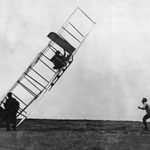
The Wright brothers prove what happens when that monopoly metastasizes. Orville and Wilbur secured U.S. Patent 821,393 in 1906, covering their lateral control system. Rather than compete on engineering, they spent the next decade suing Glenn Curtiss and every other American aviation pioneer who dared improve on their design. Curtiss, who built superior aircraft, had to spend his time fighting injunctions instead of building planes. The U.S. aviation industry largely froze while litigation dragged through courts.
Europe had no such paralysis. French, German, and British manufacturers iterated freely, competed aggressively, and by the time World War One broke out in 1914, European aviation had lapped America. The U.S. military scrambled to field combat aircraft and found its domestic industry strangled. The government ultimately forced a cross-licensing agreement in 1917 through the Manufacturers Aircraft Association, dismantling the very monopoly Washington had granted eight years earlier. The state created the problem, then congratulated itself for solving it.
This is the standard story patents tell. The incentive argument runs like this: without patent protection, inventors will not invest in research because competitors will copy their work. The claim sounds intuitive, but the math rarely supports it. Pharmaceutical companies spend more on patent litigation and regulatory lobbying than many spend on actual drug discovery. Curtiss needed customers and competitive pressure to motivate him, which the Wright litigation denied him.
Progress compounds through imitation, recombination, and rivalry. Prices fall, quality rises, and you benefit directly when inventors race each other rather than race to the courthouse. Every year a patent holds a superior technology off the market is a year you pay more for worse outcomes.

The government taxes you when you earn money, taxes you when you spend it, taxes you when you invest it, and then taxes your children when you die. The federal estate tax currently kicks in at 40% on estates above $13.61 million, a threshold the Biden administration repeatedly tried to lower. Washington frames this as targeting dynastic wealth. It actually targets a lifetime of accumulated savings, already taxed multiple times over.
Property rights mean nothing if the state can confiscate your accumulated capital the moment your heart stops. Murray Rothbard put private property at the foundation of liberty for exactly this reason: ownership that evaporates at death is not ownership. It is a revocable license the state issues and reclaims at will.
Consider a family farm in Iowa worth $15 million on paper, generating $200,000 a year in real income. The heirs owe $540,000 in federal estate taxes within nine months of death. They did not get $540,000. They got a farm. So they sell it, usually to a corporate agricultural buyer, which is a funny outcome for a tax rhetorically aimed at breaking up concentrated wealth.
The capital your grandfather spent forty years building represents deferred consumption, resources he chose not to spend. Taxing that capital destroys it. This process doesn't redistribute purchasing power; it rather converts productive assets into government expenditure, removing them from capital markets where they would have funded jobs, equipment, and future production.
Calling this anything other than state-sanctioned inheritance confiscation requires genuine ideological commitment to the fiction that the state has a prior claim on what you built.


Before Social Democracy enabled them to run for public office, sociopaths had to find alternative ways to control their desired subjects.
Grigori Rasputin crawled out of Siberian peasant obscurity in 1869 and somehow died in a St. Petersburg palace in 1916.
Born in Pokrovskoye, a village in the Tyumen region, Rasputin spent his early years doing what Siberian peasants did: farming, drinking, wandering. Around his late twenties he attached himself to a fringe Christian sect called the Khlysty, who believed sin was a prerequisite for divine grace. Convenient theology for a man with his appetites.
He arrived in St. Petersburg around 1903 and worked his social climb with remarkable efficiency. By 1905 he had the Romanovs' complete attention, specifically because Tsarevich Alexei suffered from hemophilia and Rasputin genuinely seemed to relieve the boy's episodes. How exactly remains disputed; the most credible explanation is that he stopped the doctors from giving Alexei aspirin, which thins blood. Medieval remedy: effective outcome.
The man drank heavily, slept with half the aristocracy (willing participants, records suggest), and somehow accumulated enough political influence that ministers feared him. Tsar Nicholas II was easily led. Alexandra was fanatical in her devotion to Rasputin.
The assassination in December 1916 became legend. Felix Yusupov and associates fed him cyanide-laced cakes, shot him, and threw him into the Malaya Nevka River. The autopsy found drowning as cause of death. His lungs were full of water. The poison apparently did very little.
He was 47 at the time.

Socialism already fails before the first five-year plan even starts!
A fundamental impossibility is baked into the system's architecture. Market prices encode millions of decisions simultaneously; central planners cannot replicate that coordination. Not with spreadsheets and not with AI.
1. The calculation problem.
Prices encode millions of decisions simultaneously: how scarce copper is, how urgently you need it, what you would sacrifice for it. Central planners cannot replicate this. They receive none of your preferences, only aggregate statistics, and they make decisions with the lag and crudeness of a hammer trying to perform surgery. Ludwig von Mises nailed this in his 1920 paper "Economic Calculation in the Socialist Commonwealth," and the Soviet Union spent seventy years empirically confirming it.
2. The incentive collapse.
When you cannot own the fruit of your labor, you stop planting. Soviet collective farms produced a fraction of what private plots produced per acre, because the man working his own quarter-hectare had a reason to show up at dawn. The collective farmer only had a reason to appear present. These are categorically different motivations, and they produce categorically different grain yields.
3. Capital consumption.
Socialist governments spend the accumulated capital of prior productive generations, then borrow, then print currency. Venezuela's bolivar lost 99.99 percent of its value between 2012 and 2022. Shelves empty not because production is hard but because price controls make production irrational.
4. Knowledge is local and personal.
No committee in Caracas or Moscow knows that the auto shop in Barquisimeto needs six specific bolts this Tuesday. The shop owner knows. Centralize that decision and the shop sits idle while the committee drafts a memo.
5. Political capture.
Resources under state control flow toward those with political connections, not economic productivity. This is a law, not a tendency. Every socialist state produces a nomenklatura, a party elite, a Politburo with dacha privileges while citizens queue for bread. Cuba's Communist Party leadership eats differently than Havana's ordinary residents. Always. Without exception.
6. Exit destroys the experiment.
When socialism makes life intolerable, the talented, the ambitious, and the capital-owning simply leave. East Germany built a wall to solve this, which tells you everything about the voluntary appeal of the system.
Socialism dismantles the very mechanisms that allow human coordination to function: prices, ownership, local knowledge, and incentives. Remove those, and you have organized poverty. Every. Single. Time.


Exclusive: A covert Russian network sought to exploit last month's riots in France by using social media to blame the unrest on uncontrolled immigration and portray the government as having lost control, according to an internal EU assessment seen by Reuters reut.rs/3UMHXCW

Nanjing, December 1937. Japanese troops murdered an estimated 200,000 Chinese civilians in six weeks.
"Comfort women": 200,000 women enslaved across occupied territories. Unit 731 conducted live biological experiments on prisoners in Manchuria. These are documented crimes of industrial scale.
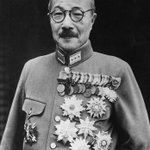
Hideki Tojo, Japan's wartime Prime Minister and military commander, ordered campaigns that killed between 10 and 30 million civilians across Asia from 1937 to 1945, depending on the accounting methodology, and you probably spent forty minutes on him in high school.
The axis of history's worst mass murderers runs through Berlin and Moscow, and Western education stops there.
Stalin murdered kulaks by the millions and receives the academic treatment of a "flawed visionary." Tojo gets a footnote. The asymmetry tracks predictably when you notice which atrocities threatened Western imperial interests and which ones didn't.
Tojo didn't conjure his war machine from private savings and voluntary exchange. The Japanese imperial state commanded resources through conscription, confiscation, and military requisitioning of entire regional economies. The Greater East Asia Co-Prosperity Sphere was based on extraction under uniform, not free trade.
Tojo hanged in December 1948 after a war crimes tribunal. Justice arrived, formally. Concentrated state authority, legitimized by nationalist mythology and unchecked by any constitutional constraint, produced Nanjing. It produced Manchuria. Total power and mass death are cause and effect.

45 million views on this post about Mises. The world is ready to hear the free market message.

Mises obliterated the entire socialist project in 1920 with one devastating insight: "Where there is no free market, there is no pricing mechanism; without a pricing mechanism, there is no economic calculation." The socialists spent the next century pretending this problem didn't exist while their economies collapsed around them.
And yet here we are, watching politicians promise they can "fix" healthcare, housing, and energy markets through central planning. They can't even calculate the cost of their own programs correctly — how exactly are they going to allocate resources across an entire economy?
Every Venezuelan breadline, every Soviet grain shortage, every Chinese famine was just Mises being proven right in the most brutal way possible. But sure, let's try democratic socialism this time. What could go wrong?
Jesse Livermore made millions reading a ticker tape. A strip of paper with numbers on it. Prices of stocks printed in sequence as trades cleared. That was the whole operation.
He called it "reading the tape." What he meant was watching prices move in real time, finding patterns in how buyers and sellers behaved, and placing bets accordingly. No forecasts. No fundamental analysis of railroad earnings or copper reserves. Just prices, in sequence, telling you what the market was doing right now.
Charts grew directly from this practice. Someone figured out that drawing yesterday's prices on paper saved you from memorizing them, and that a week's worth of prices drawn in a line showed you something a single number never could. The chart holds the same information as the tape; it is just displayed in a way our brains can process more easily.
Here is what charts cannot do: predict the future.
Prices carry information about past trades between willing buyers and sellers. That information is real and useful. A price rising on heavy volume tells you that many participants, each acting on their own private knowledge, chose to buy at increasing levels. Great to know.
The trader who mistakes a picture of the past for a window into the future will lose money systematically. Livermore himself went bankrupt four times. He read the tape better than almost anyone alive in 1929, and the tape still destroyed him because he thought it could tell the future instead of visualizing the past.
Charting is a record-keeping tool, not an oracle. Use it as organized memory, a compressed history of what prices did, against which you weigh what they are doing now.

A short history of the current monetary system.
In 1907, a liquidity panic froze New York's credit markets. J.P. Morgan personally organized a private bailout, which worked, but the banking cartel used the crisis as a prop. They needed a lender of last resort, meaning they needed someone else to absorb their losses. Congress gave them the Federal Reserve in 1913, a central bank dressed up in public interest language that was written largely by the bankers it was supposed to supervise.
Then came the war. World War One gave European governments the excuse to suspend gold convertibility and print the money the fighting required. The Fed expanded credit aggressively to finance U.S. war bonds. That expansion did not vanish after the Armistice; it metastasized into the credit bubble of the 1920s. When the bubble collapsed in 1929, the Fed tightened into the contraction and turned a sharp recession into a catastrophe.
By 1933, Roosevelt made it permanent, criminalizing private gold ownership under Executive Order 6102 and confiscating metal at $20.67 per ounce before revaluing it to $35. Citizens lost roughly 41% of their gold's purchasing power overnight by order of their own government.
World War Two completed the centralization. At Bretton Woods in 1944, the dollar became the world's reserve currency, technically convertible to gold at $35 per ounce for foreign governments only. The U.S. now had the exorbitant privilege of printing the reserve currency, and it spent accordingly, running guns, soldiers, and welfare programs on paper promises.
By the late 1960s, France noticed the gap between printed dollars and actual gold and started converting. Nixon stopped this by closing the gold window on August 15, 1971. Pure fiat with no anchor whatsoever. The last thread snapped without a vote, without a constitutional amendment, by executive press conference on a Sunday evening.
The 2008 crisis showed what fiat enables at scale: the Fed created $1.3 trillion in new reserves between September and December 2008 alone to rescue institutions that had bet recklessly. In 2020, the Fed expanded its balance sheet by over $3 trillion in three months. You paid for that through every price you saw rise in 2021 and 2022.
Each crisis produced new powers. Each new power survived the crisis that justified it and became the baseline for the next expansion.
On and on we go; where we will stop, no one knows.
The only mistake sound-money economists have ever made is underestimating banks' and the Fed's ability to kick the can down the road and come up with new, innovative ways to expand the money supply and steal from citizens.


Yesterday, my 3-year-old nephew was playing outside when he came across a bee on the ground. I saw it and told him to leave the bee alone; he didn't listen. Told him 3 times to leave the bee alone and said it would sting him if he didn't listen. He didn't listen.
About 5 minutes later, he came running, crying because the bee stung him on his index finger. He won't play with or near a bee ever again. His older sister runs away when she sees a bee. She was stung on her foot last year.
This episode made me think of a near-perfect analogy:
Western Europe is like the 3-year-old playing, about to be stung.
Eastern Europe is the older sister.
Collectivism is the bee.


