

CEO of TradeSmith, a leading fintech and quantitative investment research firm. Investors trust over $30 billion to be monitored and analyzed on our platform.
Joined October 2022
- Tweets2.9K
- Following225
- Followers5.6K
- Likes1.3K




$NVDA surged 34% this morning after its board reinstated Jensen Huang as CEO.
The rest of AI infrastructure came along for the ride. Related names rose 10% to 25%, and the VanEck Semiconductor ETF $SMH jumped 16% in morning trading.
What drove the board's reversal is still unclear. Pressure from employees, investors, or Washington may have played a role.
Here's the part that matters for traders. One big up day doesn't repair a broken chart.
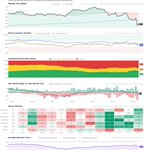
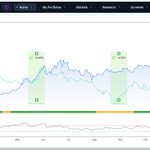
$SMH gained 176% in the 12 months through this June. Then it slid into a volatile, sideways range.
Heavy selling over the past month, partly tied to the Huang saga, pushed $SMH to new lows and below its 200-day moving average.
Even after today's pop, the ETF sits well below that 200-day line and below its summer and fall consolidation zone.
Our line in the sand: $SMH above $570 before getting aggressive on the long side of AI infrastructure.
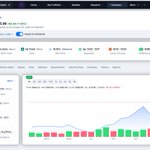
The business case is not the issue. TradeSmith's Fundamental Score on $NVDA reads 91.7 out of 100.
It's the price action that still needs to catch up, and that's why the plan is to let the chart confirm before stepping in.
Top $SMH holdings to watch for confirmation: $NVDA, $TSM, $AMD, $TXN, $ASML and $MU.
Is a 34% day enough to get you back in, or are you waiting for $570?
1
476
Zscaler $ZS jumped 18% after CrowdStrike $CRWD agreed to buy it in an all-stock deal worth about $43.9 billion.
My call to own cybersecurity stocks back in March keeps paying off. TradeSmith's Technical Score on $CRWD sits at 73.5, a strong trend read on the buyer.
Neocloud stocks ripped on Jensen Huang's return to Nvidia $NVDA. Nebius $NBIS, IREN $IREN and CoreWeave $CRWV each rose more than 20%.
These are the companies renting out AI compute by the hour, so they trade as a leveraged bet on demand for Nvidia chips. A stable leader at the top of the chip supply chain is good news for them.
Not everything is working, though. Rate-sensitive and commodity names are still under pressure.
Homebuilder NVR $NVR hit a new one-year low.
Crude oil fell to its lowest level since late August.
Refiners Valero $VLO and Marathon Petroleum $MPC hit new three-month lows.
Natural gas producer Expand Energy $EXE hit a new one-year low.
The bigger picture: the Dow is trading below its 200-day moving average, a red flag for the broad market.
That's a backdrop for patience and selectivity, not aggressive positioning.
Strength is concentrated in the secular themes, cybersecurity and AI compute, while housing and energy keep making new lows.
That split tells you where the money is going, and where it's leaving.
Bookmark this for your watchlist.
1
463
Most people watch Tesla $TSLA when they think about a SpaceX deal. Today, the more important price may have been SpaceX $SPCX.
Tesla jumped about 13.7% to $393.10 by mid-morning, up from Friday's $345.82 close. SpaceX rose about 8.7% to $138.89 at the same time, after Jefferies started coverage with a Buy rating.
Here is why both moves matter. The deal under discussion is reportedly all-stock, which means Tesla holders would be paid in SpaceX shares. A rising SpaceX price makes any exchange ratio worth more to them. A rising Tesla price makes any premium cost SpaceX more.
Bloomberg reports an announcement could come as soon as December. No terms are on the table, and independent committees at both companies are still doing the work.
So today's rally did two things at once. It raised the value of what Tesla holders might receive, and it raised the price SpaceX would have to pay to get there.
Which side of that ratio do you think moves more before a deal is announced?
Weeks like the one stocks just had are rare, and what usually comes after them is not what most people expect.
The S&P 500 $SPY fell 8.6% last week, its 12th biggest weekly decline since 1950. It closed Friday at 6,910.39 after seven straight losing days, the longest streak since February 2020.
Here is the part that gets lost in a drawdown. After the biggest weekly declines, the S&P 500's average return over the next year was 26%.
That is not a promise, just a signal. It is a pattern built on the fact that big weekly drops tend to happen near points of maximum fear, when sellers have already sold.
This week tests it quickly. Futures were up 2.7% Monday morning, and the calendar is packed: PCE inflation Wednesday, markets closed Thursday, and a half day Friday.
The averages also hide the path. Some of those years started with another leg lower before the gains arrived.
What is your prediction for 1 year out?
2
648
NuScale Power $SMR is down 62% since early September. Joby Aviation $JOBY is down 49% in three months.
When markets sell off, the moonshots get hit hardest.
These are early-stage companies building next-generation technology. Little or no revenue, heavy R&D, and stocks that can fall 90% or rise thousands of percent.
Nvidia $NVDA grabbed the headlines in this decline. But the moonshot names have suffered far worse.
Quantum computing: IonQ $IONQ, Rigetti $RGTI and D-Wave $QBTS are each down more than 40% since early September. All three hit new lows today.
Air taxis: $JOBY is down 49% in three months. Archer Aviation $ACHR is down 50%. Both are at new one-year lows.
Small nuclear reactors: $SMR is down 62%, and Oklo $OKLO is down 48% over the same span. Both at new one-year lows.
Gene editing: CRISPR Therapeutics $CRSP is down 30% over two months and recently hit a one-year low.
Inflation worries, rising rates and doubts about AI infrastructure are driving the selling.
Many of these companies will fail. A few will likely succeed in a big way, the same path that made $NFLX, $AMZN and $NVDA legendary.
Right now they are falling knives. The setup to watch is sellers getting exhausted and the stocks putting in a bottom.
This is a watch list moment, not a buy-everything moment.
Which moonshot would you most want to own at the bottom?
1
5
1,138
Bloom Energy $BE ran roughly 3,000% from late 2024 to mid 2026. Today it dropped 6% to a new 6-month low.
That is a big warning for the AI infrastructure trade.
Bloom is a poster child of the trend. Its Bloom Box turns natural gas into on-site electricity, letting data centers skip strained power grids and come online faster.
Demand is real. Revenue grew 138% year over year in Q3.
But the stock is not trading on the fundamentals right now. After peaking in June, it went sideways, and the latest selling pushed it to new lows. TradeSmith's short-term Health indicator has had $BE in the bearish zone since early November.
$BE is not alone. GE Vernova $GEV, Lumentum $LITE, ASML $ASML, Applied Materials $AMAT and Vertiv $VRT all hit new six-month lows today.
That is turbines, optical networking, chip equipment and data center cooling, all breaking down together.
The backdrop is massive. Big Tech has already poured over $1 trillion into AI infrastructure and is on pace for over $700 billion this year alone.
The long-term case may still be intact. Less than 1% of the world pays for top-tier AI, so adoption has a long runway.
But a trend is guilty until proven innocent. It earns trust by attracting money and moving higher with purpose.
Right now, AI infrastructure is doing neither. The disciplined approach is to wait for real buying support before committing new capital.
What would it take for you to buy $BE or $GEV here?
1
647
Friday was not just investors changing their minds about AI. It was leverage and machines being forced to sell at the same time.
Leveraged ETFs had to sell an estimated $39 billion of stock at Friday's close to reset, one of their largest days since 2015, per Libella Group's model.
Volatility-targeting funds sold an estimated $11 billion more. Trend followers have sold $57 billion over the past month and are now net short, according to Goldman estimates reported by Bloomberg.
TradeSmith's data shows how forced it was. $SPY traded 2.9 times its 20-day average volume Friday, 176 S&P 500 names hit one-month lows, while our momentum, breadth, junk bond demand, safe haven demand and VIX data all pinned at maximum fear.
Options poured fuel on it. Friday was monthly expiration, and SpotGamma says puts made up more than 80% of expiring positions, the first time since April 2025.
Dealers were short gamma, which means they had to sell into the decline to stay hedged.
Hedge funds were already heading for the exits. JPMorgan says they just had their worst week since April 2025. Goldman's prime desk, as reported, shows long-short net leverage at a one-year low and the heaviest single-stock shorting since June 2022.
Margin calls? Clearly in Taiwan. Margin loans fell a record $1.5 billion Friday, 632 accounts were force-liquidated, and today the exchange cut its margin-call threshold to stop the spiral.
About $1.25 billion of crypto positions were liquidated Friday. In the US, margin debt was already easing in October, and I have not seen evidence of a broad margin-call cascade.
So who is buying this morning? Largely the same mechanics in reverse. Once Friday's options expired, $NVDA rose strongly after the close, before any weekend headline.
Record short selling eventually has to be bought back. Leveraged ETFs buy into the close on an up day.
Then came the headline: President Trump urging Nvidia's board to rehire Jensen Huang, and Treasury Secretary Bessent softening his stance.
Goldman's desk offers the right caution. Its Panic Index hit 9.8 out of 10, a level that has historically marked relief.
But mutual fund and retail positioning still sits at the 75th percentile, and the Fed is likely to be still hiking.
Hedge funds capitulated. The broad investor washout has not happened.
So is this a bottom or a relief rally? Right now, the evidence says relief rally, but I'm hoping for a bottom.
Hedge funds have capitulated. Panic readings are at extremes. But everyday investors are still heavily positioned, the SEC probe into Nvidia is still open, and markets still price a December rate hike.
Here is what would change my mind: the market holding Friday's lows through Wednesday's PCE report, the VIX back under 25, and credit spreads tightening.
Until then, expect volatility and a real chance of retesting the lows.
What are your thoughts?

Important Market Update: The bounce failed, and now the Fed is hiking into it...
Two weeks ago I told you a bounce with bad breadth is a bounce on probation. Probation is over. The market gave back the entire rebound and then some.
Bottom line up front. The S&P 500 closed Thursday at 7,175.83. That is six straight losses, 8.2% below the October 6 record, and its lowest close since late April.
It is lower again this morning, near 7,139. All four major indexes closed Thursday below their November 5 crash-day closes, and the Dow is under 50,000 for the first time since June.
A lower low is trend damage, not noise. I also owe you honesty on a stat I shared last time: after a VIX spike like November 5, the S&P was higher a month later in nine of the last ten cases. The month is not up yet, but so far this is shaping up as the tenth.
What actually happened, in order.
Monday, November 9: the S&P jumped 2.35%, its best day since April 8, as chips rebounded and oil fell.
Tuesday, November 10: October CPI ran hot, +0.4% on the month against +0.3% expected, with core at +0.3% for a third straight month. Fed Governor Waller said a 50 basis point hike should be on the table.
Thursday, November 12: Jensen Huang resigned as CEO of $NVDA. The CFO is interim chief, and the board later said it does not intend to reinstate him.
Friday, November 13: producer prices came in at 6.5% year over year, the biggest since November 2022. The 10-year hit 5.15%. Even so, the week closed up 2.5%, snapping a four-week losing streak.
Then this week took all of it back:
Monday: chips fell 5.3% on new export curbs and capex forecast cuts.
Tuesday: $NVDA beat on everything (revenue $115.8 billion, up 103%, with guidance of $130 billion against $125 billion expected) and the stock still fell.
Wednesday: the Fed minutes showed “almost all” officials expect more hikes.
Thursday: Anthropic’s record $81.3 billion IPO opened at $111.50 and faded to $97.17. The S&P turned a 1.3% gain into a 2% loss, with 464 decliners against 37 advancers.
This morning the tape is split. Shortly after the open the Dow was up about 0.4%, while the S&P was down about 0.5% and the Nasdaq down about 1.4%.
That tells you today’s selling is aimed at AI, not at everything. $NVDA traded near $142 before the open, below every close since June 2025. $ANT fell about 10% to the high $80s, still above its $83 IPO price.
The VIX touched 31 before the bell, its highest since March. Money is hiding in Treasuries, with the 10-year back under 5%.
Why I’m not abandoning the bull case. The earnings are still real. $NVDA just grew revenue 103% and guided higher without a dollar of China data center sales. All ten of my AI Cash Machines have now reported, and $ZETA completed the set with revenue up 46%, a beat, and a raised full-year guide.
The consumer is still spending where there is value: $WMT raised guidance for the third time, and $TGT comps rose 5.6%.
This morning’s final University of Michigan survey showed sentiment at 51.5, a three-month high, with one-year inflation expectations dropping a full point to 3.7%.
The S&P now trades under 18 times forward earnings by FactSet’s count, the cheapest in three years, because profits kept rising while prices fell.
And fund managers just made their biggest cut to tech since June 2006, which is what washouts look like.
But I will not dress it up. The businesses delivered, and the stocks got sold anyway.
The cracks, deepest first.
One, the Fed is hiking into a falling market. A December hike is now fully priced, and the only debate left is size: futures show about a 10% chance of a half-point move after Waller said the Fed “may have to shock people.”
Mortgages are back at 7.28%, with existing home sales at their lowest since 2010.
Two, good news is being sold. When the most important company in the market beats and raises and drops six sessions in a row, the market is telling you something about positioning and trust.
Three, $NVDA has a leadership vacuum, an open board investigation, and a founder headed for congressional testimony.
Four, the breadth is ugly: Thursday saw 796 new lows against 21 new highs on the NYSE, and gold (under $3,600) and Bitcoin (near $62,000, its lowest since July) are being liquidated alongside stocks while the dollar climbs.
That is what forced selling looks like.
Five, the AI financing machine is under a microscope. The Fed’s own stability report named AI a risk, with infrastructure debt above $680 billion, and the market just had to absorb the biggest IPO ever in the middle of a correction.
Six, no Iran deal, and a December 11 funding deadline with shutdown odds near one in three.
How I’m playing it: I do not know yet whether this is the turn or a deep correction inside the meltup, and I do not need to know.
This is a critical point I want to make... The playbook is the same either way. The bounce was the market’s gift for fixing position sizes. If you did not use it, use the next one.
Most Importantly, though... Honor your stops and check whether your leaders are still in their green zones. Dry powder is now an asset, not a drag, so do not spend it early: a close near 7,037 would make this an official 10% correction, and the Fed meets December 8 and 9.
Next week is a holiday week with thin liquidity and the Fed’s preferred inflation gauge on Wednesday, so expect exaggerated moves in both directions.
Stay with companies posting real numbers. Hold the bull case firmly and loosely at the same time. Ride the trend. Survive the turn. Right now, the second half of that sentence is the most important job.

1
1
610
CrowdStrike $CRWD agreed to buy Zscaler $ZS in an all-stock deal valued at about $43.9 billion.
Zscaler holders get 1.135 CrowdStrike shares for each share. At the announced price, that works out to about $260.41 per Zscaler share, roughly a 34% premium. CNBC called it one of the largest cybersecurity deals on record.
CrowdStrike holders will own about 84% of the combined company. The deal is expected to close in the second half of CrowdStrike's fiscal 2028.
The early market reaction was textbook. Zscaler rose about 14% premarket. CrowdStrike fell about 8%.
Here is why that matters. Because it is all stock, the value Zscaler holders receive moves with CrowdStrike's price. Every point CrowdStrike loses comes out of that 34% premium.
So the deal value on paper this morning is already below $43.9 billion. The final number depends on where CrowdStrike trades between now and closing.
How long until the market agrees on what this deal is worth?
Amazon $AMZN is up 1.7% since early October. The Nasdaq 100 is down 16.4% over the same stretch.
That gap is the story of this market right now.
The Dow is trading below its 200-day moving average. That is the line separating healthy long-term trends from the ugly part of town, where crashes and panics tend to happen.
It is not a reason to sell everything. The Dow has slipped below it and rallied back several times in the past three years.
But it is a red flag. When it happens, the smart move is to look at which stocks are holding up while everything else gets hit.
That is relative strength. If the market drops 10%, you want what drops 2%, or even rises.
$AMZN fits. While the Dow fell 3.8% and the Nasdaq 100 sank 16.4%, Amazon climbed.
The fundamentals explain why. AWS is booming on AI compute demand. Amazon is the largest employer of robots in the U.S. It holds major equity stakes in Anthropic and OpenAI.
That is AI and robotics exposure in a single blue chip, and big money is clearly buying it.
TradeSmith's short-term Health indicator agrees. It flipped bullish on $AMZN last week, even as the broad tape weakened.
Stocks that hold steady in a storm are often the leaders when the weather clears. Think of a beach neighborhood after a hurricane. The houses still standing were built right.
Which stocks are you seeing hold up like $AMZN?
442
Short sellers must eventually buy to close. A squeeze is what happens when they all need to at once.
A rising price forces shorts to buy back, which pushes the price higher, which forces more shorts to buy. In a stock with a crowded short position and a small float, that loop can send the price vertical in days.
Squeezes are violent and brief. They end as fast as they start, usually right after the latecomers pile in.
CoreWeave $CRWV's unsecured bonds due 2032 traded last week, per Bloomberg, below 80 cents on the dollar.
Bond prices are the cleanest read on financing stress. A bond at par says lenders expect to be repaid in full and on time. A bond near 80 says they want a much higher yield to keep lending.
The stock followed the bonds. CoreWeave fell about 6% Thursday to $44.91, and at Wednesday's close it was already about 65% below its 52-week high. TradeSmith's Technical Score on CoreWeave is 17.6, near the bottom of the scale, confirming how heavy the trend has become.
Here is why it matters beyond one company. The neocloud model borrows against GPUs to build capacity, then rents that capacity to a handful of big AI customers. When debt gets more expensive, the economics of every new data center change, even if demand is strong.
AI demand did not break this week. The price of AI money went up.
What would you watch first for a CoreWeave turn: the bonds or the stock?
Apple $AAPL fell 0.9% Thursday, closing at $349.21, while the Nasdaq dropped 2.25% and AI stocks took the worst of it.
Now Apple is stepping into the AI agent market. Bloomberg has reported that Apple is pushing to turn Siri into an autonomous agent that can take actions on a user's behalf, possibly as early as 2027.
Coverage Friday tied part of Anthropic $ANT's premarket drop to that competitive threat.
Here is why the market cares. Apple controls the operating system on more than a billion devices. An agent built into the phone does not need to win a download. It is simply there.
TradeSmith's Quantum Score on Apple is 87.8, with a Technical Score of 95.4. The company long labeled late to AI is holding up better than nearly every big tech name in this selloff.
That is the contrast of the week. The newest AI pure play is trading below its first-day close, while the company with the distribution is near the top of its range.
In consumer tech, distribution has beaten technology before.
Who wins the AI agent race on the phone: Apple or the model makers?
2
629
$7.75 billion is how much AMD $AMD billed to customers in China and Hong Kong in 2025, 22.4% of revenue, and it is the number at the center of this week's selloff.
AMD closed Thursday at $489.19, down 7.7% from $530.14, after short seller Hunterbrook alleged that a blacklisted Chinese server maker, IEIT Systems, kept receiving newer AMD firmware. The report cites at least six newer versions, the latest in an update dated Oct 19.
The report also concedes something important: its records do not establish an export violation on their own. Hunterbrook's affiliate is short the stock. AMD says the claims misrepresent its business and that it follows US export law.
An allegation is not a ruling. The stock still fell about 5% before the bell Friday as the whole chip group sold off.
Under the noise, TradeSmith's Fundamental Score on AMD is 94.3. The quality of the business is not what is being questioned. The China exposure is.
Short reports hit fast and resolve slowly. The next real data point comes from a regulator, not a headline.
Does AMD get back to $530 before this story is resolved?
1
808
Short interest tells you how many shares have been sold short. The useful version is a percentage of the float.
Days to cover goes one step further: short interest divided by average daily volume. It estimates how many days of normal trading it would take for every short seller to buy back.
High short interest plus many days to cover means a crowded, slow exit. Which sets up the next lesson.
2
622
Nebius $NBIS closed at $96.92 Thursday, down 9.4% and about 66% below its June peak, on the day Michael Burry claimed credit for the neocloud selloff.
"I tried to warn you all," he wrote, naming CoreWeave $CRWV, Nebius, Nvidia and semis, while adding that he never said short, only that he provided the information one would need to sell.
His record on these names is mixed in the details. He disclosed a Nebius short in August, and later reports said he had covered several AI shorts. The broader argument has been consistent: GPU-backed businesses depend on depreciation assumptions, debt markets and a few big customers.
That argument is getting tested now. CoreWeave fell about 6% Thursday to $44.91. Its 2032 unsecured bonds fell below 80 cents on the dollar earlier this week, per Bloomberg.
The bull case has not disappeared. Nebius reported a 571% jump in quarterly revenue to $980.8 million just last week. Demand is real. The question is what it costs to finance.
Is the neocloud selloff about demand, or about the price of money?
1
8
3,150
Amazon $AMZN fell 3.87% on the day Anthropic $ANT went public. Alphabet $GOOGL fell 3.46% and closed at a 52-week low.
They are Anthropic's two biggest outside owners, each holding a stake of roughly 14%. You might expect the largest IPO on record to be good news for the owners. Thursday, it was not.
Here is the logic. Before Thursday, owning Amazon or Alphabet was one of the few ways to get exposure to Anthropic. Now Anthropic trades on its own, and part of the premium for the stand-in gets handed back.
Then there is the cost side. Both companies are spending heavily on AI data centers, and the market is asking harder questions about the return on that spending.
TradeSmith's Quantum Score on Amazon is still 83.1, a strong read for a stock that just sold off. The core businesses, cloud and retail at Amazon, search and cloud at Alphabet, are not what fell.
A large stake in a leading AI company is a real asset. The market simply stopped paying for it twice.
Are Amazon and Alphabet now cheaper ways to own Anthropic than Anthropic itself?
2
3
789
CrowdStrike $CRWD is up 157% since I was pounding the table on cybersecurity back in March. Palo Alto Networks $PANW is up 131%.
The Global X Cybersecurity ETF $BUG is up 94% over the same stretch.
That is not a random rally. Cybersecurity has been one of the strongest of the 150+ industry groups we track over the past eight months.
The driver is simple. AI does not just make businesses more productive, it makes attackers more productive too.
A criminal group that once ran a handful of people can now run thousands of AI agents around the clock. Cloudflare $NET has described AI-powered attacks that probe for weaknesses nonstop and change tactics on the fly.
Look at the recent string of outages: grounded flights, banking systems down, Charles Schwab offline, millions of Outlook users locked out of email, and a reported $6.3 billion crypto exchange theft.
Most of the affected organizations say AI attacks were not the cause. Maybe so. But nobody has a strong incentive to admit it.
Meanwhile, worries about AI safety have climbed over the past three months. That kind of concern tends to show up in one place first: security budgets.
These stocks sold off hard early this year on fears AI would disrupt software. Then the market flipped the story, and the rebound has been dramatic.
TradeSmith's indicators agree with the move. $CRWD and $BUG both sit in the Green Zone with Bullish short-term Health right now.
AI's promise and AI's dangers are both feeding the same trade.
Which of these would you own from here: $CRWD, $PANW or $BUG?
2
3
1,105
Beta is a simple idea with a narrow meaning.
A beta of 1 means the stock tends to move with the overall market. A beta of 2 means it tends to swing twice as hard. Below 1, it is steadier than the market.
What beta does not measure is the risk unique to that company, the product flop, the fraud, the lawsuit. It tells you about the wave, not the boat.
3
588
Nvidia $NVDA and Alphabet $GOOGL both hit one-year lows today, while Cracker Barrel $CBRL stays near its highs.
That split says a lot about where money is hiding.
The backdrop: the Dow is trading below its 200-day moving average, and worries about inflation, rising rates and AI infrastructure spending are driving the selling.
Here is the full scoreboard from today's session.
Holding near highs:
Cracker Barrel $CBRL, restaurants.
American Outdoor Brands $AOUT, outdoor products.
Energizer $ENR, household products.
One-year lows in big tech:
$NVDA, the AI chip leader.
$GOOGL, the hyperscaler.
Precious metals miners at one-year lows:
Gold: Barrick $B, Kinross Gold $KGC, Alamos Gold $AGI.
Silver: Pan American Silver $PAAS, Coeur Mining $CDE, Hecla Mining $HL.
Commodities at new lows:
Lithium: Albemarle $ALB and SQM $SQM.
Uranium: Cameco $CCJ.
Iron ore: Vale $VALE.
Crypto at new lows:
Coinbase $COIN.
The pattern is clear. Defensive consumer names are holding up. AI leaders, miners, commodities and crypto are all under pressure at the same time.
When this many groups hit new lows together, leadership is narrowing to steady, boring businesses. That is classic risk-off behavior.
It also means the hard-hit groups are worth tracking. New lows tell you where the selling is concentrated, and that is where the eventual rebound candidates come from once the sellers run out.
Bookmark this for your watchlist.
2
6
1,035