

One nerd’s perspective on the financial planning world… CFP, #LifelongLearner, Entrepreneur-In-Denial, Advisor #FinTech, & publisher of the Nerd’s Eye View blog
Joined October 2008
- Tweets132K
- Following456
- Followers96.8K
- Likes74




Pinned Tweet
Our list of "Best Conferences 2025!", and be sure to take advantage of the discount codes that several have offered to Nerd's Eye View readers!
Best in:
-Overall Planning: @FPANorCal
-Technology: @t3techhub
-Advanced Tax Planning: @AICPA Engage
and more!
bit.ly/4fisUpb

The tipping point that leads to the need for more structure: As we grow, how do we balance firm efficiency with providing quality and value to the client? kitc.es/3Wzb7pH
In this guest post, Mike Lecours explores how advisors can use two kinds of Client Service Calendars (CSC), which isn't a one-size-fits-all solution, but rather a framework that can be pointed at whichever constraint is actually binding for the firm: capacity or perceived value:
-Efficiency-focused CSC, designed to streamline the advisor's workload by consolidating outreach into fewer, more systematized touchpoints
-Value-enhancement CSC, better suited to firms with capacity to spare, aimed at deepening the client relationship by pulling the advisor's 'behind the scenes' work
#advicers

1
34
4,181
Reg BI will grant – and in fact, require – that broker-dealers now explain their standard of conduct as being an obligation to act “in the best interests of the customer when making a recommendation.”
Which leaves little room for RIAs to market their fiduciary obligation to act “in the best interests of the client” as a differentiator when broker-dealers will be able to use substantively identical words. Raising the question: how will RIAs differentiate themselves in the future? kitc.es/4vmWaCG

7
56
8,449
Working as an associate advisor can come with frustrations based on the extent (and limits) of their job responsibilities and the freedom granted to them. For instance, because they have relatively less experience than lead advisors, their firm might not yet be confident in their ability to present 'live' in client meetings, as a mistake made by the associate in the meeting could reduce a prospect's or client's trust in the firm. kitc.es/4AgoBoU

The value of a spousal spending 'check-in number': One strategy for maintaining cash flow balance and marital harmony is to create a "check-in number" that represents the upper limit of how much each partner can spend on an individual purchase without checking in with the other.
(Heather & @dougboneparth | The Joint Account)
More curated articles #WeekendReading: kitc.es/4kkPmnv

3
16
2,905
IRS Updates Tax Brackets, Deductions, Credits For 2027 ➡️ The IRS recently issued 2027 inflation adjustments for tax brackets, the standard deduction, tax credits, and retirement account contribution limits, amongst other areas, providing advisors with an opportunity to ensure clients are maximizing opportunities and avoiding entering phase-out areas. kitc.es/4kkPmnv #WeekendReading @irs
3
49
2,714
Getting started as a financial planner is difficult. Financial planning still has quite a ways to go to create the sorts of clear career progression paths that exist in the fields of medicine, law, and accounting. 10 tips for new financial planners looking to maximize their own progression down the financial advisor career path: kitc.es/44Tmiu5
In the modified RMD approach, the average of the last three years of portfolio values is used to calculate the withdrawal, rather than the value on a single (arbitrary) day. The total portfolio value at a certain point, say December 31st, of each of the last three years is added together and divided by 3. This provides a rolling three-year (RTY) average value. This average value is divided by the appropriate divisor in the RMD table, which yields the following year's withdrawal amount. kitc.es/4t2XNVi #RMD

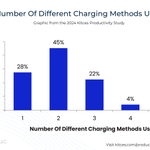
Most advisory teams use more than one way to charge for their services. Only 28% use just one pricing method, such as AUM-only or subscription-only. 45% rely on two (such as AUM plus commissions or AUM plus a subscription fee) and 27% use three or more.
We look at how advisors charge for their services in greater detail in our Advisor Productivity Study, available entirely for FREE here: kitc.es/4gpB6Ef

4
13
3,055
How can advisors deliver bad news to new clients? What do you say to this client that doesn't seem to understand or want to admit that their spending habits probably aren't going to work for their retirement, or it sounds like they're getting ready to retire and maybe should work more years than they want to. And they're hooked to another advisor who said they were going to be okay. kitc.es/3XfXID3
In this 203rd episode of Kitces & Carl, we discuss how to help a client who wants a retirement they can't afford – especially if their previous advisor has left them with the impression that they can afford that lifestyle.
2
15
2,604
The latest in #AdvisorTech: @orionwealthtech has announced a new fee on technology vendors that access Orion data via integration, forcing providers to decide whether to eat the fee, raise their own prices, or stop integrating with Orion.
Will other AdvisorTech platforms follow Orion's lead in charging vendor-level data access fees? Does a standalone AI 'operating system' offer something more than what's available in existing advisor software (that often wants to be the operating system itself)? Do AI tools reduce the value proposition for centralized data warehouse providers like @milemarkerco? kitc.es/4ix6zY9

1
27
2,411
A client's international move can change the regulatory landscape (even if nothing else about the relationship changes). In fact, the U.S. regulatory framework doesn't go away; the new country's is ADDED. The first question isn't, "How do I advise this client?" – It's, "Should I continue advising this client?" kitc.es/4BPaLLR
In this guest post, Ashley Murphy, co-founder and executive director of the Global Financial Planning Institute (GFPI) and the founder and principal of @aretewealthau, shares a 5-question framework for questions for compliance, and discusses how a client's international move can affect everything about the advisory relationship, including the regulatory landscape that an advisor is subject to (even if nothing else has changed), as well as custodial options and capabilities.

1
14
2,170
Worried About Spending? Focus On What REALLY Matters! (And It’s Not The Small Stuff!) kitc.es/3SVI7qe
Eat at home more often; skip the morning Starbucks; bring a shopping list to the grocery store so that you do less impulse buying; clip those coupons; rent movies instead of going out. The list went on and on. Yet as I looked at the list, I couldn't help but think... really? 🤔

Three areas are found in more than 90% of financial plans and are the essentials of financial planning: retirement planning (98%), investment management (96%) and tax planning (92%). Social Security planning ranks fourth, included in 86% of plans, because so many advisors work with clients who are retired or close to retirement.
The typical advisory team covers 15 of 27 planning areas. Among the least common are career salary benchmarking (6%), tax preparation (17%) and estate document preparation (19%).
We look at what advisors include in their financial plans in greater detail in our Advisor Productivity Study, available entirely for FREE here: kitc.es/4gpB6Ef

Crafting Deeper Client Relationships To Drive Loyalty, Referrals, And Gain Career Flexibility: Sarah Baker, senior wealth advisor at @MasonInvests, shares how she focuses on building closer client relationships which has allowed her to build greater loyalty and generate more referrals. kitc.es/4AbIUDS
In this episode, we talk in-depth about how Sarah seeks to identify and address a client's "greatest felt need" to ensure she's hitting their primary pain point (while also addressing the full range of planning issues), why Sarah moved away from a standardized client service calendar in order to have more bespoke interactions with clients facing a range of life circumstances, and how Sarah mixes in regular in-person and virtual client events to grow her client relationships between scheduled meetings.
#FASuccess #podcast #financialadvisorpodcast
3
1,570
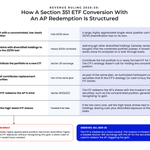
Section 351 is only the first ingredient in the strategy addressed by Revenue Ruling 2026-20. One of the primary reasons that ETFs, in general, can be extraordinarily tax efficient is their ability to conduct transactions in kind. Authorized Participants (APs), which are generally large financial institutions, can transact directly with ETFs in large blocks of ETF shares known as creation units. An AP can contribute cash or securities to an ETF in exchange for ETF shares. Conversely, the AP can present ETF shares for redemption and receive securities from the ETF. kitc.es/4yGoGRr
#Section351exchanges

The 'Christmas Tree Problem' In New Planner Hiring: We have almost no 'real' entry-level financial planning jobs, but we have an overabundance of call center, office admin, and sales jobs; the proverbial 'boxes of coal' surrounding the otherwise rare 'trunk' of high-quality financial planning opportunities. kitc.es/4BZ60PU
The rapid advance of AI-enabled financial planning software has led many advisory firms to wonder whether they still need to hire entry-level planners. With tools now able to turn a client's spreadsheets and PDFs into a detailed financial plan in a matter of minutes, handing off the work traditionally given to new planners can look like an easy decision, particularly for a profession that already struggles to find talent. Yet there are several reasons to believe that firms that pull back from hiring new planners may end up worse off.
In this guest post, @DrDanielYerger, founder and owner of the RIA MY Wealth Planners, explores why firms should continue to invest in developing entry-level planners amidst the rise of AI, from the risks of relying on technology over talent, to the tasks and career path that make doing so worthwhile. #advicers #hiring #financialplanners

Averaging together risk tolerance and risk capacity scores, the advisor can unwittingly end up in situations where clients with extremely low risk tolerance (or risk capacity) end up with portfolios that are far too risky for their situation. In other words, the low risk tolerance (or capacity) should have acted as a constraint to the investment policy statement, but didn’t.
Risk tolerance and risk capacity should be measured separately, and then scored on a two-dimensional scale that considers the contributing role (and limiting nature) of each (rather than a single continuum that merely averages the two together). kitc.es/4fcUjuj #risktolerance #risk #advicers

4
47
4,259
More "fun with AdvisorEconomics data" this weekend. Looking at what it costs advisory firms to deliver their advice services, relative to the fees they charge a typical client.
The chart you're looking at here is revenue per client on the vertical axis, and cost-to-serve per client on the horizontal. The former is straightforward - total revenue divided by client headcount. The latter is the cost side of the equation... total business expenses of the firm, divided by that same client headcount.
What the chart reveals is that while there's much industry debate about what a 'reasonable' advisory fee is, the reality is that advisory firms really DO tend to keep their costs in line with what they charge, reinvesting into depth of planning, services, or other capabilities, so profit margins are relatively consistent. Simply put, firms with higher dollar clients tend to do more for each client, increasing their costs in line with the additional fees they charge.
This makes sense in a competitive environment - firms that charge 'too much' relative to the depth and breadth of services they provide will eventually be outcompeted by other firms that are willing to do more for a less generous profit margin, and firms that charge too little for what they provide can't hire support to cover all the work and eventually face burnout.
In essence, that means there really is a "healthy" profit margin for an advisory firm - roughly somewhere between 20% to 35% (after reasonable salary compensation to the owner, this is JUST profits) - where firms can struggle outside of those profit bands. Being "too profitable" seems nice in the short term, but it tends to result in a firm that isn't competitive (fees "too high" relative to the higher level of services other firms will provide for the same fee). Being "barely profitable" also becomes an issue, though, because the firm doesn't have the room to reinvest into staff and technology, and cannot withstand business shocks (e.g., a bear market). Thus why, when we look at the data, the numbers tend to stay in a relatively tight band where revenue/client and cost/client move in sync.
The starting point is to understand the firm's cost-to-serve per client (all business expenses divided by client headcount) relative to their revenue-per-client, to see whether the numbers are in-line... first at a firm level overall (as shown in the chart here), and then at the individual client level (i.e., client by client) to see if there are clients who don't even pay enough to cover the cost it takes to operate the firm on their behalf (which drags down the average overall)!
(For those who are curious, AdvisorEconomics is in paid beta right now as we build out a deeper data set, so you can try out your own numbers for a discounted $29/month rate at advisoreconomics.com/?utm_so… )

An Email Marketing Playbook That Converts Leads Into Clients: Characteristics of an effective content marketing campaign, from offering personalized lead magnets to proactively reaching out to leads who show interest in the firm (Patrick Di Cesare | @XYPNOfficial) #WeekendReading: kitc.es/3Vawm0A

11
3,433
A client calls, worried about the unsettling headlines or a sudden drop in their portfolio. The advisor does what they do best – responds with data. The long-term market trends, historical recovery patterns... And the client nods. They might even say, "That makes sense." But when the call ends, the anxiety lingers.
Why logic isn't enough, and 6 questions that can help clients work through market fears and help them feel less stuck in uncertain times: kitc.es/4v3BdNe
