

Head of Science at WRHS | EEF ELE with Alexandra Park Research School | Teacher of A level bio (OCR), BTEC App Sci, GCSE bio and combined science (AQA)| NPQSL 🔬
Manchester, England
Joined September 2017
- Tweets9.2K
- Following2.1K
- Followers3.4K
- Likes38.5K




Pinned Tweet
New blog post ✍🏻
Using the whole class feedback from mini whiteboards
educake.co.uk/whole-class-fe…

Looking forward to sharing and hearing from the other speakers at the science strand next march.
This conference is free and I got loads out of it last time I attended. Sign up on the link below! – at Urmston, England

👉 Announcing! - Another brilliant Science Speaker: Emily Bird will be joining us to speak in the Science strand at Connect 2027!
Have you got your free ticket yet? Join us on Saturday 6th March 2027 in Manchester - tickets are FREE for teachers.
Tickets and details here: ttradio.org/connect27

Wholeheartedly agree with this. And fighting an uphill battle with some colleagues about it!


Miss Bird retweeted

You can't Rosenshine your way out of a Curriculum problem*
But you also can't Curriculum your way out of a Rosenshine problem**
And you can't ANYTHING your way out of a behaviour problem.

An ex-student got in touch this afternoon with the link to her first published paper. I'm so incredibly proud of her, and so happy that she shared it with me. – at Sale, England
1
14
555
The two days after Ofsted visit should be a holiday. Week 2 has been a lot! – at Urmston, England
7
456
Excited to start working with Alexandra Park Research School this academic year! – at Urmston, England

As another academic year comes to a close, we'd like to say a huge thank you to all the schools, educators, partners and colleagues we've had the privilege of working with this year.
We wish you a restful summer break ☀️
#ResearchSchoolsNetwork #EEF

253
Miss Bird retweeted

In 2013 I wrote a book called Seven Myths about Education.
What is the most persistent myth, the one that is hardest to kill, and the one that has biggest implications outside education?
Transferable skills.
People think that you can teach things like critical thinking, creativity, problem-solving, etc. But you can't.
But the idea is so persistent not just in schools but in universities, the corporate world and the British civil service.
Over the next few weeks, I will have a series of articles about it on my Substack. You can read the intro here and listen to me talking about it tomorrow on the @EconTalker podcast.
substack.nomoremarking.com/p…

Miss Bird retweeted

What about practical science? Surely coursework better assesses this than an exam?
We've been there before and analysis of the 2014 GCSE Science data shows something remarkable. Look at the Controlled Assessment (CA)
marks vs exam marks: 3/

Miss Bird retweeted

If a teacher wanted to make a real and instantaneous academic impact this school year, here's exactly 4 things they should do:
1. Start every lesson with retrieval practice

Miss Bird retweeted

If you're still using PPt as well as a visualiser, this is a nice way to save flipping between the two.

Okay now THIS is a teacher hack to get on board with... 👏
secondaryenglish.co.uk/
#teachers #teacherhack #teachertip #powerpoint
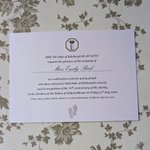
Do I know anyone else attending the Duke of Edinburgh 70 year celebration in Edinburgh today? – at Currie, Scotland

2
192
Exploring facial vasodilation as well as ecology on our PAG 3 field trip yesterday – at Manchester, England


168
Really interesting day at the Northwest ELE conference today @EducEndowFoundn
Lots of ideas (and a big further reading list) ahead of September! – at Manchester, England


3
229
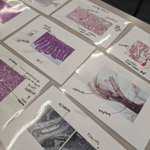
A level physics, A level chem, GCSE physics, A level biology. Nice relaxing start to the half term. – at Manchester, England
1
2
555
Some wider reading on epigenetics/ justification for my after work activities – at Manchester, England


Reading books and visiting museums may slow aging as much as exercise 👀
Scientists from University College London found that regular engagement with art and cultural activities may actually slow biological aging at the DNA level.
Researchers analyzed data from 3,556 adults using advanced “epigenetic clocks” including DunedinPACE and PhenoAge, which measure how fast the body is biologically aging.
The study found that people who engaged in arts activities weekly showed about 4% slower biological aging, while frequent participants appeared biologically around 1 year younger on average.
Activities linked to the benefits included museum visits, art galleries, music, painting, dancing, photography, reading and other creative hobbies.
Researchers believe arts engagement may help reduce chronic stress and inflammation while improving brain stimulation, emotional regulation and social connections.

4
835


Miss Bird retweeted

Looking for a Science post for September in the North West? I speak from personal experience when I say this is a GREAT school to work in. Please share far and wide!
tes.com/jobs/vacancy/teacher…

Miss Bird retweeted
Is study leave fair?
When I worked in middle class schools, Year 11 and 13 were gone from more or less the first week after Easter. By this point in the year, I probably would have had over 20 hours of "gain time" already.
I could have spent that time developing our curriculum, observing others, reading, arriving a bit later, leaving a bit earlier. Having a more relaxed time in lunch and break.
Now, I work in a school where we don't do that. Year 11 are in till the last exam. Year 13 are in till the last exam. The pace doesn't change, in fact it accelerates in this critical pre-exam period. And then, when they're gone, it'll be end of years for everyone else, and I won't have that nice relaxing time to catch up on all the jobs I never had time to do.
This, surely, is a systemic inequality. Schools with "study leave" already have a lot of perks, and get to offer their staff something that schools serving a poorer demographic don't. That doesn't seem fair to me.