




Helping AI text detectors keep up with changing conditions. @manish_raghavan, @NikhGarg, and Kevin Ren show how test-time adaptation can help detectors identify AI-generated writing, even as new models emerge or text is disguised to appear human-written. bit.ly/48n7Igm

70
Why do robots need both classical engineering and AI?
@MITLIDS and @MIT_CEE's @GioeleZardini co-authored "Principles of Robot Autonomy," w/ @MIT_alumni @drmapavone PhD ‘10, Daniele Gammelli, Joseph Lorenzetti, and Katie Lu. Read a 3Q and explore the book: bit.ly/4AvpRoa

Can robots learn to correct their own fuzzy memories?
UQ-DAAAM, a new system from @MITLIDS students and PI @lucacarlone1 identifies and corrects unreliable object descriptions in robot memory, helping robots perform complex tasks more reliably. bit.ly/3WS7MC5

Five LIDS PIs named 2026 #AI2050 Fellows!
Congrats to Senior Fellow @m_sendhil and Early Career Fellows @alex_damian_, @baileyflan, @Micro_Yunha, and @manish_raghavan! The @schmidtsciences initiative supports research tackling #AI's toughest challenges. bit.ly/4Ai7gfj

Congrats also to @MIT_alumni Irene Chen PhD '22 and Allison Z. Koenecke '14 as well as former postdoc Juan Carlos Perdomo who were also named #AI2050 Early Career Fellows.
67
MIT LIDS retweeted

MIT professors discuss a new project to track how AI chatbots are responding to questions about the 2026 U.S. midterm elections. news.mit.edu/2026/qa-hey-ai-…

Could #AI chatbots influence how Americans vote?
@MITLIDS PI @charapod & @MITPoliSci's @AdamBerinsky spoke with @CNN about how popular AI chatbots answer questions about the midterms—and why the chatbot voters choose matters. cnn.com/2026/10/30/business/…
@MIT_SCC @MITSloan @MIT_SHASS

Congrats! LIDS researchers Kaveh Alimohammadi, @NavidAzizan, and collaborators, have received the 2026 MIT Prize for Open Data for their work on generating scientifically useful synthetic data while protecting individual privacy. bit.ly/4ixDiN5
@ScienceMIT @mitlibraries

1
6
418
Gunter Stein, a pioneering control systems engineer and longtime @MITLIDS researcher, has died at 84. His work helped shape modern control theory, while his influential essay “Respect the Unstable” emphasized engineers’ responsibility for safety.
MIT News: bit.ly/4e40zVv

4
142
How AI came to model the “messy” human mind
Benjamin Lindquist explores how engineers introduced randomness into early AI systems, laying the groundwork for today’s deep-learning models—and their tendency to hallucinate.
Read the Q&A: bit.ly/3VRrGgi

1
126
MIT LIDS retweeted

It is legal to break the law! New paper on game theoretic motion planning arxiv.org/pdf/2610.22277
MIT LIDS retweeted

Congratulations to @drmapavone @GioeleZardini and team on this fantastic achievement! Principles of Robot Autonomy is poised to become a go-to textbook for anyone interested in learning about robotics.

Ever wondered what it’s like to learn robot autonomy @Stanford? Now you can.
Today, we’re opening up the robot autonomy teaching materials that my collaborators and I have been developing over the past several years—for anyone, anywhere, completely free.
At the heart of this effort is Principles of Robot Autonomy (PoRA), a textbook inspired by the Stanford robot autonomy course series I’ve been teaching since 2017.
Robot autonomy has evolved from a research discipline into a technology deployed in the real world. Building capable autonomous systems requires more than understanding individual algorithms: it requires understanding how perception, state estimation, planning, control, and learning work together in a complete autonomy stack.
That’s what we set out to teach with PoRA: bringing classical robotics and modern AI together in one coherent framework, grounded in both theory and practice.
Coming soon in print from Cambridge University Press, Principles of Robot Autonomy is also freely available online and comes with a comprehensive collection of open educational resources:
📖 Textbook, arxiv.org/abs/2608.03496 — Foundations of robot autonomy, from classical methods to modern AI-based approaches.
🎥 Video lectures, porabook.com/lectures/ Lectures from my Stanford courses on robot autonomy and on optimal and learning-based control.
💻 Interactive exercises, porabook.com/exercises/ — Hands-on Python implementations and Jupyter notebooks.
📝 Teaching materials, porabook.com/instructors/ — Lecture slides and resources for instructors.
🌐 Explore all PoRA resources, porabook.com/ — Including Ask the Book, an AI study assistant integrated throughout the textbook to answer questions, explain derivations, and connect ideas across chapters.
📣 Read the Stanford announcement: news.stanford.edu/stories/20…
Our goal is simple: to make high-quality education in robot autonomy accessible to students, researchers, engineers, educators, and anyone curious about how autonomous robotic systems work.
I believe that sharing knowledge is fundamental to the mission of a university. Autonomous robotics—and Physical AI more broadly—are among the defining technological frontiers of our time. We want to help more people understand these technologies, build with them, and advance the field.
A huge thank you to my co-authors, @DanieleGammelli, Joseph Lorenzetti, @katielulula, and @GioeleZardini, and to everyone who helped bring this project to life.
Explore the resources, use them in your own learning or teaching, and please share them with anyone who might find them useful!
#Robotics #PhysicalAI #ArtificialIntelligence #AutonomousSystems #Education
@Stanford @StanfordEng @StanfordAILab @StanfordHAI

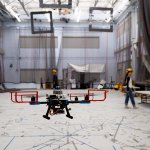
How can drones safely navigate unknown environments with moving obstacles? @MITLIDS researchers developed SANDO, a system that plans efficient flight paths with mathematical guarantees against collisions. The tech could advance disaster-response robotics.
bit.ly/4jQxIri

5
139
What happens when companies use the same #AI to screen job applicants? A new study from @MITLIDS PIs Brian Hedden and Manish Raghavan finds that “algorithmic monoculture” isn't always harmful to job seekers — and may even benefit them in some cases. More: bit.ly/4hSEFpg

How can AI help improve the complex systems that shape everyday life? @MITLIDS PI and associate prof @MIT_CEE and @mitidss, @wucathy uses Reinforcement Learning to develop safer, more efficient transportation systems.
Read her @MITNews profile: bit.ly/4AStaGR
@MIT_SCC

ALT Photo of Cathy Wu, leaning against a wall with a bicycle
5
133
MIT LIDS retweeted
great work from Harry and Nicolas at @MITAeroAstro and @MITLIDS
- Video: youtu.be/l_hArumdj1s?si=FHjv…
- Paper: arxiv.org/pdf/2606.08277
#mitSparkLab #robotPerception #uncertaintyQuantification

This game-playing AI is the new champ at Stratego. LIDS grad student Zhiyuan Fan, PI @gabrfarina, and collaborators developed Ataraxos, an AI that defeated top-ranked human players of the complex board wargame — with potential applications beyond games. bit.ly/4hqqnf6

MIT LIDS retweeted
Did you know the original Claude — the chatbot’s namesake, according to Anthropic lore — was a renowned MIT professor? Claude Shannon SM ’40, PhD ’40, who taught at MIT from 1956 until his retirement in 1978, was known to many as the father of information theory and of modern digital communications.

ALT At left, grayscale photo of an older Claude Shannon posing at a blackboard. At right, color photo of a bust of Shannon, pensive and looking down, in front of glass windows on a sunny day.
When #AI operates in the physical world, “pretty close” may not cut it. LIDS researchers developed HardFlow, a method that helps pretrained generative AI satisfy hard constraints while improving solution quality — without retraining. bit.ly/4xydxBN

MIT LIDS retweeted

Thinking about adding machine learning to your engineering toolkit? Start by hearing from the person who teaches it.
On Wednesday, September 9 at 12pm ET, MIT professor Youssef Marzouk will walk through MIT xPRO's machine learning, modeling, and simulation: engineering problem-solving in the age of Ai. You'll learn what to expect from the program and get to ask the course team directly.
Register now: bit.ly/3UD0lxE
