

Rightify Ghana is a human rights organization in Ghana. Focus: Advocacy | Community Empowerment | Media Monitoring on Human Rights | Document & Report Abuses
Ghana
Joined August 2019
- Tweets21.1K
- Following1.1K
- Followers10.7K
- Likes43K




Pinned Tweet
Breakdown of the Human Sexual Rights and Family Values Bill, 2025 (Anti-LGBTQ Bill)
The reintroduced Anti-LGBTQ Bill now contains nineteen (19) clauses, reduced from the twenty (20) clauses in the version previously passed by the Parliament of Ghana before it lapsed. Despite...


Ghana Votes to Erase LGBTQI+ People from UN Resolution Against Extrajudicial Killings; A Move Against It's Own Constitutional Protection of Right To Life
On 13 November 2026, Ghana voted at the UN General Assembly's Third Committee to remove explicit protection for LGBTQI+ people from the resolution on extrajudicial, summary or arbitrary executions.
The resolution has one purpose: to make sure that when people are unlawfully killed, states investigate, prosecute the people responsible, and provide justice to victims' families. It names groups who are especially at risk of being targeted, including journalists, human rights defenders, religious minorities, Indigenous Peoples, and people killed because of their sexual orientation or gender identity.
An amendment led by Egypt, on behalf of the Organisation of Islamic Cooperation, tried to replace that explicit reference with vague wording. Ghana voted in favour. The amendment failed, 74 votes to 69 with 24 abstentions, but Ghana's position sends a troubling message: that the lives of LGBTQI+ Ghanaians are less deserving of protection, investigation and justice.
This is a step backwards. In 2022, Ghana voted in favour of this same resolution, including its protection for people targeted because of their sexual orientation or gender identity. This year, Ghana backed an attempt to remove that protection.
Being named in this resolution creates no new rights and no special treatment. It asks only that when someone is killed because of who they are, the killing is not ignored. Outright International has documented more than 230 targeted killings of LGBTQI+ people across every region between January 2020 and July 2026, and many more cases never get recorded or prosecuted.
Ghana's 1992 Constitution guarantees every person the right to life and equality before the law. Ghana is also a party to the International Covenant on Civil and Political Rights, which protects the right to life without discrimination. A vote to make some victims invisible goes against these commitments.
Through our Equality Envoys network across all 16 regions, Rightify Ghana continues to document violence against LGBTQI+ people and the impunity that follows it. Silence at the UN feeds impunity at home.
The resolution now goes to the full General Assembly in December, where a similar amendment may come up again. We urge Ghana's Permanent Mission to the United Nations to vote against any attempt to remove sexual orientation and gender identity, and to support the resolution as a whole. The right to life must protect every Ghanaian, without exception.

An amendment led by Egypt, on behalf of the Organisation of Islamic Cooperation, tried to replace that explicit reference with vague wording. Ghana voted in favour. The amendment failed, 74 votes to 69 with 24 abstentions, but Ghana's position sends a troubling message: that the lives of LGBTQI+ Ghanaians are less deserving of protection, investigation and justice.

Rightify Ghana retweeted
Rightify Ghana's new study, 'Navigating Democracy: Safety, Inclusion, and Political Participation of Sexual and Gender Minorities during #Ghana's 2024 Presidential and Parliamentary Elections', heard from 218 participants across six regions: 176 survey respondents, plus 42 people in focus groups and key informant interviews.
Here is what LGBTQI+ respondents told us 👇
🗳️ PARTICIPATION
64.8% voted in 2024, but only 26.1% joined campaigns and 20.5% took part in policy discussions. Almost a third (30.1%) have never taken part in any civic activity.
🚧 BARRIERS
94.3% cited fear of stigma and discrimination, and 61.9% cited safety concerns.
⚠️ DISCRIMINATION
75.6% faced or witnessed discrimination in civic or political spaces. The most common forms were verbal harassment (64.2%) and online abuse (54.0%).
📢 MISINFORMATION
72.7% see misinformation about LGBTQI+ persons very often. Social media is the top source (85.8%), followed by radio and TV (65.9%) and religious platforms (60.2%).
🎤 CAMPAIGN RHETORIC
56.8% said political campaigns affected LGBTQI+ persons negatively.
🛡️ SAFETY
78.4% feel unsafe taking part in civic activities; only 7.4% feel very safe. The risks they named most were harassment (87.5%), violence (80.1%) and blackmail (75.0%).
✅ WHAT NEEDS TO CHANGE
🔹 Electoral Commission: non-discrimination guidelines and training for election officials
🔹 CHRAJ: a safe, anonymous complaints pathway
🔹 NCCE: voter education on constitutional rights and the difference between a Bill and a law
🔹 Civil society: more civic education and leadership pathways for LGBTQI+ persons
🔹 Development partners: long-term support for psychosocial care, economic empowerment and legal aid
Democracy works best when every citizen can take part freely, safely and meaningfully. 🇬🇭
👉 Swipe through the findings and share to raise awareness.
🔗 Read more at rightifyghana.org
#NavigatingDemocracy #RightifyGhana #lgbtq #HumanRights InclusiveDemocracy Ghana Elections CivicParticipation LGBTQI EqualityForAll
Rightify Ghana retweeted
📢 NEW STUDY | Navigating Democracy: Safety, Inclusion, and Political Participation of Sexual and Gender Minorities (LGBTQI+) during Ghana's 2024 Presidential and Parliamentary Elections
Ghana's 2024 elections were marked by unprecedented anti-LGBTQ+ rhetoric, misinformation and hostility. To understand how this affected the democratic participation of LGBTQI+ persons, Rightify Ghana commissioned a baseline study across six regions: Greater Accra, Ashanti, Northern, Central, Bono and Volta.
The study heard from 218 participants: 176 survey respondents, plus 42 people in focus group discussions and key informant interviews with community members, Electoral Commission and CHRAJ officials, legal practitioners, traditional leaders and civil society.
Here is what we found 👇
🗳️ THEY VOTE, BUT STAY OUT OF PUBLIC VIEW
64.8% of LGBTQI+ respondents voted in 2024, close to the national turnout. Participation drops sharply where people have to be visible: only 26.1% joined political campaigns and 20.5% took part in policy discussions. Almost a third (30.1%) have never taken part in any civic activity.
🚧 FEAR, NOT LACK OF AWARENESS, HOLDS PEOPLE BACK
94.3% cited fear of stigma and discrimination as a barrier, followed by safety concerns (61.9%) and family or community pressure (47.2%). Yet 45.5% said they are very familiar with Ghana's democratic processes.
"Participating in public democratic processes becomes a risk rather than a right." (Survey respondent)
⚠️ DISCRIMINATION IS WIDESPREAD
75.6% faced or witnessed discrimination in civic or political spaces, and 51.1% deliberately avoided taking part because of their identity. The most common forms were verbal harassment (64.2%), online abuse (54.0%) and physical threats (48.9%).
📢 MISINFORMATION IS CONSTANT
72.7% see misinformation about LGBTQI+ persons very often. Social media is the biggest source (85.8%), followed by radio and TV (65.9%), religious platforms (60.2%) and political speeches (57.4%).
🎤 CAMPAIGNS TARGETED IDENTITY INSTEAD OF ISSUES
56.8% said political campaigns affected LGBTQI+ persons negatively, and 42.6% said very negatively.
"All candidates seemed to agree that I should be persecuted. I did not want to be responsible for electing my hangman." (Survey respondent)
🛡️ NEARLY FOUR IN FIVE FEEL UNSAFE
78.4% feel unsafe taking part in civic activities, and only 7.4% feel very safe. The risks they named most were harassment (87.5%), violence (80.1%), blackmail (75.0%) and public outing (62.5%). 59.7% said safety fears linked to the anti-LGBTQ+ Bill discouraged them from voting, even though the Bill was not law at the time.
🏛️ LOW TRUST IN INSTITUTIONS
47.2% gave state institutions the lowest possible rating for responsiveness. Fear of reporting creates a cycle of silence: with no complaints, institutions can say there is no problem.
💪 COMMUNITIES ARE RESPONDING
Despite these challenges, participants are asserting their constitutional rights, running their own community protection systems, and using music, drama and creative messaging to encourage civic participation.
"My vote counts... I have the right to express my opinion." (Focus group participant)
✅ WHAT NEEDS TO CHANGE
🔹 Electoral Commission: issue non-discrimination guidelines, train all election officials, including on respecting gender expression at polling stations, and set up safe reporting channels
🔹 CHRAJ: create a safe, anonymous complaints pathway and strengthen referrals to the Ghana Police Service
🔹 NCCE: include constitutional rights, and the difference between a Bill and a law, in voter education
🔹 Political parties: adopt codes of conduct that ban hate speech and focus campaigns on issues
🔹 Media: commit to ethical reporting, fact-checking and non-stigmatising language
🔹 Civil society: expand civic education, legal aid, psychosocial support and leadership pathways for LGBTQI+ persons
1/2
🔹 Development partners: provide long-term funding for safety, inclusion and evidence-based advocacy
Inclusive participation is not only about one group's rights. It strengthens Ghana's democracy for everyone. 🇬🇭
👉 Read, share and join the conversation.
🔗 rightifyghana.org
📧 [email protected]
#NavigatingDemocracy #RightifyGhana #HumanRights #InclusiveDemocracy #Ghana #Elections #CivicParticipation #EqualityForAll
2/2
2
37
Rightify Ghana retweeted

No Gana os Bispos não se preocupam com um caso de estupro contra 19 garotas em escola, ao invés disso estão apoiando uma lei que criminaliza relações consensuais, enfim.

The Bishops Have Found Their Voice. Just Not for the Girls of Obuasi.
For weeks, Ghana has been reeling from allegations that the headmaster of Obuasi SHTS sexually abused up to 19 of his students. Parents, alumni, civil society, political parties and even other churches spoke up and demanded justice.
The Ghana Catholic Bishops' Conference said nothing.
Now the Bishops have spoken, and with real urgency:
"We'll not let reconsideration of the anti-LGBTQ+ bill drag on. Parliament must act with urgency and uphold the constitution."
So the urgency is there. It just goes to a bill that criminalises consenting adults, not to 19 schoolgirls who say they were abused by the man meant to protect them.
The Bishops met in the Ashanti Region, the same region as Obuasi. They said they would not let a bill "drag on." Meanwhile, the girls of Obuasi wait for justice, counselling and safety. Who is speaking up so that their case doesn't drag on?
A church that demands urgency for a bill that criminalises people, but has none for children who say they were abused, is choosing its causes, not protecting the vulnerable.
Ghana's children deserve that urgency too.
#RightifyGhana #HumanRights #KillTheBill #LGBTQ #Ghana

Rightify Ghana retweeted
The rescission, however, does not mean the controversial legislation has been abandoned or withdrawn. Rather, it creates an opportunity for Parliament to revisit the bill, address the identified inconsistencies and proceed with another vote.
Ghana’s Parliament reverses Anti-LGBTQ+ Bill passage for reconsideration, with third-time passage expected
Ghana’s Parliament has rescinded its earlier passage of the Human Sexual Rights and Family Values Bill, 2025, popularly known as the Anti-LGBTQ+ Bill, paving the way for lawmakers to reconsider the legislation and address inconsistencies identified in its provisions.
Speaker of Parliament Alban Bagbin announced the decision on Tuesday, November 10, 2026, following a vote by the House to reverse its earlier resolution on the bill, which was passed on May 29, 2026.
According to Mr Bagbin, the decision followed a review by Parliament’s Legislation Drafting Department, which identified discrepancies between the decisions taken by lawmakers during deliberations on the bill and the provisions subsequently captured in the final draft.
Speaking on the floor of Parliament, the Speaker explained that although the drafting department could identify the errors, it had no authority to independently alter provisions reflecting decisions already taken by the House.
“The draft people could put them right. But once there are decisions, they cannot tamper with the decision of the House. It has to be brought back for the House to do the proper thing,” he said.
He further explained that the bill had consequently been returned to Parliament to enable lawmakers to formally rescind their previous decision and make the necessary corrections.
Putting the motion to a vote, Mr Bagbin asked members who supported the rescission to indicate their position.
“Those in favour, say aye. Those against, say no,” he declared before announcing the outcome.
“Honourable members, the ayes have it. The House has accordingly rescinded its earlier decision, which was taken on Friday, May 29, 2026, in respect of the third reading of the Human, Sexual Rights, and Family Values Bill 2025,” the Speaker announced.
The rescission, however, does not mean the controversial legislation has been abandoned or withdrawn. Rather, it creates an opportunity for Parliament to revisit the bill, address the identified inconsistencies and proceed with another vote.
The bill is therefore expected to return before the House for reconsideration, with lawmakers anticipated to pass it for the third time.
Rightify Ghana retweeted
The Bishops Have Found Their Voice. Just Not for the Girls of Obuasi.
For weeks, Ghana has been reeling from allegations that the headmaster of Obuasi SHTS sexually abused up to 19 of his students. Parents, alumni, civil society, political parties and even other churches spoke up and demanded justice.
The Ghana Catholic Bishops' Conference said nothing.
Now the Bishops have spoken, and with real urgency:
"We'll not let reconsideration of the anti-LGBTQ+ bill drag on. Parliament must act with urgency and uphold the constitution."
So the urgency is there. It just goes to a bill that criminalises consenting adults, not to 19 schoolgirls who say they were abused by the man meant to protect them.
The Bishops met in the Ashanti Region, the same region as Obuasi. They said they would not let a bill "drag on." Meanwhile, the girls of Obuasi wait for justice, counselling and safety. Who is speaking up so that their case doesn't drag on?
A church that demands urgency for a bill that criminalises people, but has none for children who say they were abused, is choosing its causes, not protecting the vulnerable.
Ghana's children deserve that urgency too.
#RightifyGhana #HumanRights #KillTheBill #LGBTQ #Ghana
Rightify Ghana retweeted
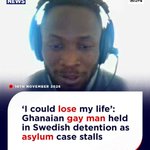
‘I could lose my life’: Ghanaian gay man held in Swedish detention as asylum case stalls
A 33-year-old Ghanaian man seeking asylum in Sweden because of his sexuality says he fears for his life if he is returned to Ghana, where he claims he could face imprisonment and brutal attacks for being gay.
Samuel Asiamah, whose asylum application remains unresolved, has been held at a detention facility in Åstorp, about an hour north of Malmö, for six months, according to a report by The Irish Times published on September 12, 2026.
Despite having valid asylum papers, Asiamah was detained after running away from an asylum camp. His lawyer has reportedly been unable to obtain answers from Swedish authorities about why he continues to be held.
The Ghanaian, who fled the country in November 2024, told The Irish Times that he would not cooperate with efforts by Swedish authorities to arrange his return to Ghana because of what he believes awaits him if he is sent back.
“There is a difference between co-operation and placing your life in jeopardy,” he said.
“If people in prison know you are homosexual, you will be brutalised and assaulted, and you could lose your life.”
His case has drawn attention to the difficulties facing asylum seekers as Sweden tightens its migration and refugee policies, despite its longstanding reputation as a country that offers protection to people fleeing persecution.
From family rejection to physical attacks
Asiamah told The Irish Times that his difficulties in Ghana began within his family after his mother became suspicious of his sexuality.
He was raised by his grandmother in the countryside before moving to Accra at the age of 18 to live with his mother, who, according to him, was deeply troubled by the possibility that he was gay.
He said she took him to regular church blessing services, hoping to address what she considered a source of shame to the family.
“She was upset, then furious and gradually started to neglect me, making comments about me being a shame to her and the family,” he recounted.
His home became a place of persistent conflict, prompting him to leave at 19. He subsequently found support through a local LGBTQ+ group called Solace.
However, he said his relationship with his first boyfriend exposed him to further hostility, with verbal insults escalating into repeated physical attacks. He still carries a scar from one of the assaults, the report said.
Asiamah later met a man identified as “Brother Kofi”, who promised to help him travel to Europe.
He reportedly took 60,000 Ghana cedis from his mother's savings to finance the journey. He was flown through Mauritius to France before travelling to Sweden, where he arrived in November 2024. The man who facilitated the journey allegedly abandoned him.
After spending a week homeless, he was offered accommodation by a woman who later asked him to leave when she discovered his sexuality.
He told the newspaper that he eventually sought help from Swedish police after they found him on the street one snowy day.
Asylum application in limbo
Asiamah applied for asylum in Malmö in February 2026, hoping Sweden would provide protection from the hostility he says he experienced in Ghana.
But his application has since become a source of uncertainty.
According to The Irish Times, he told his case officer in May that Ghana's Parliament had passed a Bill seeking to criminalise the promotion of LGBTQ+ activities, with proposed prison sentences of up to 10 years. He also referred to a provision that would require friends and family members to report one another.
The case officer reportedly dismissed the development as irrelevant to his application because Asiamah had not personally experienced the proposed legal regime.
The newspaper reported that the Ghanaian's concerns about returning home are compounded by the prospect of imprisonment and the risk of abuse if his sexuality becomes known while in custody.
....
myjoyonline.com/i-could-lose…

The Bishops Have Found Their Voice. Just Not for the Girls of Obuasi.
For weeks, Ghana has been reeling from allegations that the headmaster of Obuasi SHTS sexually abused up to 19 of his students. Parents, alumni, civil society, political parties and even other churches spoke up and demanded justice.
The Ghana Catholic Bishops' Conference said nothing.
Now the Bishops have spoken, and with real urgency:
"We'll not let reconsideration of the anti-LGBTQ+ bill drag on. Parliament must act with urgency and uphold the constitution."
So the urgency is there. It just goes to a bill that criminalises consenting adults, not to 19 schoolgirls who say they were abused by the man meant to protect them.
The Bishops met in the Ashanti Region, the same region as Obuasi. They said they would not let a bill "drag on." Meanwhile, the girls of Obuasi wait for justice, counselling and safety. Who is speaking up so that their case doesn't drag on?
A church that demands urgency for a bill that criminalises people, but has none for children who say they were abused, is choosing its causes, not protecting the vulnerable.
Ghana's children deserve that urgency too.
#RightifyGhana #HumanRights #KillTheBill #LGBTQ #Ghana
‘I could lose my life’: Ghanaian gay man held in Swedish detention as asylum case stalls
A 33-year-old Ghanaian man seeking asylum in Sweden because of his sexuality says he fears for his life if he is returned to Ghana, where he claims he could face imprisonment and brutal attacks for being gay.
Samuel Asiamah, whose asylum application remains unresolved, has been held at a detention facility in Åstorp, about an hour north of Malmö, for six months, according to a report by The Irish Times published on September 12, 2026.
Despite having valid asylum papers, Asiamah was detained after running away from an asylum camp. His lawyer has reportedly been unable to obtain answers from Swedish authorities about why he continues to be held.
The Ghanaian, who fled the country in November 2024, told The Irish Times that he would not cooperate with efforts by Swedish authorities to arrange his return to Ghana because of what he believes awaits him if he is sent back.
“There is a difference between co-operation and placing your life in jeopardy,” he said.
“If people in prison know you are homosexual, you will be brutalised and assaulted, and you could lose your life.”
His case has drawn attention to the difficulties facing asylum seekers as Sweden tightens its migration and refugee policies, despite its longstanding reputation as a country that offers protection to people fleeing persecution.
From family rejection to physical attacks
Asiamah told The Irish Times that his difficulties in Ghana began within his family after his mother became suspicious of his sexuality.
He was raised by his grandmother in the countryside before moving to Accra at the age of 18 to live with his mother, who, according to him, was deeply troubled by the possibility that he was gay.
He said she took him to regular church blessing services, hoping to address what she considered a source of shame to the family.
“She was upset, then furious and gradually started to neglect me, making comments about me being a shame to her and the family,” he recounted.
His home became a place of persistent conflict, prompting him to leave at 19. He subsequently found support through a local LGBTQ+ group called Solace.
However, he said his relationship with his first boyfriend exposed him to further hostility, with verbal insults escalating into repeated physical attacks. He still carries a scar from one of the assaults, the report said.
Asiamah later met a man identified as “Brother Kofi”, who promised to help him travel to Europe.
He reportedly took 60,000 Ghana cedis from his mother's savings to finance the journey. He was flown through Mauritius to France before travelling to Sweden, where he arrived in November 2024. The man who facilitated the journey allegedly abandoned him.
After spending a week homeless, he was offered accommodation by a woman who later asked him to leave when she discovered his sexuality.
He told the newspaper that he eventually sought help from Swedish police after they found him on the street one snowy day.
Asylum application in limbo
Asiamah applied for asylum in Malmö in February 2026, hoping Sweden would provide protection from the hostility he says he experienced in Ghana.
But his application has since become a source of uncertainty.
According to The Irish Times, he told his case officer in May that Ghana's Parliament had passed a Bill seeking to criminalise the promotion of LGBTQ+ activities, with proposed prison sentences of up to 10 years. He also referred to a provision that would require friends and family members to report one another.
The case officer reportedly dismissed the development as irrelevant to his application because Asiamah had not personally experienced the proposed legal regime.
The newspaper reported that the Ghanaian's concerns about returning home are compounded by the prospect of imprisonment and the risk of abuse if his sexuality becomes known while in custody.
....
myjoyonline.com/i-could-lose…
Swedish authorities have asked him to contact the Ghanaian Embassy to facilitate his return, but he has refused.
Neither the Swedish Migration Agency nor the country's Migration Ministry responded to The Irish Times when approached for comment on his detention.
Sweden's tougher migration policy
Asiamah's predicament comes against the backdrop of a significant shift in Sweden's approach to asylum and immigration.
The country, once regarded as a leading destination for people fleeing persecution, has tightened its migration policies in recent years, with the issue becoming a major subject of political debate.
The Irish Times reported that asylum applications in Sweden had fallen by 96 per cent from their 2015 peak to 6,737 in 2025. The country's asylum approval rate stood at about 23 per cent, less than half the European Union average, according to the report.
The Swedish government has also increased financial incentives for migrants willing to leave the country, raising so-called resettlement grants to 350,000 Swedish kronor, equivalent to about €31,371, for adults prepared to return.
The policy shift has raised concerns among asylum support groups and human rights advocates about the treatment of people who say they are fleeing unsafe conditions.
An organiser of a Malmö-based asylum support group assisting Asiamah told The Irish Times that Sweden's approach to vulnerable migrants had changed.
“It used to be seen as a victory in Sweden to protect people here from unsafe situations, but these people have been so dehumanised now that getting rid of them quickly is the new victory,” the organiser said.
Fear of being sent back
The uncertainty surrounding his asylum application and detention has taken a toll on Asiamah's mental wellbeing.
He told the newspaper that he shares a room with two other detainees, has fixed meal times and limited opportunities to spend time outdoors. He also said some inmates were violent criminals.
The hardest part, he said, was not knowing what would happen to him.
“Sometimes I feel very empty. I used to cry a lot,” he said, adding that he had previously experienced suicidal thoughts.
His fears have also been heightened by discussions among European countries about establishing so-called “return hubs” outside the European Union for people whose asylum applications have been unsuccessful.
The Irish Times reported that Nigeria and Uganda were among countries being considered as possible host locations. Both countries have the death penalty for people found guilty of criminalised same-sex activity, the newspaper noted.
Asiamah said he was alarmed by the discussions, arguing that people genuinely seeking protection could be placed at risk if they were treated like criminals.
“They are mixing up people who really need help from the authorities and safety, from bad people, religious extremists and Islamist gangs,” he said.
For Asiamah, the prospect of being returned to Ghana remains particularly frightening.
He told the newspaper that he sometimes thinks about his former boyfriend, who also left Ghana and is now in Canada.
“They let him stay,” he said.
His own future, however, remains uncertain as he waits in detention for a decision on his asylum application.
1
190
Rightify Ghana retweeted

how do we unlearn homophobia?
@thevicmensashow ft. lena waithe out now 🍊
youtu.be/pd0uGUhfIiE
Rightify Ghana retweeted
9 in 10 LGBTQI+ people feared stigma in Ghana’s 2024 elections – Study finds
A study by Rightify Ghana says 94.3 per cent of the sexual and gender minority (LGBTQI+) people it surveyed feared stigma and discrimination during Ghana’s 2024 elections.
The human rights group shared the findings in the Ashanti Region as it trained volunteers to record rights abuses before the 2028 elections.
The study, called Navigating Democracy, looked at safety, inclusion and political participation. It covered 218 people in six regions. Of these, 176 answered a survey and 42 took part in focus groups and key informant interviews.
Fear did not stop most people from voting. About two in three respondents, 64.8 per cent, voted in 2024. Fewer took part in other ways. 26.1 per cent joined campaigns and 20.5 per cent took part in policy discussions. 30.1 per cent never took part.
Ebenezer Peegah, the Executive Director of Rightify Ghana, said people voted but met barriers.
“Our democracy is not inclusive. If we want to deepen our democracy, we need to make it inclusive,” he said.
The study found that 56.8 per cent of respondents said political campaigns affected them negatively. 42.6 per cent said very negatively.
Respondents could name more than one barrier to taking part. After stigma, 61.9 per cent named safety concerns, 47.2 per cent named family or community pressure, and 36.9 per cent named perceived legal restrictions. Lack of information was named by 33.5 per cent, and economic barriers by 32.4 per cent.
Other findings show the same pattern. 78.4 per cent said they feel unsafe taking part in civic life. 75.6 per cent said they faced or witnessed discrimination. 72.7 per cent said they see misinformation very often.
Mr Peegah said messages about key populations ran through the 2024 campaigns. He said presidential and parliamentary candidates used them, as did political leaders, sports figures and people in culture.
He said the targeting of minority groups is a sign of democratic backsliding.
The Constitution gives every person the right to vote and to be voted for. Mr Peegah said that right applies to key populations.
“These are citizens of this country who pay taxes,” he said. He said their number is enough to decide votes.
He asked political parties to campaign on issues, not on groups of people.
“We want political parties to campaign on issues that improve the lives of Ghanaians and solve problems, like unemployment and bad roads,” he said.
The volunteers, known as Equality Envoys, will record cases, follow them up and report on happenings in their own regions. They will also report when politicians make statements that put fear in people.
Rightify Ghana also runs an early warning system that teaches people the signs of democratic backsliding.
Mr Peegah cited one example. He said some traditional authorities banish people from their communities, and that only the courts can limit a person’s movement.
“There are some traditional authorities who just banish people, and that is against the law,” he said.
myjoyonline.com/9-in-10-sexu…
@Mambaonline @76Crimes @WashBlade @HumanDignityT @OutrightIntl @AllOut @frankmugisha
The rescission, however, does not mean the controversial legislation has been abandoned or withdrawn. Rather, it creates an opportunity for Parliament to revisit the bill, address the identified inconsistencies and proceed with another vote.
Ghana’s Parliament reverses Anti-LGBTQ+ Bill passage for reconsideration, with third-time passage expected
Ghana’s Parliament has rescinded its earlier passage of the Human Sexual Rights and Family Values Bill, 2025, popularly known as the Anti-LGBTQ+ Bill, paving the way for lawmakers to reconsider the legislation and address inconsistencies identified in its provisions.
Speaker of Parliament Alban Bagbin announced the decision on Tuesday, November 10, 2026, following a vote by the House to reverse its earlier resolution on the bill, which was passed on May 29, 2026.
According to Mr Bagbin, the decision followed a review by Parliament’s Legislation Drafting Department, which identified discrepancies between the decisions taken by lawmakers during deliberations on the bill and the provisions subsequently captured in the final draft.
Speaking on the floor of Parliament, the Speaker explained that although the drafting department could identify the errors, it had no authority to independently alter provisions reflecting decisions already taken by the House.
“The draft people could put them right. But once there are decisions, they cannot tamper with the decision of the House. It has to be brought back for the House to do the proper thing,” he said.
He further explained that the bill had consequently been returned to Parliament to enable lawmakers to formally rescind their previous decision and make the necessary corrections.
Putting the motion to a vote, Mr Bagbin asked members who supported the rescission to indicate their position.
“Those in favour, say aye. Those against, say no,” he declared before announcing the outcome.
“Honourable members, the ayes have it. The House has accordingly rescinded its earlier decision, which was taken on Friday, May 29, 2026, in respect of the third reading of the Human, Sexual Rights, and Family Values Bill 2025,” the Speaker announced.
The rescission, however, does not mean the controversial legislation has been abandoned or withdrawn. Rather, it creates an opportunity for Parliament to revisit the bill, address the identified inconsistencies and proceed with another vote.
The bill is therefore expected to return before the House for reconsideration, with lawmakers anticipated to pass it for the third time.
Rightify Ghana Trains 32 Youth Leaders from All 16 Regions on Early Warning, Documentation and Hate Speech Monitoring
From 5 to 8 November 2026, Rightify Ghana held a residential training in Kumasi for 32 community youth leaders, two from each of Ghana's 16 regions. The training equipped them to document human rights violations, monitor hate speech and misinformation, and run a community early-warning system.
The training responds to the unprecedented anti-LGBTQI+ rhetoric, misinformation and abuse seen during Ghana's 2024 presidential and parliamentary elections. It also prepares communities to detect and counter similar threats before and during the 2028 elections.
Participants learned how to:
✅ Spot early warning signs of threats and rising hostility
✅ Document rights violations safely and accurately, with the consent of survivors
✅ Recognise and log hate speech and misinformation
✅ Raise alerts and activate a timely response and referral to support services
Rightify Ghana also used the training to share its study 'Navigating Democracy: Safety, Inclusion, and Political Participation of Sexual and Gender Minorities during Ghana's 2024 Presidential and Parliamentary Elections', which assessed the experiences of LGBTQI+ community members during the 2024 elections.
"What is not documented, did not happen." With trained youth leaders in every region, communities are better prepared to protect themselves and to turn their experiences into evidence for change.
Every citizen deserves to take part in Ghana's democracy freely, safely and meaningfully.
#NavigatingDemocracy #RightifyGhana #HumanRights #EarlyWarning #LGBTQ