

Founder and CEO @GeneralMatter, partner @FoundersFund, early engineer @SpaceX.
California, USA
Joined April 2008
- Tweets351
- Following334
- Followers20.4K
- Likes2.8K








For the record, this episode was filmed the day before the wave of Guinness pint histograms

When an industry has high margins yet stagnates for decades, there are almost always A) very high barriers to entry and B) ways for startups to surpass incumbents via good, modern engineering.
SpaceX, Tesla, Anduril and others broke into these types of guarded industries. The beginnings are hard, but the opportunity expands with forward progress.
Nuclear will be the next industry to go through this transformation and live up to its potential.
Thanks @collision for having me on!

General Matter CEO @ScottNolan joined me to break down why enriched uranium is the bottleneck for nuclear power. We get into why US nuclear fuel comes from Russia; their enrichment facility in Paducah, Kentucky; applying the SpaceX playbook to heavy industry; and the reasons nuclear became expensive.
00:00:00 Introduction
00:00:41 America’s missing nuclear fuel
00:05:27 Why small reactors need stronger fuel
00:11:42 Can nuclear power the AI buildout?
00:15:25 Why nuclear became so expensive
00:22:24 The startups reinventing nuclear
00:25:31 General Matter’s race to 2030
00:29:44 Stripe Press’ new books
00:30:22 The SpaceX playbook applied to nuclear
00:35:18 Uranium enrichment, explained
00:45:53 How small startups beat stagnant incumbents
Scott Nolan retweeted

The U.S. Nuclear Regulatory Commission has accepted our first license application for review.


Everything in the economy depends on energy. Economic growth depends on energy growth.
We are ending the bottleneck in nuclear energy: fuel.
Thank you to @JakePaul and @GovAndyBeshear for joining us in Paducah and your support of what we're building.

America needs to build again.
@ScottNolan @generalmatter is rebuilding a safe and clean nuclear fuel supply chain here at home.
energy is national security and we @antifund @geoffwoo are proud investors and backers of Scott & General Matter on leading the way
Scott Nolan retweeted
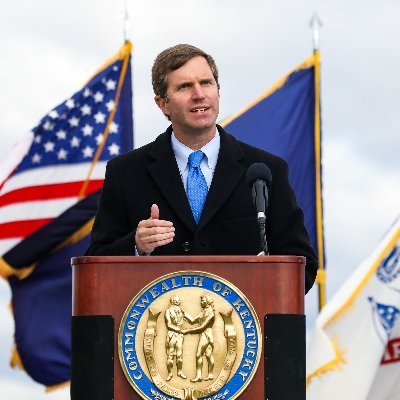
Yesterday we celebrated the progress being made on the largest investment in Western Kentucky history with General Matter. This $1.5 billion investment will create 140 good-paying jobs, delivering more opportunity to hardworking Kentuckians in Paducah and beyond.


Scott Nolan retweeted

The next 250 years of the American project should be unimaginably abundant, if we can keep it.
Read Scott Nolan's vision for America's Next 250 in today's Not Boring.

America's first 250 years took us from candlelight to satellites.
America's next 250 will be even more incredible.

America's Next 250 by @ScottNolan
notboring.co/p/americas-next…

Energy is upstream of all economic activity. The correlation across societies is under-appreciated. See below.
Clean, safe, low cost energy production and will inevitably be used to improve people's lives.
@JTLonsdale thanks for the fun and wide-ranging conversation.


In the 1980s, the US produced 80% of global enriched uranium.
Today that number is zero -- and we rely on Russia instead!
@ScottNolan & @GeneralMatter are solving this crisis; he’s jumpstarting America's nuclear renaissance, and makes us all more bullish on its scale & speed.
Scott Nolan retweeted

A nuclear-powered future for @NASA exploration is inevitable. SR-1 Freedom is just the beginning 🇺🇸
Today is the one year anniversary of the nuclear executive orders.
Since then, @ENERGY and @SecretaryWright have been unlocking the nuclear future we were once promised.
For the private sector 99%+ of the work remains, but an abundant, high-energy sci-fi future is ahead.

My first interview with US Secretary of Energy @SecretaryWright and @ScottNolan, Founder of @GeneralMatter.
This conversation is on nuclear and how we're going to power the AI data center buildout.
0:07 Powering the AI data center boom
3:25 Biggest energy bottlenecks over the next five years
6:03 Ramping power generation before we have SMRs
16:06 Bridging the nuclear transition with natural gas
21:39 What if we’re underestimating how much power we’ll need for AI
27:10 Staying ahead of China
34:07 Why AI is hated + the fear of AI data centers driving up electricity prices
40:21 Increasing baseload capacity
42:50 Building hundreds of gigawatts by 2050
49:37 Copying the SpaceX playbook
53:14 Incentivizing founders to build ahead of demand
59:03 “If you want to build big things in America, come talk to the government”
Scott Nolan retweeted

Back-of-envelope numbers for 1 gigawatt data center:
All-in Capex: ~$50 bn
Enterprise revenue generated: ~$25-30 bn/year
Electricity cost: $1-2 bn/year
~2 year payback.
The boom is real.
Japan is one of America’s closest allies and is turning its nuclear reactors back on. The goal: 20% of the grid by 2030.
As we restore US enrichment and meet domestic demand, with the support of @EximBankUS we are ready to help Japan secure the fuel it needs.

Scott Nolan (@ScottNolan ) was employee ~30 at SpaceX. He spent over a decade at Founders Fund backing Anduril, Radiant, and Crusoe Energy. In 2023, he went looking for a company enriching uranium domestically. There was none. So he started General Matter (@generalmatter ).
The U.S. once produced 86% of the world's enriched uranium. By 2013 it was zero. Russia filled the gap. China is scaling fast. Meanwhile, every advanced reactor company in America was hitting the same wall: no domestic fuel supply.
General Matter is changing that. $900M DOE contract. First facility in Paducah, Kentucky, the exact site where the U.S. last enriched uranium. And just weeks ago in Tokyo, a $2.4B EXIM financing deal to supply Japanese utilities.
Why is this important to Japan? Because 70% of Japan's oil passes through the Strait of Hormuz. Because Japan currently imports all its enriched uranium from Europe. Because Japan has been burned by energy dependency in 1941, the 1970s, and right now.
One pellet of enriched uranium contains as much energy as 100 barrels of oil. You can stockpile it for years. The energy density alone makes nuclear the most defensible base load option for an import-dependent economy.
I sat down with Scott over sushi in Tokyo to talk about all of this. Enjoy.
(00:00) Intro
(01:17) The $2.4B EXIM Deal
(04:43) Why General Matter Had to Be Started
(11:51) The Uranium Supply Chain
(15:40) SpaceX and Nuclear: The Parallel
(19:54) Japan's Energy Security
(25:58) Safety Myths and Next-Gen Reactors
(31:10) Enrichment Economics
(37:18) The SpaceX Approach to Cheaper Enrichment
(46:43) Japan Supply Chain Partnership
(56:50) Why Peter Thiel Joined the Board
(01:02:10) Founders Fund on Japan
(01:09:02) Definite Optimism and the Anduril Playbook
(01:13:10) General Matter's Culture
(01:15:27) Five-Year Scaling Plan
Scott Nolan retweeted
Enrichment is coming home, and now even sooner.
@ENERGY has selected General Matter for the Nuclear Energy Launch Pad, a program that expands DOE authorization to the fuel supply chain and other nuclear technologies. inl.gov/news-release/nationa…

We enrich to solve the ultimate bottleneck: energy

*New Lecture*
Stanford @frontiersystems '26, Session 8 (Full Video)
Energy Bottlenecks with @ScottNolan from @generalmatter
00:00 Energy Bottlenecks Intro
00:11 AI Factory Overview
02:55 Why Power Matters
03:56 From ChatGPT to Enterprise Demand
07:25 Meet Scott Nolan
09:03 Energy Is The Real Limit
11:16 Demand Growth Reality Check
13:17 Stranded Power Era
15:54 What Data Centers Need
16:59 Nuclear As Baseload Path
18:21 Fuel Cycle And Enrichment Gap
21:41 Bitcoin Mining As Rehearsal
25:03 Building Primitives Not Pivots
28:17 Nuclear Safety And Narrative
30:22 Calibrating the Moment
30:54 Pick Important Problems
32:14 General Matter Breakthrough
35:04 Building Team and Site
37:18 Government Support Reality
39:19 Jobs and AI Demand
42:37 Scaling Timelines and Space
46:16 Early SpaceX Lessons
50:25 Nuclear Perception and Europe
53:17 Supply Chain and Enrichment
56:56 Why US Lost Enrichment
59:25 Back to the Future Wrap
.@patrick_oshag Thanks for having me on, and for the extreme degree of presence and thoughtfulness throughout the conversation.
To prevent the historical record from slowly drifting, I was “just” an intern in 2003 (team member 30-something) and went full time at SpaceX in 2004 (50-something).
I once believed a company was big when it hit 50 people, but that was obviously wrong. The first 100 is the first 1% of a 10k person company.
When a company has many chapters in its future, it’s always the early days. Scale invariance is a powerful thing.

.@ScottNolan started his career as employee 30 at SpaceX. He left to join Founders Fund after Peter Thiel recruited him personally in 2011, and spent the next 12 years backing companies like SpaceX, Anduril, Radiant, and Crusoe Energy.
The through line across all of it, and the worldview Thiel built Founders Fund around, was finding important problems that incumbents have no incentive to solve. Scott's version of that thesis was physical-world companies in a decade when venture capital had largely decided not to fund them.
Before starting @generalmatter, Scott met nearly every advanced reactor company in America. They all were constrained by the same problem - no one was enriching uranium domestically at scale. He spent 2023 looking to invest in a company solving it and found none.
The US once led the world in enrichment. But it let its enrichment plants calcify and shut down its last domestically owned facility in 2013. Today Russia supplies about 25% of the enriched uranium that fuels 20% of the country's electricity. Congress has already passed a ban on those imports that takes full effect in 2028.
So Scott started General Matter, the first private American uranium enrichment company, built on DOE land in Kentucky where the country's last enrichment plant once operated. In January, the DOE awarded it a $900 million contract.
Thiel sits on almost no boards, yet he joined General Matter's.
Enjoy this great conversation with Scott Nolan.
Timestamps:
0:00 Intro
1:00 Finding Important Problems
6:18 Lessons from Peter Thiel
9:32 Spotting Underappreciated Companies
21:46 The Danger of Falling in Love with Ideas
25:12 The Nuclear Energy Bottleneck
30:44 Why America Needs to Vertically Integrate
37:55 AI, Data Centers, and the Energy Squeeze
45:41 Advanced Nuclear Reactors
49:27 The Bring Your Own Energy (BYOE) Concept
53:45 Navigating America's Nuclear Fuel Cliffs
1:15:32 The Trade-offs Between Investing and Operating
1:18:00 Kindest Thing
Allied demand for American nuclear fuel accelerates everything we're building here in the US.
Thank you to our partners at @ExImBankUS and NEDC for supporting us as we expand abroad.


Scott Nolan retweeted

Unreal numbers 👀⚡️
"JPMorgan estimates that, had Germany not phased out nuclear power, the country would have generated 50% less electricity from fossil fuels and 84% less electricity from natural gas in 2024. Electricity prices in Germany would have been around 25% lower, and the country would have imported half as much electricity.."

Great to see hyperscalers making commitments to BYOE at yesterday’s @WhiteHouse Ratepayer Protection Pledge.
By drafting off generational investment, we can align the interests of data centers and their communities to ensure the US leads in AI.
Our perspective on BYOE: teapaw.org/generalmatter/status/2…

Under @POTUS leadership, the biggest AI companies in the world are committing to the Ratepayer Protection Pledge.
Data centers are the foundation of the internet and next generation technologies, supporting the U.S. economy and national security. Although electricity demand is increasing, Americans won’t be footing the bill. President Trump is leveraging the data center boom to benefit American households, businesses, and the energy grid at large.

