
The official account of Stanford Medicine
Stanford, CA
Joined July 2009
- Tweets22.9K
- Following265
- Followers373K
- Likes1.2K





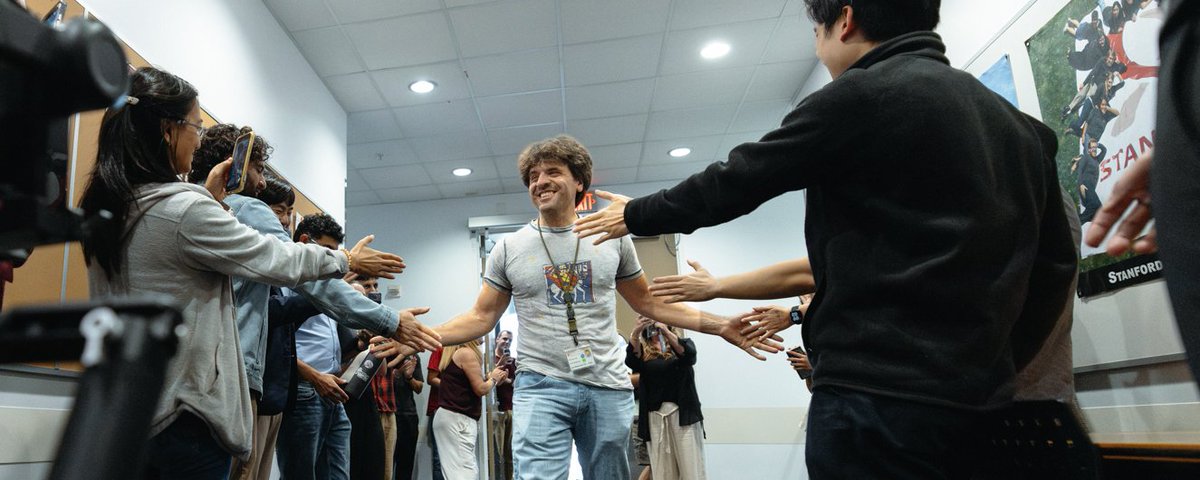
Meet A.J. Phillips, Ibukun Ajifolokun, Colette Benko and Ziv Lautman, the four PhD candidates who led the pack in the Three Minute Thesis competition by bringing their human health research to life.
stanmed.stanford.edu/three-m…

A new Stanford Medicine-led study challenges decades of thinking about concussions, finding that straight-line head motion may be more predictive of brain injury than rotational motion.
med.stanford.edu/news/all-ne…

Game changers: The innovations that keep college and professional athletes in top form are benefiting the rest of us.
stanmed.stanford.edu/innovat…

What habits can help us live healthier, longer lives?
Stanford Medicine's Michael Fredericson, MD, professor of orthopaedic surgery, joins host Maya Adam, MD, to share how exercise, nutrition, sleep and recovery support healthy aging. Watch the latest Health Compass episode: med.stanford.edu/health-comp…

Stanford Medicine retweeted

The U.S. measles surge and loss of elimination status are signs that more vaccination is needed, said a Stanford Medicine pediatric infectious disease physician. Here’s what else she wants you to know. med.stanford.edu/news/insigh…


A Stanford Medicine-led study identified three distinct brain activity patterns, or biotypes, in children with ADHD, anxiety or both. The findings could help improve early diagnosis and guide more personalized treatments. med.stanford.edu/news/all-ne…

Stanford Medicine retweeted
Regular exercise can help reduce fatigue and improve treatment outcomes for cancer patients. Stanford Medicine experts explain how physical activity can support cancer care and why it matters during treatment. med.stanford.edu/news/insigh…

What do the trillions of microbes living in your gut have to do with your health? And do popular gut health trends actually work? In this Health Compass podcast, Stanford Medicine microbiologist Justin Sonnenburg, PhD, discusses how the gut microbiome influences our health, why fiber matters and what the science really says about probiotics, prebiotics, fermented foods and microbiome testing. med.stanford.edu/health-comp…

Walk with Me: What inspired Karen Adams to start a menopause clinic? And what’s her favorite hot flash anthem? Meet the director of the Stanford Program in Menopause & Healthy Aging. bit.ly/4Atn7rw
A recent clinical trial raised questions about the effectiveness of colonoscopies. Stanford Medicine experts explain why colonoscopies remain important for colorectal cancer screening and prevention.
stan.md/4yOlyUl
Stanford Medicine retweeted

Today's Grand Rounds came to us live from the ISS! We're incredibly grateful to Stanford EM alum and @NASA astronaut Anil Menon, MD, for joining us from orbit to explore the intersection of EM and space and inspire future space MDs!
Ad astra, Dr. @astro_anil !

Stanford Medicine orthopaedic surgeon and U.S. Army veteran Constance Chu, MD, uses advanced imaging technologies to detect early signs of joint disease and improve patient care, including for fellow veterans. Learn how her military experience continues to shape her clinical practice and research.
med.stanford.edu/news/insigh…

Stanford Medicine retweeted

After removing a rare tumor, @StanfordMed surgeons Drs. @leahbackhusmd and @lillianltsai led a team effort to rebuild the patient’s chest wall in a 16-hour operation, marking the first adult U.S. implantation of this custom-made prosthesis. @osteobionix
med.stanford.edu/ctsurgery/a…

How does CAR-T cell therapy work? This animated explainer breaks down how this innovative cancer treatment uses a patient's own immune cells, reprogramming them to recognize and attack cancer cells. youtube.com/watch?v=v5FvGzdR…
Stanford Medicine researchers and their colleagues are studying whether patterns of brain activity could help identify people at risk of developing Alzheimer’s disease, potentially allowing for earlier interventions.
stan.md/4A7vzfK

How does the body change during perimenopause and menopause? In this episode of Stanford Medicine’s Health Compass podcast, gynecologist Karen Adams, MD, explains what happens during this transition, explores treatment options and shares how women can thrive through midlife and beyond. med.stanford.edu/health-comp…

At a Stanford University symposium, leaders from Stanford Medicine and Stanford Law School explored how artificial intelligence is transforming medicine and law, including its impact on education, public trust and access to care and justice. stan.md/4jSo2N3
@StanfordLaw

ALT George Triantis and Lloyd Minor speak at the symposium.

ALT Russ Altman, Stanford University; Megan Ma, Stanford Law School; Kent Walker, Google and Alphabet; and John Whyte, American Medical Association, at a Stanford University symposium on artificial intelligence in law and medicine.
“We’re setting ourselves on a new trajectory based on our incredible foundation,” said Mary Hawn, MD, the chair of the department and the Emile Holman Professor in Surgery. “The resources we have at Stanford, in terms of being on a major research university campus, accelerate our discoveries, and it’s making a difference for our patients every day.” stan.md/4j04DIY
@StanfordSurgery @maryhawn

ALT 100 years of surgery at Stanford Medicine

ALT 100 years of surgery at Stanford Medicine

ALT 100 years of surgery at Stanford Medicine