

ISW is a policy research organization focused on U.S. national security. Email: [email protected]. https://xitter.cf/t.co/FO1PVyOnYB
Washington D.C.
Joined September 2009
- Tweets57K
- Following3.3K
- Followers1.5M
- Likes18.1K




Pinned Tweet
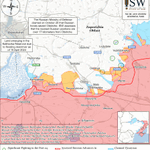
NEW: Russian President Vladimir Putin used his October 27 call with Finnish President Alexander Stubb and Norwegian Prime Minister Jonas Gahr Store to reiterate Moscow’s longstanding demands in Ukraine and rearticulate Moscow’s claims that NATO expansion is among the “root causes” of the war. Putin also stated that “root causes” must be resolved as preconditions for any future peace negotiations.
Other Key Takeaways:
Russia and Ukraine began observing a limited ceasefire in Russian-occupied Oleshky, Kherson Oblast, on October 27 to facilitate humanitarian aid deliveries and evacuate civilians from the settlement. Both sides are reportedly abiding by the ceasefire terms as of this writing.
It remains unclear how the Russian authorities will treat Ukrainians evacuated from Oleshky and whether Russian occupation authorities will provide the residents a legitimate and duress-free choice to return to Ukrainian government-controlled Ukraine.
The Russian 26th Tank Regiment (47th Tank Division, 1st Guards Tank Army [GTA], Moscow Military District) operating in the Kupyansk direction is reportedly planning to disband several platoons to create an unmanned aircraft system (UAS) company.
Neither Russian nor Ukrainian forces advanced on October 27.
Russian forces launched an unspecified number of Iskander-M/S-400 ballistic missiles and 280 drones against Ukraine overnight.


NEW: Iran likely used its meeting with Saudi Arabia, Pakistan, and Turkey to pressure the trio of countries to help forge a US-Iran deal that would achieve key Iranian objectives. Iran is presumably attempting to exploit regional concerns that renewed fighting and US-Iran tensions could embroil regional countries in the future and is aiming to portray the United States as the source of the problem.
Other Key Takeaways:
Iranian-backed Iraqi militias almost certainly used two drones to surveil the US Embassy in Baghdad on October 27 in order to threaten and deter the United States from striking Iran. The militias’ decision to use drones is more subtle than previous militia threats and is likely a response to the changing political situation in Iraq and Iranian preferences.
The Houthis are attempting to deter Egypt from furnishing Saudi Arabia with defensive military support following Egypt’s parliament approval of “purely defensive” military assistance to Saudi Arabia, including Egyptian forces that will remain in Saudi territory and not assist in Saudi attacks on Houthi targets, on October 26.


2/ Russian Offensive Campaign Assessment, October 27, 2026: isw.pub/UkrWar102726
Institute for the Study of War retweeted
NEW: People’s Liberation Army Navy (PLAN) aircraft carrier Liaoning sailed near the Basilan Strait, located within the Philippine archipelago, on October 22. The People’s Republic of China (PRC) appears to be increasing its military activity around the Philippines to intimidate Manila to reduce its presence in the South China Sea and possibly accede to PRC territorial claims. Liaoning’s movements likely simulated breaking through the first island chain and possibly isolating the Philippines or Taiwan during a conflict. (1/2)
Other Key Takeaway:
The PRC is continuing to portray the United States as an aggressive hegemon in the space domain and suggesting that US space weapons development could result in a global arms race. The PRC is continuing to develop its own space capabilities, however, particularly counterspace and dual-use assets that could be used against US and allied weapons systems in a future conflict.

Institute for the Study of War retweeted
2/ Russia’s population and relative (but diminishing) wealth will let Putin continue his war for a long time, to be sure. But Ukraine is at least equally likely to hold off Russian attacks while raising the cost to Russia high enough to force a compromise peace—which is the stated aim of Ukrainian President Volodymyr Zelensky and the Ukrainian government. The latter outcome—a sustainable compromise peace—is also the stated aim of the US government and of Ukraine’s other supporters. It is only Putin who opposes compromise.
The task of Ukraine and its partners is to continue to increase pressure on the Kremlin and raise the cost of pursuing Putin’s unbridled ambitions high enough to convince him to accept peace that he does not dictate. That task will be very challenging, but it is feasible, and it should be the focus of all policy aimed at ending this horrible war.

Institute for the Study of War retweeted
CONCLUSION 🧵(1/2): Putin would have the world, and especially the United States, believe that he is somehow holding back from crushing Ukraine, but that he could do so at any moment of his choosing. The opposite is the case.
If Putin had had a way of ending the war quickly, he surely would have used it. The effort to field an army large enough to make virtually no gains is costing Putin a fortune, driving up inflation in Russia, and generating increasing social discontent. Fielding a larger army would cost more with no guarantee of materially changing the situation on the front. That is why Putin is holding back at least for now. ⬇️
Putin has likely recognized the folly of trying to drown Ukraine in Russian blood and has instead opted to try to hammer Ukraine into submission with a strategic bombing campaign. The Russians have secured a temporary advantage in the skies over Ukraine through their jet-powered drones and the shortage of Patriot missiles that can intercept their ballistic missiles. But Ukraine is fielding solutions to defend against the jet-powered drones, and it is hardening and decentralizing its infrastructure to survive the ballistic missile strikes (as well as developing its own ballistic missile interceptors, although that effort will take time).
The Russian strikes are currently devastating Ukrainian energy and other infrastructure and imposing a brutal cost on Ukrainian civilians—as Putin intends. But there is no reason to think that this strategic bombing campaign will be any more successful than every other strategic bombing campaign in history—all of which have failed to compel a country holding its own on the battlefield to surrender.


It is unclear whether Putin is lying about Russian gains or being lied to by his own military—or both. Russian military correspondents constantly complain of what they call “beautiful reports” that Russian military units send to higher headquarters, claiming gains they have not made. Ukrainian forces say that they have been able to use the Russian military’s own internal culture of lying to their advantage, luring Russian troops into traps because the Russians think that they are moving through territory they control. Leaked Russian military maps show phantom gains, often matching Putin’s claims. The pervasive lying within the Russian military is a problem for Russian soldiers, but likely an advantage for Putin, as it supports his own efforts to present Russian forces as advancing and winning when, in fact, they are doing neither.
NEW: People’s Liberation Army Navy (PLAN) aircraft carrier Liaoning sailed near the Basilan Strait, located within the Philippine archipelago, on October 22. The People’s Republic of China (PRC) appears to be increasing its military activity around the Philippines to intimidate Manila to reduce its presence in the South China Sea and possibly accede to PRC territorial claims. Liaoning’s movements likely simulated breaking through the first island chain and possibly isolating the Philippines or Taiwan during a conflict. (1/2)
Other Key Takeaway:
The PRC is continuing to portray the United States as an aggressive hegemon in the space domain and suggesting that US space weapons development could result in a global arms race. The PRC is continuing to develop its own space capabilities, however, particularly counterspace and dual-use assets that could be used against US and allied weapons systems in a future conflict.
2/ China & Taiwan Update, October 27, 2026: isw.pub/ChinaTaiwanUpdate102…
CONCLUSION 🧵(1/2): Putin would have the world, and especially the United States, believe that he is somehow holding back from crushing Ukraine, but that he could do so at any moment of his choosing. The opposite is the case.
If Putin had had a way of ending the war quickly, he surely would have used it. The effort to field an army large enough to make virtually no gains is costing Putin a fortune, driving up inflation in Russia, and generating increasing social discontent. Fielding a larger army would cost more with no guarantee of materially changing the situation on the front. That is why Putin is holding back at least for now. ⬇️
Putin has likely recognized the folly of trying to drown Ukraine in Russian blood and has instead opted to try to hammer Ukraine into submission with a strategic bombing campaign. The Russians have secured a temporary advantage in the skies over Ukraine through their jet-powered drones and the shortage of Patriot missiles that can intercept their ballistic missiles. But Ukraine is fielding solutions to defend against the jet-powered drones, and it is hardening and decentralizing its infrastructure to survive the ballistic missile strikes (as well as developing its own ballistic missile interceptors, although that effort will take time).
The Russian strikes are currently devastating Ukrainian energy and other infrastructure and imposing a brutal cost on Ukrainian civilians—as Putin intends. But there is no reason to think that this strategic bombing campaign will be any more successful than every other strategic bombing campaign in history—all of which have failed to compel a country holding its own on the battlefield to surrender.
It is unclear whether Putin is lying about Russian gains or being lied to by his own military—or both. Russian military correspondents constantly complain of what they call “beautiful reports” that Russian military units send to higher headquarters, claiming gains they have not made. Ukrainian forces say that they have been able to use the Russian military’s own internal culture of lying to their advantage, luring Russian troops into traps because the Russians think that they are moving through territory they control. Leaked Russian military maps show phantom gains, often matching Putin’s claims. The pervasive lying within the Russian military is a problem for Russian soldiers, but likely an advantage for Putin, as it supports his own efforts to present Russian forces as advancing and winning when, in fact, they are doing neither.
2/ Russia’s population and relative (but diminishing) wealth will let Putin continue his war for a long time, to be sure. But Ukraine is at least equally likely to hold off Russian attacks while raising the cost to Russia high enough to force a compromise peace—which is the stated aim of Ukrainian President Volodymyr Zelensky and the Ukrainian government. The latter outcome—a sustainable compromise peace—is also the stated aim of the US government and of Ukraine’s other supporters. It is only Putin who opposes compromise.
The task of Ukraine and its partners is to continue to increase pressure on the Kremlin and raise the cost of pursuing Putin’s unbridled ambitions high enough to convince him to accept peace that he does not dictate. That task will be very challenging, but it is feasible, and it should be the focus of all policy aimed at ending this horrible war.
Institute for the Study of War retweeted
2/ Read more about the situation in Oleshky in this recent special report by ISW's @karolina_hird ⬇️ xitter.cf/TheStudyofWar/status/2…
SPECIAL REPORT | NEW: Oleshky: How Russia Governs Through Humanitarian Decline
The ongoing humanitarian crisis in the occupied Oleshky area reflects the coercive logic of Russian occupation governance in a heavily damaged frontline city. Oleshky has become a test case for Russian rule in an area marked by depopulation, damaged infrastructure, chronic insecurity, and growing isolation from the rest of Ukraine. Rather than reversing these conditions, Russian occupation authorities appear to govern through them, leveraging residents’ increasing dependence on occupation-controlled services, institutions, and administrative systems to sustain control. As humanitarian vulnerabilities deepen and alternatives to occupation governance diminish, humanitarian decline and Russian occupation rule become mutually reinforcing.
Russian forces occupied these left bank settlements on February 24, 2022 — the first day of the full-scale invasion of Ukraine — during the initial military push to occupy all of Kherson Oblast from positions in occupied Crimea. Russian troops largely maintained a distance from Oleshky itself in the first few weeks of the invasion, and remaining elements of the Ukrainian city administration attempted to organize self-governance efforts and self-sufficient security patrols while refusing to directly cooperate with Russian soldiers. Geolocated images show Russian forces had officially entered Oleshky as of late March 2022, breaking the tacit governance agreement that had been in place with the remaining Ukrainian officials. Russian forces and occupation officials took full control of Oleshky in late April 2022, however, and about 40 percent of the pre-war population fled to Ukrainian-held territory while security checkpoints were still open.


MORE: Kremlin officials have consistently rejected ceasefire proposals — both for a partial and complete ceasefire that the US and Ukraine have proposed — while Ukrainian officials have consistently reiterated their willingness for such a ceasefire.
Peskov’s and Ushakov’s recent statements indicate that the Kremlin’s position heading into the upcoming trilateral talks remains to reject ceasefire proposals.
Furthermore, the Kremlin’s current negotiating position on the war in Ukraine continues to include Moscow’s longstanding demand from before the full-scale invasion that NATO change its charter and roll back its membership to NATO’s former 1997 borders.

NEW: Ukrainian President Volodymyr Zelensky reiterated his willingness for a complete or partial ceasefire, including moratoriums on strikes against energy infrastructure or the Black Sea, but the Kremlin continues to reject a ceasefire.
Other Key Takeaways:
The Kremlin's current negotiating position on the war in Ukraine continues to include Moscow’s longstanding demand from before the full-scale invasion that NATO change its charter and roll back its membership to NATO’s former 1997 borders.
Ukraine’s long-range strike campaign is forcing Russia to relocate its data infrastructure and augment protection measures for data centers.
Russia launched one Kh-31P anti-radiation missile, three Kh-59 or Kh-69 cruise missiles, and 140 drones (including 70 jet-powered ones) against Ukraine overnight on October 25 to 26.
Ukrainian forces continued their long-range strike campaign against Russian industrial facilities and logistics infrastructure overnight on October 25 and 26.


Institute for the Study of War retweeted
NEW: Senior officials from the Mecca Pact’s three signatories met with senior Iranian officials in Tehran on October 26 to discuss a new US-Iran deal in concert with ongoing Pakistani and Qatari efforts. The United States and Iran reportedly continue to face roadblocks regarding the sequencing of the agreement.
Other Key Takeaways:
The Mecca Pact parties also likely attempted to end current Houthi attacks on Saudi Arabia and prevent future Iranian strikes on the kingdom. Gulf-based diplomatic sources told Israeli media that Saudi Arabia attempted to negotiate a ceasefire with the Houthis during a meeting with Iranian officials.
The Houthis may seek to avoid striking US targets in support of Iran if the United States and Israel resume strikes in Iran to prevent US retaliation, which could weaken the group’s current position relative to Saudi Arabia.
Iran has reportedly continued to fund Hezbollah’s reconstitution of its military forces and capabilities.
Current indicators suggest that Hezbollah may not participate in a renewed Iranian conflict by attacking Israel in the near term. The Iranian regime may prefer to limit Hezbollah’s involvement in such a round of conflict in order to prioritize Hezbollah’s military reconstitution, given that any Hezbollah attacks on Israel would almost certainly provoke an Israeli response.

Institute for the Study of War retweeted
NEW: Ukrainian President Volodymyr Zelensky reiterated his willingness for a complete or partial ceasefire, including moratoriums on strikes against energy infrastructure or the Black Sea, but the Kremlin continues to reject a ceasefire.
Other Key Takeaways:
The Kremlin's current negotiating position on the war in Ukraine continues to include Moscow’s longstanding demand from before the full-scale invasion that NATO change its charter and roll back its membership to NATO’s former 1997 borders.
Ukraine’s long-range strike campaign is forcing Russia to relocate its data infrastructure and augment protection measures for data centers.
Russia launched one Kh-31P anti-radiation missile, three Kh-59 or Kh-69 cruise missiles, and 140 drones (including 70 jet-powered ones) against Ukraine overnight on October 25 to 26.
Ukrainian forces continued their long-range strike campaign against Russian industrial facilities and logistics infrastructure overnight on October 25 and 26.

NEW: Senior officials from the Mecca Pact’s three signatories met with senior Iranian officials in Tehran on October 26 to discuss a new US-Iran deal in concert with ongoing Pakistani and Qatari efforts. The United States and Iran reportedly continue to face roadblocks regarding the sequencing of the agreement.
Other Key Takeaways:
The Mecca Pact parties also likely attempted to end current Houthi attacks on Saudi Arabia and prevent future Iranian strikes on the kingdom. Gulf-based diplomatic sources told Israeli media that Saudi Arabia attempted to negotiate a ceasefire with the Houthis during a meeting with Iranian officials.
The Houthis may seek to avoid striking US targets in support of Iran if the United States and Israel resume strikes in Iran to prevent US retaliation, which could weaken the group’s current position relative to Saudi Arabia.
Iran has reportedly continued to fund Hezbollah’s reconstitution of its military forces and capabilities.
Current indicators suggest that Hezbollah may not participate in a renewed Iranian conflict by attacking Israel in the near term. The Iranian regime may prefer to limit Hezbollah’s involvement in such a round of conflict in order to prioritize Hezbollah’s military reconstitution, given that any Hezbollah attacks on Israel would almost certainly provoke an Israeli response.
NEW: Senior officials from the Mecca Pact’s three signatories met with senior Iranian officials in Tehran on October 26 to discuss a new US-Iran deal in concert with ongoing Pakistani and Qatari efforts.
Read more ⬇️
Institute for the Study of War retweeted
It is unclear whether Putin is lying about Russian gains or being lied to by his own military—or both. Russian military correspondents constantly complain of what they call “beautiful reports” that Russian military units send to higher headquarters, claiming gains they have not made. Ukrainian forces say that they have been able to use the Russian military’s own internal culture of lying to their advantage, luring Russian troops into traps because the Russians think that they are moving through territory they control. Leaked Russian military maps show phantom gains, often matching Putin’s claims. The pervasive lying within the Russian military is a problem for Russian soldiers, but likely an advantage for Putin, as it supports his own efforts to present Russian forces as advancing and winning when, in fact, they are doing neither.
Ukraine, not Russia, has held the initiative in key sectors of the frontline for much of the year. Ukrainian forces have decisively defeated the main Russian offensive intended to complete the seizure of Donetsk Oblast in 2026. Ukrainian forces operationally defeated the Russian northern pincer in the Lyman direction and defeated the Russian military command’s plan to conduct a wide encirclement of Ukraine’s Fortress Belt.
Ukraine’s Operation Vivaldi resulted in the liberation of around 277 square kilometers and 16 settlements north and northeast of Lyman over four phases that Ukrainian 3rd Army Corps Commander Brigadier General Andrii Biletskyi began announcing in September 2026, although the operation likely began around March 2026.

NEW: Ukrainian President Volodymyr Zelensky reiterated his willingness for a complete or partial ceasefire, including moratoriums on strikes against energy infrastructure or the Black Sea, but the Kremlin continues to reject a ceasefire.
Other Key Takeaways:
The Kremlin's current negotiating position on the war in Ukraine continues to include Moscow’s longstanding demand from before the full-scale invasion that NATO change its charter and roll back its membership to NATO’s former 1997 borders.
Ukraine’s long-range strike campaign is forcing Russia to relocate its data infrastructure and augment protection measures for data centers.
Russia launched one Kh-31P anti-radiation missile, three Kh-59 or Kh-69 cruise missiles, and 140 drones (including 70 jet-powered ones) against Ukraine overnight on October 25 to 26.
Ukrainian forces continued their long-range strike campaign against Russian industrial facilities and logistics infrastructure overnight on October 25 and 26.