

You only see what you know (Goethe)
Austria
Joined December 2008
- Tweets50.5K
- Following27.6K
- Followers45.5K
- Likes380



Pinned Tweet
View of the Kamerlengo Fortress in Trogir, Croatia (@Croatia_hr), which is listed as UNESCO World Heritage Site > https://teapaw.org/t.co/lylXsDskig

Travelwriticus retweeted

¿Sabéis lo que es un cenotafio? 🤔
Es un monumento funerario en el cual no está enterrada la persona a quién está dedicado.
En la Basílica de San Vicente #Ávila tenemos este magnífico ejemplo, el Cenotafio de San Vicente.
El mártir Vicente fue trasladado a San Pedro de Arlanza, y después a Covarrubias y Burgos.


Travelwriticus retweeted

Le château de Meslay est un petit château de la Loire qui réserve bien des surprises ! Cette élégante demeure de style Régence a été construite au XVIIIe siècle. Onze générations s'y sont succédé jusqu’à aujourd’hui ! 😯
⬇️ 𝗘𝗻 𝘀𝗮𝘃𝗼𝗶𝗿 + ⬇️
omonchateau.com/chateau-de-m…


Travelwriticus retweeted

#TheatreFriday – The Roman Theatre of Sagalassos, perched high in the Taurus Mountains of ancient Pisidia (modern Türkiye). 🎭
Built during the 2nd century AD, the theatre could accommodate around 9,000 spectators. Although constructed in the Roman period, it retained the Greek tradition of a horseshoe-shaped cavea built into the natural hillside. Construction was apparently never fully completed, but the surviving rows of stone seating and the remains of the stage building still offer a remarkable glimpse into the city's cultural life.
At an altitude of around 1,500 metres, it is one of the most dramatically situated ancient theatres in Anatolia.
followinghadrianphotography.…


Travelwriticus retweeted
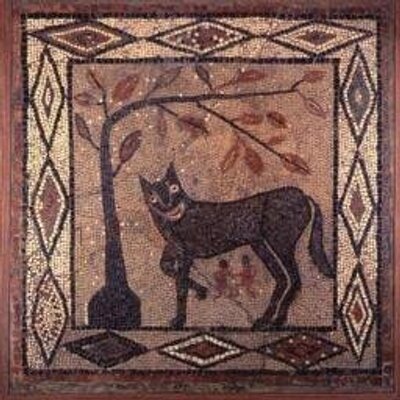
Today 284AD Roman soldier Diocletian proclaimed Emperor by the army. He is perhaps best remembered for "The Diocletianic Persecution" (303–11), the empire's largest and bloodiest official persecution of Christianity

Travelwriticus retweeted

Como cada 19 de noviembre nos encanta felicitar por su aniversario al @museodelprado de Madrid, custodio también de insignes obras románicas como las pinturas murales de la ermita de la Vera Cruz de Maderuelo (Segovia).
19/11/1819 - 19/11/2026
¡Feliz 207 cumpleaños!

Travelwriticus retweeted

St. Catherine’s Monastery in the Sinai Peninsula. It was constructed between 548 and 565 by Justinian I as part of his grand building program across the empire.

Travelwriticus retweeted

Fachada pintada de la Tumba macedonia de Agios Athanasios, situada cerca de Tesalónica, en el norte de Grecia.
Buenas noches con hermosos monumentos

Travelwriticus retweeted

Con l’arrivo su Netflix della terza stagione de “L’Imperatrice”, la figura di Elisabetta d’Austria torna al centro dell’attenzione. Ricordiamo quando Sissi aveva il volto di Romy Schneider e passeggiava tra i nostri Templi di Paestum! Un legame magico tra cinema e archeologia


Travelwriticus retweeted

The first thing that catches your eye inside Gellért Thermal Bath is the turquoise, but the real beauty is in how many details are competing for attention.
The Zsolnay tiles, mosaics, columns and tiny cherub sculptures turn a bathing hall into something closer to a palace. Built between 1912 and 1918, it became one of Budapest’s defining Art Nouveau interiors.
And beneath all that decoration, the baths are fed by naturally hot mineral springs from Gellért Hill.
Would you spend an afternoon here just looking at the architecture?

Travelwriticus retweeted

One balcony, six architectural styles.
From the ornate ironwork of Victorian architecture and the flowing, nature-inspired curves of Art Nouveau to the geometric patterns of Art Deco and the clean lines of Bauhaus, balcony design has evolved alongside architectural trends.
Mid-Century Modern introduced a warmer, more understated approach, while contemporary designs often favor glass, minimal detailing, and open views.
Same architectural feature, six very different design languages.
Which balcony would you choose for your home?

Travelwriticus retweeted

Rome: The Western Library of the Forum of Trajan opens to the public for the first time, following a major restoration. The ancient underground site, in the shadow of Trajan's Column, features archaeological artefacts alongside multimedia installations.


Travelwriticus retweeted

Sala de lectura de la Biblioteca de la Ciudad de la Arquitectura y del Patrimonio, ubicada en el Palacio de Chaillot en París (Francia).
El techo abovedado está cubierto por una copia a escala real de los frescos románicos de la Abadía de Saint-Savin-sur-Gartempe, recreados entre 1940 y 1943 por cinco pintores fresquistas.
La biblioteca alberga miles de volúmenes especializados en arquitectura, diseño, urbanismo y paisaje.


Travelwriticus retweeted

Pour soutenir un seul toit de verre, à Paris, on a employé plus d'acier que pour toute la Tour Eiffel.
C'est le Grand Palais. Sa nef de fer et de verre est la plus grande verrière d'Europe.
Plus de 8 000 tonnes d'acier. Près de 15 000 m² de vitres.
Une voûte à 60 mètres de haut, plus que le premier étage de la Tour Eiffel. Et tout ça monté en trois ans à peine.
La France l'a bâti à toute vitesse pour l'Exposition universelle de 1900. Il fallait éblouir le monde entier, qui venait à Paris par millions.
Le message était clair : après la tour de fer, la France pouvait aussi en faire un palais.
Depuis, le bâtiment a tout encaissé.
Pendant la Grande Guerre, on a installé sous sa verrière un hôpital militaire, des centaines de lits pour les soldats blessés.
En 1944, un incendie a tordu son métal pendant la libération de Paris. Il a tenu.
À la fin du siècle dernier, il a même fallu le fermer dix ans : ses fondations bougeaient, et des morceaux de métal tombaient du plafond.
Il tient toujours. On l'avait dressé pour une fête de sept mois.
Plus de 120 ans plus tard, on y expose, on y défile, et on y a même croisé le fer aux Jeux olympiques de 2024.
📸 Photos : Chatillon Architectes


Travelwriticus retweeted

#sguardireali L'Armeria Reale nello scatto di @nomora_it su #Instagram:
"Can you imagine walking through a palace filled with centuries of royal treasures?The Royal Palace of Turin is a magnificent former residence of the House of Savoy... A masterpiece of Italian royal history!" – at Turin, Piedmont


Travelwriticus retweeted
Which of these Art Deco elevator doors is your favorite?
From top left to bottom right.
Fisher Building — Detroit, Michigan
Chrysler Building — New York City
Bullocks Wilshire — Los Angeles, California
Fred F. French Building — New York City
70 Pine Street — New York City
Mayflower Hotel — Akron, Ohio

Travelwriticus retweeted
#TheatreFriday - The Roman Theatre of Ostia (Italy) was built between 18 and 12 BC, likely under Marcus Agrippa. Originally 65 meters in diameter, the cavea was expanded to 88 meters during the reigns of Commodus, Septimius Severus, and Caracalla, accommodating around 4,800 to 6,000 spectators.
The auditorium featured radial vaults and a two-storey façade with 21 arches. The orchestra, about 23.5 meters in diameter, faced a 35.7-meter-long stage with a decorated proscaenium. Behind the theatre is the Piazzale delle Corporazioni, whose portico was enlarged under Hadrian. The orchestra was later adapted for aquatic spectacles. After extensive 20th-century restoration, the theatre remains in use for performances.
followinghadrianphotography.…


Travelwriticus retweeted
Marble columns reappear in Trajan's Forum thanks to anastylosis, a reconstruction process which incorporates original architectural elements to the greatest degree possible. Rome has also employed the technique in conservation projects at the Basilica Ulpia and Temple of Peace.
