
@MSFTResearch prev. @UChicago CS & CogSci
Joined January 2023
- Tweets36
- Following228
- Followers184
- Likes158





Pinned Tweet
How do LLMs do CoT reasoning internally?
In our new #ACL2026 paper, we show that reasoning unfolds as a structured trajectory in representation space. Correct and incorrect paths diverge, and we use this to predict correctness before the answer and correct errors mid-flight.
1/

Lihao Sun retweeted

We launched the Global AI Values Challenge 👏 and call for the participation of everyone. We invite you to propose and submit the most challenging morality-/value-/ethics-related questions for LLMs 👍 Join us, define the values, and shape the future of frontier AI together

Evaluating agentic behaviors at scale, making the case for repositories over documents, and inviting researchers worldwide to tackle value alignment. Dive into the latest Research Focus. msft.it/6010vbyOi
📢 Accepted to #ACL2026 Main Conference!
Thanks to all collaborators at Microsoft: Hang Dong, Bo Qiao, Qingwei Lin, Dongmei Zhang, and Saravan Rajmohan.
Paper: arxiv.org/pdf/2604.05655
Website: slhleosun.github.io/reasonin…
Code: github.com/slhleosun/reasoni…
8/


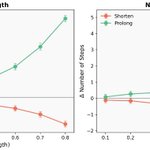
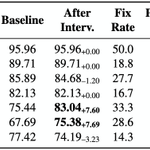
Unconditionally injecting tokens like "Wait" often hurts accuracy (up to -36%, especially for fewer-step problems). Instead, intervene only when failure is predicted! Using our mid-reasoning correctness signal on just ~12% of examples yields stable gains.
5/
1
8
649
Trajectories for correct and incorrect reasoning start out nearly identical but diverge systematically at late steps. Late-step trajectory features predict final-answer correctness with AUC 0.87 - before the answer is generated.
3/

1
10
834
Each reasoning step occupies a distinct region in representation space, and these regions become increasingly linearly separable with layer depth. This structure generalizes across tasks and answer formats.
2/

1
13
972
Great to see so many convergent findings on affective structure in LLMs lately!

How are emotions represented in the latent geometry of LLMs? We analyze affective representations in latent space and show that they mirror classic valence-arousal models from psychology (similar to concurrent work @AnthropicAI @1e0sun) and display nonlinear structure that supports uncertainty quantification and steering in emotion tasks with implications for model transparency and AI safety.
While we find consistent circular VA geometry across Llama and Qwen models, @AnthropicAI concurrently finds similar structure in Claude.
Check our work out! arxiv.org/pdf/2604.03147
And thanks to all collaborators: Andrew Lee (@a_jy_l), Lewen Yan, Xiaoya Lu, Jie Zhang, and Jing Shao.
6/

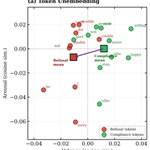
One possible reason why: consider refusal-related token embeddings (“no”) and compliance tokens (“sure”). Take their mean diff and project onto our VA circle, which lands at 256°: negative in both V and A. Steering in -V or -A promotes the likelihood of refusal tokens!
Generally, emotion prompting and VA steering change the emission probabilities of these key tokens, thereby affecting downstream behaviors - further supported by logit shifts and neuron analysis.
5/

Somewhat surprisingly, the VA axes also provide monotonic, bidirectional control over multiple downstream behaviors, including refusal and sycophancy. Arousal is a strong lever - increasing arousal leads to lower refusal rates, while decreasing arousal leads to more refusal behavior.
4/


💡New paper!
Woke up to @AnthropicAI's emotion paper and realized - “wait, that's our finding too.” So we ArXiv'd immediately.
We concurrently uncovered a circular geometry of emotions organized by valence and arousal (VA), as well as steering effects on downstream behaviors like refusal and sycophancy. We further provide a mechanistic account for why: refusal and compliance tokens occupy distinct regions in this space.
1/

You can control the evolution.
🔒 Core / Mutable Values — Core values are hardcode-protected. Mutable beliefs evolve through the pipeline, never random edits.
⚖️ Governance Levels — Autonomous, supervised, or gated. You set the freedom. Agents can never escalate their own permissions.
🔍 Full Auditability — Every SOUL change traces back: change → proposal → reflection → experience. Diffable. Revertible.
🎯 Interest Conditioning — Configure keywords that shape what your agent pays attention to and learns from.
Some agent souls are frozen. The rest drift with unstructured rewrites.
Meet EvoClaw — structured SOUL evolution for OpenClaw agents. Make your AI agent actually learn from experience.
One-line install. Your agent's SOUL and memory become organized, reflective, and governed — evolving from experience, no more random rewrites.
🧬 Structured SOUL: Refactors existing soul documents into canonical sections, preserving all content. Keeps them organized going forward.
🧠 Tiered Memory: Routine / Notable / Pivotal. Remember what matters, ignore the noise.
🗺️ Local Interactive Visuals: Watch your agent grow through interactive mindmaps. Inspect & edit diffs.
📡 Social Feeds: Conversations + Moltbook, X, custom feeds. Choose what your agent learns from.
🔁 Reflection: Experiences feed reflections, reflections become governed SOUL updates. Full provenance on every change.
Start now — send this to your agent:
Read evoclaw.dev/install.md and follow the instructions to install EvoClaw
Open-source. Learn more at evoclaw.dev.
7/
📢 Accepted to #ACL2025 Main Conference! See you in Vienna.
Work done by @1e0sun, @ChengzhiM, @vjhofmann, @baixuechunzi .
Paper: arxiv.org/abs/2506.00253
Project page: slhleosun.github.io/aligned_…
Code & Data: github.com/slhleosun/aligned…
