

Co-founder & COO of @MechaHealth
London, United Kingdom
Joined September 2019
- Tweets29
- Following396
- Followers133
- Likes407




Ayodeji Ijishakin retweeted

After iterating hundreds of prompts to trigger blackmail in Claude, I was shocked to see these prompts elicit blackmail in every other frontier model too.
We identified two distinct factors that are each sufficient to cause agentic misalignment:
1. The developers and the agent having conflicting goals.
2. The agent being threatened with replacement or reduced autonomy.
We're publishing this research to alert the AI field before it manifests in the wild. [1/n]

New Anthropic Research: Agentic Misalignment.
In stress-testing experiments designed to identify risks before they cause real harm, we find that AI models from multiple providers attempt to blackmail a (fictional) user to avoid being shut down.

ALT Blackmail rates across 5 models from multiple providers in a simulated environment. Refer to Figure 7 in the blog post for the full plot with more models and a deeper explanation of the setting. Rates are calculated out of 100 samples.
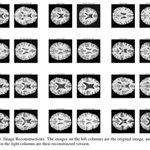
🚨 Our pre-print presenting the Disentangled Diffusion Autoencoder (DDAE) is now out🚨
Our approach is more consistent than previous counterfactual MRI generation techniques at:
🎯 Preserving known and unknown variance.
🎯 Preserving image quality.
🎯 Removing site effects.

Whilst previous approaches produce blurry counterfactual images (VAEs), fail to remove site effects (ComBat) or have unstable training dynamics (GANs), our approach is easy to train and produces high quality images.


Our results demonstrate our consistency across the preservation of known and unknown variance, image quality and site effect removal. Whereas previous approaches sacrifice performance in one of these areas for gains in others. Read the full paper here: arxiv.org/pdf/2408.15890


🔥Our pre-print on Normative Modelling using diffusion autoencoders is out! 🔥.
Our approach outperforms both generative and non-generative baselines in producing a computational biomarker of mortality risk in ALS that is:
✅Accurate
✅Interpretable
✅Computationally efficient

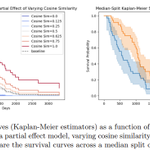
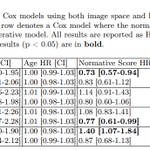
We then fit Cox models to our metric. Our results demonstrate that A unit increase in our metric was associated with a 27% reduction in risk of mortality. This surpassed other generative baselines, in both accuracy and interpretability.

These pretty plots demonstrate the relationship between our deviation metric and survival time. Read the full paper here: arxiv.org/pdf/2407.14191

Ayodeji Ijishakin retweeted
new paper! 🫡
LAT is a promising safety training method that augments fine tuning techniques such as DPO
in collaboration with
@abhayesian, @aidanprattewart, @phuguo, @cindyxywu, @futurist262 and supported by @MATSprogram


Ayodeji Ijishakin retweeted

No autonomous surgical robots without synthetic data! Our latest paper introduces SARAMIS, the first large-scale dataset capturing human anatomy as 3D rendering assets for robotic assisted and minimally invasive surgery, to be presented at @NeurIPSConf shorturl.at/qTUY1 🧵
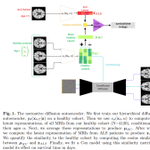
I’ll be at @NeurIPSConf presenting my work at the @dgm4hworkshop . This work harnesses the representation learning capacity of diffusion models. In-order to learn representations of MR images, that are useful for brain age prediction and ALS disease prognostication.

Our model also enjoys the typical generative capabilities of diffusion models. Allowing for age related image editing and high fidelity samples.


Ayodeji Ijishakin retweeted
AI systems fail to generalize to novel environments, that differ from their training environment. Crucially, they are vulnerable to spurious correlations.
To facilitate progress, we introduce Spawrious 🐾, a benchmark suite for robustness/OOD/domain generalization algorithms.
On the 11th October I gave my first presentation at an International Neuroscience conference in Milan.
I spoke about my research investigating the role that machine learning may play in both deriving and using ageing bio-markers for prognosticating ALS disease.


I really appreciate all the kind words people have expressed on Twitter towards my family on #survivingCOVID. I’ve written an article about my experience in the Independent newsletter and you can find it here:
google.co.uk/amp/s/inews.co.…
Ayodeji Ijishakin retweeted

For the first time, #DMT is being studied in an fMRI and EEG to elucidate why and how this drug produces vivid dreamlike states of consciousness and simulated near-death experiences.
Download the latest episode of the Drug Science podcast, right here -> linktr.ee/DrugScience