

The Aphasiology Symposium of Australasia 2018 conference will be held on Queensland’s Sunshine Coast from 28-29 November 2018.
Sunshine Coast, Queensland
Joined September 2017
- Tweets420
- Following318
- Followers228
- Likes318





ASA2018 retweeted

The call for abstracts for the @BasAphasia Clinical Symposium 2019 is now open. The deadline for abstract submission is March 17th. We welcome abstracts from all areas relating to #aphasia with a clinical focus and from any research method. For more info: bas.org.uk/events/Clinical-S…
ASA2018 retweeted
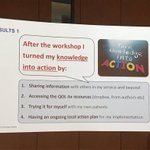
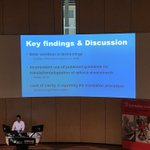
Another lovely and very interesting paper to come from this Aussie team. Very important to look at how #aphasia recommendations are implemented into practice & hearing the SLTs’ perspectives on this. It may ring true for SLTs in other countries - give it a read! @UEA_Health

Such a proud moment when an Honours student publishes their thesis! Read about SLPs’ perspectives on changing practice. They reported more reminders would have been helpful! tandfonline.com/doi/full/10.… @aphasiologist1 @dr_epower
ASA2018 retweeted

The remaining videos from @ASAQLD2018 are now available on the Aphasiology Symposium of Australasia 2018 YouTube channel: https://teapaw.org/t.co/tXuma5R3EQ Apologies if your video is missing. If you would like to share your presentation slides please email me in the New Year.
Missed #ASAQLD2018 but not wanting to miss the presentations? More are now available on our YouTube channel! How lucky are we to have such talented students to make this happen

More videos have been added to the ASAQLD2018 YouTube channel. Check them out at https://teapaw.org/t.co/ivPrbVR0WH @ASAQLD2018 @Kirstiney82
Missed #ASAQLD2018? Or want to relive the awesomeness? Check out the ASA 2018 YouTube Channel! Thanks to tech extraordinaire @DrAnnieJHill
You can check out some of the videos of the presentations from the Aphasiology Symposium of Australasia - now available on the @ASAQLD2018 YouTube Channel: https://teapaw.org/t.co/tXuma5R3EQ More to follow next week! @ASAQLD2018 @Kirstiney82
ASA2018 retweeted
Thank you @ASAQLD2018 for the opportunity to present my research in Australia! I had such fantastic discussions with conference delegates & really enjoyed the conference @UEA_Health @RCSLTResearch
This Post is from an account that no longer exists. Learn more
ASA2018 retweeted

We are currently analysing interviews with speech pathologists about working with interpreters. They had a lot to say about this issue! Your comments mirror some of their thoughts. 👍🏽
And the winner is...Melbourne! The next @AusAphasiaAssoc and ASA conferences will be held in Melbourne in 2020 #ASAQLD2018
1
5
🔑 In our final keynote for the conference, Professor Cathy Price from @WCHN_UCL shares @PLORASResearch research findings #ASAQLD2018
🔑Price: To understand recovery in a new patient with #aphasia we need to know: 1️⃣What language regions are damaged? 2️⃣What recovery pathways are preserved? 3️⃣How consistently do other patients recover from the same type of damage? #ASAQLD2018 @PLORASResearch @WCHN_UCL
🔑Price: Hopes to develop a clinical tool that will allow clinicians to answer questions from people with aphasia like “Will I recover?” “When will I recover?” “Which therapy?” “Will it work?” #ASAQLD2018 @PLORASResearch @WCHN_UCL
4

🔑Price: Lesion site may help to understand non-lesion factors. Lesion site explains lesion volume and initial severity. Lesion site may determine the influence of post-stroke learning ability and pre-stroke learning experience #ASAQLD2018 @PLORASResearch @WCHN_UCL
2
ASA2018 retweeted

Apraxia of speech is a key differential feature for PPA subtypes but how to detect in presence of aphasia - PVI measure for three syllable words accurate for stroke AND progressive. Clear decline in nfvPPA of PVI over time. #ASAQLD2018 Kirrie Ballard
ASA2018 retweeted

Kirrie Ballard #ASAQLD2018 how can we differentiate between apraxia of speech and Aphasia? This is very important.

ASA2018 retweeted

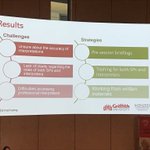
Challenges and strategies when working with interpreters in management of communication disorders- more research needed to guide inter professional practice of #slpeeps and interpreters @annejrhuang @SamSiySP #ASAQLD2018


ASA2018 retweeted

@ZZ_diong in Malaysia majority of SLPs using non-standardised language ax when working with PwA. Highlighting the challenges of providing SLP treatment in the context of limited culturally and linguistically diverse resources @ASAQLD2018