

Stanford, CA
Joined October 2021
- Tweets83
- Following271
- Followers1.2K
- Likes229




Pinned Tweet
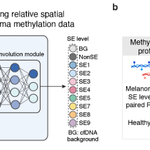
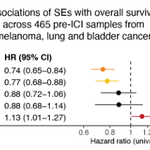
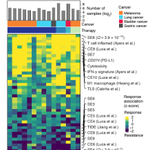
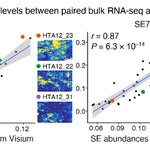
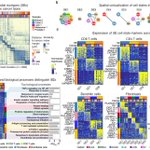
1/ Thrilled to share our new paper, out today in @Nature: "Non-invasive profiling of the tumour microenvironment with spatial ecotypes".
Paper (open access): nature.com/articles/s41586-0…

An honor to discuss our recent @Nature paper with @EricTopol on his Ground Truths podcast! See his fantastic thread below and a link to our conversation here: erictopol.substack.com/p/a-b…

For treatment and outcomes for cancer, the tumor microenvironment (TME) is pivotal, but we've never had a non-invasive way to assess it. Until now, a blood test breakthrough! (<-a term I use sparingly)
Pictured below, schematically, the TME surrounds the cancer cells and consists of immune cells, blood vessel (endothelial) cells, fibroblasts and matrix

15/ We are grateful to our funding sources including @theNCI, @TheVFoundation, @CancerRF, @MelanomaReAlli, and @Ludwig_Cancer. We deeply thank the patients and their families whose generous contribution of samples made this research possible.
16/
GitHub: github.com/digitalcytometry/…
Web interface: spatialecotyper.stanford.edu

Thanks @IamLinghua !!
You’re unable to view this Post because this account owner limits who can view their Posts. Learn more
Aaron Newman Lab retweeted

SCI @AaronNewmanLab & others unveil CytoTRACE 2, a deep learning tool that predicts absolute cell developmental potential from #SingleCell RNA-seq data, outperforming prior methods and refining maps of cell fate and potency across tissues. brnw.ch/21wX6j4 @kang_minji_

Aaron Newman Lab retweeted

CytoTRACE 2: an interpretable deep-learning method that uses scRNA-seq data to predict absolute developmental potential across datasets.
nature.com/articles/s41592-0…
