

“Here are selected beneficial insights from the words of the scholars, the books of knowledge, and whatever benefits come to mind.” — Ibn ʿAqīl, al-Funūn
Riyadh — London
Joined July 2017
- Tweets1.2K
- Following100
- Followers1.3K
- Likes4.5K





Pinned Tweet
Manners of the Student of Knowledge: Writing Down Benefits
al-Nawawi:
“He should not belittle any benefit that he sees or hears in any field whatsoever. Rather, he should hasten to write it down, then remain consistent in reviewing what he has written.”
(al-Majmu 1/89)

Abu Muhammad Walid Ashor retweeted

Winter Conference 2026 at @MasjidSalafi
NEW: Special guest speakers in person (inshā'-Allāh).
Shaikh ‘Abdul-Ḥakīm Daḥḥās
Shaikh ‘Abdul-Khāliq Māḍī
"Principles in Establishing a Muslim Home."
📆 Friday 25th to Sunday 27th December.
🕌 Salafi Mosque, Wright Street, Birmingham B10 9SP.
🏠 All are welcome—bring the whole family.
🏨 Book a hotel today.
🌴 Share the poster and invite your friends and family.

“Whoever Allah disgraces, none can honour.” (Surah al-Hajj)
Imam Ibn al-Qayyim said:
Sin is a cause of a servant becoming lowly in the sight of his Lord and losing his standing with Him. [...]
When a servant becomes insignificant to Allah, no one will honour him, as Allah, the Most High, says:
“And whoever Allah disgraces, none can honour.” [al-Hajj: 18]
Even if people show them respect outwardly, either because they need something from them or because they fear their harm, deep down they regard them as the most worthless and insignificant of people.
(al-Daa wal-Dawaa 1/144)
Note:
“Whoever Allah disgraces, none can honour.” This has two meanings: [1] no one will show him true honour or respect, and [2] no one can restore his honour or raise his standing after Allah has disgraced him. He can only restore his honour through repentance to Allah.

Abu Muhammad Walid Ashor retweeted

🆕 𝐋𝐈𝐕𝐄 𝐋𝐄𝐂𝐓𝐔𝐑𝐄 📣
📖 Tafsir of Surah At-Takāthur (Tafsir Ibn Kathir)
🎙️ Abu Muhammad Walid
🕢 𝐓𝐎𝐌𝐎𝐑𝐑𝐎𝐖 (Wednesday) 7:30pm
🌐 Live on: mixlr.com/Daaruttawheed
⛔ New Location:
📍Clockhouse Community Centre
Henry Grace (Main Hall)
Defiance Walk,
SE18 5QL

Abu Muhammad Walid Ashor retweeted

DAY 4 | Four-Day Intensive Fiqh Course
📘 40 Hadith on Fiqh
By al-Hafidh al-Mundhiri
With Abu Muhammad Walid
🗓 20, 21, 22 & 24 November
🕢 7:30 pm (after Isha)
📍Markaz us-Sunnah
500 Sunleigh Rd, Alperton, HA0 4NF
🖥 Listen live on Mixlr:
musunnah.mixlr.com

It was said to Imam al-Muzani: “So-and-so hates you.”
He replied:
“I find no pleasure in his company, nor do I miss him in his absence.”
(Manaqib al-Shafi'i 2/355)

Abu Muhammad Walid Ashor retweeted
Four-Day Intensive Fiqh Course
Starting This Friday
📘 40 Hadith on Fiqh
By al-Hafidh al-Mundhiri
With Abu Muhammad Walid
🗓 20, 21, 22 & 24 November
🕢 7:30 pm (after Isha)
📍Markaz us-Sunnah
500 Sunleigh Rd, Alperton, HA0 4NF
🖥 Listen live on Mixlr:
musunnah.mixlr.com

The Patience Required in Prayer and Dutifulness to Parents (Qualities of the Siddiqun)
Hafidh Ibn Hajr al-Asqalani:
“Being patient in maintaining the prayers and performing them at their prescribed times, as well as maintaining dutifulness towards one's parents, are constant and ongoing obligations. No one can remain patient in being mindful of Allah with regard to these matters except the Siddiqun.”
(Fath al-Bari 2/11)
Note: Who are the Siddiqun?
Imam Ibn al-Qayyim: “The highest level of truthfulness is the level of Siddiqiyyah. This is the perfection of submission to the Messenger, together with the perfection of sincerity towards the One who sent him (Allah).” (Madarij al-Salikin 2/258)
Shaykh Abdul-Rahman al-Sa‘di: “The Siddiqun are those who have perfected the levels of faith, righteous deeds, beneficial knowledge and true certainty.” (Tafsir al-Sa‘di pg. 841)

Mixing Zamzam Water with Other Water to Make It Last Longer and to Share With Others
Allamah Muhammad ibn Ali Ibn Adam al-Ityubi (rahimahullah) said:
“Mixing blessed water, such as Zamzam water, with other water does not cause it to lose its special qualities, as its blessing extends to the other water.
Therefore, what some pilgrims do when returning to their countries, by adding more water to the Zamzam water they have brought back to increase its quantity and enable them to share it with their relatives and friends, is a good practice. And Allah knows best.”
(Dhakhirah al-Uqba — Explanation of Sunan al-Nasa'i 8/588)


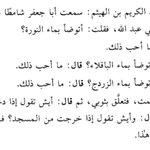
Imam Ahmad ibn Hanbal on Knowing What to Ask the Scholars & What to Learn First
Abu Ja'far Shamit al-Qutay'i said: Abu Abdillah (Imam Ahmad) once entered upon me, so I asked him:
“Can I perform wudu with water mixed with nurah (a substance used for hair removal)?” He replied: “I do not like that.”
I said: “Can I perform wudu with water mixed with broad beans?” He replied: “I do not like that.”
I said: “Can I perform wudu with water mixed with safflower?” He replied: “I do not like that.”
I then stood up, and he caught hold of my garment and said: “What supplication do you say when you enter the masjid?” I remained silent.
He then said: “And what supplication do you say when you leave the masjid?” I remained silent.
He said: “Go and learn that.”
(Tabaqat al-Hanabilah 1/87)
Notes:
1) This narration shows that the student of knowledge should prioritise learning what is most important and frequently practised before delving into less common and more advanced matters over which the scholars differ.
2) Early scholars, such as Imam Ahmad, would sometimes say, “I do not like that” to indicate that something is disliked or forbidden, out of caution against declaring something forbidden without explicit evidence from the Qur’an or Sunnah.

Leave Matters to Those Qualified and Able to Handle Them
The poet said:
يَا بَارِيَ الْقَوْسِ بَرْيًا لَسْتَ تُحْسِنُهَا
لاَ تُفْسِدَنْهَا وَأعْطِ القَوْسَ بَارِيها
O one who makes a bow, but does not know how to make it properly, do not ruin it. Rather, leave the bow to the one who knows how to make it.

The Generosity of Imam Shu'bah Ibn al-Hajjaj
Abu al-Nadhr said:
“Whenever Shuʿbah travelled by boat with a group of people, he would pay the fare for everyone.”
(al-Jarh wal-Taʿdil of Ibn Abi Hatim 1/173)

Overlook People's Flaws When Their Good Qualities Are Abundant
Imam Malik narrated that al-Qasim ibn Muhammad used to say, "Among men are those whose flaws are not mentioned."
Muhammad ibn Rushd (al-Jadd) explained:
"Al-Qasim's statement is correct, the meaning of it is what Malik said that when a flaw is minor and a person's overall conduct is good and upright, a minor flaw is not mentioned, since no one is entirely free of such flaws, given the abundance of his good qualities."
(al-Bayan wal-Tahsil 18/409)
Note: Al-Qasim Ibn Muhammad is the grandson of Abu Bakr al-Siddiq (radiyallahu anhu). He was from the Imams of the Tabi'in in Madinah and one of the Seven Fuqaha (Jurists).

Arabic Poetry: Make the Most of Your Time and Opportunities
The poet said:
إِذا هَبَّت رياحُك فاغْتنمْها
فإن لكل خافقة سكونُ
ولا تغفل عن الإحسان فيها
فما تدري السكونُ متى يكونُ
When your winds begin to blow, seize the opportunity,
For after every gust of wind comes stillness.
Do not neglect to do good during them,
For you do not know when the stillness will come.
Explanation:
Make the most of your time and opportunities while you have them, because they will not always be there. When you have free time, energy, good health and a sharp mind, use them to seek knowledge and do good before you lose these blessings or become occupied with other things.

The Wisdom Behind the Order of Chapters in Fiqh Books
The chapters of fiqh are carefully arranged, taking things step by step and building on what comes before. The books of the different madhhabs generally follow the same order, with slight differences in arrangement.
Imam Siraj al-Din al-Bulqini al-Shafi‘i discussed the wisdom behind this arrangement in the books of the Shafi‘i madhhab.
Read the English summary or download the full Arabic PDF here:
t.me/AbuMuhammadWalid

Yahya ibn Mu‘adh al-Razi said:
“Let your conduct towards a believer consist of three things: if you do not benefit him, then at least do not harm him; if you do not bring him joy, then at least do not grieve him; and if you do not speak well of him, then at least do not speak ill of him.”
(al-Zuhd wal-Raqaiq of al-Khatib al-Baghdadi no. 91)

