

local ai 5080 ⚡️ 16Gb VRAM + 64GB DDR4 3080 💪 10GB VRAM + 16GB DDR4 nothing to sell, just results.
Joined January 2025
- Tweets533
- Following122
- Followers23
- Likes2.3K




Pinned Tweet
I just finished a pretty ridiculous local LLM tournament on my home RTX 5080 16GB system.
Qwen 35B @ Q8 vs Qwen 27B @ UD-Q3_K_XL.
15 identical challenges.
Direct inference.
Codex runtime.
Artifact forensics.
Tool traces.
Actual task timing.
The results were way more interesting than “bigger model wins.” 🧵

Good to know Google still hasn’t ironed out the chat template and reasoning-token leakage issues we saw with Gemma. Some things never change. 😂

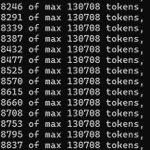
I asked Carbon a math question and unintentionally left the Thinking level on Low. It started responding immediately, and after six screenfuls of math... this came up. I'm not kidding. It went on like this for pages and pages.

12
VIBEXIETY
/vīb-ZĪ-uh-tee/ · noun · informal, tech slang
Definition: A state of intense psychological distress experienced when an AI coding session has only 1% of its usage limit remaining, while the user is agonizingly close to completing a task.
Symptoms: Frantic prompting, compulsive usage checking, irrational optimism, and the overwhelming fear that one more tool call will end everything.
Example: “The code was working, the tests were almost passing, and then the vibexiety hit. I had 1% left and three bugs to fix.”
Etymology: From vibe coding + anxiety, first observed among developers who trusted an AI agent with an entire afternoon of work.
Related condition: Token brinkmanship — the reckless decision to request “just one more fix” despite imminent usage exhaustion.
See also: rate-limit rage, context collapse, quota dread.
I told my AI agent:
Lock the subject. Change the world.
Qwen 3.8 Flash on a 3080 took control of ComfyUI on my 5080 and ran the whole pipeline:
stock footage → Qwen Image 2.1 → MiniMax H3 → QC → iteration
First render sucked.
The agent knew it sucked, diagnosed the crop, fixed it, and ran it again.
I didn’t make the video. I gave an agent a goal.
1
1
172
Qwen 3.8 Flash on a 3080 took control of ComfyUI on my 5080 and ran the whole pipeline:
stock footage → Qwen Image 2.1 → MiniMax H3 → QC → iteration
1
111

Can someone explain to me... HOW IS THIS POSSIBLE!!!
Qwen 3.8 Flash Next on a 3080 10gb VRAM / 48GB DDR4

1
41
Niko is absolutely cooking right now

Qwen3.8-Flash-Next first 32K tokens are 4%-10% faster, LOW RAM mode added (for low hardware).
New update here
github.com/Niko1221/Strata/r…

11
New one-shot voxel pagoda build — straight from my very first launch with Strata by @coldniko.
Running the IQ3_S GSQ-RCO quant from ISTA-DASLab on a 5080 + 64GB DDR4 and sustaining ~36 tok/s through Hermes.
Absolutely wild performance from hardware that barely even registers as “serious” by homelab standards.
Same prompt. Same seed. Same workflow.
Only changed CFG to 3.5 and added a negative prompt.
Hermes handled the edit, reran the ComfyUI workflow through MCP, and kicked back a new 2048×2048 result in 2m29s.


My new favorite way to use ComfyUI:
Hermes agent over Hermex
Ornith 1.5 9B on the RTX 3080
Qwen Image 2.1 on the RTX 5080
Comfy MCP tying it all together
Agent handles the brainwork. 5080 handles the pixels.


33


index retweeted

Always wanted to play with my physical Pokémon cards in AR, so I unleashed Astra + CLAD on it… they did not disappoint!
⚡️🥽
Basically a fully playable proto with all 151 mons from SV 151.
@specs @specsfordevs – at Marina del Rey, CA
This is the update I’ve been needing!
Buun killing it like always!
Can’t wait to play with some autoround quants on the 5080 this weekend!

Proud to announce: buun-llama now has experimental native .safetensors support, including NVFP4, EXL3, and various exotic quants. No more waiting for ggufs, no more switching engines. Enjoy your favorite quants with VBR today!
Run with -m the usual way: -m my_safetensors_dir/

1
24
Qwen 3.8 Flash-Next running locally on a single RTX 5080 16GB. 😎
98K context. Full 512-expert model. ~4.27bpw Q4_K_M. PLE lazy-loaded from NVMe.
Latest 98K run:
⚡ 433 tok/s prefill
🧠 13.6 tok/s decode
On. A. 5080.
Absolutely absurd that this even runs let alone runs this well and built this pagoda in one shot. 😂


QWEN 3.8 FLASH NEXT IS GIVING ME SERIOUS FOMO.
I’M ALREADY PLANNING MY UPGRADE PATHS AND RE-ARCHITECTING EVERYTHING FOR THE NEXT GENERATION OF QWEN.
I’VE BEEN ONLINE FOR DAYS.
SLEEP IS TEMPORARILY DEPRECATED.
50
Who stops their agents frequently enough to keep up with all the updates?
Are my tok/s too low or something?

Hermes merged 81 PRs on August 28
DESKTOP IMPROVEMENTS (15 PRs)
• fix(desktop): stop the workspace pane and pooled sockets flickering at idle
• fix(desktop): let the HUD drag onto another monitor
• fix(desktop): 'This device' Capabilities scope reaches the local machine again under a remote regist...
• fix(paths): display_hermes_home renders POSIX separators on Windows (kills ~/AppData\Local\hermes ch...
VOICE & REAL-TIME (3 PRs)
• fix(desktop): stop session-switch transcript flicker (supersedes #96130, #82899)
• fix(update): gate the fork-upstream prompt for --yes and non-tty runs
• fix(desktop): Bot Chat reopen refetches the transcript instead of the idle snapshot (#96183, salvage...
DEVELOPER TOOLS & PLUGINS (17 PRs)
• feat(a2a): client tools config-gated — disabled unless enabled (−561 tok/call on unconfigured instal...
• fix: strict positional providers no longer 400 on histories with displaced or replayed tool results ...
• fix(agent): tool-pair sanitizers — whitespace ids pair, stale empty tool_calls drop, orphan logic un...
• fix(desktop): a malformed mcp_servers entry no longer blanks the whole workspace (salvage #94338)
SECURITY & SECRETS (2 PRs)
• fix(agent): 413 recovery measures bytes, not token estimates (salvage #88960)
• fix(browser): CDP screenshots survive redaction byte-identical — no more provider 400 invalid_image ...
INTEGRATIONS & CHAT (5 PRs)
• fix(gateway): /handoff works on multi-profile installs (salvage #91217, fixes #91216)
• fix(gateway): event loop no longer freezes on hot blocking sites; ASYNC lint gate stops the class (s...
• fix(gateway): stale model/provider keys no longer survive session model_config writes (salvage #9674...
• fix(cron): manual-run prompt no longer dropped on the relay-fronted gateway forward
STABILITY & FIXES (39 PRs)
• fmt(js): npm run fix auto-fix
• refactor(patch): V4A gated to OpenAI-family mains — replace-only base (−149 tok/call for every other...
• fix(install): locked uv sync sees project config in BOTH Unix installers without re-exposing ambient...
• fix(install): fresh installs keep hash-verified deps and Node 24.0-24.10 no longer dies at npm (salv...
81 new features and fixes

1
17
😳
This isn’t something I have played with but this is something I’m interested in learning and adding to the stack!

Introducing PhoneLLM, an open model for voice agents.
GPT 5.6 Terra performance on typical voice agent tasks at 1/3 the latency and 1/18 the cost.
For voice agents, we need models that are both very low latency and very good at tool calling and instruction following.
There's a trade-off here, and we often have to compromise on either latency or capability when building voice agents. With PhoneLLM (and the training and data stack that made this model possible) we're fixing this problem.
For the last couple of years, most of the effort in frontier model development has gone towards leveraging test-time compute. Which is awesome! Models of all shapes and sizes are available that perform really, really well ... if you have "thinking" turned on for your model.
But if you need your agent to respond at voice conversation speed, you can't use thinking models.
PhoneLLM is a full-weights fine-tune of NVIDIA Nemotron Nano 30B. We trained on a wide range of real-world telephone and customer support use cases. The training focused on taking the excellent Nano 30B base capabilities and teaching the model to do typical voice agent tasks with thinking disabled.
The results are really good: accurate tool calling and concise, on-topic responses in long conversations.
And fast: TTFAT measured server-side is <100ms if you run PhoneLLM on a lightly loaded B200. :-)
But seriously, when we characterize model latency, we do it with full, end-to-end, batched request simulations using real Pipecat voice agent pipelines.
You can serve more than 80 concurrent agents on a single B200 with P95 end-to-end TTFAT <600ms. Including network overhead. That's an LLM cost-per-minute around $0.0025. (1/4 of a cent.) At a latency lower than any third-party API offers today.
More details about this model, including weights on @huggingface, how to spin it up with one click on Modal, and a starter project repo you can clone, are in the thread ...
1
366