

I document the hidden side of aviation, covert flights, intelligence-linked aircraft, and gray-zone airlift history. See my Instagram aircraft_history_junky
Joined February 2026
- Tweets521
- Following60
- Followers2.5K
- Likes985



SHADY SUNDAY | THE LEARJET, 23 SUITCASES & HALF A TON OF METH
On October 1, 2026, a 40 year old American registered Learjet departed Malaysia for Laos. According to investigators, it arrived without drugs. What happened next turned an ordinary looking charter flight into an international narcotics investigation.
The aircraft was Learjet 55B N73GP, registered in the United States through a Utah-based aircraft trustee and operating on a charter associated with Malaysian company CGT Asia.
At Luang Prabang, vehicles reportedly arrived with 23 suitcases. Inside 21 of them were 500 packages containing 521 kilograms (1,149 pounds) of suspected crystal methamphetamine. The intended destination? Manila, Philippines.
The charter allegedly cost $49,500, arranged by a Filipino customer. But Lao authorities apparently knew something was coming. Police reportedly received intelligence about the planned shipment ten days before the aircraft landed.
Thirteen people were detained, including the pilots and airport personnel.
Here’s where it gets interesting.
CGT Asia maintains its pilots refused the unexpected baggage over weight, balance, and safety concerns. The company denies knowingly participating in the shipment. Investigators have not established that the crew or operator was complicit.
Meanwhile, N73GP’s FAA registration identifies TVPX ARS Inc. as trustee, not the publicly undisclosed beneficial owner. A perfectly legal aviation arrangement, but another layer investigators must unravel.
A private jet. An American registration. A Malaysian charter. A Filipino customer. A Lao airport. And half a ton of methamphetamine that allegedly appeared at an intermediate stop.
The drugs were seized. The aircraft was grounded. But who actually orchestrated the shipment?
That’s the question still hanging over N73GP.
AIRCRAFT HISTORY JUNKY
Like. Follow. Share.
#ShadySunday #AircraftHistoryJunky #N73GP #privatejet #Learjet #AviationHistory #AviationIntelligence #DrugTrafficking #NarcoAviation #CovertAviation #GrayAviation #AviationInvestigation #Laos #PrivateAviation
THE RAVEN WHO TRADED A BIRD DOG FOR AN F-111
One pilot. Two aircraft. Two completely different worlds of Cold War aviation.
Somewhere in the shadows of America’s Secret War in Laos, USAF pilot Lloyd E. Van Zee flew one of the most politically sensitive missions of the Vietnam War.
He was a Raven Forward Air Controller, part of a small fraternity of American pilots operating under the classified Steve Canyon program.
His aircraft? An unmarked Cessna O-1 Bird Dog. His uniform? Civilian clothes. His mission? Find the enemy, coordinate airstrikes, and support friendly forces in a country where American combat operations were officially denied.
Flying low over Laos, Ravens worked alongside CIA supported forces, Royal Lao troops, and indigenous ground commanders. Armed with radios, marking rockets, and an intimate knowledge of the terrain, these pilots directed devastating American airpower from tiny observation aircraft.
Only about 200 men served as Ravens. Twenty-two were killed.
Van Zee was one of those who made it home.
But his aviation career took an extraordinary turn.
By 1974, Van Zee was flying the General Dynamics F-111E with the 55th Tactical Fighter Squadron at RAF Upper Heyford, England.
The same man who had flown a slow, vulnerable Bird Dog over a clandestine battlefield was now operating a supersonic, terrain following strike aircraft designed to penetrate heavily defended Warsaw Pact airspace.
From civilian clothes and smoke rockets over Laos to high-speed NATO strike operations over Europe.
Two very different cockpits. Two very different wars being prepared for.
And one largely forgotten American aviator whose career bridged them both.
AIRCRAFT HISTORY JUNKY
Like. Follow. Share.
#AircraftHistoryJunky #RavenFAC #SecretWar #Laos #SteveCanyon #O1BirdDog #F111Aardvark #USAirForce #CIAHistory #CovertAviation #ColdWarAviation #ForwardAirController #MilitaryAviation #AviationHistory #RAFUpperHeyford

Aircraft history junky retweeted

“It was hell on earth.”
The Beirut barracks bombing killed 241 American servicemen 43 years ago today. A second attack killed 58 French paratroopers.
Publisher @SKatzKeating spoke with men who were there.

THE AIRLINE PILOT WHO ALLEGEDLY REHEARSED HIS ATTACK
Two routine passenger flights. One alleged reconnaissance mission. And a planned attack on Israel’s busiest airport.
On September 30, 2026, flydubai Flight FZ1073 was cruising at approximately 34,000 feet over Saudi Arabia when its copilot allegedly attempted to hijack the Boeing 737 MAX 8, registered A6-FKF.
According to UAE prosecutors, 29 year old Omani copilot Hamam al-Hammami planned to crash the aircraft into the passenger terminal at Ben-Gurion International Airport, inspired by the September 11 attacks.
But investigators uncovered something even more disturbing.
Prosecutors allege he had flown the Dubai–Tel Aviv route twice before, using legitimate airline flights to study the route and intended target.
On September 30, he allegedly attacked Captain Smit Machchhar with an emergency axe. Despite serious injuries, the captain managed to summon help. Other pilots and passengers intervened and restrained the copilot.
Flight-tracking data recorded violent altitude excursions, including a descent exceeding 14,000 feet. The aircraft eventually diverted to Tabuk, Saudi Arabia, with visible damage to its rudder.
Investigators are examining whether the suspect acted alone. Although aircraft records show A6-FKF operating the Tel Aviv route earlier in September, the specific reconnaissance flights and aircraft remain unidentified.
What makes this case particularly unsettling is the alleged exploitation of legitimate airline operations for hostile reconnaissance. A trained pilot, authorized cockpit access, and routine passenger flights reportedly became part of the preparation for a terrorist attack.
AIRCRAFT HISTORY JUNKY
#AircraftHistoryJunky #Flydubai #FZ1073 #Boeing737MAX #AviationIntelligence #AviationSecurity #Counterterrorism #CovertOperations #OSINT #AviationHistory #IntelligenceOperations
🤖 Made with AI


THE CIA CALLED IT A “BUM DROP”
A declassified CIA glossary defined a bum drop as an airdrop made without a reception committee—the ground team that would normally mark the DZ, receive the agent, recover equipment, and help clear the site.
In other words: The aircraft crosses into hostile territory at night. The agent jumps. Nobody is waiting below. He has to land, recover his gear, hide the parachute, avoid security forces, and somehow make contact with the underground.
Sometimes this was necessary because the first agent had to go in before a network existed to receive him.
And the early Cold War produced some brutal examples.
Western Ukraine, 1949: radio-trained couriers were parachuted behind the Soviet frontier. Their communications equipment was destroyed on impact, crippling the mission.
Lithuania, 1950: CIA-supported agents were dropped in to reconnect with anti-Soviet resistance and rebuild communications networks.
Albania, 1950–53: CIA/OPC teams infiltrated émigré agents to establish contacts, collect intelligence, and support resistance against Enver Hoxha’s regime.
Latvia, 1952: CIA REDSOX agents were inserted into Soviet territory, where hostile security services were already hunting infiltrators.
That was the gamble behind the bum drop.
No lights.
No ground team.
No reception committee.
Sometimes the aircraft did everything right…
…and still delivered the agent into a counterintelligence trap.
The first man into the network, before the network existed.
#AircraftHistoryJunky #CIA #BumDrop #CovertAviation #ColdWar #Espionage #IntelligenceHistory #ClandestineOperations #AirDrop #C47 #IronCurtain #HUMINT #Counterintelligence #Declassified #AviationHistory


THE SECRET DRONE CAMPAIGN THAT GROUNDED MOSCOW
On October 9, 2026, one of Vladimir Putin’s presidential Il-96 aircraft was returning from Turkmenistan when Ukrainian drone threats forced Moscow’s airports to suspend operations, leaving the massive four-engine jet unable to land.
The aircraft, RA-96025, had carried Putin to Turkmenistan the previous day. Now it was being diverted north to St. Petersburg. Two other government Il-96s, RA-96020 and RA-96022, maneuvered over the Moscow region before eventually landing at Vnukovo. Five Russian government aircraft reportedly experienced disruptions.
Whether Putin himself was aboard the diverted aircraft remains unconfirmed.
Behind this disruption was a remarkable new chapter in Ukraine’s campaign against Russian aviation.
According to an October 15 investigation by The Atlantic, Ukrainian planners developed a campaign reportedly code-named M&Ms, initially proposing as many as 1,000 AI-guided drones per night against Moscow’s airport infrastructure. The ambitious plan was never authorized in its original form.
Instead, Ukraine has exploited a different vulnerability: Russian airspace security.
Long-range drones approaching Moscow can trigger airport closures, forcing airliners to hold, divert or remain grounded. In one reported week, 345 flights were canceled. During the October 9 disruption alone, more than 200 flights were delayed and over 100 canceled.
And the drones didn’t need to destroy a single runway.
This is air interdiction through disruption rather than destruction. Relatively inexpensive unmanned aircraft can impose enormous costs on an aviation network simply by creating threats that authorities cannot ignore.
The October 9 incident demonstrated how far that disruption could reach. Even Russia’s presidential aviation fleet was caught in the restrictions.
A specially equipped Il-96 designed to transport the Kremlin’s leadership across continents was diverted because small unmanned aircraft made Moscow’s airspace temporarily unavailable.
The economics of aerial warfare are changing, and Ukraine’s reported M&Ms campaign may be one of the clearest examples yet.
AIRCRAFT HISTORY JUNKY
#AircraftHistoryJunky #OperationMMs #Drones #Il96 #RussianAviation #DroneWarfare #MilitaryAviation #AviationHistory #IntelligenceOperations #UkraineWar #AirInterdiction #PresidentialAircraft
🤖 Made with AI


THE NAVY’S FLYING RADAR THAT HUNTED THE TALIBAN
Built to protect British warships from enemy aircraft, the Royal Navy’s Sea King ASaC.7 ended up hunting insurgent networks hundreds of miles from the nearest ocean.
In May 2009, Sea Kings from 854 and 857 Naval Air Squadrons deployed to Camp Bastion, Afghanistan. Nicknamed Baggers for their enormous side mounted radar housing, these helicopters carried the powerful Searchwater 2000 radar, originally developed for naval surveillance.
Over Afghanistan, that radar took on a different mission. Using ground moving target capabilities, crews tracked suspicious vehicle movements across Helmand Province, feeding intelligence to coalition aircraft and ground forces hunting insurgents, narcotics traffickers and IED networks.
In October 2011, British officials reported that Sea King crews helped U.S. Marines intercept approximately 1,000 kilograms of heroin. In another operation, a Bagger tracked a suspicious vehicle, passing intelligence that helped Marines apprehend two suspected experienced bomb makers.
The radar wasn’t identifying drugs or explosives directly. It was detecting movement, tracking suspicious activity and guiding other intelligence assets toward potential targets.
By the time their five-year deployment ended in 2014, the Royal Navy credited these helicopters with more than 2,000 operational sorties, contributing intelligence associated with 150 arrests, 40 tonnes of drugs and 172 tonnes of homemade explosives seized.
A helicopter built to defend aircraft carriers against Soviet-era threats had become an airborne intelligence platform hunting insurgent networks deep inside Afghanistan.
AIRCRAFT HISTORY JUNKY
#AircraftHistoryJunky #SeaKing #RoyalNavy #FleetAirArm #MilitaryAviation #AviationHistory #OperationHerrick #Afghanistan #ISR #IntelligenceOperations #Searchwater2000

THE SECRET B-26 STRIKE CANCELED HOURS BEFORE TAKEOFF
On the night of April 16, 1961, sixteen unmarked B-26 Invaders sat armed at Takhli, Thailand, ready to launch a covert strike into Laos under Operation MILLPOND. Their target was communist positions on the Plain of Jars, and the mission was designed to look like anything but a direct American attack.
The cover story was serious. American and Air America pilots were issued Royal Lao Air Force commissions, blood chits and gold coins before going to bed. If they were shot down, the paperwork was meant to support the fiction that they were flying for Laos, while the blood chits and gold were there to help buy rescue, food, transport or silence. Some U.S. military pilots had even been conveniently discharged so they could take part without officially appearing as American servicemen.
The strike force was reportedly less than four hours from takeoff when everything stopped. Around 3 a.m., the crews were awakened and told the mission was dead.
What makes MILLPOND so incredible is the timing. As these B-26s waited in Thailand, another CIA-backed B-26 operation was unfolding in Cuba: the Bay of Pigs. For a brief moment, Washington was on the edge of launching two separate covert air wars on opposite sides of the world using the same aircraft type.
One launched. One never left the runway.
The exact reason Kennedy canceled MILLPOND at the last minute is still debated, but the mission revealed just how close the United States came to a secret bombing campaign in Laos before the wider Secret War had fully taken shape.
Sixteen bombers. Fake commissions. Escape gold. A covert war stopped before sunrise.
#OperationMillpond #B26Invader #AirAmerica #CIA #Laos #PlainOfJars #SecretWar #ColdWar #CovertAviation #Takhli #MilitaryAviation #AviationHistory #AircraftHistoryJunky


SHADY SUNDAY — The Home Built Cocaine Plane That Crossed an Ocean
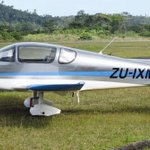
It looked like an ordinary four-seat homebuilt aircraft. But the South African registered Sling 4, ZU-IXM, was hiding a much darker story.
On September 14, 2025, the aircraft crashed into a sugarcane field near Coruripe, Brazil, killing Australian pilot Timothy James Clark. Authorities recovered approximately 180 kilograms (397 pounds) of cocaine from the wreckage, including packages carrying imitation SpaceX logos.
But the cocaine wasn’t the only interesting discovery.
The little Sling had reportedly been modified with additional fuel capacity for long-distance flights across the South Atlantic. Investigative reporting suggested Clark had accumulated extraordinary flying hours, with claims that the aircraft’s engine had even been replaced in Brazil. ZU-IXM had been photographed in northeastern Brazil as early as October 2023, raising questions about its movements during the intervening years.
Then investigators began examining the pilot’s connections.
Clark had reportedly operated a Malawi-registered Beechcraft King Air 350, 7Q-YAO, on legitimate flights in Africa. Investigations by Bellingcat and The Sunday Times also connected him to Oliver Herrmann, a German businessman with alleged ties to the Kinahan organized crime network.
Whether that organization controlled ZU-IXM’s final shipment remains unproven. So do claims about the number and routes of its transatlantic crossings.
A homebuilt aircraft. Modified fuel tanks. International aviation connections. Nearly 200 kilograms of cocaine.
And one question investigators still haven’t answered: How many trips did ZU-IXM make before its final flight?
AIRCRAFT HISTORY JUNKY | SHADY SUNDAY
Like. Follow. Share.
#ShadySunday #AircraftHistoryJunky #ZUIXM #Sling4 #CocainePlane #AviationHistory #AviationMystery #DrugSmuggling #NarcoAviation #IllicitAviation #CovertAviation #GeneralAviation #ExperimentalAircraft #AviationIntelligence #SouthAtlantic #TrueCrimeAviation


JAMES FLATLEY’S OTHER EXPERIMENT
Everybody knows James Flatley as the Navy test pilot who landed a C-130 aboard USS Forrestal.
Twenty years later, he was involved in a very different experiment.
By 1983, Rear Admiral James H. Flatley III was commanding Carrier Group Eight and Carrier Battle Forces, Second Fleet. During that year’s tense Mediterranean deployment, he also temporarily served as Commander Task Force 60 aboard USS Dwight D. Eisenhower.
At the time, the Navy was trying to solve a major Cold War problem: how do you combine radar tracks, aircraft reports, submarine information, intelligence traffic and tactical data links into one usable picture for the carrier battle group?
One answer was JOTS: the Joint Operational Tactical System.
Developed under Rear Admiral Jerry Tuttle, JOTS used commercially available computers to help fuse tactical information that had traditionally been scattered across paper plots, separate displays and message traffic.
When Flatley relieved Tuttle at Carrier Group Eight, the experiment did not disappear.
A history of the program records that Flatley pushed JOTS to the Navy Department level.
That put him at an interesting point in naval warfare history.
Around him were E-2C Hawkeyes, EA-6B Prowlers, F-14 Tomcats, S-3 Vikings and other aircraft feeding the carrier group’s larger intelligence and tactical picture. The goal was becoming increasingly clear:
find, identify and understand the threat before it could find you.
Flatley did not invent JOTS.
But he helped move it from an experimental fleet tool toward wider Navy acceptance.
That fits his career remarkably well.
At Pax River, he tested whether aircraft could operate inside the carrier environment.
Two decades later, he was helping the Navy test whether computers could make sense of the entire battlespace around one.
The C-130 landing made James Flatley famous.
But his later work helped push carrier warfare toward the digital age.
AIRCRAFT HISTORY JUNKY
#JamesFlatley #NavalAviation #ColdWar #USNavy #CarrierAviation #JOTS #E2Hawkeye #F14Tomcat #ElectronicWarfare #NavalIntelligence #AircraftHistory #AviationHistory


BEFORE AREA 51 WAS AREA 51
Before the Blackbird. Before stealth. Before decades of rumors and black project mythology, there was the U-2.
In 1955, the CIA needed somewhere isolated enough to test Kelly Johnson’s new high-altitude reconnaissance aircraft and train the men who would fly it into some of the most heavily defended airspace on Earth. Groom Lake, Nevada became that place.
The first U-2s were built at Lockheed’s Skunk Works, partially disassembled, flown into Groom Lake, and reassembled in secret. The base went by names like Watertown, Paradise Ranch, the Ranch, and Homeplate long before “Area 51” entered popular culture.
The pilots were just as secret. Experienced Air Force aviators were recruited into the CIA program, with some “sheep-dipped” into civilian status to give Washington a layer of deniability if a mission went wrong.
Inside the program, even the language was sanitized.
The U-2 was an “article.” The pilot was a “driver.” Groom Lake was “Homeplate.”
These men trained in pressure suits, practiced the U-2’s notoriously difficult landings with chase cars and aircraft, and prepared to spend hours alone above 70,000 feet carrying cameras and electronic collection equipment over denied territory.
Within months, Groom trained pilots were operating over Eastern Europe and the Soviet bloc, photographing airfields, missile sites, bomber bases, radar networks, and strategic infrastructure that American intelligence had struggled to penetrate by other means.
The U-2 helped replace Cold War guesswork with imagery.
And Groom Lake proved that a remote, compartmented facility could bring together the CIA, the Air Force, Lockheed engineers, test pilots, intelligence officers, and cutting-edge sensors under one roof.
That model would later support the A-12 OXCART and generations of classified aviation programs.
The U-2 didn’t just fly from Area 51.
It helped create the place Area 51 would become.
#AircraftHistoryJunky #U2 #Area51 #GroomLake #CIA #AQUATONE #SkunkWorks #ColdWar #SpyPlane #BlackProjects


THE CAPTURED T-28 THAT HUNTED A COVERT C-123
Before North Vietnam’s MiGs became famous, one of its first successful interceptions came from a captured American-built T-28 Trojan.
The aircraft, No. 963, had originally served with the Royal Lao Air Force before being flown into North Vietnam by a defecting pilot. Hanoi repaired it and turned it into an improvised night interceptor.
On 15–16 February 1964, radar picked up an aircraft approaching from Laos. Ground controllers vectored 963 toward the target until pilot Nguyễn Văn Ba spotted a twin engine transport in the dark.
It was a C-123 Provider.
Ba closed in and fired two bursts from the T-28’s 12.7 mm guns. The C-123 caught fire and crashed near the border.
The strange part: Vietnamese accounts say the Provider was carrying a commando or agent team into North Vietnam.
That places this little known shootdown inside the much larger clandestine air war already underway, CIA-backed infiltration missions, covert C-123 operations, and the transition toward what became MACV-SOG.
The exact C-123, crew, and operator are still unclear.
But the basic story is wild enough:
A captured American trainer, guided by North Vietnamese radar, shoots down another American-built aircraft apparently carrying a covert infiltration team.
No MiGs. No missiles. Just a stolen T-28 hunting in the dark.
AIRCRAFT HISTORY JUNKY
#AircraftHistoryJunky #T28Trojan #C123Provider #CovertAviation #VietnamWar #SecretWar #MACVSOG #CIA #AviationHistory
🤖 Made with AI

HOW TO GUIDE AN AIRCRAFT TO A DROP ZONE THAT ISN’T SUPPOSED TO EXIST
Before GPS, encrypted datalinks and precision airdrop systems, clandestine aircraft often depended on a handful of people hiding on the ground.
They were called the reception committee.
In Mercenary’s Manual Part Two, Terry P. Edwards describes a system that closely mirrors U.S. Special Forces unconventional warfare doctrine: coded drop zones, planned approach sectors, obstacle reporting, release points and prearranged ground signals.
The ground party’s job was not simply to mark a field.
It had to tell the aircrew:
This is the correct DZ.These are the correct people.
Lights, panels, smoke, fires or geometric patterns could be arranged in a predetermined configuration. If the expected signal was wrong, or missing, the aircraft could abort.
That system had deep roots.
During WWII, SOE and OSS reception parties guided clandestine aircraft into fields across occupied Europe. Aircraft such as the Westland Lysander used improvised landing grounds to insert or extract agents, while larger Special Duties aircraft dropped weapons, radios, supplies and personnel to resistance networks.
The same basic ideas survived into the Cold War.
CIA terminology retained the reception committee concept, and U.S. Special Forces doctrine formalized coded DZs, authentication, approach corridors and ground party security.
And if putting a team on the ground was too dangerous?
There was the blind drop.
No obvious reception party. No marked DZ. The aircraft navigated to the location and released using its own navigation and computed solution.
By 1977, Edwards had packaged that same logic into a commercially sold mercenary handbook.
The technology has changed, but the mission has not:
Find the right people. Find the right patch of ground. Deliver the load. Leave before anyone else understands what just happened.
THE AIRCRAFT ONLY NEEDED TO FIND THE FIELD ONCE.
THE ENEMY COULDN’T BE ALLOWED TO FIND IT AT ALL.
#AircraftHistoryJunky #WestlandLysander #SOE #OSS #CIA #CovertAviation #ClandestineOperations #SpecialForces #Airdrop #Airborne #UnconventionalWarfare #MilitaryAviation #AviationHistory #SpecialOperations
🤖 Made with AI


Aircraft history junky retweeted

CNN gains exclusive access to Erik Prince's operation in Haiti as security forces battle gangs that control much of Port-au-Prince. Nick Paton Walsh reports.
Watch the full report on cnn.com/allaccess.

FROM RC PLANES TO DRONE-HUNTING GUNSHIPS
What looks like an expensive afternoon of shooting remote controlled airplanes with a minigun has a surprisingly serious connection to modern aerial warfare.
The footage shows an RC aircraft being targeted with a mounted minigun. It looks recreational, but the military application is very real.
In April 2026, U.S. Marine Corps UH-1Y Venom crews trained near Yuma, Arizona, using M134 miniguns against aerial drones. Thousands of rounds per minute, a moving target, and the challenge of hitting something small in open air.
Meanwhile, Ukraine has taken the concept considerably further.
Ukrainian Mi-8 helicopter crews have been hunting Russian Shahed attack drones with door-mounted miniguns. Even more interesting is the modified Antonov An-28/PZL M28 operating as an improvised aerial interceptor, reportedly equipped with thermal imaging and an M134.
One Ukrainian operation, Aerotim, is led by former aerobatic pilot Timur Fatkullin. His unconventional crew has reportedly destroyed hundreds of Russian drones using an aircraft originally designed for utility transport, not air combat.
It’s a remarkable example of modern gray aviation: civilian flying experience, adapted aircraft, improvised weapons integration, and an old-fashioned door gunner taking on 21st century unmanned aircraft.
And suddenly, shooting RC airplanes doesn’t seem quite so ridiculous.
AIRCRAFT HISTORY JUNKY
#AircraftHistoryJunky #Minigun #M134 #CounterDrone #Antonov28 #MilitaryAviation #DroneWarfare #AviationHistory
Aircraft history junky retweeted
Our correspondent Wolf is on the floor at AUSA, while publisher @SKatzKeating handles traffic at HQ. Counter-drone is high on the agenda.