

I help sites rank on Google and get cited by ChatGPT. Rank Season: the workflows that rank, sent every Monday. What moved, what works, what pays. Free ↓
Joined August 2026
- Tweets8.9K
- Following3.9K
- Followers2.3K
- Likes4.8K
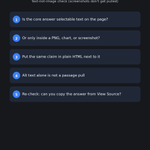
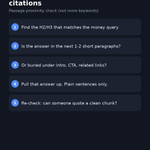
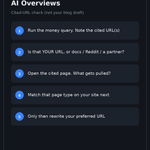
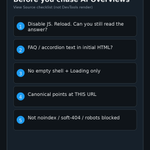


Pinned Tweet
most SEO news is noise. a few things actually move rankings and revenue each week
Rank Season sends just those every Monday: what moved in Google and AI search, the AI workflows that rank, and the plays that turn clicks into money
free. first issue drops soon, get on the list: rankseason.com

Google said on Oct 15 it would show inline links higher up in AI answers more often. one tracker shows the opposite.
David Konitzny of Peec AI, via Search Engine Roundtable (Nov 24): on Sep 21, 76.8% of AI Overviews had their first inline link in the first third of the answer. by Nov 20 it was 51.8%, with drops around Oct 9 and Oct 30.
that's Peec's own tracking, and Peec sells AI search tracking. it shows where links sit, not what that did to clicks.
my take: a citation at the bottom of the answer and one at the top aren't the same win. track where you're cited, not only if.
the link position check:
1. pick 10 queries where an AI Overview cites you
2. note if your link sits in the first third, the middle or the end
3. compare those pages' Search Console clicks before and after Oct 9. a drop is a lead to check, not proof
where does your first link usually land?
Google finished one core update and announced the next one on the same day.
the November 2026 core update finished rolling out today, Nov 24 (started Nov 10), per Google's Search Status Dashboard. right after, Google preannounced a December 2026 core update. no start date yet.
Google told Barry Schwartz the December update focuses on:
- how it understands and ranks relevant content
- longer, more complex questions
- personalized results for people with personalization turned on
my take: your clean window to read November is short.
the core update read:
1. add dated notes now: Nov 10, Nov 24, and the December start when it lands
2. Google's advice is to wait at least a week after rollout ends, so from Dec 1 compare the week after Nov 24 to the week before Nov 10 in Search Console
3. sort the pages that lost clicks by query length. if long, detailed questions dropped most, fix those first, since December is aimed there too
sources: Google Search Status Dashboard, Barry Schwartz at Search Engine Roundtable.
are you reading November now or waiting for December?
4
9
520
Google finished one core update and announced the next one on the same day.
the November 2026 core update finished rolling out today, Nov 24 (started Nov 10), per Google's Search Status Dashboard. right after, Google preannounced a December 2026 core update. no start date yet.
Google told Barry Schwartz the December update focuses on:
- how it understands and ranks relevant content
- longer, more complex questions
- personalized results for people with personalization turned on
my take: your clean window to read November is short.
the core update read:
1. add dated notes now: Nov 10, Nov 24, and the December start when it lands
2. Google's advice is to wait at least a week after rollout ends, so from Dec 1 compare the week after Nov 24 to the week before Nov 10 in Search Console
3. sort the pages that lost clicks by query length. if long, detailed questions dropped most, fix those first, since December is aimed there too
sources: Google Search Status Dashboard, Barry Schwartz at Search Engine Roundtable.
are you reading November now or waiting for December?
1
50
Google's AI products cited social and UGC sites 52% more from January to August. ChatGPT cited the same sites 44% less.
that's Semrush's US data on 18 social and UGC domains (Nov 23). it counts citations, not clicks or sales, and Semrush sells AI visibility tools, so read it as a direction.
the split is the useful part. Pinterest: up 131% in AI Overviews, down 92% in ChatGPT. YouTube led AI Overviews, Reddit led ChatGPT.
so a drop in one engine isn't a drop everywhere.
the platform split check:
1. pick 5 queries where you want your brand named
2. run each in Google (AI Overview or AI Mode) and in ChatGPT
3. note which social sites get cited in each
4. only cut a channel if it's missing from both
I turn studies like this into checks every monday in Rank Season, a free SEO newsletter. no issue out yet, so you'd get it from the first one, plus access to a link trading community. link in bio.
which one shows up more for you, YouTube or Reddit?
it's always rank season. here's what the newsletter actually covers.
Rank Season is a 5 min email every monday, with 3 parts:
1. what changed in Google and AI search that week, and whether your pages are affected
2. AI workflows that rank, as steps you can copy that afternoon
3. plays that turn search clicks into revenue
it's free. the first issue goes out once the list reaches 100 people, and everyone on it gets into a link trading community. link in bio
which of the 3 would you open first?
here's the list. free every monday, and it comes with the link trading community: rankseason.com/?ref=x-post
1
22
ChatGPT's shopping help page used to say product results are "not influenced by any OpenAI partnerships." that line is gone.
the new line: "Product results are not ads; how products and merchants are selected is described below." Juozas Kaziukėnas flagged it on X and Barry Schwartz covered it on Search Engine Roundtable today. OpenAI doesn't say partnerships now affect results. the promise is just no longer there.
what OpenAI does say: merchants are ranked on availability, price, quality, and whether you're the maker or primary seller.
the ChatGPT shopping check:
1. ask ChatGPT for your best seller the way a buyer would
2. note if your store is in the merchant list, and at what price
3. on Shopify, your product data already flows in. if not, OpenAI points to its Product Feed docs to apply for a direct feed
is your store in the list?
Google Search profiles look like they're rolling out beyond the US, Canada and India. Google hasn't announced it.
Barry Schwartz reported it on Search Engine Roundtable (Nov 22): Clara Soteras claimed hers in Spain, and Gagan Ghotra saw it with AU, Singapore and Dubai accounts. Google's help page still lists only those 3 countries.
why it matters: if a brand or person has a knowledge panel, Google may have already made a profile for it. claim it and you can pin up to 8 posts, add up to 8 links and suggest edits to the name and bio. Google says edits may show in the knowledge panel.
the profile check:
1. search your brand or your client's name
2. next to the knowledge panel, click More, then View Search Profile
3. claiming needs 10,000+ followers on one of YouTube, Instagram, X or TikTok
does your brand have one yet?
63% of software buyers who already had vendors in mind added another one after chatting with AI.
that's Wynter's survey of 200 people buying software, analyzed by Kevin Indig (Nov 11). he discloses he's a Wynter investor, and it's self-reported, so read it as a direction, not a test on your brand.
the part most SEOs miss: the first answer isn't the finish line. 62% of buyers who chose a vendor saw it in the first answer, and 75 of those 78 kept asking. top follow-ups: pricing 57.5%, vendor comparisons 54.5%, integrations 46%, setup 40%.
the follow-up check:
1. ask Claude and ChatGPT your category question the way a buyer would
2. then ask "X vs [competitor]", "does X integrate with [tool]" and "how hard is setup"
3. note which answers cite your own pages and which cite someone else's
which follow-up does your site lose?
2
4
147
most SEOs block pages in robots.txt to keep them out of Google. Search Console's "Indexed, though blocked by robots.txt" says otherwise. unblock it and use noindex. any on yours?
5
6
442
one digital PR campaign, 40 links, every one pointing at the homepage, where nobody buys.
that's an example from Alex Galinos on Search Engine Land (Nov 20). he runs SEO and digital PR for travel brands, and his fix starts before the pitch: pick the money pages first, then the topic.
his filter most teams skip: can the onsite version of the study link naturally to those money pages? if the anchors feel forced, it's a vanity topic.
the money page test, before you build a campaign:
1. write down the 3 pages you want to rank
2. draft the internal links from the study to each one
3. if a link reads forced, change the topic, not the link
his point, and I agree: homepage links aren't wasted. stopping there is.
where did your last campaign's links land?
2
4
230
Bing is testing a "Web Mode" tab and ChatGPT is testing web only results. blue links aren't done. read your top page's title like it's all a searcher sees. would you click?
1
3
266
81% of major publishers that block Claude's search crawler got almost no Claude citations. for publishers that allow it, that number was 12%.
that's from Muck Rack's October "What Is AI Reading?" report. a correlation across big publishers, not a test on your site.
the part people miss: Anthropic runs separate bots. ClaudeBot collects training data. Claude-SearchBot is for search, and Anthropic says blocking it may reduce your visibility in Claude's results.
the Claude bot check:
1. open your robots.txt
2. look for rules on ClaudeBot, Claude-SearchBot, Claude-User, or a block on all bots
3. if you only meant to stop training, block ClaudeBot and leave Claude-SearchBot open
which Claude bots does your robots.txt block?
2
4
187
most SEOs check AI Overviews on their head terms. Pew's data points at the other end of the list.
Pew tracked the Google searches of 900 US adults in March 2025. only 8% of one or two word searches showed an AI summary. for searches of 10+ words it was 53%. searches starting with who, what, when or why: 60%.
their data, not mine, and it's from 2025, so read it as a direction, not today's rate.
the long query check:
1. Search Console, Performance, add filter, Query, Custom (regex)
2. paste ^(\S+\s+){9,}\S+$ to see only queries of 10+ words
3. compare their CTR with your short queries. high impressions with a much lower CTR is where I'd look first
Rank Season is a free monday SEO newsletter, still before issue one. join now and you also get into a link trading community. link in bio.
how many of your queries are 10+ words?
7
4
193
Google's advice to CMOs for AI search: skip the generic "Top 10 Things to Consider" article.
it's in a Think with Google guide by Brendon Kraham, a VP on Google's ads side. his example: a running store makes a deep dive video on why one customer's shoe collapsed instead. SEOs picked the line up this week, with the November core update still rolling.
my take: it's guidance, not a ranking rule. but a top 10 list anyone could write is the easiest page for an AI answer to replace.
the generic list check:
1. Search Console, Performance, Pages, filter URLs containing "best" or "top"
2. compare clicks since Nov 10 with the 10 days before. the update isn't done, so treat it as a first look
3. on any that fell, add one thing only you have: a test, a photo, a customer case
how many top 10 posts are on your blog?
.seo made ICANN's confirmed list, but you can't buy one yet. Google says a keyword in the TLD gives no ranking edge, so don't plan a move. would you get one?
1
93
Andrew Shotland Googled Vanguard's support number, called the one in the AI Overview, and reached a scammer.
he wrote it up on Search Engine Land (Nov 20). the fake agent even got "Bank of America" onto his caller ID. Vanguard and BofA had no record of the calls.
my take: if your brand has a support line, an AI answer can hand out a wrong number under your name. that's a search problem now, not just a fraud one.
the support number check:
1. Google "[your brand] customer service number" and "[your brand] phone"
2. compare every number in the AI Overview with your contact page
3. if one is wrong, click thumbs down, then Report a problem, and say what's wrong in the details
when did you last search your own support number?
3
4
228