

Postdoctoral Fellow | Yamanaka-Ohmura lab | 北京脑科学与类脑研究所 (CIBR) | Burdakov lab alumni | PhD Neuroscience | 🇺🇸 → 🇨🇭 → 🇨🇳
Beijing, China
Joined November 2019
- Tweets57
- Following108
- Followers70
- Likes300




Pinned Tweet
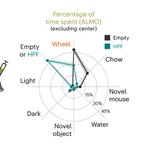
With only so many hours in a day, many of us struggle to find the time to exercise. What allows us to maintain exercise-behavior when other activities vie for our attention? The first paper of my PhD published in @NatureNeuro suggests orexins! (1/8) nature.com/articles/s41593-0…

Alexander Lee Tesmer retweeted

“To feel less hungry, just dilate your eyes”: Final cut pnas.org/doi/10.1073/pnas.26…


Alexander Lee Tesmer retweeted

Are you procrastinating right now?
We found two separable brain axes for staying on task, arousal and dopamine. Two widely used drug classes, GLP-1 agonists (semaglutide) and orexin antagonists (for insomnia), each moved engagement along a different one.
biorxiv.org/content/10.64898…

Alexander Lee Tesmer retweeted

Thanks to everyone sharing in this moment!
I’m so grateful to my trainees & collaborators…
dlab.stanford.edu/group-memb…
(pic: optogenetics conference chairs, Tuscany)
Reading for all those asking:
for technical details: dlab.stanford.edu
for everyone: deisseroth.org/projections

Alexander Lee Tesmer retweeted

BREAKING NEWS
The 2026 #NobelPrize in Physiology or Medicine has been awarded to Karl Deisseroth, Peter Hegemann and Georg Nagel “for their discoveries concerning light-gated ion channels and optogenetics.”

Alexander Lee Tesmer retweeted

1/10 Our paper is out today in Science!
During artificial hibernation, hippocampal firing rates fell by ~70% and synapse density fell by more than half—yet mice retained memories formed beforehand.
How can memory survive such extensive brain remodeling?
doi.org/10.1126/science.aee7…
Alexander Lee Tesmer retweeted

Excited to share our first red ACh sensor!
We developed GRAB_rACh1h, the first genetically encoded red fluorescent sensor for recording acetylcholine dynamics in vivo. (1/3)

Alexander Lee Tesmer retweeted

Catalogue entries for more than 100 antibodies sold by the research services and supply company Thermo Fisher Scientific contain images that have apparently been manipulated, according to a pair of science sleuths.
go.nature.com/4wZqGEE

Alexander Lee Tesmer retweeted

Where, exactly, does learning happen in the brain?
Out now @Nature , we identify a synaptic locus of birdsong learning and show that the circuit can be tuned to make birds learn faster, but at a cost.🧵 #neuroscience
nature.com/articles/s41586-0…
Open link: rdcu.be/fiyrS

Alexander Lee Tesmer retweeted
We are thrilled to share our new preprint!
What happens to memory when >50% of synapses disappear?
We show that artificial hibernation induces massive neuronal remodeling, yet preserves memory through protected circuit architecture.
biorxiv.org/content/10.64898…

Alexander Lee Tesmer retweeted

Online now: Hunger modulates exploration through suppression of dopamine signaling in the tail of the striatum dlvr.it/TNRPCh

Alexander Lee Tesmer retweeted

A hypothalamic circuit for anticipating future changes in energy balance. biorxiv.org/content/10.1101/… #biorxiv_neursci

In mice, orexin neurons multiplex the encoding of rapid body-movements with slow changes in blood glucose. The extent to which these neurons correlate with movement across behavioral and metabolic states surprised us! Now a Version of Record in @eLife. doi.org/10.7554/eLife.103738…

Alexander Lee Tesmer retweeted

How do animals decide if they should forage for food or stay home to take care of newborn offspring? Whose needs come first? For my PhD work now out in @Nature, we examined how hunger and parenting neurons interact and are reshaped postpartum in mice 🧵⬇️ nature.com/articles/s41586-0…



Alexander Lee Tesmer retweeted
(1/3) Excited to introduce our new GRAB sensors for a series of steroid hormones! These tools enable real-time detection of steroid hormone dynamics in vivo🐭🧠.Happy to share these sensors and welcome any feedback!Please contact [email protected] for information.

Alexander Lee Tesmer retweeted

Just released today in Nature Communications.
“Body temperature regulates glucose metabolism and torpid behavior”
Using a hibernation-like mouse model (QIH), we uncovered key links between thermoregulation and glucose metabolism.
doi.org/10.1038/s41467-025-6…

Alexander Lee Tesmer retweeted

In our Learning Club @CompNeuro_lab tomorrow (= July 3rd, Thursday, 2 PM CET),
@AlexanderTesmer will tell us about his recent paper (biorxiv.org/content/10.1101/…). If you'd like to attend, send an empty email to [email protected] to get the link! Thanks Alex!
