

Explore the ancient world with me #history
Joined March 2025
- Tweets4.9K
- Following334
- Followers33.9K
- Likes2.1K


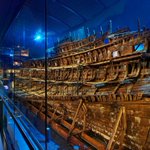





The Mary Rose as depicted in the Anthony Roll. She has the distinct carrack profile with high "castles" fore and aft. Although the number of guns and gun ports is not exact, this is an overall accurate illustration of the ship as she appeared in the 1540s.

Ancient History Hub retweeted
Milan Cathedral has 135 spires, more than 3,000 statues, and a roof you can walk across. It took nearly 580 years to finish.
Construction began in 1386. The final details were completed in 1965.
Its highest spire rises 108.5 meters above the city, crowned by a gilded statue of the Virgin Mary. Its marble exterior is covered with saints, prophets, gargoyles, and figures that many visitors will never notice.
Even the roof is extraordinary. Visitors can walk among its spires and sculptures, looking out over Milan through a forest of carved marble.
Generations of architects, sculptors, and stonecutters spent their lives working on details they knew they would never see completed.
And here is what fascinates me most.
For centuries, people continued paying for, designing, and building something begun by ancestors they had never met, for descendants they would never know.
What kind of civilization commits itself to a work of beauty that may take 20 generations to complete?
And would ours make the same commitment today?

ALT Milan duomo

ALT The Gold Madonna at the top of the cathedral CC BY-SA 3.0

ALT Tourists on the roof CC BY-SA 3.0

ALT Chapel of the Madonna dell'Albero, left transept CC0
On July 19, 1545, King Henry VIII stood at Southsea Castle and watched his favorite warship go into battle against a French invasion fleet.
Her name was the Mary Rose. She had served him for over 30 years.
Then, in front of the king, she sank.
Nobody knows exactly why. The most common explanation is that she made a sharp turn, leaned over hard, and water poured in through her open gunports. She went down in minutes.
Around 400 to 500 men were on board. Fewer than 40 survived. One big reason was the netting stretched over the open decks to stop enemy boarding parties. It trapped the crew as the ship went under.
According to one account, her commander, Vice Admiral George Carew, shouted to another ship just before she sank that he had the sort of knaves he could not rule.
She sank into the soft silt of the Solent. Half the hull rotted away over the centuries. The other half, the side buried in mud, was preserved, along with almost everything inside it.
Divers found her again in 1971. After years of excavation, she was lifted out of the water on October 11, 1982. Tens of millions of people watched it on television.
Inside was a frozen moment from Tudor England. About 19,000 objects.
More than 130 longbows and thousands of arrows. Before this, almost no medieval English longbows had survived at all. Bronze and iron cannons. Swords, pikes, and armor.
And the everyday stuff. Combs, dice, shoes, a barber-surgeon's tools, musical instruments, and the skeleton of the ship's dog, who seems to have been kept to catch rats.
The crew came up too. Researchers found that some of the men had shoulder bones changed by years of drawing heavy war bows. They were the archers.
The hull spent decades being sprayed with water and then wax-like chemicals so it wouldn't crumble as it dried. It's now on display in Portsmouth, a short distance from where it sank.
Henry watched his flagship and hundreds of his men disappear in a few minutes. Almost 440 years later, they came back up.

One ancient king won so many battles that he ruined himself, and then got taken out by an old woman with a roof tile.
His name was Pyrrhus, king of Epirus in northwestern Greece, and a relative of Alexander the Great. When he was two years old, his father was overthrown, and loyal servants smuggled the baby out of the country. According to Plutarch, they got trapped at a flooded river at night and had to write a plea for help on bark, wrap it around a stone, and hurl it across to strangers on the other side.
He grew up to be one of the most feared generals of his age. Plutarch says Hannibal himself ranked Pyrrhus as the greatest commander who ever lived.
Plutarch also says Pyrrhus was physically strange. Instead of separate upper teeth, he had one solid bone with faint lines where the teeth should be. And people believed his right big toe had healing powers. He would press it against sick people's bellies to cure them.
In 280 BC he invaded Italy with war elephants, which the Romans had never seen. He beat them at Heraclea, then again at Asculum. But he lost so many of his best men that when someone congratulated him, he reportedly said one more victory like that would destroy him.
That's why we still call a win that costs too much a "Pyrrhic victory."
His advisor once asked what he planned to do after conquering Italy. Then Sicily, Pyrrhus said. Then Carthage. Then all of Greece. And after that? Then we'll relax and drink and enjoy ourselves. His advisor asked why they couldn't just do that now.
Pyrrhus kept fighting. In 272 BC he was battling in the streets of Argos when an old woman watching from a rooftop saw him attacking her son. She ripped a tile off the roof and threw it. It hit him in the neck, he dropped from his horse, and an enemy soldier cut off his head.
When his body was cremated, Plutarch says, his right big toe wouldn't burn.

Maya script on Cancuén Panel 3 describes the installation of two vassals at Machaquilá by Cancuén king Taj Chan Ahk.

In 27 AD, a businessman named Atilius saw an opportunity.
Emperor Tiberius didn't care for gladiator games and rarely put them on. The people of Rome were starving for a show. So Atilius, a man descended from freed slaves, decided to build an amphitheater and stage one himself.
He picked a spot at Fidenae, a small town about five miles outside Rome. Close enough for the city crowds to walk there.
According to the historian Tacitus, Atilius wasn't doing it out of civic pride. He was doing it for money. And he cut corners. The amphitheater was made of wood. He didn't lay a solid foundation, and he didn't properly fasten the upper structure together.
On the day of the games, Rome emptied out. Men, women, children, people of every age and class streamed down the road to Fidenae and packed into the stands.
Then the whole thing gave way.
The structure collapsed both inward and outward. It buried the people sitting in it and crushed the crowds pressing around the outside. Tacitus wrote that the ones killed instantly were the lucky ones. The rest lay trapped and mangled in the wreckage. By day they could see their husbands, wives and children pinned beside them. By night they could only hear them groaning.
Word reached Rome, and thousands rushed to Fidenae to find their families. As workers cleared the debris, relatives threw themselves onto the bodies, kissing and embracing them. Many corpses were so badly crushed that families got into arguments over who they belonged to.
Tacitus put the number of dead and maimed at 50,000. The writer Suetonius said more than 20,000 were killed. Either way, it may have been the worst stadium disaster in human history.
In the aftermath, Rome's wealthy elite threw open their homes, bringing in doctors and supplying medicine to anyone who needed it. Tacitus said for a moment the city felt like the Rome of old, when the wounded came home from battle and were cared for by the great families.
The Senate passed new laws. No one worth less than 400,000 sesterces was allowed to put on a gladiator show, and every amphitheater from then on had to be built on solid ground.
Atilius was banished.
Tens of thousands of people died because one man wanted to make a quick buck on cheap lumber.


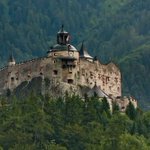
One of the largest medieval castles in Europe, Hohensalzburg sits atop a hill above Salzburg, the city made famous by The Sound of Music. Construction began in 1077 under the city's prince-archbishops, and the fortress is known for its richly decorated interiors, including the Golden Hall, along with collections of ornate arms and armor. Visitors can reach it by funicular or on foot by hiking trails, and inside they'll find marble rooms, a torture chamber exhibit, and terraces with sweeping views. Beyond regular tours, the castle also hosts concerts and theater performances. Recent restoration work has highlighted the fortress's role as a center of religious and political power in Alpine history.

October 25, 1154. King Stephen of England dies at Dover, ending nearly two decades of civil war known as the Anarchy.
When Henry I died in 1135, he left his daughter Matilda as heir and made the barons swear to support her. His nephew Stephen ignored the oath, rushed to London, and had himself crowned.
Matilda fought back. England split in two. Castles went up everywhere, armies burned the countryside, and nobles switched sides whenever it suited them. A chronicler at Peterborough wrote that people said Christ and his saints were asleep.
In 1141, Stephen was captured at the Battle of Lincoln. Matilda nearly took the throne, but the Londoners drove her out before she could be crowned. Stephen was later traded for one of her commanders. The next year she was trapped in Oxford Castle and escaped in the middle of winter by walking across the frozen river, reportedly dressed in white to blend in with the snow.
Neither side could win. In 1153, after Stephen's eldest son died, he agreed that Matilda's son Henry would inherit the crown.
Less than a year later, Stephen was dead. The young man who took the throne became Henry II, founder of the Plantagenet dynasty.

October 25, 1147. The German army of the Second Crusade was eaten alive in Anatolia by thirst, bad planning and horse archers, and never got anywhere near the Holy Land as a fighting force.
The Second Crusade is the one everybody skips, and this is why. It was led by two of the most powerful men in Europe, preached by the most famous churchman alive, and it accomplished precisely nothing.
The trigger was the fall of Edessa to Zengi in 1144, the first of the Crusader states to go. Bernard of Clairvaux preached the response across Europe and got something no previous crusade had managed, which was two reigning monarchs taking the cross. Conrad III of Germany and Louis VII of France.
Conrad went first and would not wait.
His army crossed the Bosphorus into Asia with supplies that were not adequate for what it was attempting, and marched into the Anatolian interior aiming to go overland to Syria.
That route had worked for the First Crusade fifty years earlier. There is a reason it did not work this time.
In 1097 the First Crusade had Byzantine guides, Byzantine supply arrangements and a Seljuk enemy caught off balance. By 1147 the Sultanate of Rum under Mas'ud was established, understood exactly what a crusading army was, and controlled the interior.
Beyond effective Byzantine territory, Conrad's men hit arid country they could not resupply in, and began suffering badly from thirst.
The Turks did not give them a battle. They did what horse archers do, which is hit the column, shoot, and leave before anything can be brought to bear on them. Day after day.
The worst of it fell on the infantry and the poor, who had no armour, no horses and the least food, and they were killed or taken in large numbers.
About three days' march past Dorylaeum, the nobility told Conrad to turn back.
The retreat is where it came apart. The Turkish attacks intensified on October 25, the order of march broke down, and the withdrawal became a rout. Conrad himself was wounded by arrows. The army lost nearly all its baggage, and a Syriac chronicle records the Turks growing rich on the captured gold and silver.
Now the honest part, because the numbers for this one are abused.
You will see claims that 90 percent of Conrad's army was killed, missing or captured. That figure is not reliable. Careful analysis of contemporary evidence suggests a maximum of around 63 percent losses across the whole crusade, which is still catastrophic. And of 113 individually named men, 22 died, 42 survived and 49 cannot be accounted for, though that sample is mostly knights and nobles with the best armour and the best horses, so it flatters the army's overall survival rate.
David Nicolle's argument is that the knightly core came through largely intact but shattered in morale, which fits the pattern. The men who could ride away rode away. The men who could not died.
William of Tyre blamed Byzantine treachery for the disaster, which became the standard Western explanation and conveniently avoided blaming Conrad. There is no convincing evidence for it. What is true is that Manuel I had come to terms with the Seljuk sultan, which from the Byzantine point of view was sound policy and from the crusader point of view looked like betrayal.
What was left of the Germans joined the French at Nicaea and took the coastal road instead, and were attacked again on the way. Conrad gave up and sailed from Ephesus back to Constantinople, where he spent time recovering and patched things up with Manuel, who eventually provided ships to get him to Palestine.
Some of his men were shipped to Antioch. Some made it to Attalia. Some of the prisoners were later ransomed through Armenians in Cilicia.
The crusade that reached Palestine was a shadow of what had left Europe, and the council at Acre in 1148 made the baffling decision to attack Damascus, which was the one Muslim power in the region that had been broadly friendly to the Kingdom of Jerusalem.
That siege lasted four days and failed. The crusaders went home. Damascus went over to Nur ad-Din.
So the Second Crusade did not merely fail. It destroyed two European armies in Anatolia, drove Damascus into the arms of the man who would unify Syria against the Crusader states, and left Bernard of Clairvaux writing defensive letters for the rest of his life trying to explain how God had allowed it.

October 25, 1415. Henry V had an army that was sick, starving and outnumbered, and he spent the night before the battle expecting to lose. Then it rained.
Agincourt is the most famous English victory of the Middle Ages and it was won by mud, a bottleneck, and the French doing exactly the wrong thing with enormous confidence.
Start with the state Henry was actually in, because the Shakespeare version skips it.
He had taken Harfleur in September after a five week siege, and the siege wrecked his army. Dysentery went through the camp and killed or disabled thousands. He had sailed from England with perhaps 12,000 men and by the time Harfleur fell he had to leave a garrison and send the worst of the sick home.
What he had left was somewhere between 6,000 and 9,000 men, the large majority of them archers, and he decided to march them to Calais rather than go straight home, essentially to make the point that he could walk through France unopposed.
He could not. The French shadowed him, got in front of him, and by October 24 they had blocked the road north with an army several times his size.
Numbers are the oldest argument about this battle. Older accounts give the French 36,000 or more. Modern work has pushed that down considerably, with serious estimates in the 12,000 to 25,000 range, and a few historians arguing the gap was far narrower than tradition claims. What nobody disputes is that the French had far more armoured men-at-arms and Henry had far more archers.
That night both armies sat in the rain in a ploughed field. The English were reportedly quiet, in part because Henry ordered silence. The French were confident and loud.
The ground is the whole battle.
The field at Agincourt was a strip of freshly ploughed farmland between two woods, roughly 750 to 900 yards wide at the English end and narrowing as you moved toward the French. Henry anchored his line on the trees at both ends.
That meant the French could not use their numbers. No flanking, no envelopment, nothing but a frontal advance into a space that got tighter the further they came.
And it had rained for days on heavy clay.
Henry put his archers on the flanks and in front, behind lines of sharpened stakes driven into the ground, which is a defence specifically designed to stop horses. Then he waited. When the French did not advance, he moved his whole line forward to provoke them, which is an extraordinary risk and it worked.
The French cavalry charged and the stakes and the arrows broke it. Horses went down or turned, and horses turning in a confined space run into the men behind them.
Then the French men-at-arms came on foot, in heavy plate, across a ploughed field turned to slurry, uphill into arrow fire for the last stretch.
A longbow at close range would not reliably punch through good plate armour. That is not what killed them. What killed them was exhaustion, the mud sucking at their legs, visors down so they could barely see or breathe, and arrows coming in at horses, at the gaps, at the men on the edges, pushing the whole mass inward toward the centre.
By the time the French reached the English line they were packed so tightly they could not swing their weapons.
What happened next is the part that gets sanitised. Men fell and were trampled by their own second and third ranks coming up behind. Armoured men who went face down in liquid mud could not get up and suffocated in it. The English archers dropped their bows, came in with mallets, hatchets and daggers, and killed men on the ground through the gaps in their armour.
The dead piled up in heaps that both sides describe, and men climbed the heaps to keep fighting.
The French Constable, Charles d'Albret, died there. So did three dukes, several counts, and a very large part of the French nobility, including the Duke of Alençon, who reportedly got close enough to Henry to strike the crown on his helmet.
Then Henry ordered the prisoners killed.
He had taken thousands of them, which in a medieval battle is money, because noble prisoners meant ransoms. Then there was an alarm, either a French rally forming or an attack on the baggage, and Henry had a small army with a huge number of armoured captives standing in its rear.
His knights refused. Killing a surrendered noble was a breach of the entire code they operated under, and more practically it meant burning your own ransom.
So he gave it to the archers, who had no such scruple and no stake in the ransoms, and they did it with daggers and mallets. Some accounts say prisoners were herded into a building and it was burned.
It stopped when the threat passed. Nobody knows how many died, and historians have argued about whether it was a war crime by the standards of the time or a defensible decision by a commander with no good options, which is roughly where Juliet Barker leaves it when she calls it a calculated risk.
French dead are usually estimated at 6,000 to 10,000, including the deaths after the surrender. English losses are often given as 400 to 600, and some accounts claim fewer than a hundred and change, which is almost certainly too low.
What did it achieve.
Not the conquest of France. Henry went to Calais and then home, and had to come back and campaign for years afterward. The Treaty of Troyes that made him heir to the French throne was five years away, in 1420.
What it did was decapitate the French ruling class in one afternoon. An entire generation of commanders and administrators died in that field, and the political vacuum deepened the civil war between the Burgundians and the Armagnacs that was already tearing France apart. That internal split is what let the English hold northern France for a generation.
And Henry V died in 1422, aged 35, of dysentery, the same thing that had gutted his army before the battle that made him immortal. His nine-month-old son inherited the claim to both kingdoms and eventually lost both.


Carn Brae Castle, UK - This castle started as a 15th century hilltop hunting lodge. It has remained basically the same with a few additions made in the 19th century. It is next to the site of the oldest neolithic settlement discovered so far in Cornwall


On Palm Sunday, March 29, 1461, two English armies met in a snowstorm near the village of Towton in Yorkshire.
It was the Wars of the Roses. The Yorkists on one side, the Lancastrians on the other, fighting over who would be king.
The wind was blowing the snow straight into the Lancastrians' faces. The Yorkist archers used it. They fired a volley, then stepped back. The Lancastrian archers, half blind, shot back into the wind and their arrows fell short. When they ran out, the Yorkists stepped forward, picked up the Lancastrian arrows from the ground, and shot those back too.
Then the armies closed and fought hand to hand for hours.
When the Lancastrian line finally broke, the killing got worse. Men fleeing toward a stream called the Cock Beck were cut down as they ran. Later stories said there were so many bodies in the water that men crossed on top of them.
Heralds at the time put the dead at around 28,000. That's almost certainly an exaggeration, but Towton is still often called the bloodiest battle ever fought on English soil.
For more than 500 years, it was mostly just a story.
Then in 1996, builders working on a garage at Towton Hall dug into a mass grave.
It held the remains of at least 37 men. Their bones showed what happened to them in brutal detail.
Most of the wounds were to the head. One skull had been hit by eight different blows. Many of the cuts came from angles that suggest the men had already lost their helmets. Some looked like men being finished off after they were down, or killed after they ran.
One man stood out. He was older, and his face had a huge old blade wound across the jaw that had fully healed. He had survived a battle before. He came back for another one, and this time he didn't survive.
Some of the skeletons had unusually developed arm and shoulder bones, the kind you get from years of drawing a heavy longbow.
Years later, archaeologists searching the battlefield found pieces of early handguns and lead shot. It's some of the earliest evidence of firearms ever found on an English battlefield.
Arrows, swords, and the first guns, all in one field.

The kettle-hat, introduced at the end of the 12th century, was the head protection for the common soldier. It was a dome-shaped metal hat with a wide brim riveted along the lower edge. By the 16th century it had been developed into the morion.

In 415 BC, Athens launched the most ambitious military operation in its history: a massive invasion of Sicily aimed at conquering Syracuse, the richest Greek city in the west. It ended with one of the worst disasters any ancient power ever suffered. And it didn't have to. Athens had at least four chances to save it.
The expedition was the brainchild of Alcibiades, a brilliant, reckless young aristocrat. The Athenians voted it through in a wave of excitement. The man most against it was Nicias, a cautious veteran general. To scare the assembly off, he argued it would take a gigantic force. The plan backfired. The Athenians just voted him a gigantic force, and put him in command of it alongside Alcibiades and a hard-nosed soldier named Lamachus.
Chance one: strike immediately. When the fleet arrived, Lamachus wanted to sail straight at Syracuse while the city was unprepared and panicking. Nicias wanted to play it safe. Alcibiades wanted to build alliances first. They compromised on slow, and Syracuse got time to organize.
Chance two: keep Alcibiades. Back home, Athens was in uproar over a religious scandal, and his enemies used it to recall him for trial. He didn't go home. He escaped and defected to Sparta. Then he told the Spartans exactly how to wreck the plan he had designed: send a Spartan commander to Syracuse, and put a permanent fort in Attica to bleed Athens at home. They did both. The Spartan general Gylippus arrived just as the Athenians were close to walling off the city, and turned the whole siege around.
Chance three: cut losses. By 414, Nicias was sick and his army was stuck. He wrote Athens a blunt letter saying the campaign was failing and asking to be relieved. Athens didn't recall him. It doubled down and sent a second huge fleet under Demosthenes, one of its best generals.
Demosthenes tried a bold night assault on the heights above Syracuse. It fell apart in the dark, Athenians fighting Athenians in the confusion. He told Nicias the only sane move left was to sail home while they still controlled the sea. Nicias stalled. He feared what the assembly would do to generals who came home beaten.
Chance four: the moon. When Nicias finally agreed to leave, there was a total lunar eclipse. The army took it as an omen. The seers advised waiting nearly a month, and the deeply religious Nicias agreed.
During that wait, the Syracusans blocked the mouth of the harbor. The Athenian fleet, the navy that ruled the Greek world, was crushed trying to break out. The troops refused to board the ships again. The whole army, tens of thousands strong, tried to escape overland.
The retreat was a slaughter. Harassed for days, starving and desperate for water, the Athenians reached the Assinarus River and pushed into it to drink while the enemy shot them down from the banks. Men were drinking muddy, bloody water as they died.
Nicias and Demosthenes were executed. Thousands of survivors were thrown into the stone quarries of Syracuse and left to suffer in the open, sun and cold, many dying there. Plutarch says some were freed because they could recite Euripides from memory.
Athens lost something like 200 ships and tens of thousands of men. Sparta found new life. Within a decade, Athens itself would surrender.
Thucydides, who lived through it, called it the most brilliant success for the winners and the most catastrophic defeat for the losers in the whole war. The genius who planned it was fighting for the enemy, the general who led it never wanted it, and the city that sent them kept betting more when it should've cut its losses.
