

Former USMC EOD Tech. Analysis on Anduril, autonomy, AI warfare, unmanned systems & the defense industrial base. Independent; not affiliated with Anduril.
Strategically Located
Joined May 2026
- Tweets2.1K
- Following922
- Followers5.3K
- Likes2.6K





HII and Thales have demonstrated a connected mine-hunting workflow using the REMUS 620 underwater drone.
It searches with Thales sonar, operators use AI-assisted imagery to classify contacts, and a separate vehicle returns to identify the suspected mine.
The handoffs are what caught my eye. Different companies’ vehicles, sensors and mission software working through one control environment—that’s where open architecture becomes useful to the people doing the job.
hii.com/news/hii-and-thales-…

The SeaSparrow program has reached 1,000 Block 2 missiles delivered across its 12-country consortium—up from 500 in June 2025.
That’s a useful number to keep handy when we talk about scaling missile production: another 500 rounds delivered.
dvidshub.net/news/578392/us-…

The Army has released footage of VICTOR flying with a heavy-fuel hybrid engine built using 3D metal printing.
The detail that caught my eye is air cooling: no liquid coolant. That could make supporting these aircraft in the field a little simpler.
Now, of course, we'll need to see the endurance and reliability numbers.
army.mil/article/296507/army…

Lockheed plans to invest $420 million in Camden, Arkansas, with 650 new jobs expected over five years.
That hiring timeline is interesting to me. We can fund more missiles and expand factories, but getting production up also means recruiting and training the people who will build them.
I’d watch how quickly those planned jobs turn into staffed production lines.
aedc-arkansasedc.azurewebsit…

The Army is working to expand industry fuze training in 2027 after bringing 30 people through its first course last month.
As a former military EOD Tech, I hold a special fascination and respect for the intricacies of ordnance fuzing.
A fuze controls when and under what conditions a munition functions. If we want more companies building weapons, we also need people who understand how to make them safe to handle and reliable when used.
army.mil/article/296503/arma…

SCHOTTEL just introduced an underwater thruster that tackles a practical problem for autonomous submarines: getting home if the main propulsion fails.
Unmannered Underwater Vehicles are so hot right now, I'm sure this will garner considerable interest.
schottel.de/en/media-events/…

Looking for some advice from the manufacturing and defense-tech community.
A friend runs a manufacturing company in northern Nevada with about 25 employees that’s been in business (and that size) for decades, specializing in precision machining, industrial equipment, welding, and fabrication.
His goal is to roughly double the business over the next few years. He’s weighing new markets or product lines, a second shift, or some combination. Finding enough skilled workers is a major obstacle.
He’s open to defense work but hasn’t identified the right entry point. I want to convince him to connect his existing manufacturing expertise with the effort to rebuild America’s industrial base.
For those buying parts, developing suppliers, or running shops:
Where would you look for opportunities closest to those capabilities? What supplier-development programs or resources would help him get started?
I’d also welcome experience with training new manufacturing workers, using AI to reduce administrative workload, or finding the right capital partners to support expansion.
Practical advice, lessons learned, and people worth talking to would all be appreciated.
@mttgrmm @jimbelosic @noxmetals
(Image is not of his shop... it's just here to grab your attention)

No wonder @neros_tech is hiring!
Neros says it has signed a conditional loan commitment of up to $450 million with the Pentagon’s Office of Strategic Capital, alongside $165 million in company equity for a $615 million manufacturing project.
This adds some substance to the factory and hiring push Palmer reposted earlier. Neros says the financing would help it reach one million drones a year by 2028, including manufacturing critical components in-house.
That’s the part worth watching. Sustaining production means having the parts coming through the door as reliably as the drones leave it.
The commitment is conditional—not cash already disbursed or a government order for drones. One million a year is the company’s target, not its current output.

BREAKING: The U.S. government has announced a conditional loan commitment of up to $450M to @neros_tech to scale American drone manufacturing.
The Department of War’s Office of Strategic Capital is backing the expansion of domestic manufacturing of drones and critical components for both military and non-military applications.

ALT Source: U.S. Marines
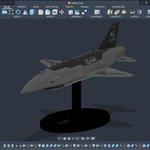
After 10yrs of CADing the ol' fashioned way, I decided to let AI give me a hand. It wasn't what I'd call efficient, but maybe I just need to write better prompts. This is obviously the future.
As soon as it's in the budget, I'll upgrade to a multi-material 3D printer and I'll turn my desk into a battlefield.

SpaceX has reportedly discussed buying Boost Mobile—or getting access to its network—with parent company EchoStar, according to The Washington Post, with Reuters also covering the report.
If it happens, the appeal seems pretty straightforward: combine satellite coverage with an existing mobile business, rather than build the entire customer operation from scratch.
That could move SpaceX beyond supplying connectivity to other carriers and closer to selling us the whole phone plan.
There’s a catch, though. Boost relies on network access from AT&T and T-Mobile, and those agreements may require their approval to transfer. Buying the business wouldn’t necessarily settle that.
These are reported talks, not an announced acquisition. The companies haven’t confirmed a deal in the reporting reviewed, and I couldn’t independently check their latest X responses. The potential benefits above are my interpretation, not confirmed plans.
kelo.com/2026/11/02/spacex-i…

This seems like the right way to look at it. Some missions will justify paying more for survivability and capability. Others will favor something cheaper that we can field in greater numbers.
We also need to get these aircraft into units and learn how to use them. Expecting the first increment to do everything risks delaying the experience that helps us build the next one.

Whether a CCA is “affordable” or “mass” enough depends on the mission, what the alternatives are, and how well the thing performs. If the F-47 ends up north of $300M and an F-35A Block 4 is somewhere around $100M, that leaves a lot of space for a survivable, appropriately equipped CCA's. Not everything has to come in under $20 or $30M.
You can’t jam the entire CCA effort into an artificial cost constraint driven by early-stage “attritability” requirements, or skip the hard DOTMLPF work needed to keep climbing the ladder toward greater autonomy and capability, over time, in the CCA fleet.
Those who want these to stay attritable forever, and those who want the first increment to be a large, expensive, supersonic stealth UCAV, both underappreciate what it takes to field game-changing capability at scale. They also underestimate what semi-autonomous or autonomous wingmen can do when employed in numbers.

Oshkosh Defense — the company that builds the military's JLTV (Joint Light Tactical Vehicle) — is teaming up with drone startup Grid Aero to mass-produce Grid Aero's Lifter cargo drone.
Lifter is a piston-powered autonomous aircraft that Grid Aero says can haul a few thousand pounds a few thousand miles. Its CEO says the design borrows as much from military trucks as from traditional aircraft, which is exactly why a truck maker is a smart partner.
Designing a drone and building hundreds of them at a steady price are two different jobs.
Lifter has 6 to 12 more months of prototype testing, a pilot production line at Oshkosh is about a year out, and nobody's announced a customer or contract yet. breakingdefense.com/2026/11/…

ParaZero reported a fourth European order for its DefendAir net pods Nov. 2, following a demonstration on the customer’s armored vehicle.
Counter-drone integration is also happening at component level: fitting an interception layer into an existing vehicle.
rss.globenewswire.com/news-r…

General Atomics opened a North Dakota control center Oct. 30 so pilots can fly its contractor-operated MQ-9 missions in Africa from the U.S.
Sen. Hoeven projects $10M+ in annual savings. For uncrewed fleets, where the people work is part of the business model.
ga-asi.com/ga-asi-opening-ne…

South Korea formally launched its new drone headquarters Nov. 2, moving combat operations to the services while centralizing development and acquisition support.
It's tasking includes certifying commercial drones. The test will be whether equipment reaches units faster.
koreatimes.co.kr/southkorea/…

The Marines have opened applications for cargo-drone trials that require carrying 100 pounds 40 nautical miles, delivering it, and flying back without refueling.
The October 30 notice schedules the demonstration for January–February. A second flight requires carrying at least 150 pounds 10 nautical miles and returning empty.
Evaluators will also examine ground setup, refueling and procedures for losing communications. Those details matter when small units have to operate and support the aircraft themselves.
There’s a procurement angle here too: successful demonstrations could lead to prototype agreements, with a possible route to follow-on production. Flight results may also be shared with the Drones.mil marketplace team upon request.
For those following defense autonomy, this is a useful test of whether demonstrated performance can move a supplier toward an actual purchase.
sam.gov/opp/adbd42e017854608…

NATO says AI agents connected its Maven targeting software to a national military system in hours.
Adm. Pierre Vandier, NATO's top transformation commander, said it at the close of DiBaX (Digital Backbone Experimentation), a two-week experiment in Latvia that ended Oct. 30. Maven Smart System is the Palantir-built software NATO bought in 2025 to pull intelligence together for commanders.
Why this is a big deal: allied forces run a pile of national systems that were never built to talk to each other. Linking them usually means custom, one-off connections, and every gap slows down handing a target or a drone track from one country to another. Cutting that work to hours would speed up coalition targeting and air defense.
defence-blog.com/nato-turns-…

This test demonstrates only part of what’s required to successfully attack a U.S. aircraft carrier.
Finding, tracking and hitting a maneuvering ship at sea is the test I’d want to see before drawing broader conclusions from this footage.

WATCH: Chinese state broadcaster CCTV has released footage that appears to show a ballistic missile hitting a full-scale mock-up of a U.S. aircraft carrier at a desert test range in Xinjiang.
The missile was a DF-26B, the anti-ship variant of the PLA Rocket Force’s Dongfeng-26.
The road-mobile DF-26 can carry nuclear or conventional warheads, has a reported range of 3,000–5,000+ km, and is often called the “carrier killer.”